
Social Skills Games for Kids and Teens
The best social skills games give kids a reason to practice what you want to teach: starting a conversation, keeping it going, reading nonverbal cues, taking turns, and handling disappointment without the afternoon falling apart. For most social skills groups, a structured conversation game like Chat Chains is a strong place to start, then you can add an emotion-reading game, a competitive card game for frustration tolerance, and, for anxious teens, a set of graded exposure challenges.
This guide is written for the people running those groups: speech-language pathologists, school counselors, BCBAs, and therapists. It is organized by the skill you are working on rather than by product type. Each section covers how the game actually plays, who it tends to suit, and the details that decide whether it works in your room: ages, group size, and how much reading it asks for.
Quick comparison
| Game | Best for | Ages | Players |
|---|---|---|---|
| Chat Chains | Starting and keeping a conversation going | 8+ | 2+ |
| Dive In | Group warm-ups and mixed-age groups | 6+ | 2+ |
| Go Fish: Faces & Feelings | Reading and showing facial expressions | 6+ | 2–6 |
| Feelings Bingo | Familiar gameplay with an emotion twist | 5+ | 2–6 |
| Secret Recipes | Turn-taking, winning and losing well | 8+ | 2–5 |
| Talent Jam | Confidence in front of peers | 8+ | 3–6 |
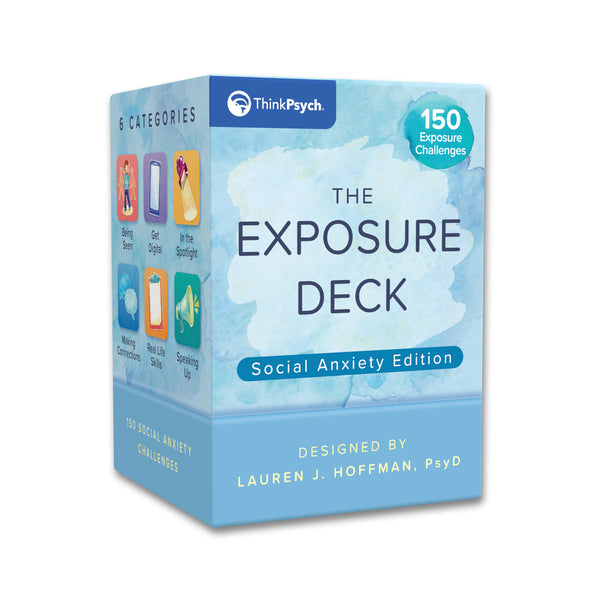
| The Exposure Deck: Social Anxiety Edition | Social anxiety in teens | 13+ | 1+ |
When you are working on starting and keeping a conversation going
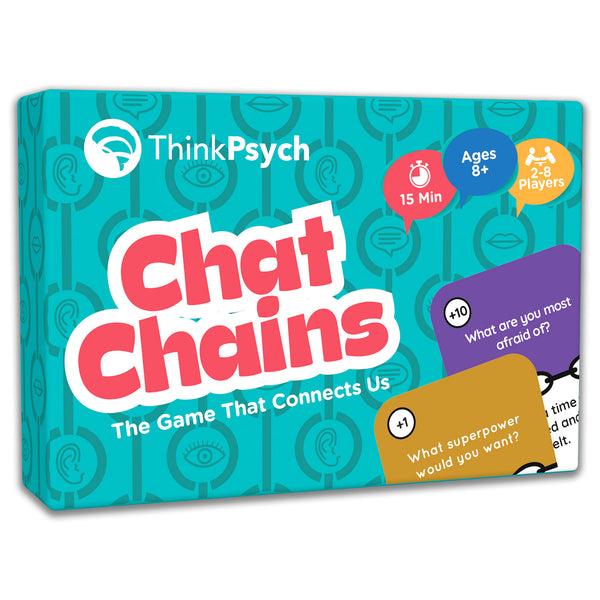
Chat Chains (ages 8+) is built around the idea that a conversation has parts you can actually see. You start with a topic card, then players add question and answer cards to build the conversation chain, one link at a time. For a child who tends to answer a question and then stop, or who jumps to a favorite subject, laying the chain out on the table can make the back-and-forth feel concrete rather than abstract. There are 150 conversation topics covering things kids and teens actually care about, and rounds can be kept short, which helps when attention is limited.
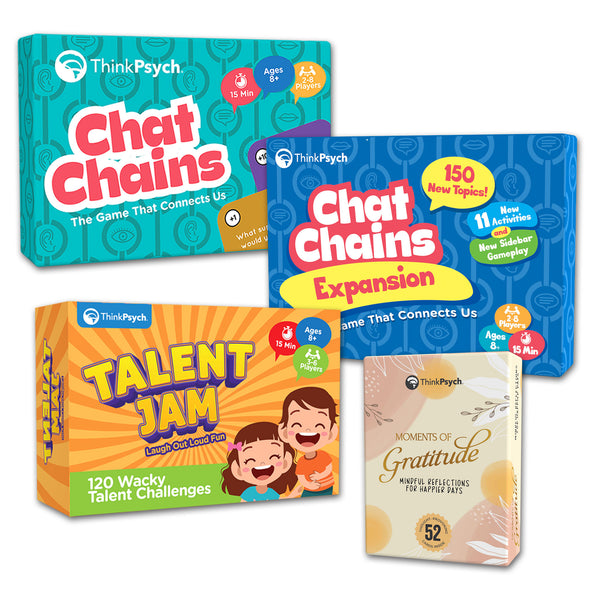
The Expansion Pack adds 150 new topics plus sidebar gameplay that brings active listening and group sharing into the mix. That makes it a natural next step once a group has the basic question-and-answer rhythm down. If listening is the goal you keep coming back to, our guide to helping a child develop active listening skills has some ideas for carrying it into everyday life.
When the group needs a warm-up
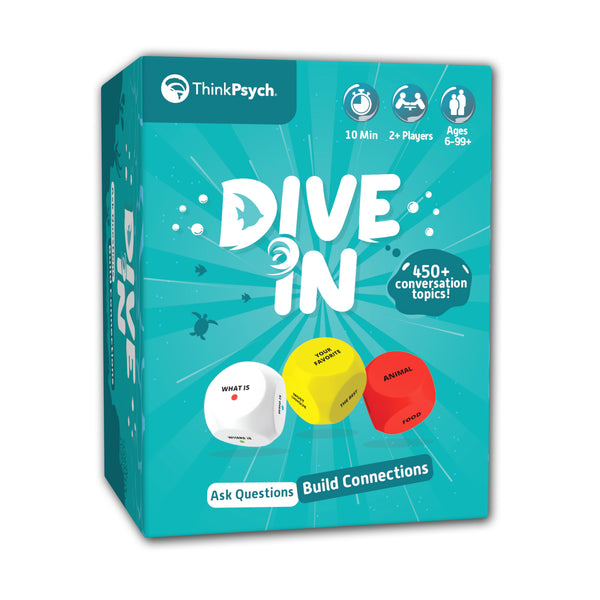
Dive In (ages 6+) uses dice to build the question for you. Players roll eight wooden dice to put together a conversation prompt, then can go deeper with one of the Dive In cards. There are more than 450 topic combinations, with a mix of silly icebreakers and more thoughtful questions, and two levels of depth, so a younger child and an older one can play the same round without either feeling out of place.
In a social skills group, it often works well as an opener. Rolling dice is low-pressure, nobody has to come up with a topic on the spot, and the funny questions tend to get a quiet group laughing before you move into the harder work of the session.
When you are working on reading faces and social cues
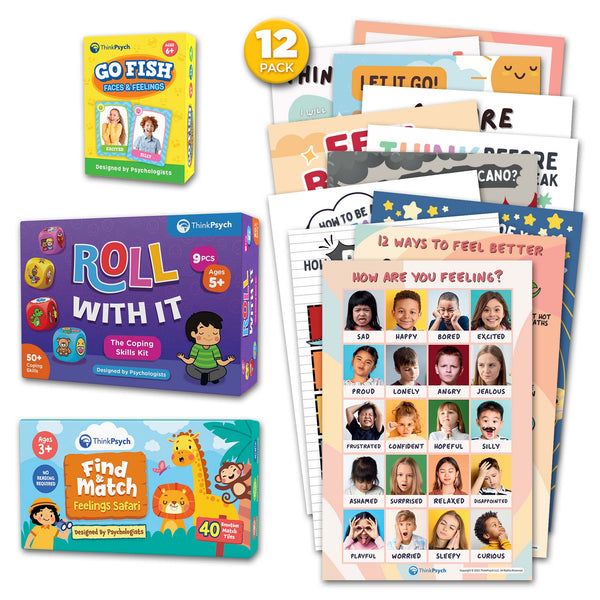
Go Fish: Faces & Feelings (ages 6+, 2 to 6 players) puts a twist on the classic card game. Instead of asking for a card by name, you act out the feeling on it, and the other player has to read your face to know what you are asking for. That one change means every turn is practice in both showing an emotion and recognizing one. No reading is needed, and the deck can also be used to play a Memory Match game variant.
Feelings Bingo (ages 5+, 2 to 6 players) works on the same skill with the whole group involved at once. One player acts out an emotion, an animal character, or an expressive object, and everyone else looks for the match on their bingo card. Because everyone is watching the performer, it can be a nice way to get a group paying attention to each other rather than to their own cards, which leads to lots of laughs. For more on the everyday side of this skill, see our list of common social cues to teach children.
When you are working on turn-taking, and winning and losing well
Secret Recipes (ages 8+, 2 to 5 players) plays a lot like Go Fish, with a competitive twist. Players collect ingredients to complete cake recipes for points, but a recipe you have laid down can be finished and stolen by an opponent first. Eight baker characters each have a special ability, which adds strategy without making the rules hard to learn.
That stealing mechanic is what makes it useful in a group. Small setbacks happen every few turns, so kids get lots of low-stakes chances to practice waiting, watching what others do, and staying calm when a plan falls through. For a child who struggles with losing, a game like this may give you something concrete to coach in the moment, and our strategies for helping a sore loser child has some ideas you can share with families for practice at home.
When a child needs practice being seen
Talent Jam (ages 8+, 3 to 6 players) turns the group into a talent show. Players take turns drawing a card and performing the challenge, whether that is singing, sketching, doing an impression, or acting out a scene, and everyone else votes for their favorites. There are 120 challenges in four color-coded categories, and with one performer and several voters each round, nobody is left waiting for long.
This is less a conversation tool than a confidence one. For kids who tend to go quiet in a group, it offers a silly, supportive way to take a small social risk, and it tends to work best once the group feels comfortable together. Our guide to building social skills in shy kids covers some gentle ways to build toward that point.
When social anxiety is what gets in the way
The Exposure Deck: Social Anxiety Edition (13+) is different from everything else here, because it is a clinical tool rather than a game. It holds 150 ready-to-use exposure challenges spanning conversations, public speaking, assertiveness, errands, and social media, and comes with a therapist guide, a client quick start guide, and a reference card. It was designed by psychologist Lauren J. Hoffman, PsyD, using exposure therapy principles.
For a teen whose social skills are there but hard to reach because of anxiety, working from a set of graded challenges can make it easier to build a fear ladder together, assign practice between sessions, or turn the cards into a group game. For older students who are ready for more everyday practice too, our list of social skills activities for high school students pairs well with it.
Not sure where to start?
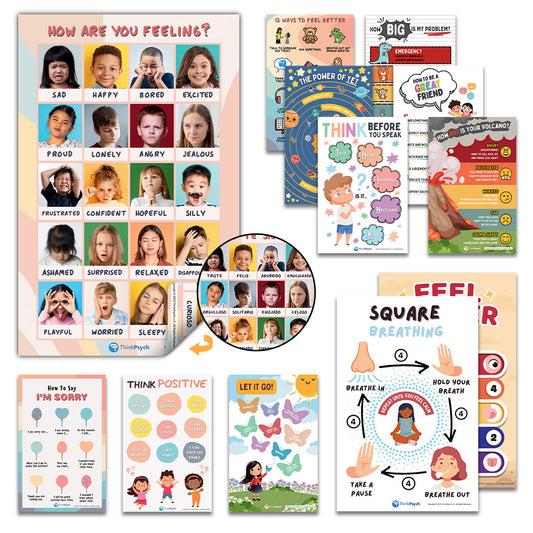
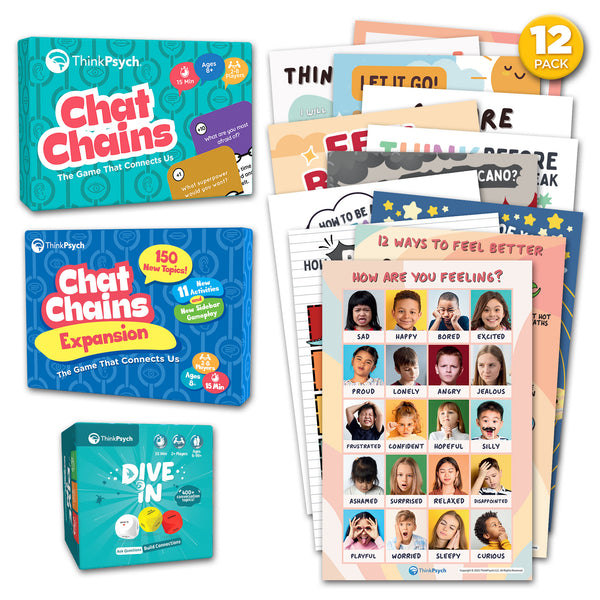
If you are putting together a social skills kit from scratch, the Social Skills Essentials Collection groups Chat Chains, the Chat Chains Expansion Pack, and Dive In with a set of bilingual SEL posters. For older groups, the High School & Teen Engagement Toolkit is built around teens. And you can browse everything in one place in our social skills games collection.
Frequently asked questions
What are the best social skills games for kids?
It depends on the skill you are targeting. For conversation skills, Chat Chains would be our top pick. For reading facial expressions, Go Fish: Faces & Feelings and Feelings Bingo need no reading and suit ages 5 and up. For turn-taking and handling a loss, a competitive card game such as Secret Recipes gives kids plenty of small setbacks to practice with.
What are good social skills games for teens?
Chat Chains, Dive In, Secret Recipes, and Talent Jam all work with teenagers, since none of them feel like a little kids’ game. For teens whose main barrier is social anxiety, The Exposure Deck: Social Anxiety Edition (13+) offers 150 social challenges that can be used in session, as homework, or as a group activity.
Do social skills groups actually work?
The research is encouraging, with some caveats. A Cochrane review of social skills groups for young people with autism found some evidence that groups can improve social competence, though it called for larger and better studies. A 2017 meta-analysis of group social skills interventions reported a moderate overall improvement in social competence, but the gains looked smaller when parents or observers rated behavior, and teachers did not appear to see a change. That is one reason practicing skills across different people and settings may matter.
Which social skills games work for kids who cannot read yet?
Go Fish: Faces & Feelings and Feelings Bingo both run on acting out and recognizing expressions, so no reading is needed. Dive In can also work with younger children if an adult reads the prompt aloud after the roll.
How can I help social skills carry over outside of group?
One low-effort way in is to send the same game home or into the classroom, so a child practices the skill with different people and in different places. Short, frequent rounds often fit into a school day or a family evening more easily than a long session.
Sources
- Gates, J. A., Kang, E., & Lerner, M. D. (2017). Efficacy of group social skills interventions for youth with autism spectrum disorder: A systematic review and meta-analysis. Clinical Psychology Review, 52, 164–181.
- Reichow, B., Steiner, A. M., & Volkmar, F. (2012). Social skills groups for people aged 6 to 21 with autism spectrum disorders (ASD). Cochrane Database of Systematic Reviews, CD008511.