


Find & Match - Feelings Safari
Find & Match - Feelings Safari


 30-day money back guarantee
 Free delivery on all US & Canada orders
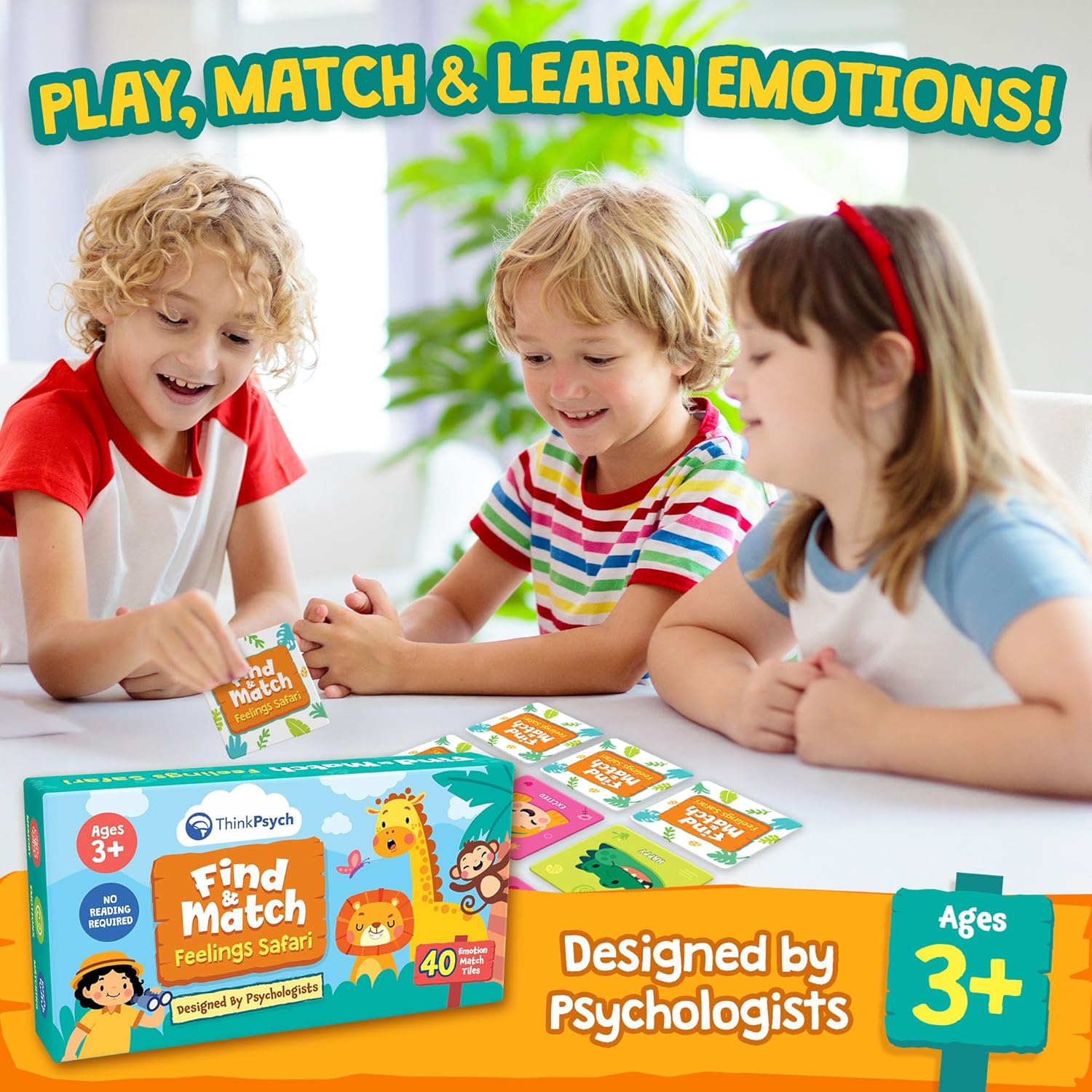
 Developed by psychologists


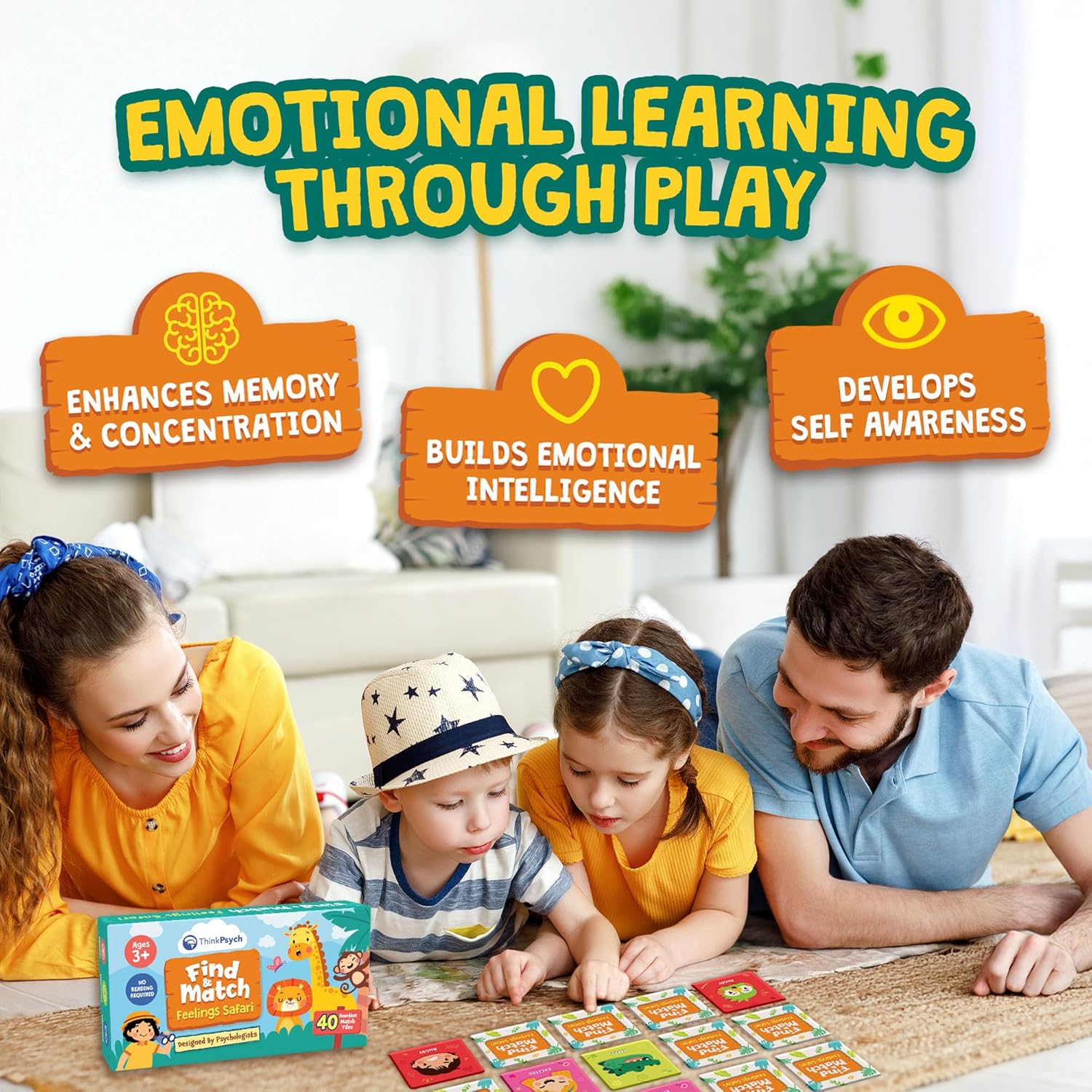
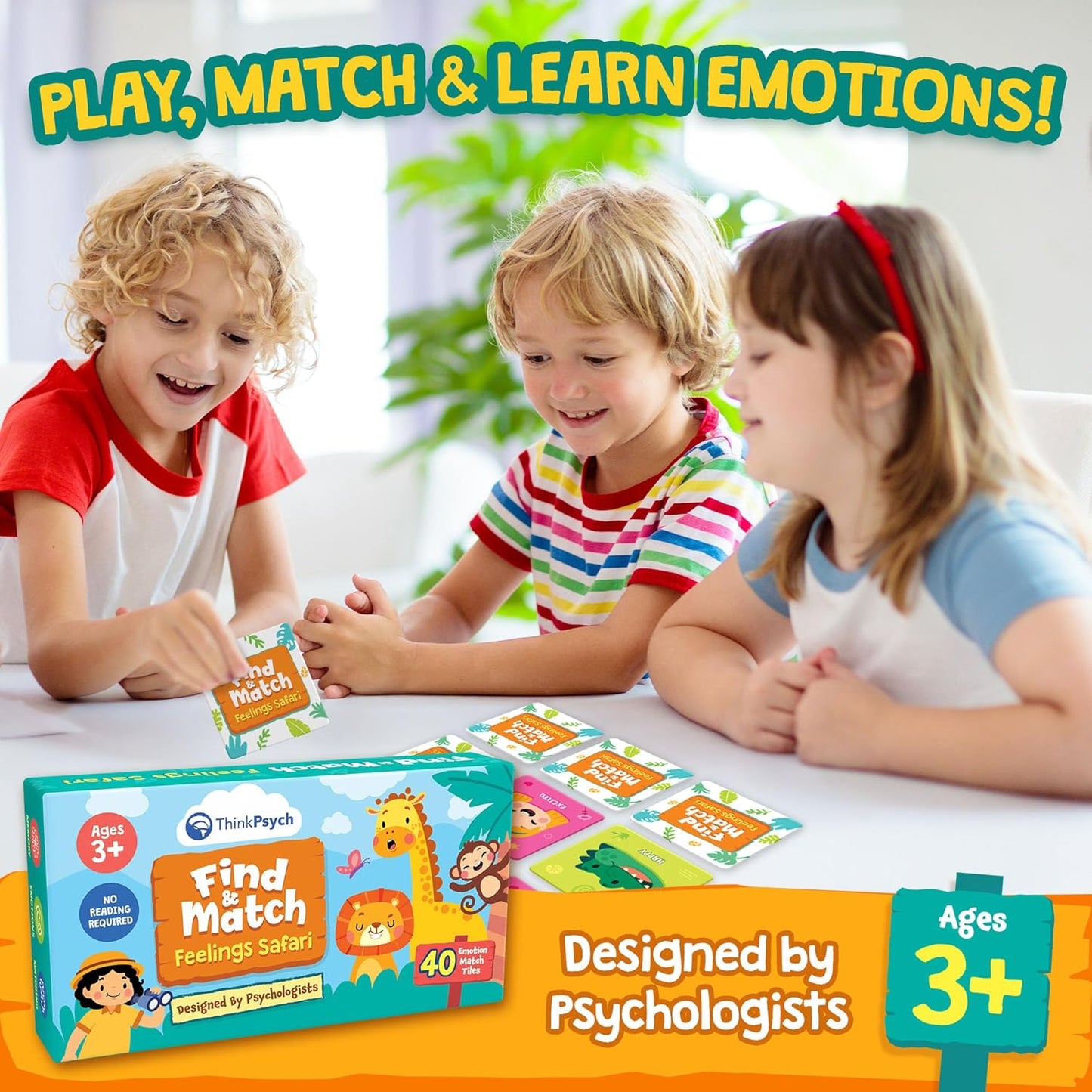
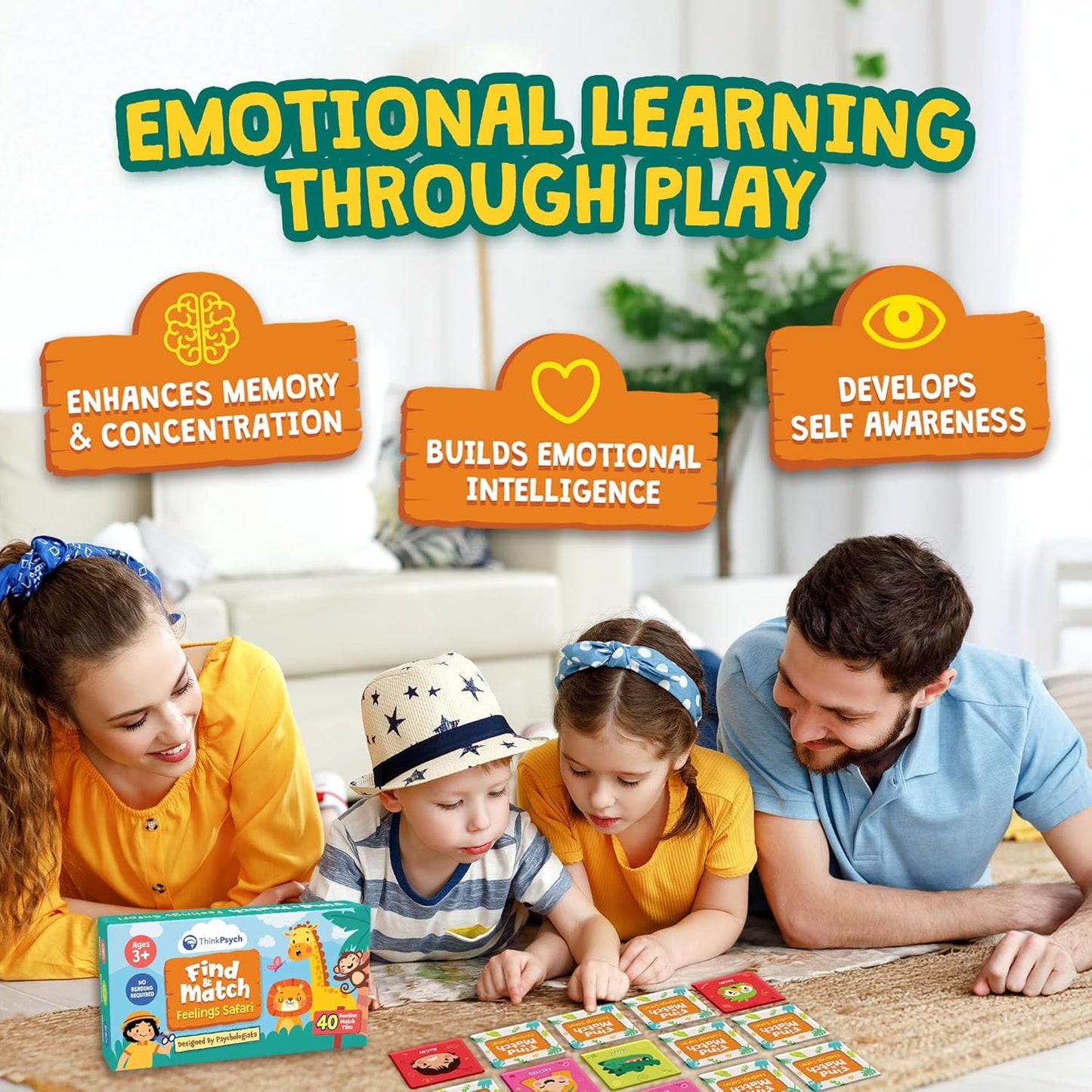
"We designed Find and Match around a simple idea: kids learn best through play. The colorful matching tiles make learning about emotions fun and effortless."
How to use
- At Home
- In the Classroom
- In Therapy
FAQ
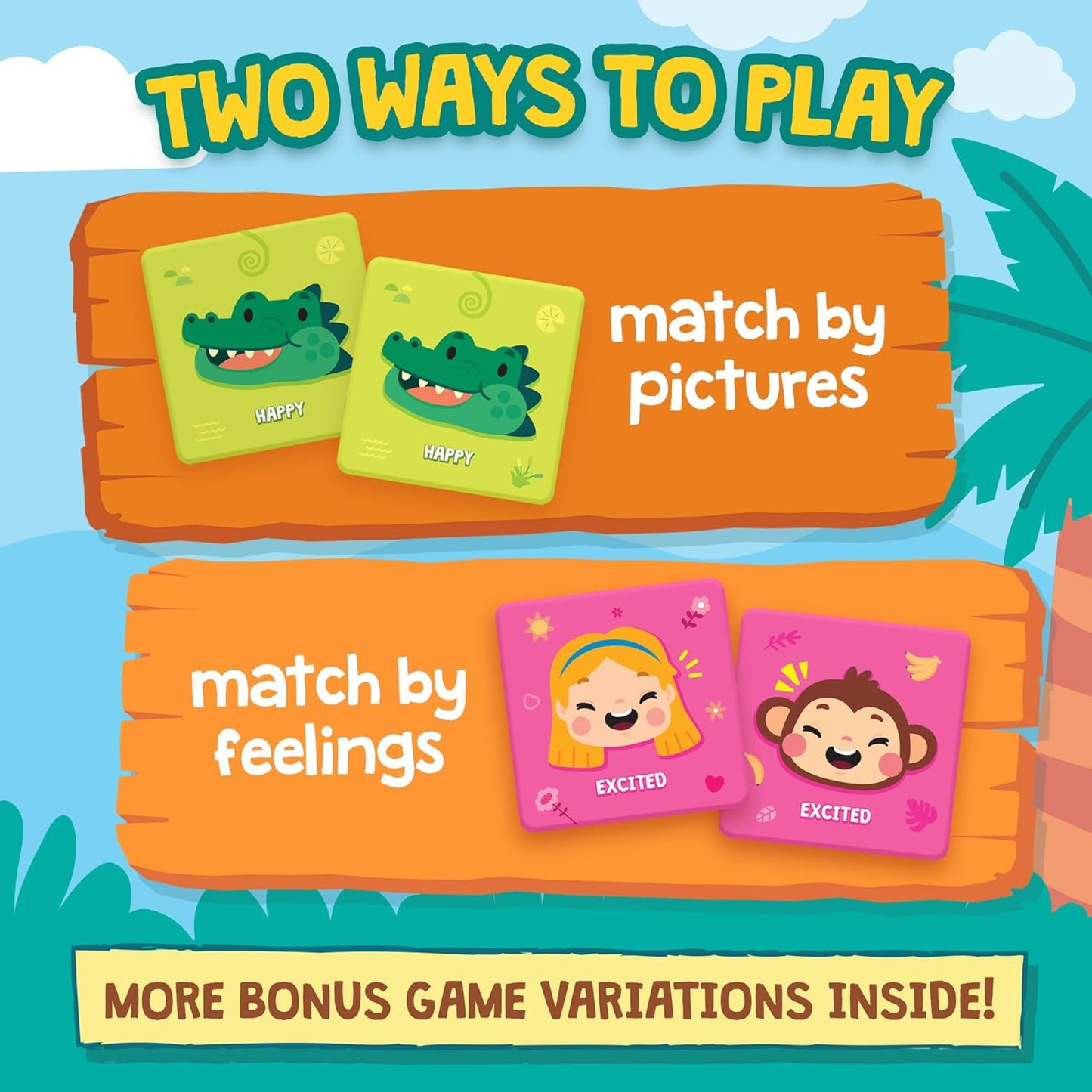
How do you play?
What ages is this best for?
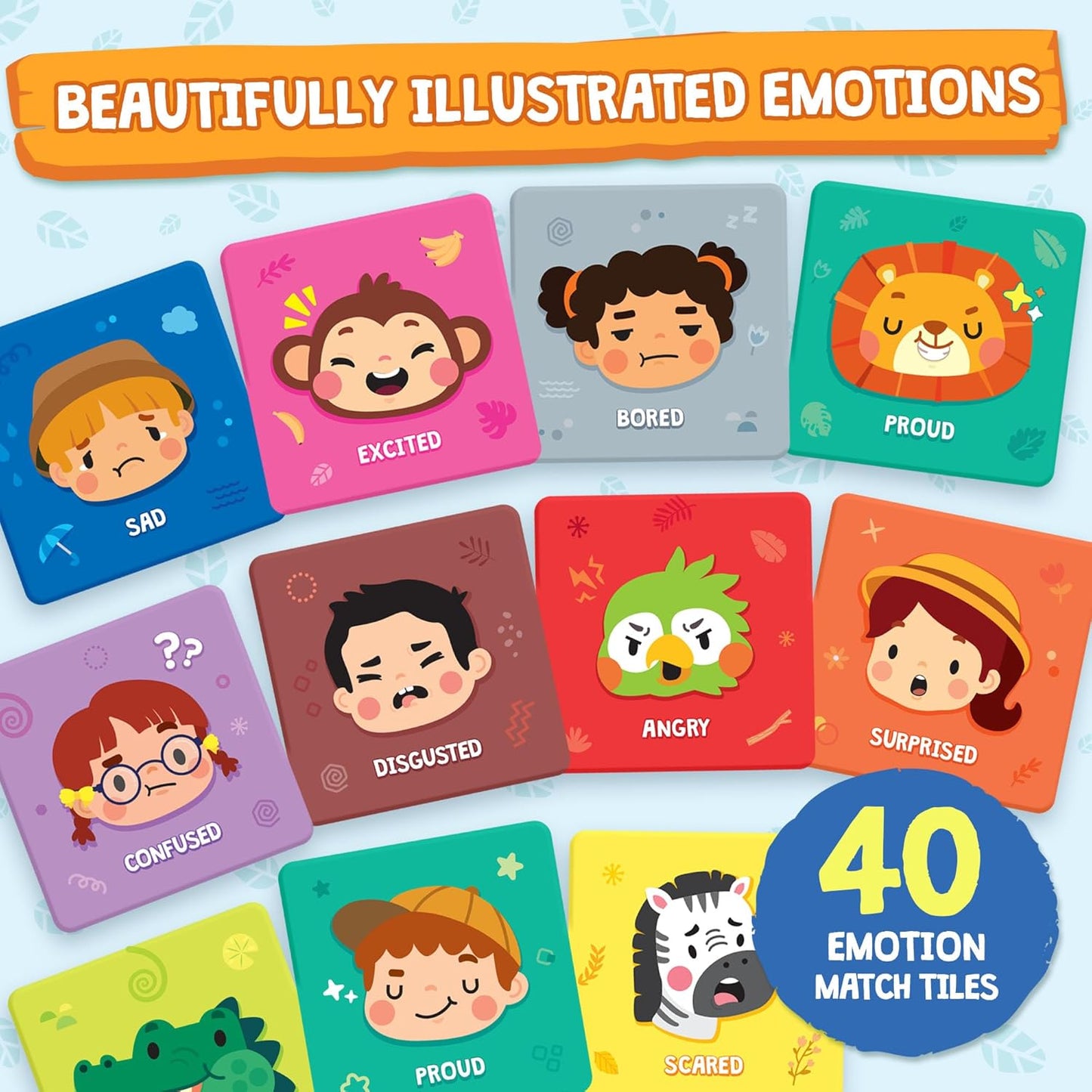
What emotions does it cover?
Can it be used with nonverbal or pre-verbal children?
What's the difference between the animal cards and the illustrated face cards?


Additional Product Details


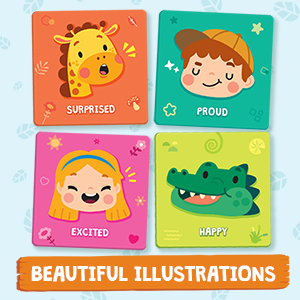


What Our Customers Think
Customers praised this educational matching game for teaching emotions through colorful, durable cards featuring animals and children. Parents, teachers, and therapists loved its versatility and engaging illustrations. Most found the cards "thick and sturdy," though a few wished they were even thicker. The game aids social-emotional development while being fun and screen-free.
I got this find and match game for my 3‑year‑old and it’s been a fun, screen‑free activity, specially since he's been increasingly asking for more screen time. It’s simple to understand, you just match the cards either by the facial expression or by the character. The illustrations are bright and clear, so no reading is needed, and my kid picked it up right away and I personally like the art style.
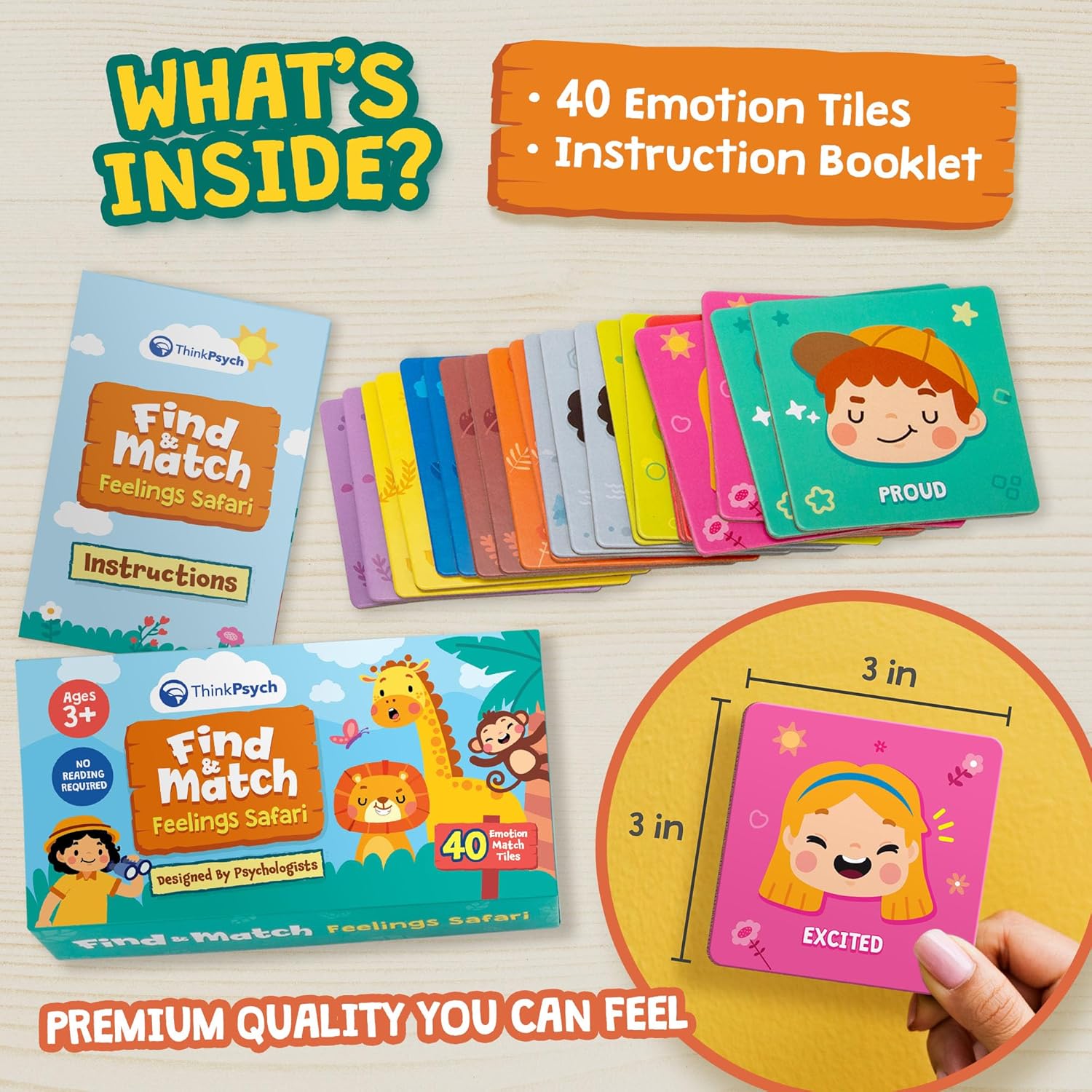
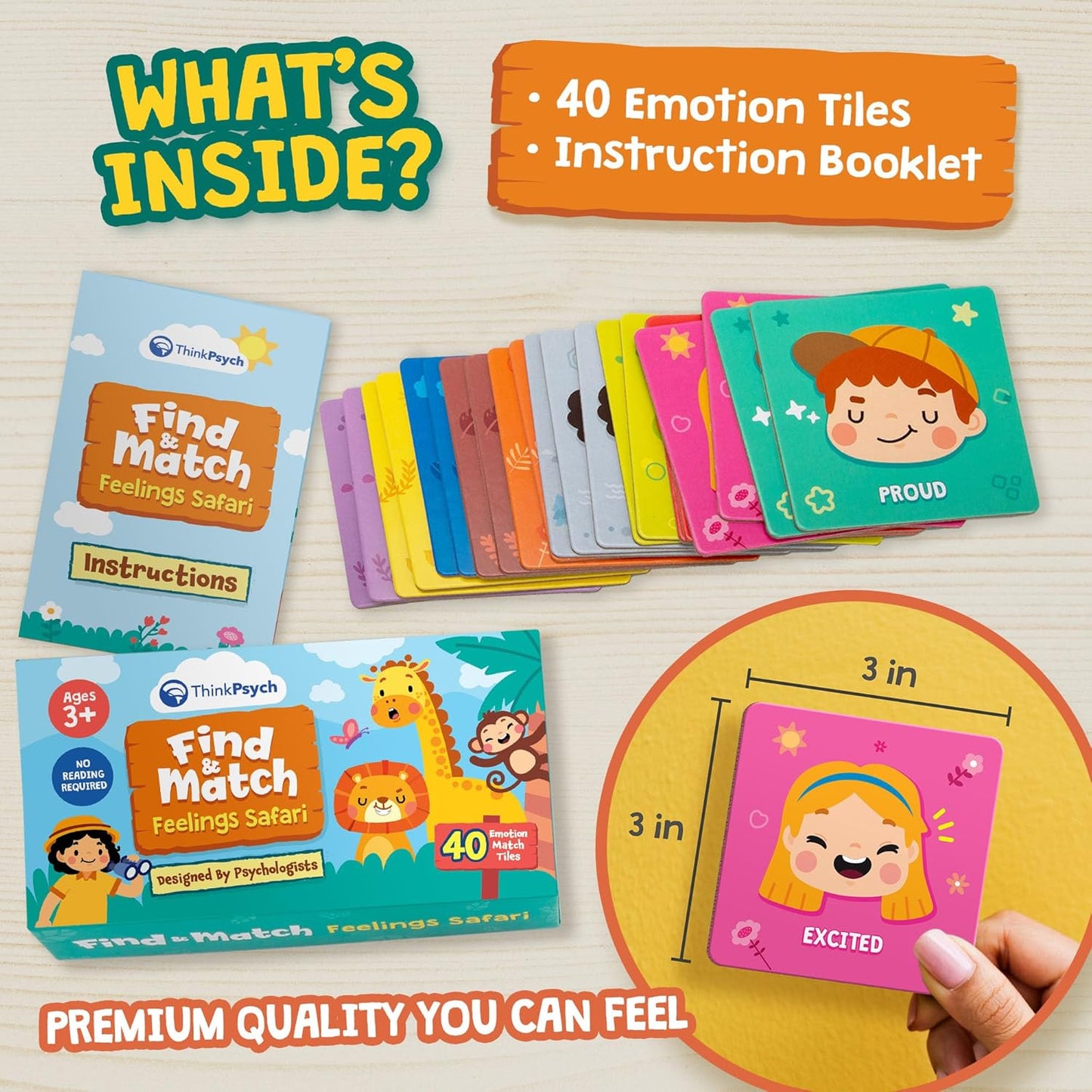
It comes with 40 thick, laminated tiles that feel sturdy and are easy for little hands to handle without roughing them up. If you have a cottage or chalet, this would definitely be a fun game to bring along to keep the young ones entertained. Overall, it’s been a nice way to mix playtime with a bit of learning without a high cost.
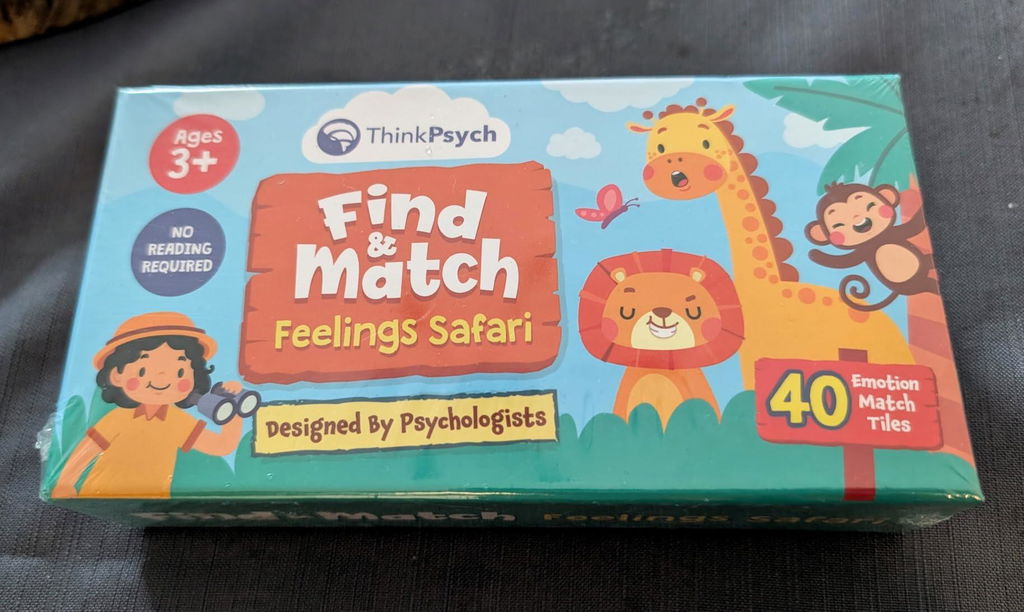
As a therapist and parent, I highly recommend ThinkPsych’s Find & Match – Feelings Safari. It’s a thoughtful and engaging twist on the classic memory game, designed to help kids recognize and talk about emotions while building memory skills. The vibrant, expressive illustrations are age-appropriate and spark meaningful conversations about feelings. I especially appreciate the durable, oversized cards, which are easy for little hands to handle, and the flexible gameplay options that make it adaptable for different ages and attention spans. My 3-year-old students love matching the faces and discussing what each one means—it’s opened the door to wonderful talks about emotions and coping strategies. A fantastic social-emotional learning tool for home or therapy settings.
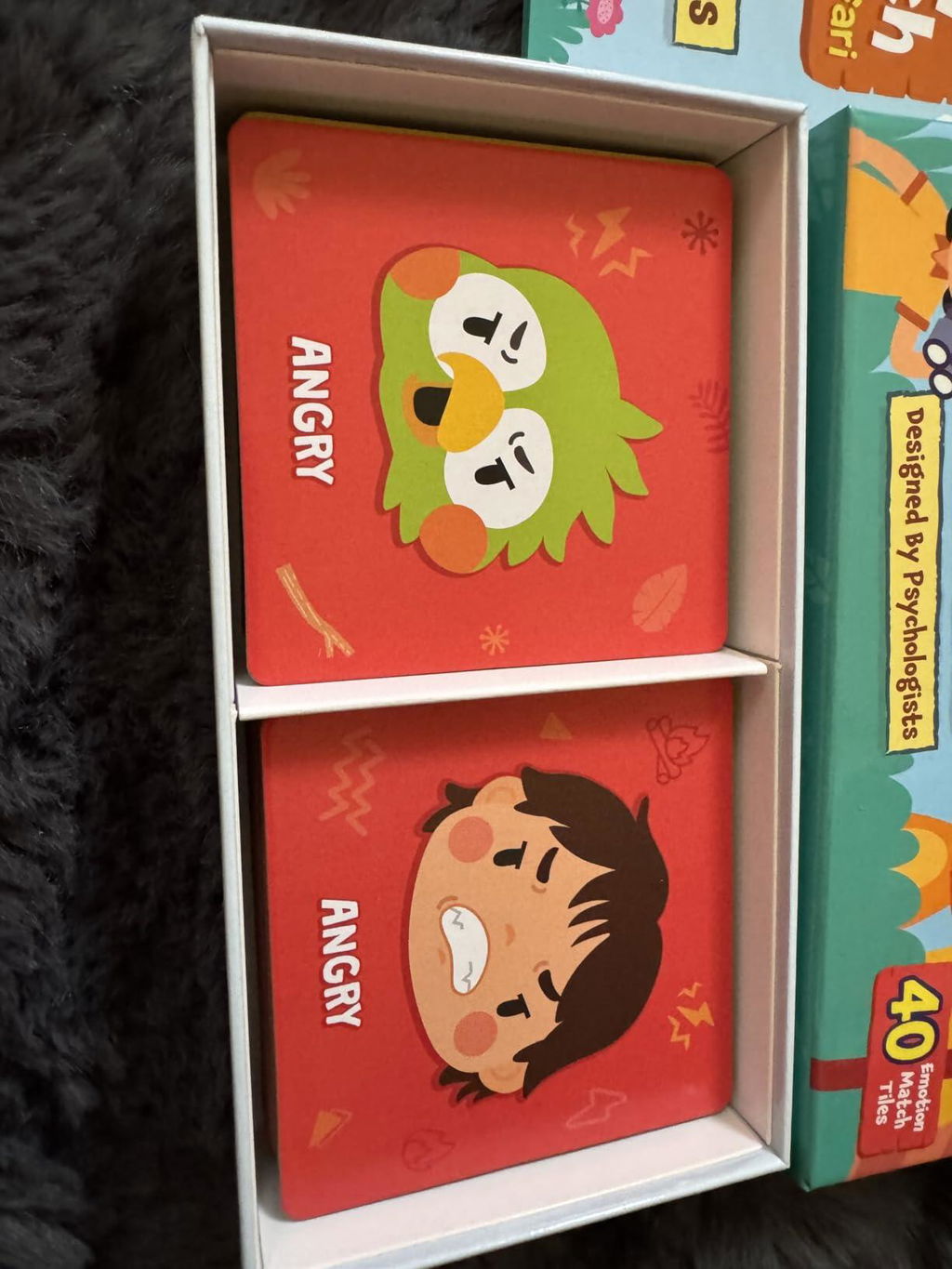
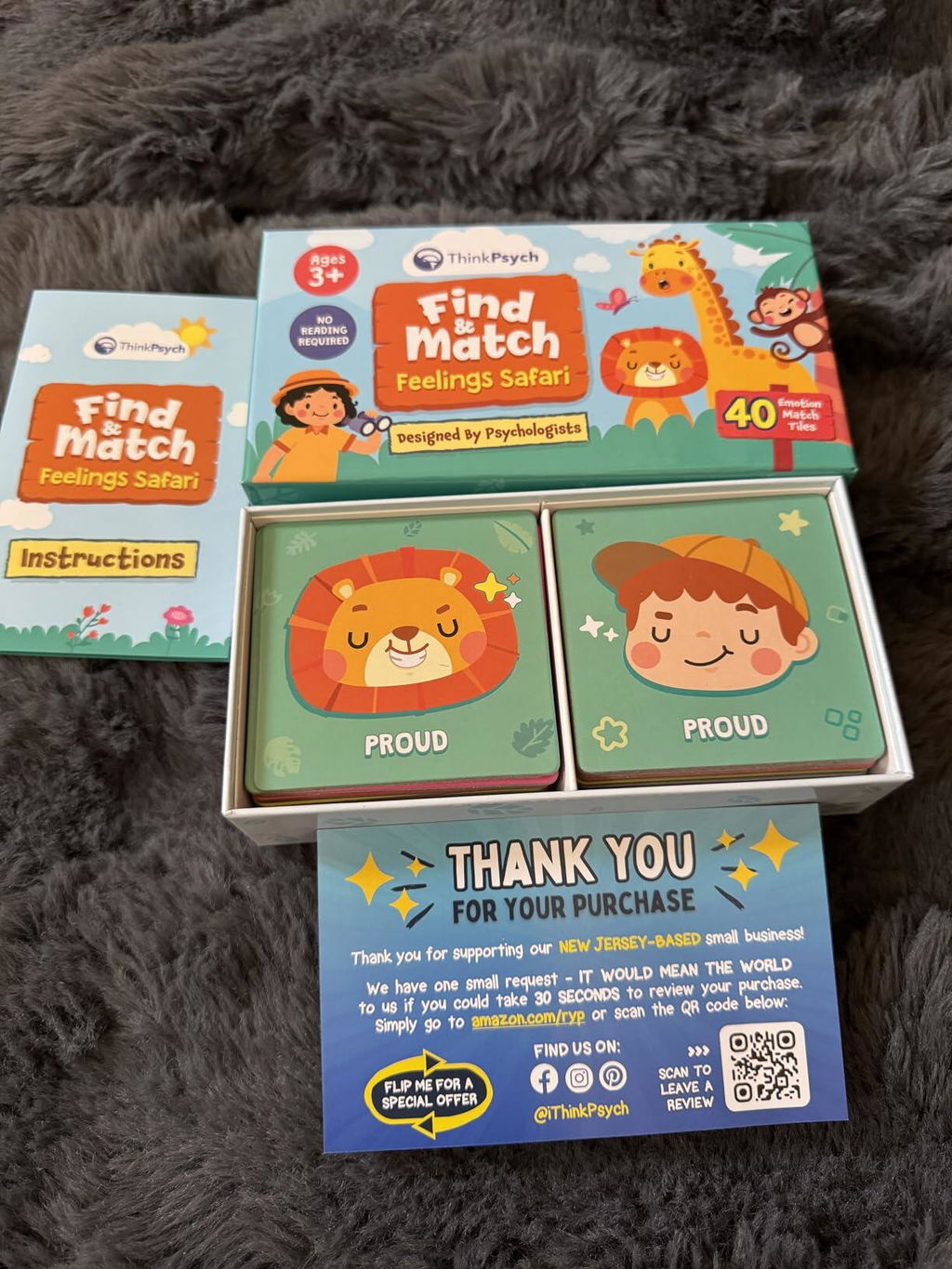
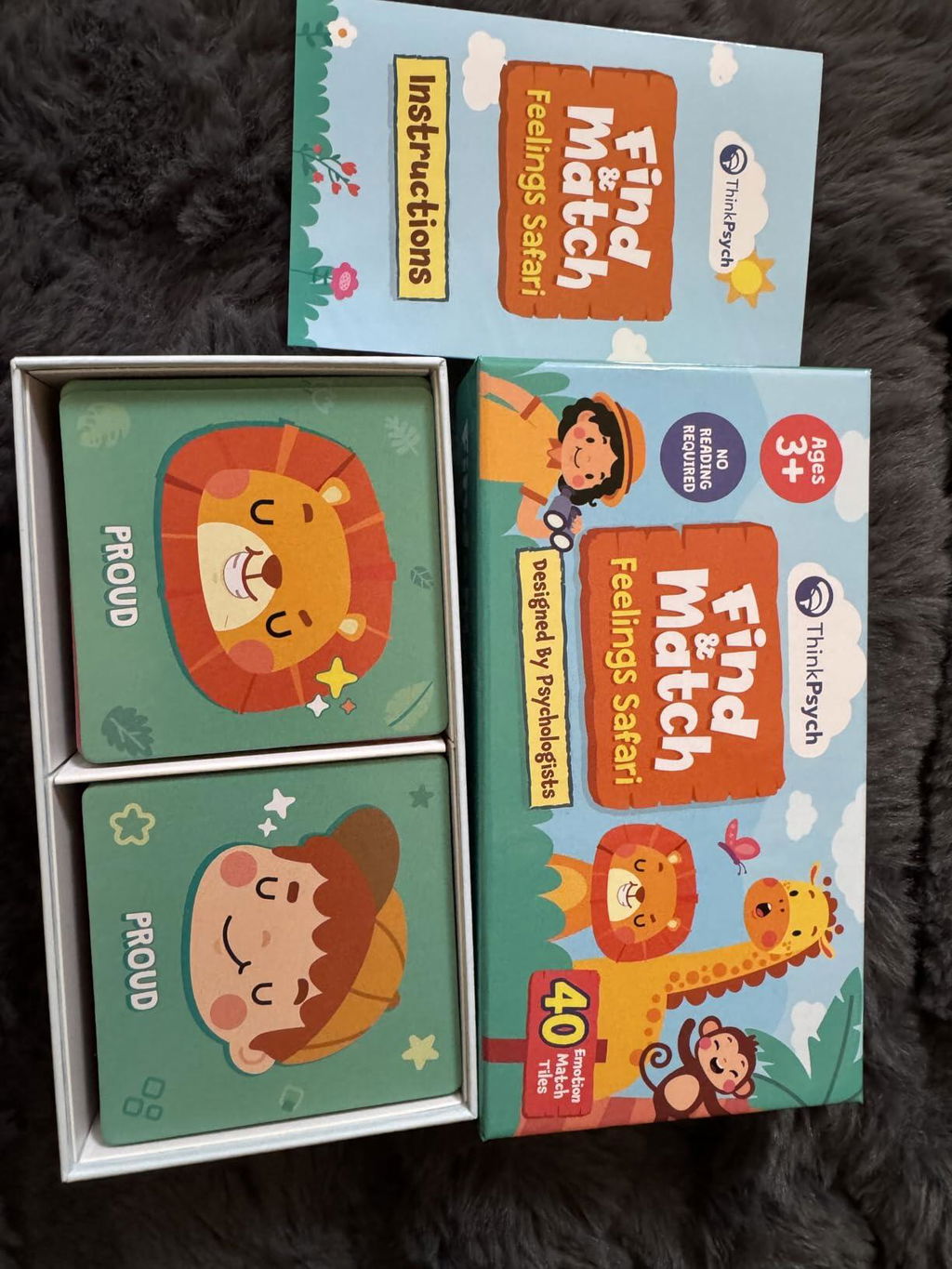
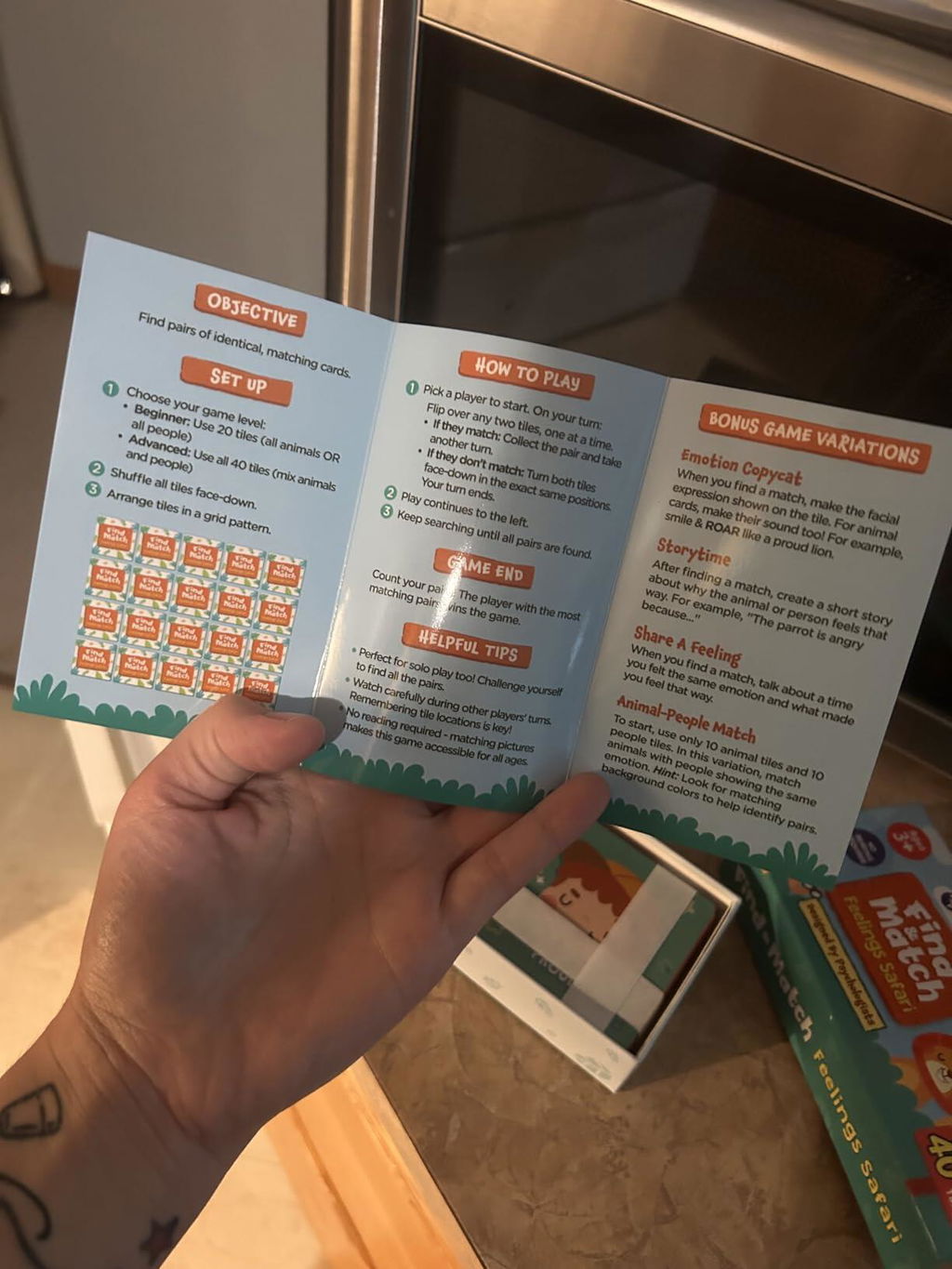
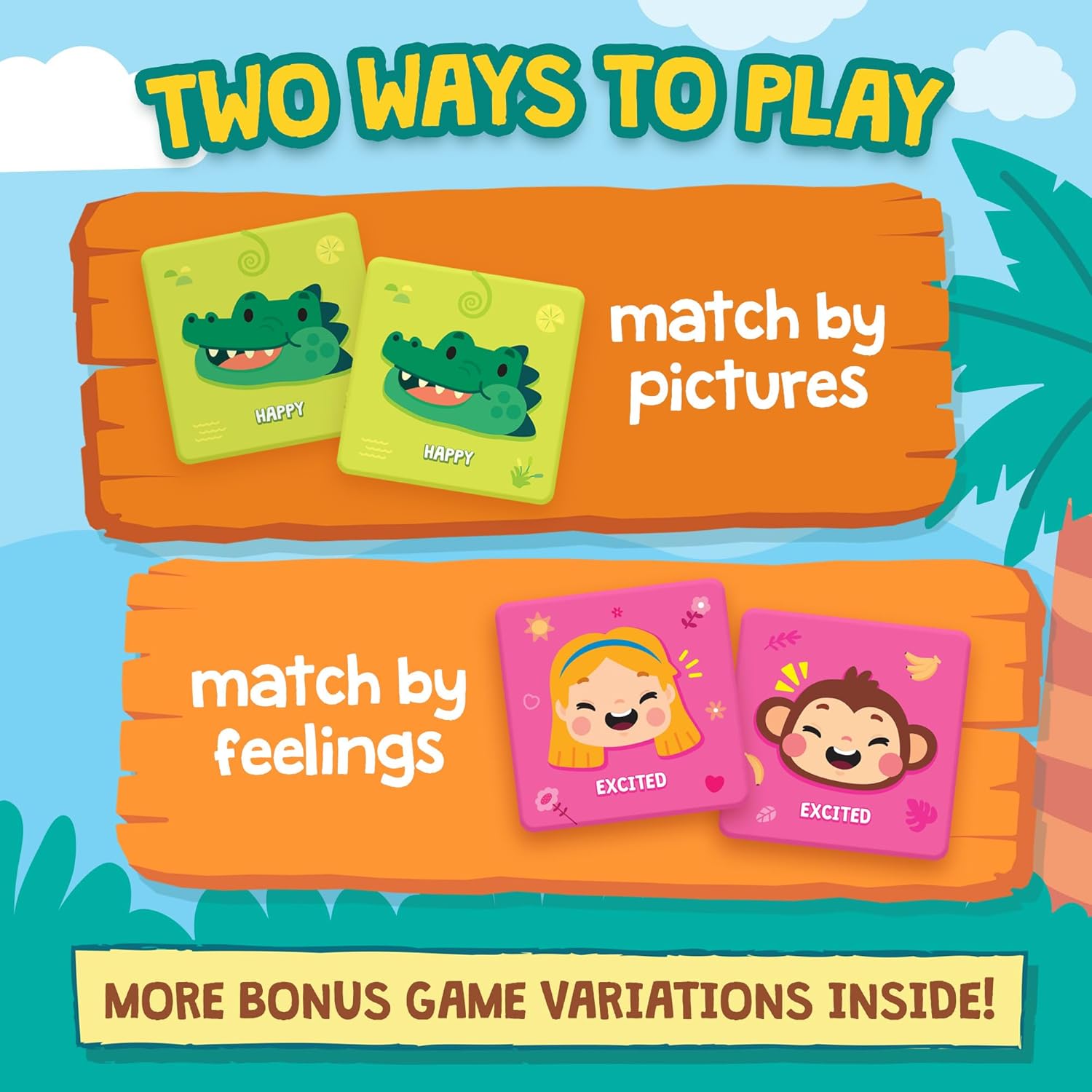
We were looking for a memory match game for our 3yr old daughter and came across this. It looked pretty good since it had a couple of different ways to match the cards between characters or feelings. We really like that the box has the two 20-card sets separated so we could start with just 20 instead of the full 40 (that we can expand to for more challenge as she grows). There's also a few other variations on how to play this game. The cards are durable and the graphics and prints are really nice leading to easy game play and matching. This is also not our only item we've gotten from ThinkPsych as we had purchased their language learning cards that really helped our daughter learn to speak!! We'll continue exploring other items from this brand for sure!!
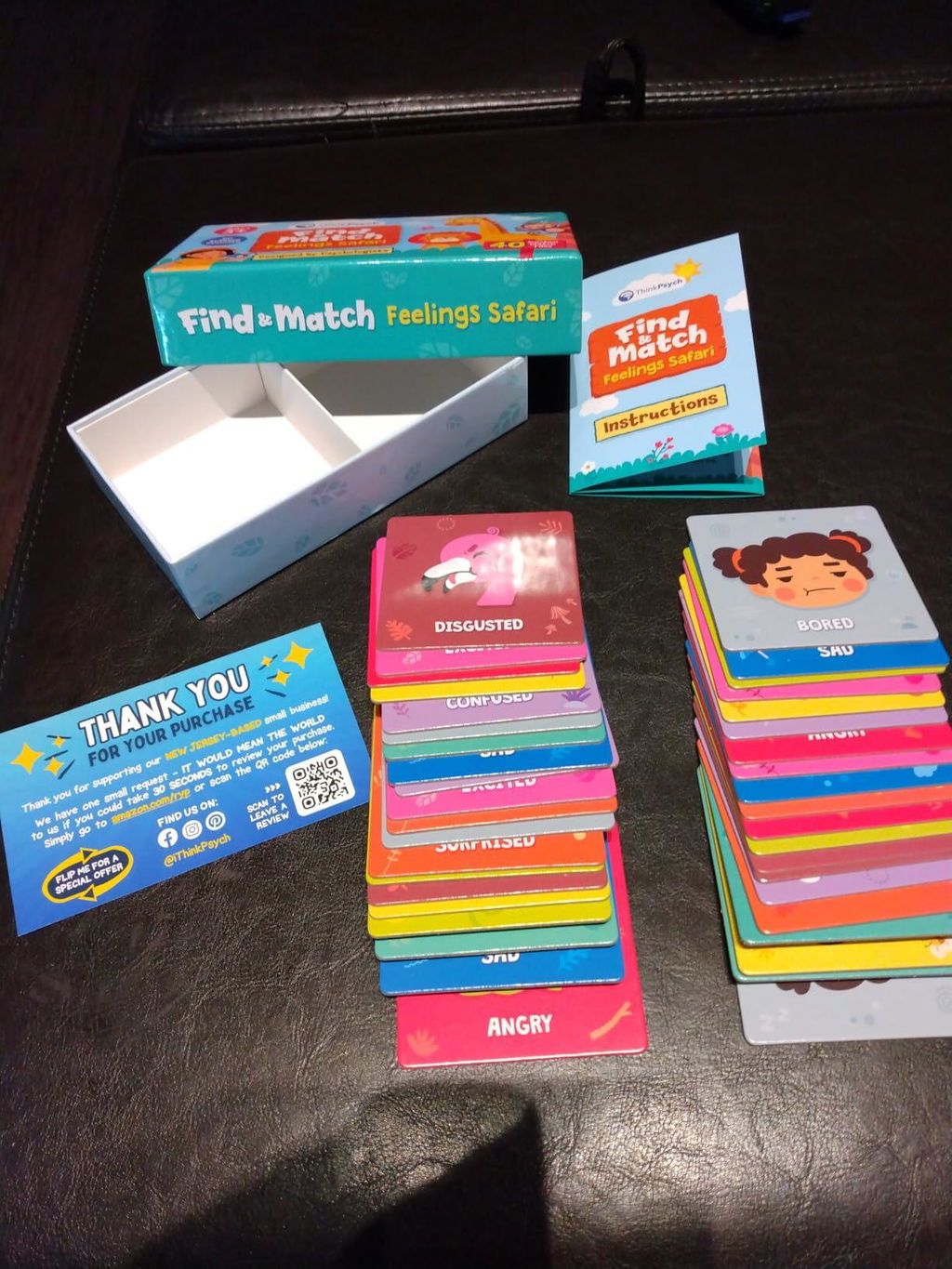
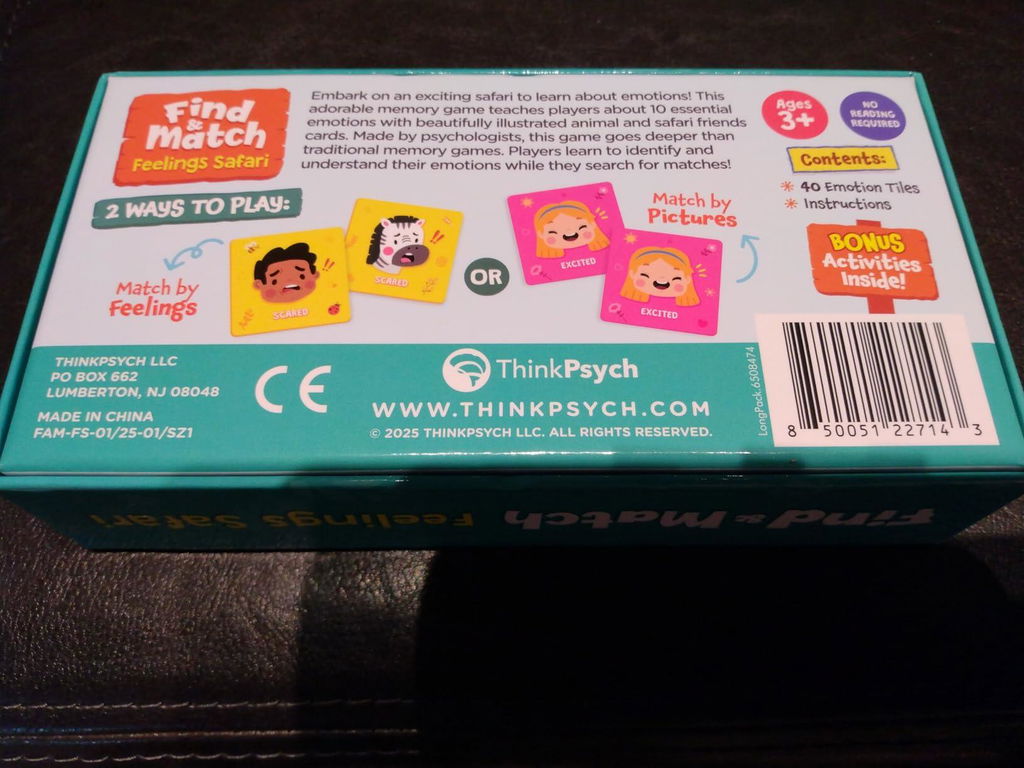
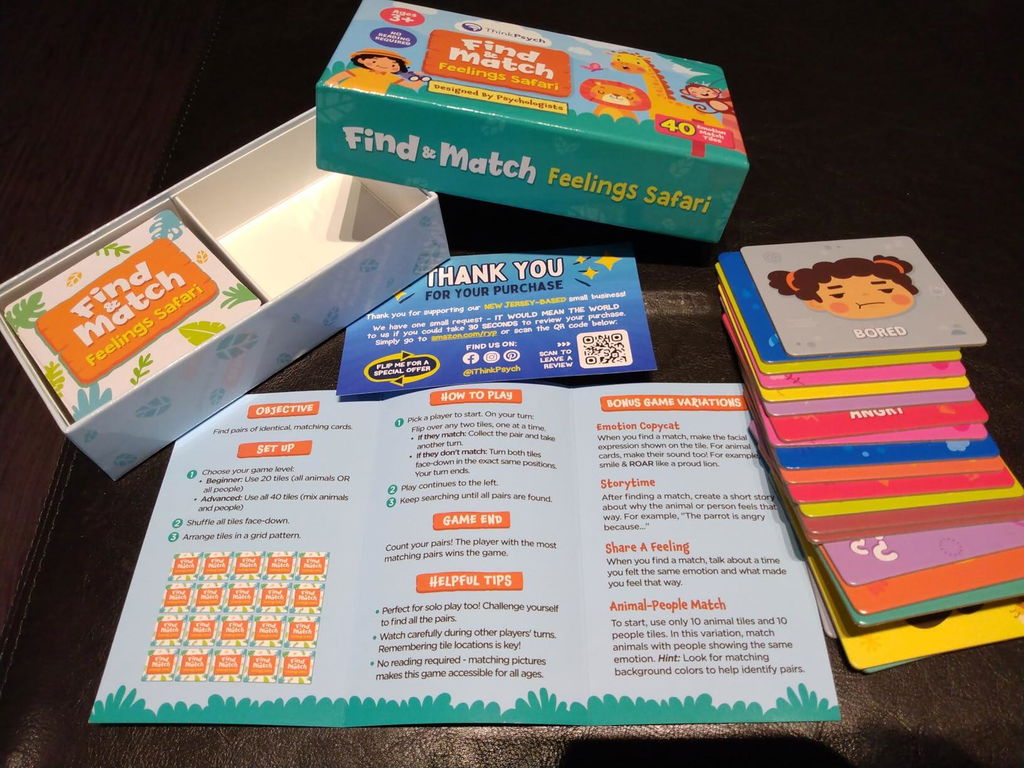
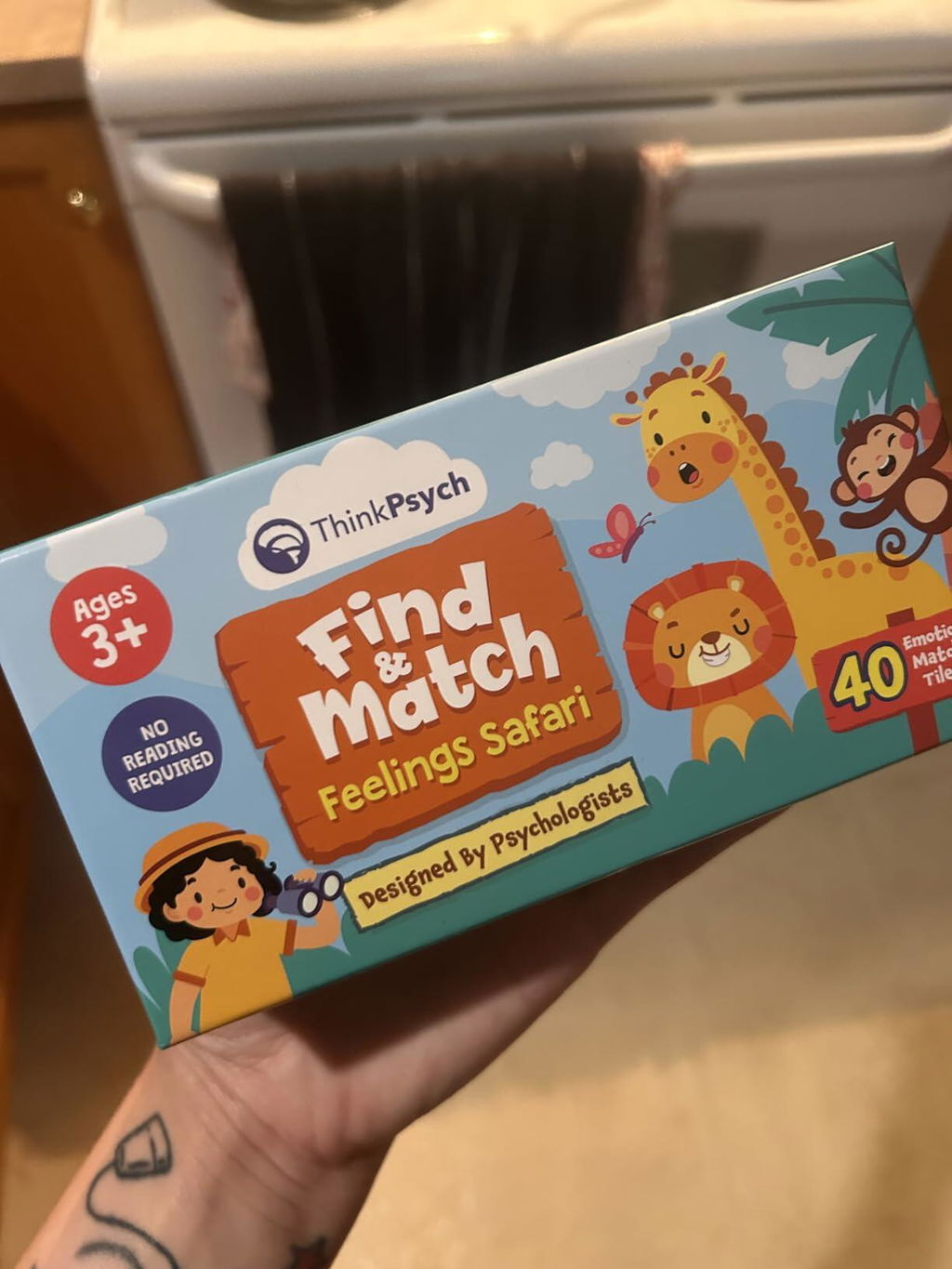
Safari of Feelings is a thoughtfully designed memory game for children ages 3 and up. It combines animals with emotions in a fun, visual, and simple way, helping little ones identify and name their feelings.
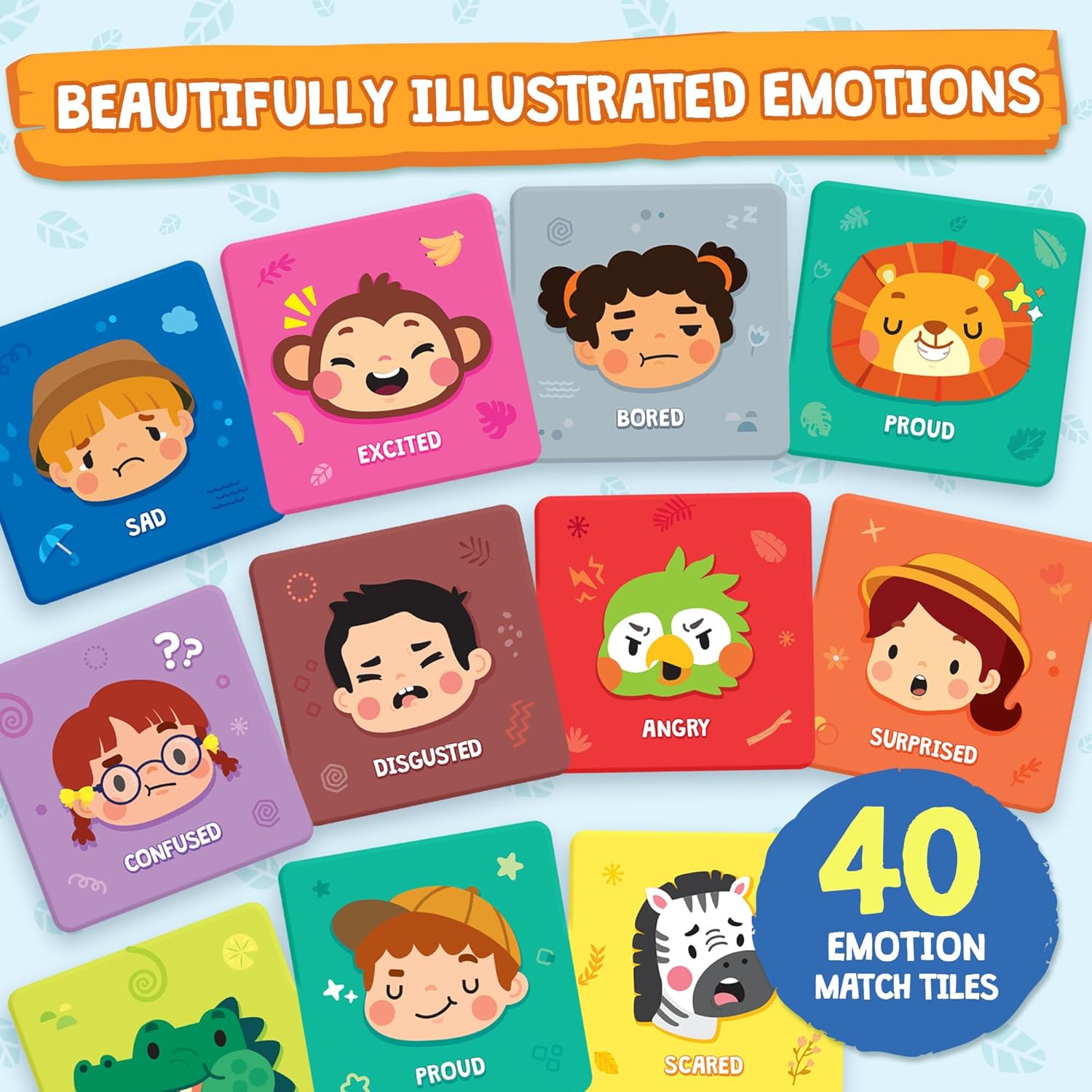
The cards feature clear, colorful illustrations that encourage conversations about emotions like happiness, sadness, anger, and fear, fostering empathy and emotional vocabulary from an early age.
The materials are sturdy—perfect for small hands—and the card size is easy to handle. This game is not only great for use at home but also a valuable resource in educational or therapeutic settings.
Highly recommended for promoting social-emotional development through play. Learning to recognize emotions can be fun, and this game proves it.
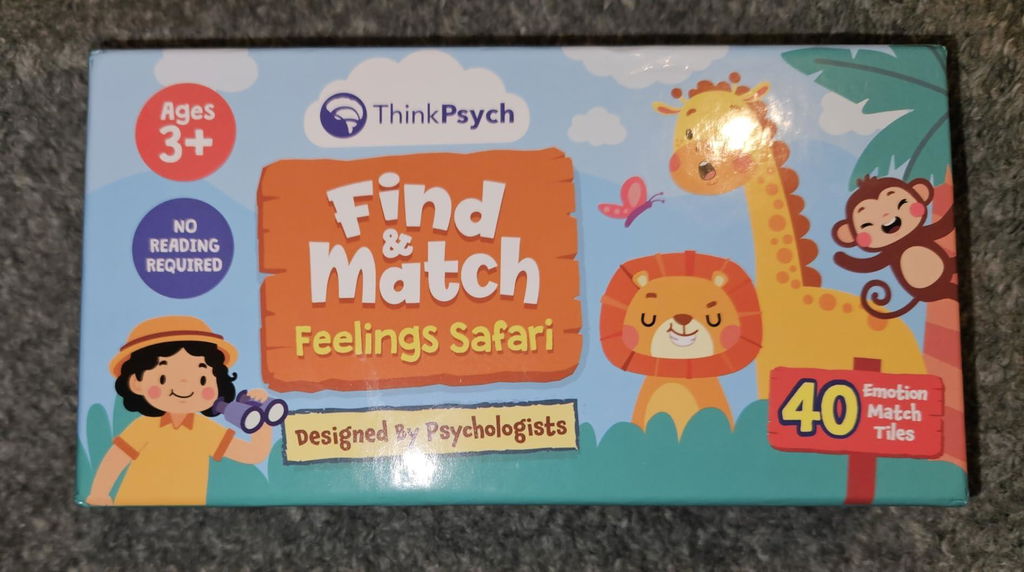
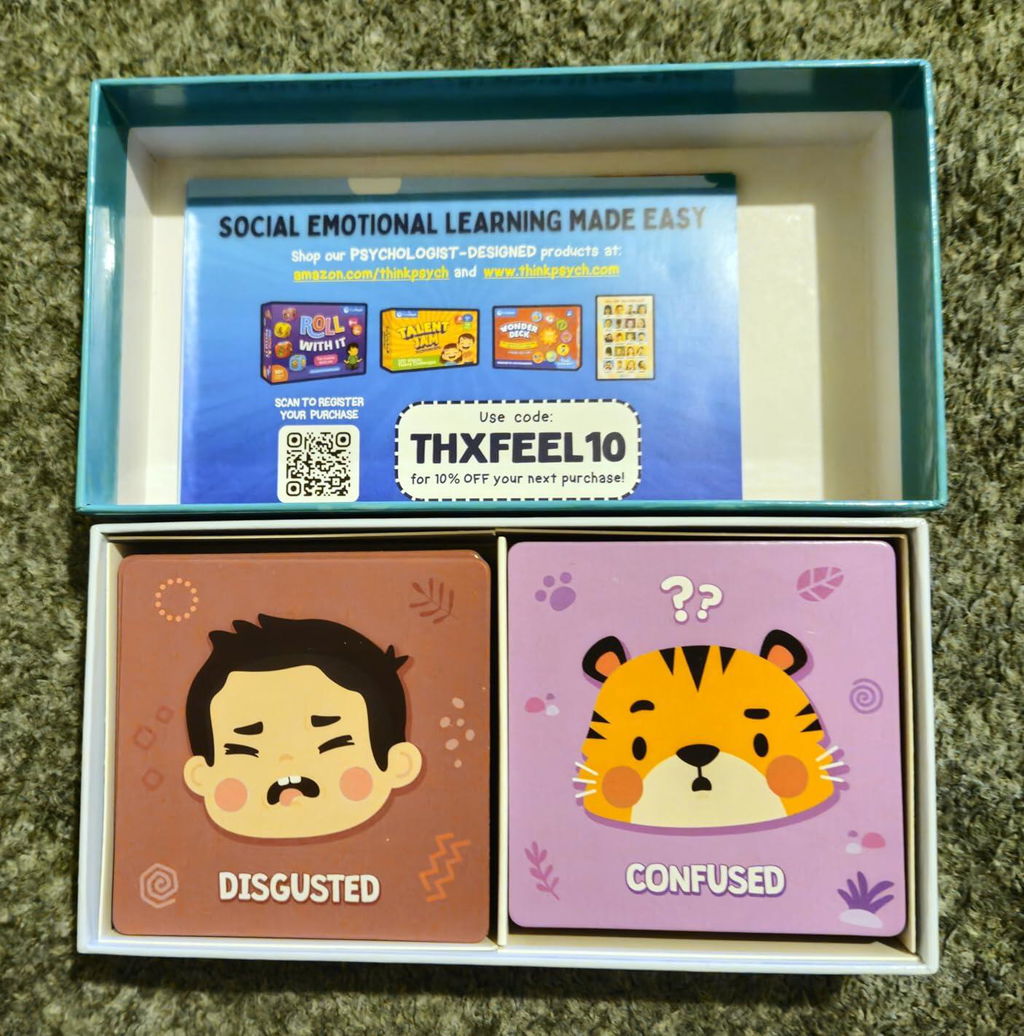
This memory matching game really surprised me with its dual purpose, blending emotional awareness with classic matching gameplay. It’s perfect for working with young children, especially those just starting to recognize and name emotions. I love that it includes two tiles per emotion rather than overwhelming kids with a huge range all at once. That design makes the learning curve gentler, letting you build confidence and familiarity before expanding the emotional vocabulary. As you go through the cards, there’s plenty of natural space to talk about feelings together, which turns a simple game into a meaningful moment.
The cards themselves are nicely thick and hold up well against enthusiastic little hands, not flimsy, and not easily bent or torn. It’s a simple setup, but super effective, and I really appreciate that it’s priced well for a learning tool. With my young child, it’s hard to find activities that are both educational and sturdy enough to last through repeat play. Whether we’re using it for quiet time or adding it to a preschool routine this is a nice set.
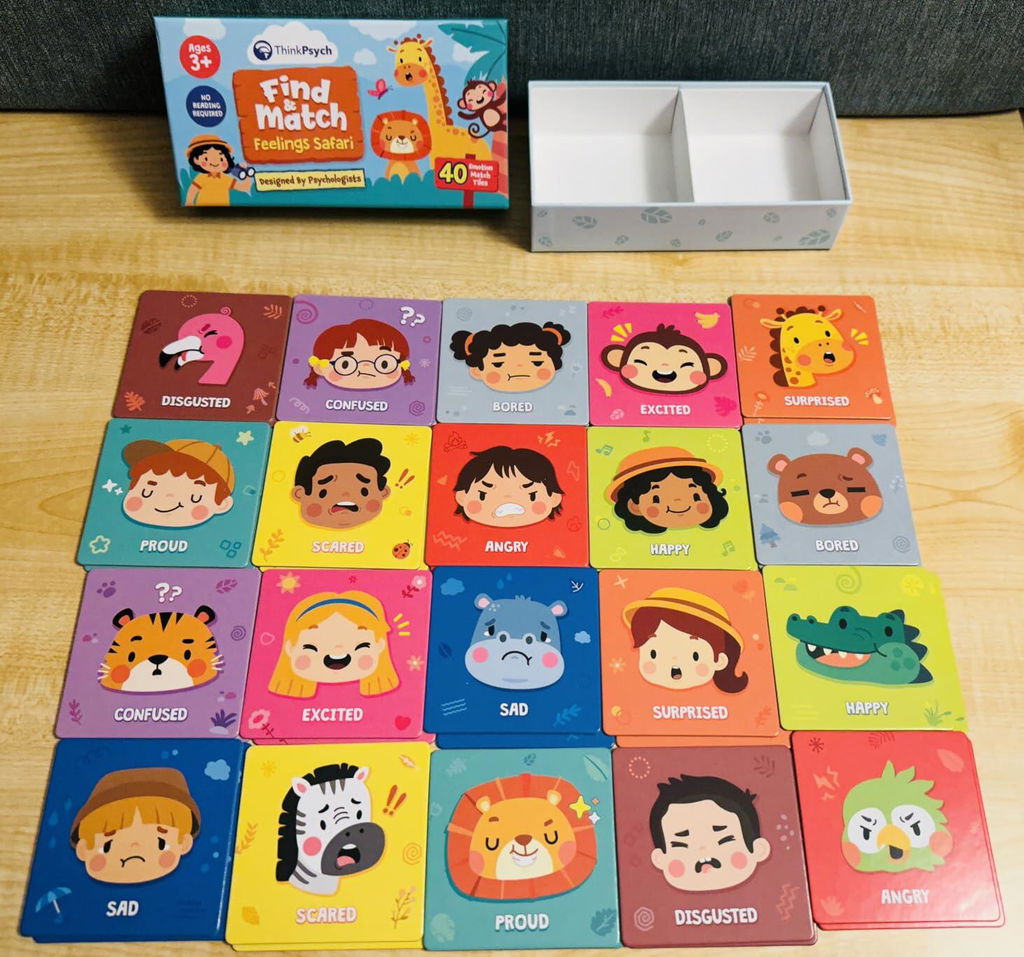
These are darling and multi-purpose! They can be used purely as a matching game, perhaps for younger toddlers, or as an emotion matching game where you match the human with the emotion to the animal with the same emotion.
I find it really important to teach my son about feelings, emotional regulation, and empathy at a young age. This matching emotions card game will be a great addition to playful lessons on these subjects!
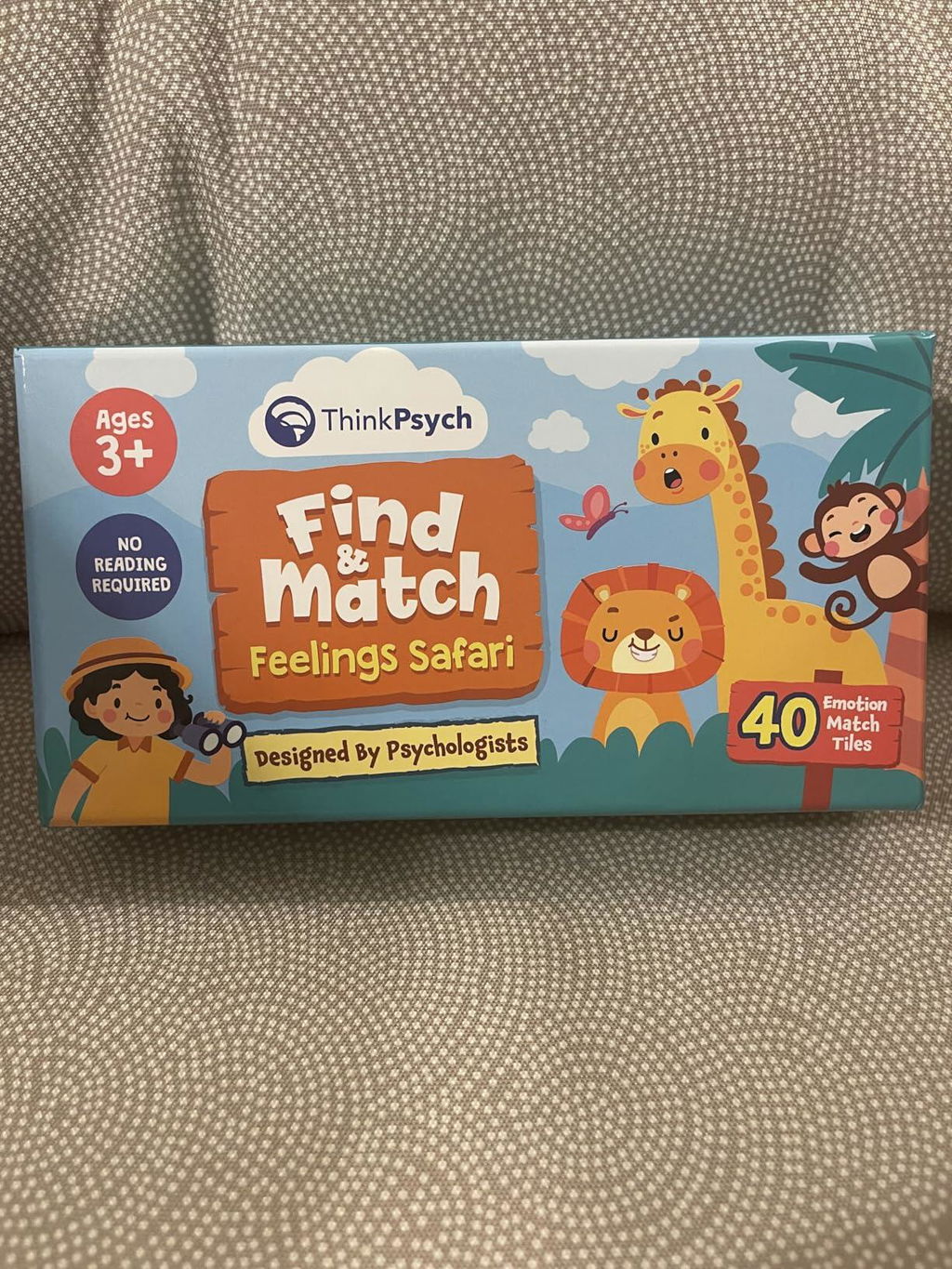
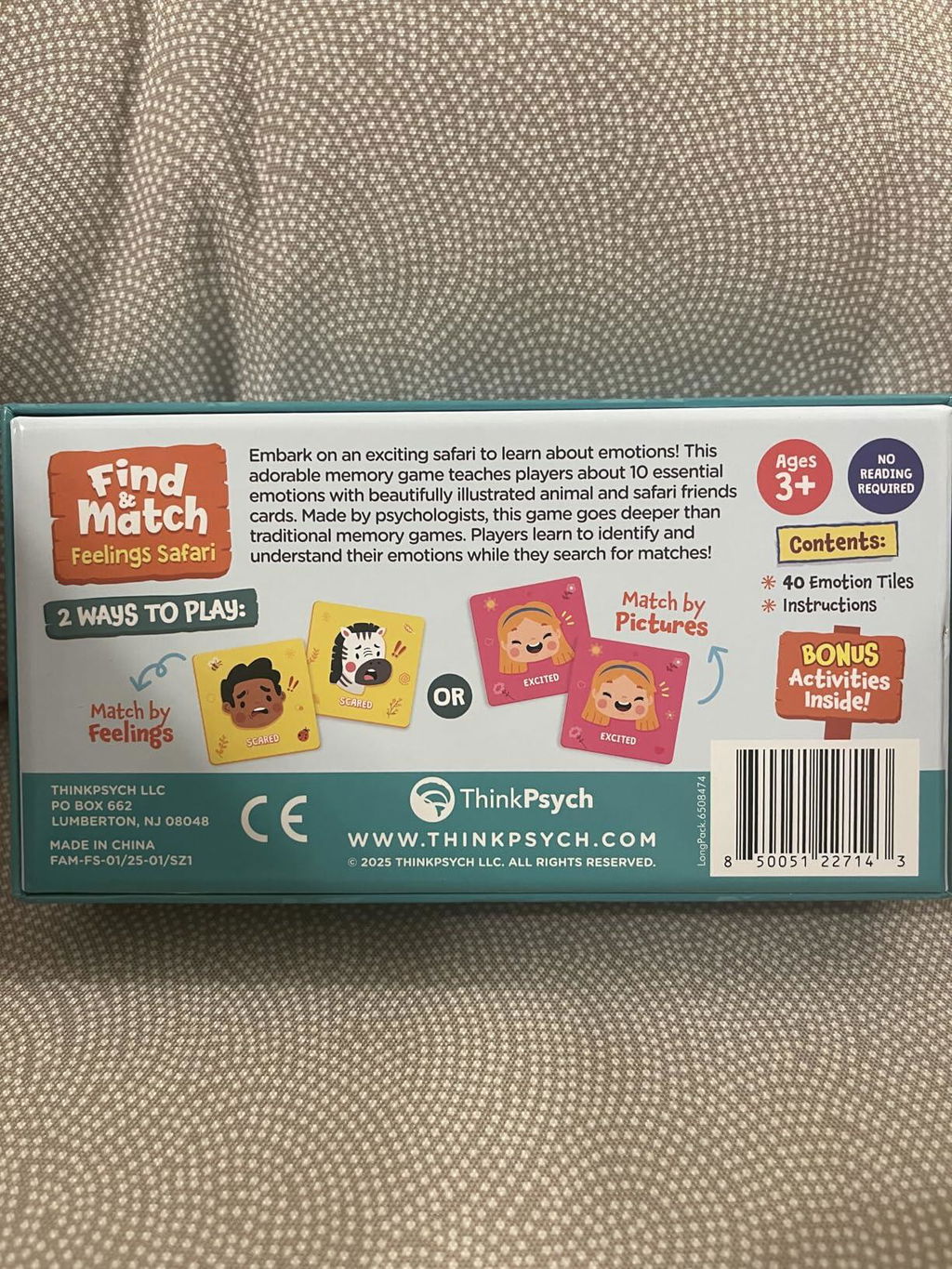
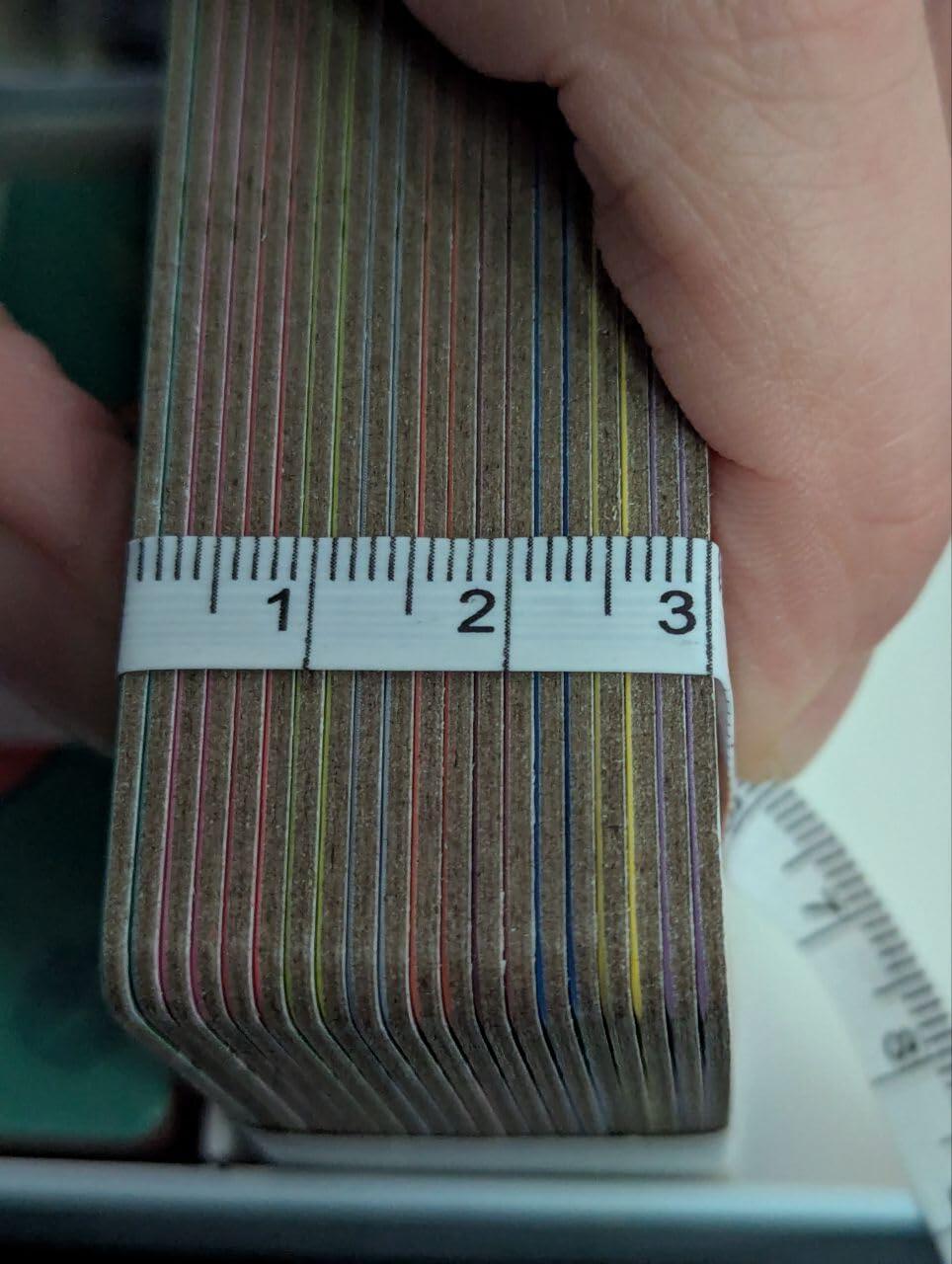
These cards are impressively thick. I'm so used to getting thin cardstock, but these are thick and nice for small hands. I can't even count the number of things my little one has smushed in her hands because they were just too thin. Definitely not an issue here! The pictures are pretty clear too, and they come in a nice box. The box is not annoying to open -- the bottom half slowly slides out when you hold it by the top (no need to claw away at it...), which is a plus, but it won't fly open on the first fall either. I am attaching a photo of how thick the cards are!
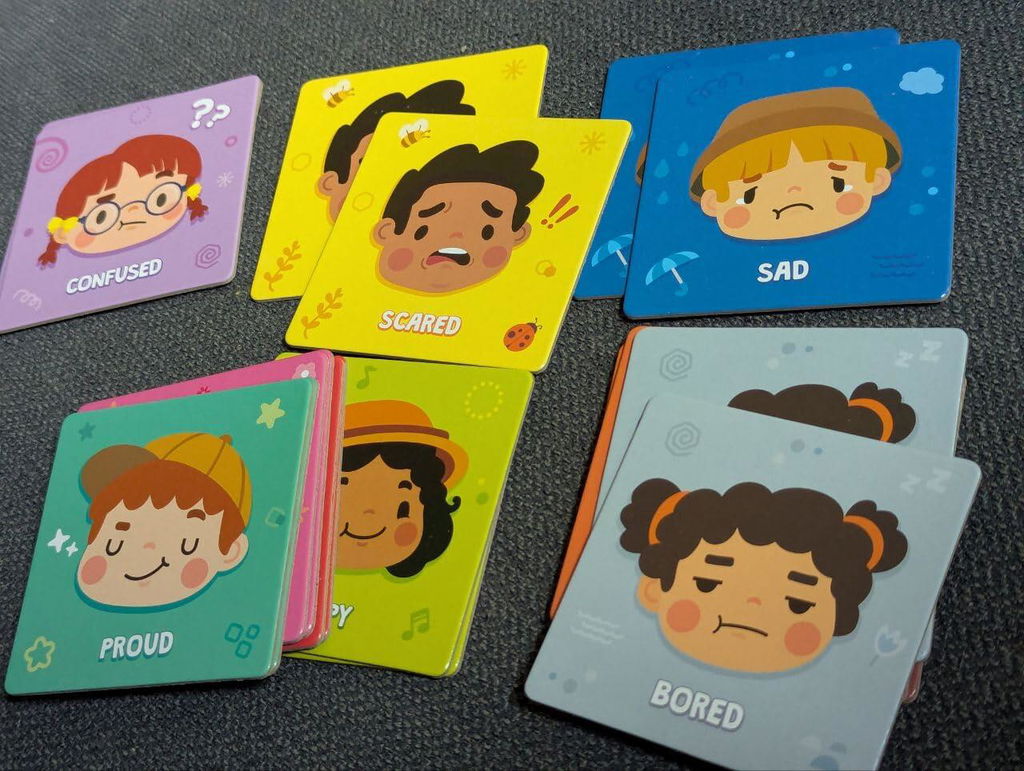
Feelings Safari is a thoughtful and engaging take on the classic memory matching game, designed to help children recognize and understand emotions while sharpening their memory skills. The game features vibrant cartoon illustrations of children expressing a wide variety of feelings—from joy and excitement to frustration and worry—which makes it an excellent tool for emotional literacy.
The cards themselves are standout quality. Unlike many modern games that use thin cardstock, these are thick, durable cardboard with a nostalgic 90s-style look and a glossy finish that resists wear. The large size is perfect for younger players; my 5-year-old had no trouble handling them and was instantly drawn to the colorful images and expressive faces.
I appreciate the flexible gameplay: players can choose to play with either 20 or 40 matches, making it easy to tailor the game for different attention spans and age groups. The illustrations are clear and age-appropriate, and the emotions are easily identifiable, even for kids still learning to name their feelings.
Overall, this is a well-priced, multi-purpose game that combines fun, education, and emotional development. It’s an excellent choice for parents, educators, or therapists looking to encourage memory skills while also opening up conversations about feelings. Highly recommended!
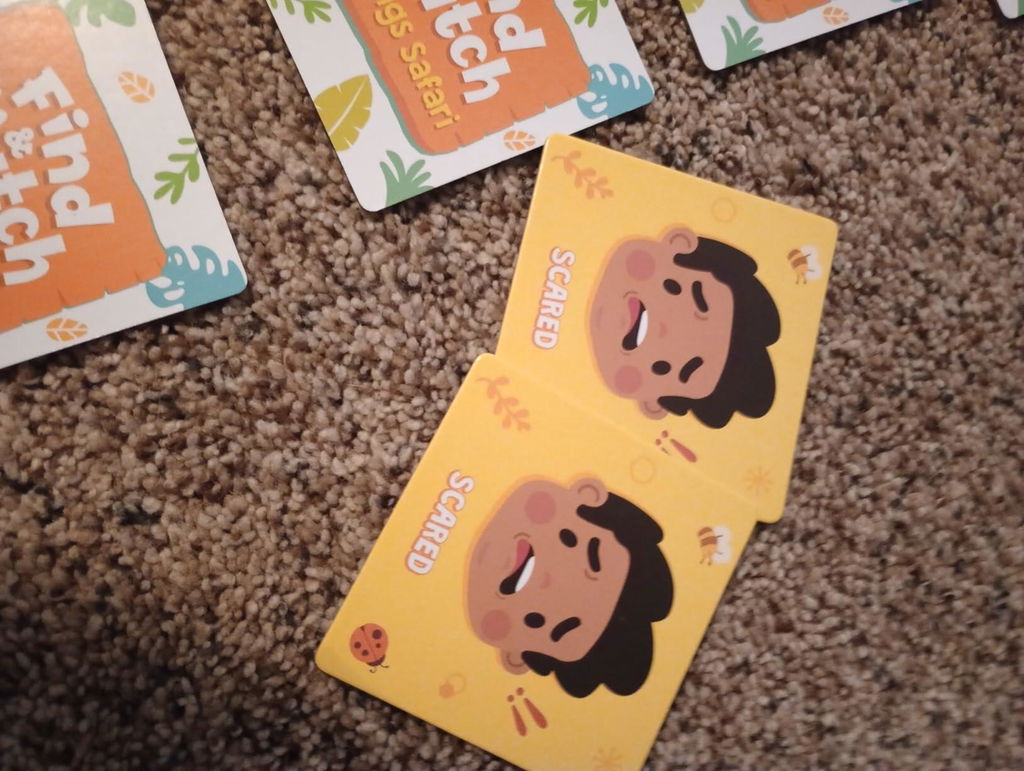
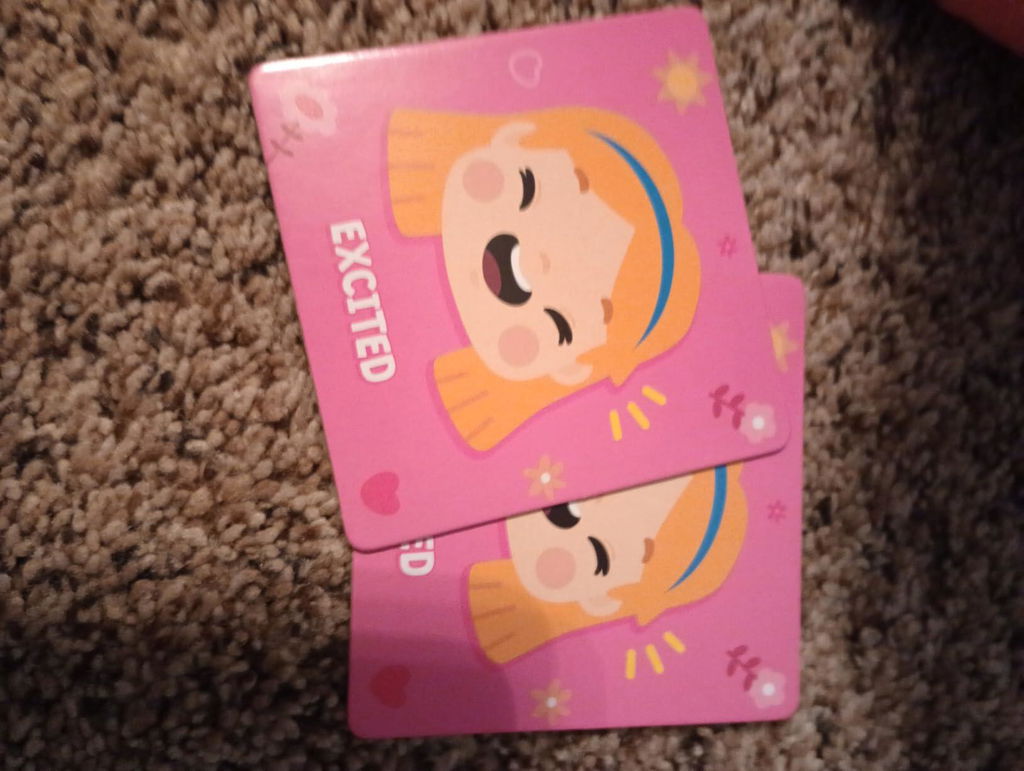
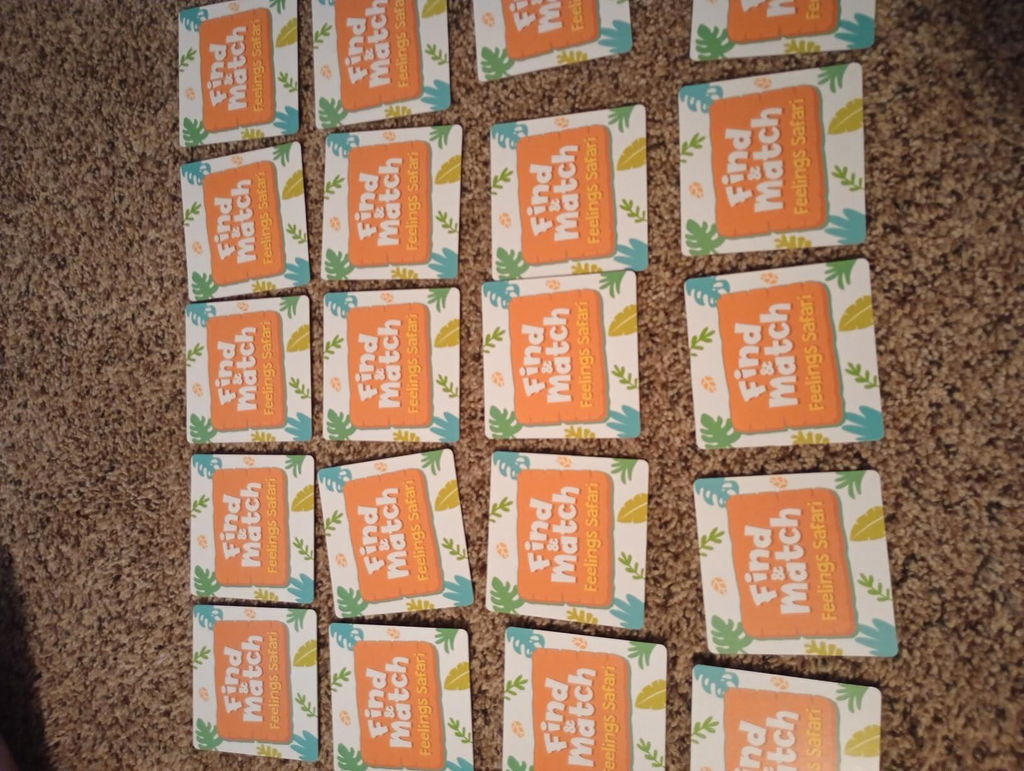
I think this is such a great tool for helping kids explore and express their emotions in a fun and interactive way. My daughter really enjoys matching the faces and talking about what each one means. It pretty much opened the door for many conversations about how she’s feeling and ways to manage them.
What I love most is that it doesn’t just focus on emotional recognition, but also helps with memory skills. The matching element keeps her engaged while exploring emotional regulations.
The pieces are colorful, sturdy, and perfect for kids. These cards would also be a great addition for calm down moments when kids are less likely able to verbally identity how they’re feeling. It’s a great way of putting a visual to different emotional expressions.
Overall, I’m really happy with this game. It’s simple, yet effective and honestly, I think every parent of young kids could benefit from having something like this on hand.
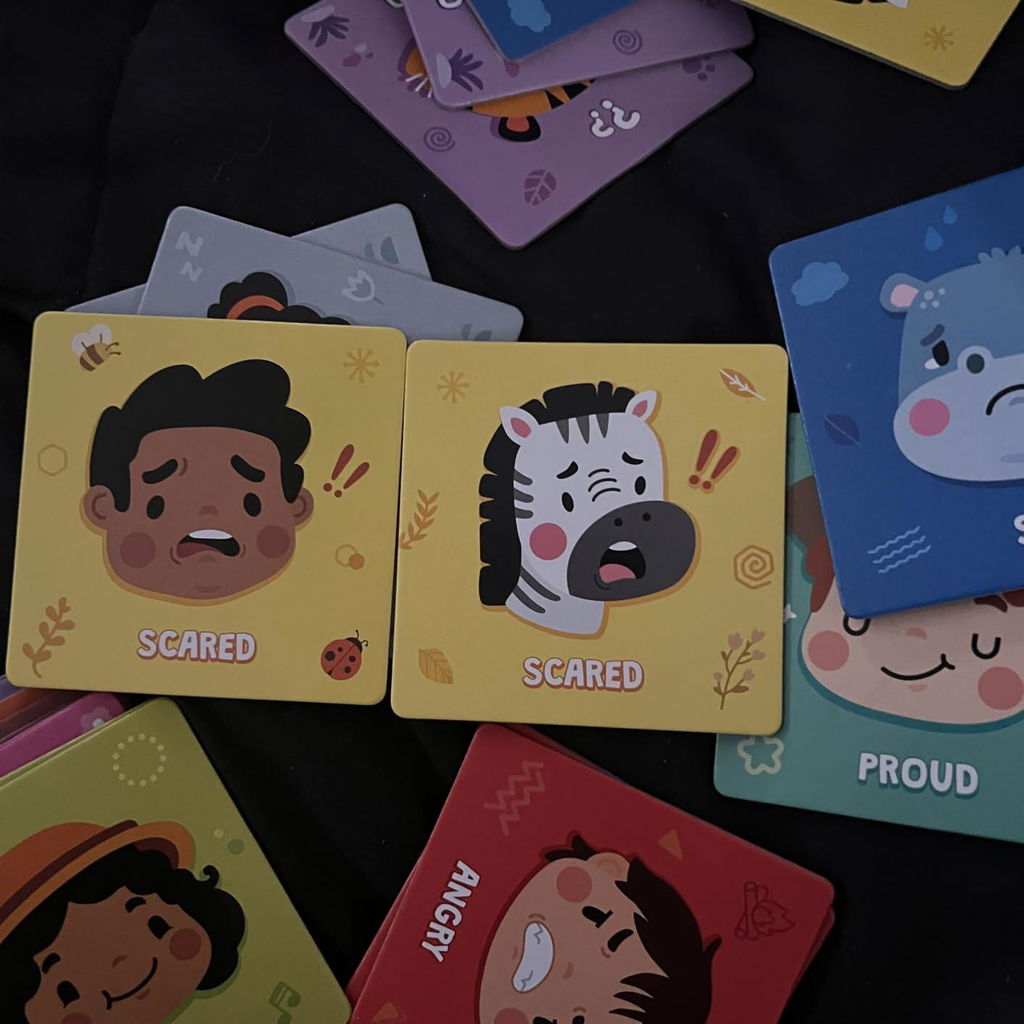
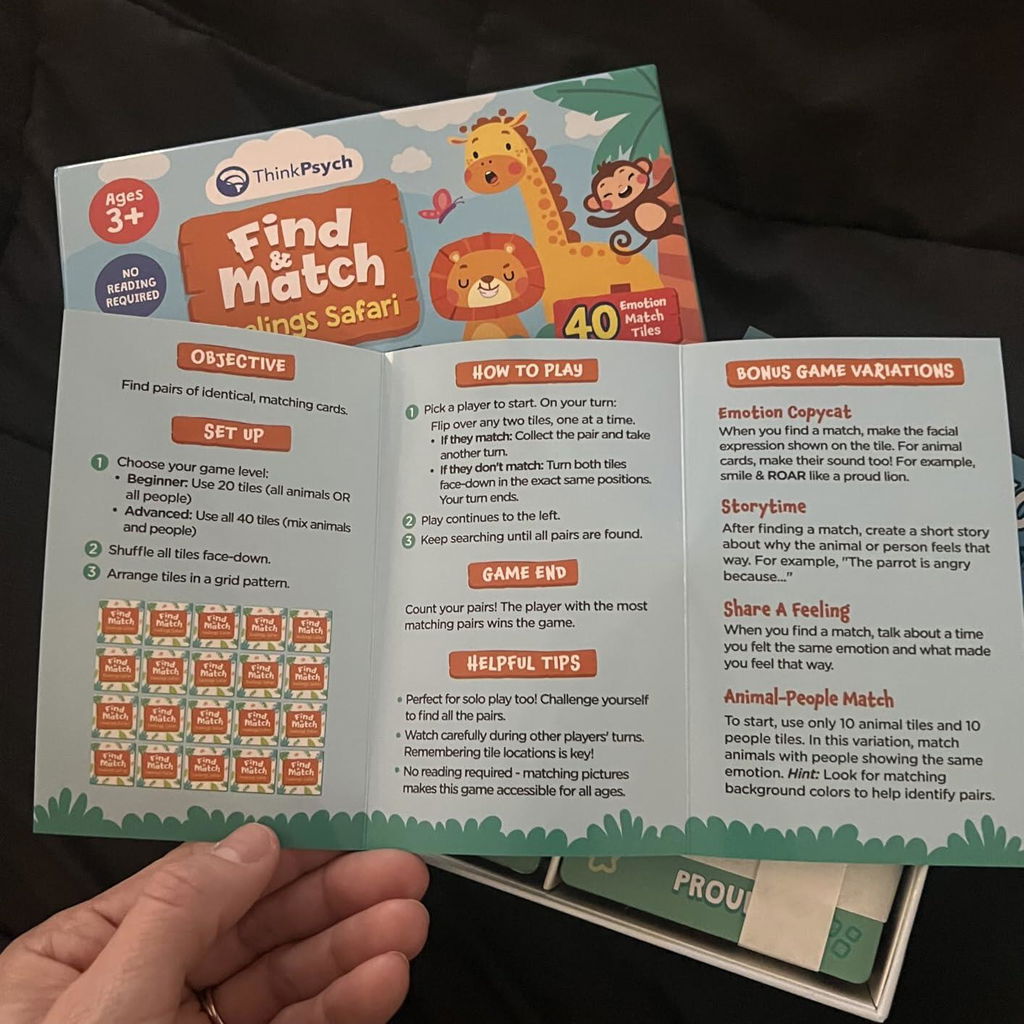
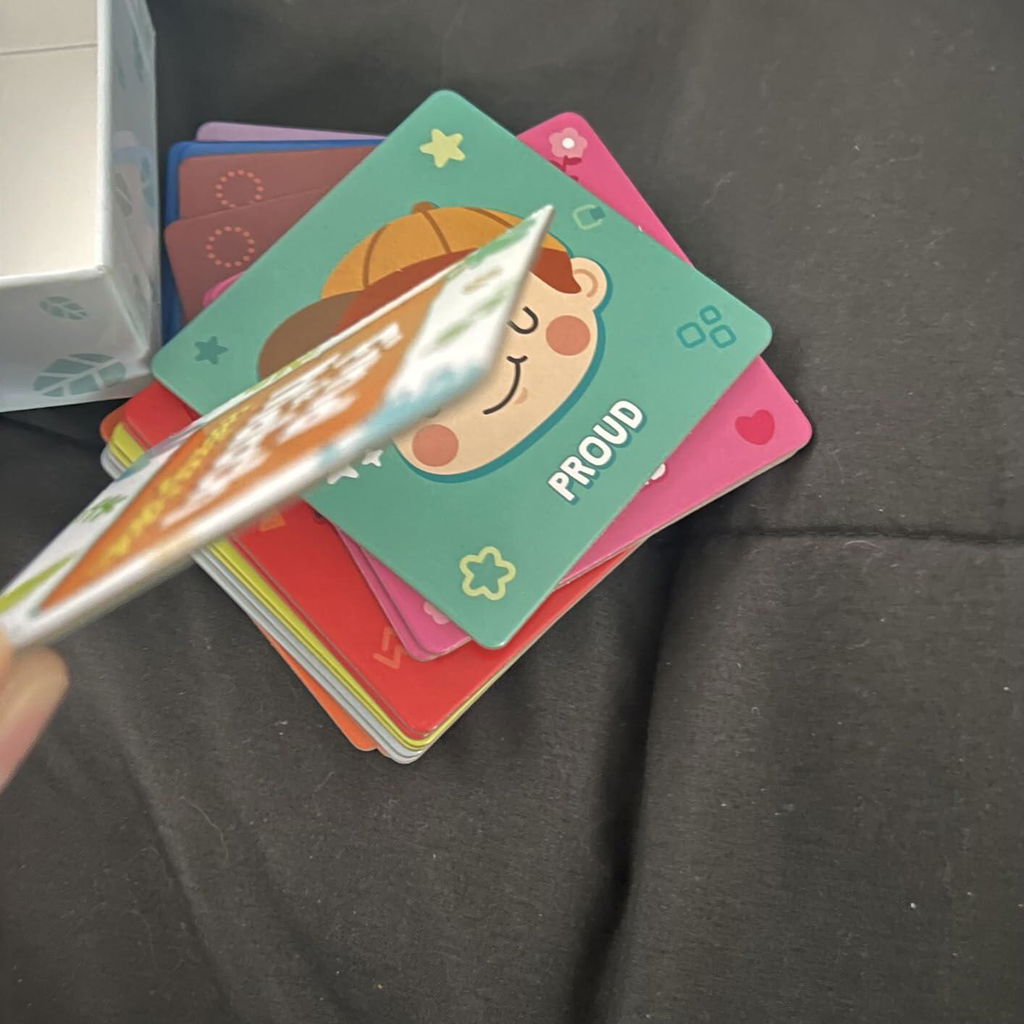
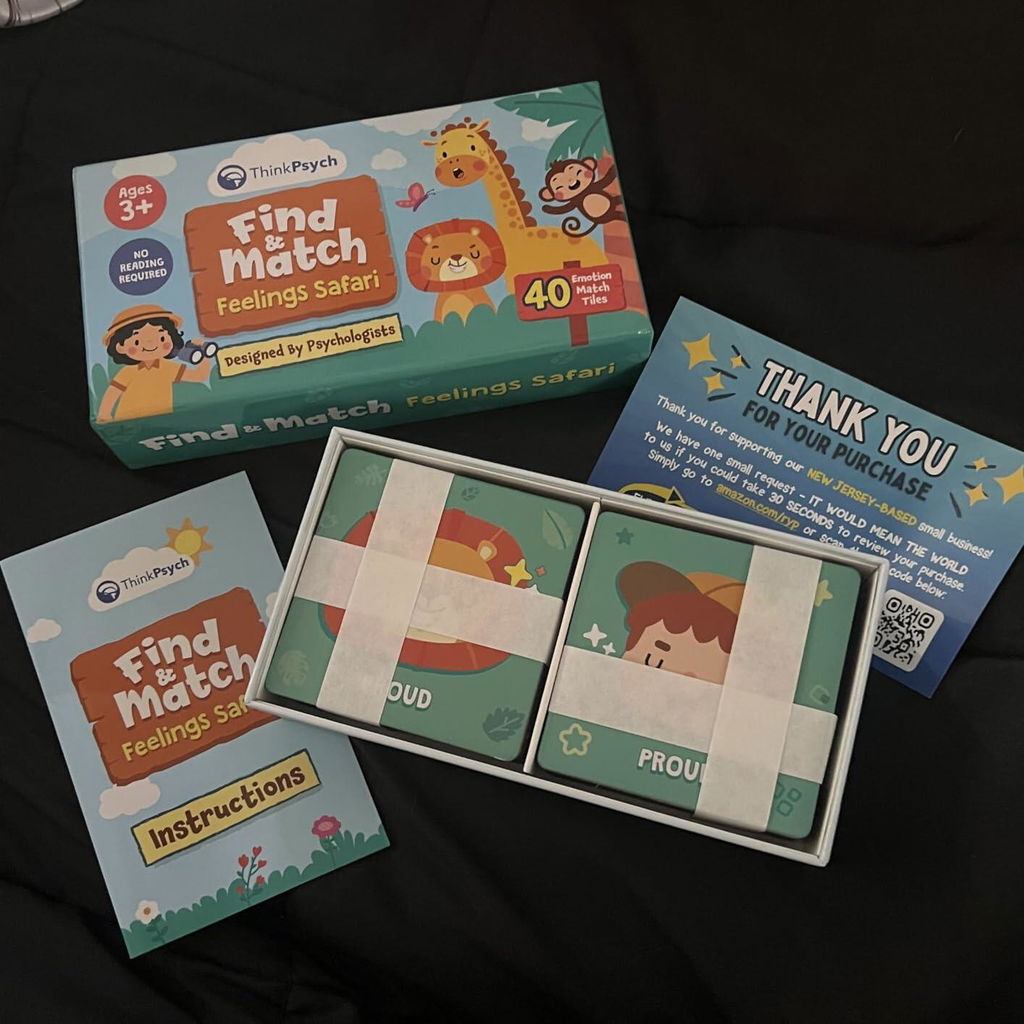
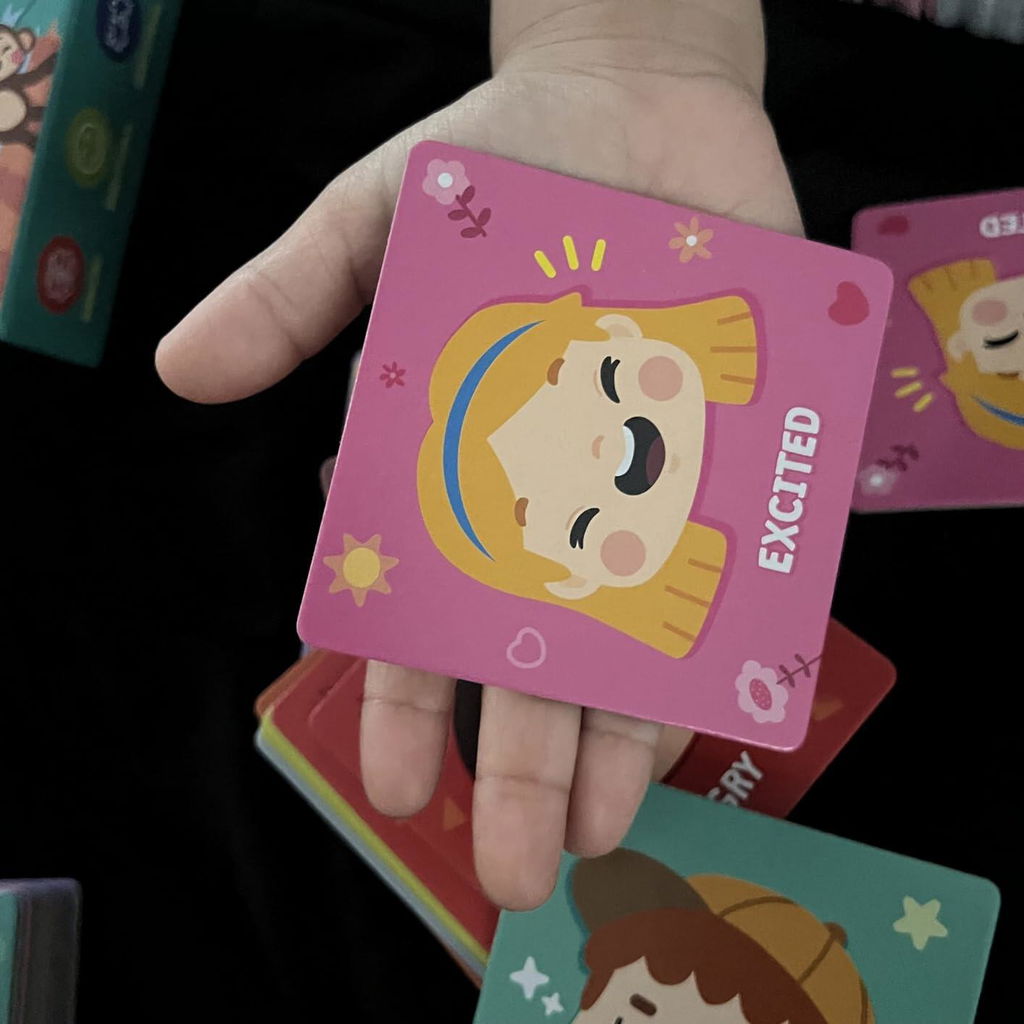
It is a thoughtful and engaging memory game designed to help young children recognize and understand emotions through play. It blends adorable animal and child characters with expressive faces, offering a fun, non-verbal way to boost emotional intelligence.
Pros,
- Multiple ways to play. Kids can match based on the character or their facial expression, with fun bonus games like Emotion Copycat and Storytime for deeper engagement.
- Emotionally educational. Introduces 10 key emotions with vibrant, relatable expressions, fostering empathy and self-awareness.
- Screen-free fun. Encourages social play and interaction without electronics.
- Great for toddlers and early preschoolers to engage independently.
Cons,
- Covers 10 emotions, which is a solid start but may feel limited as kids grow and want to explore more complex feelings.
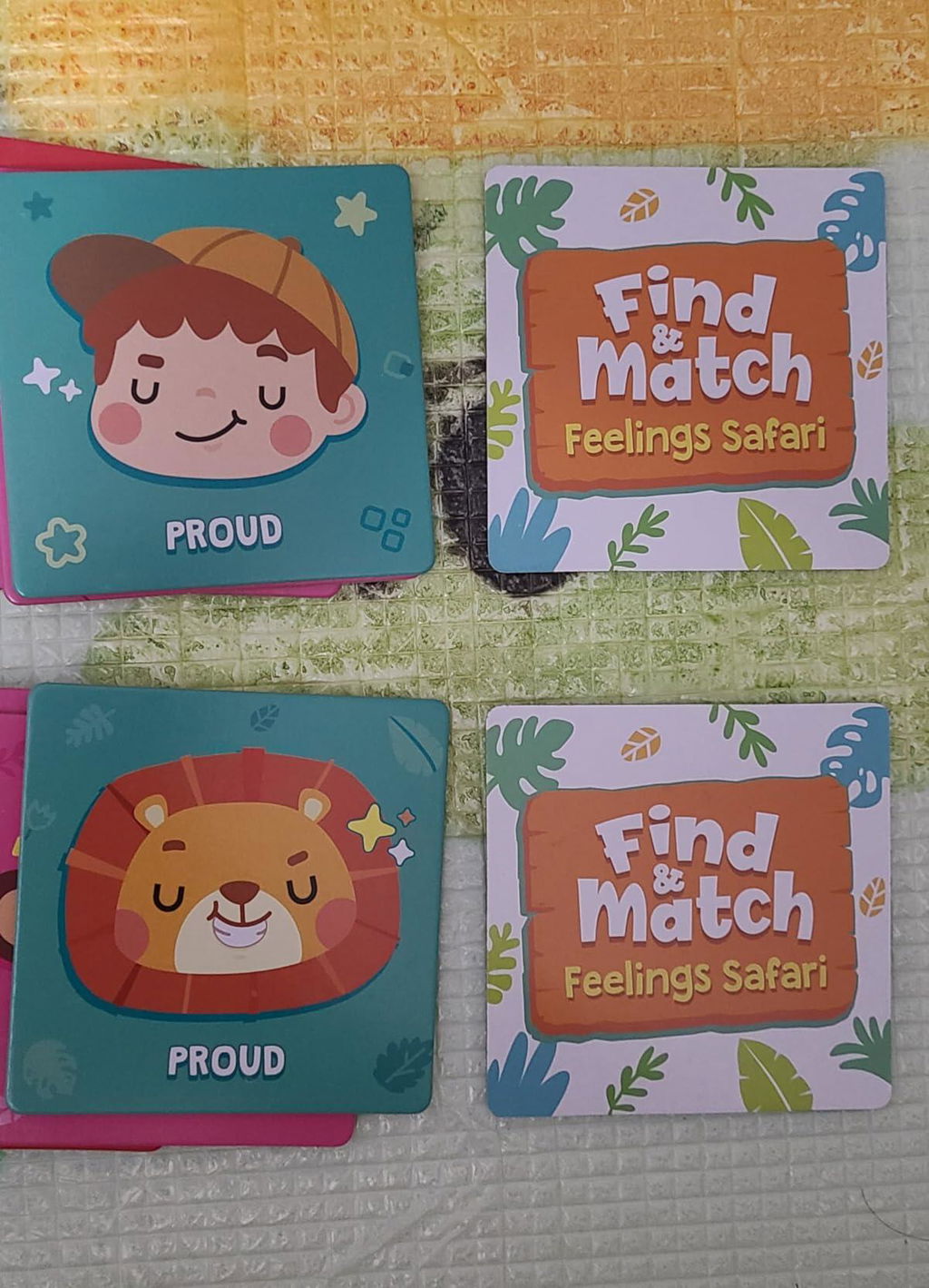
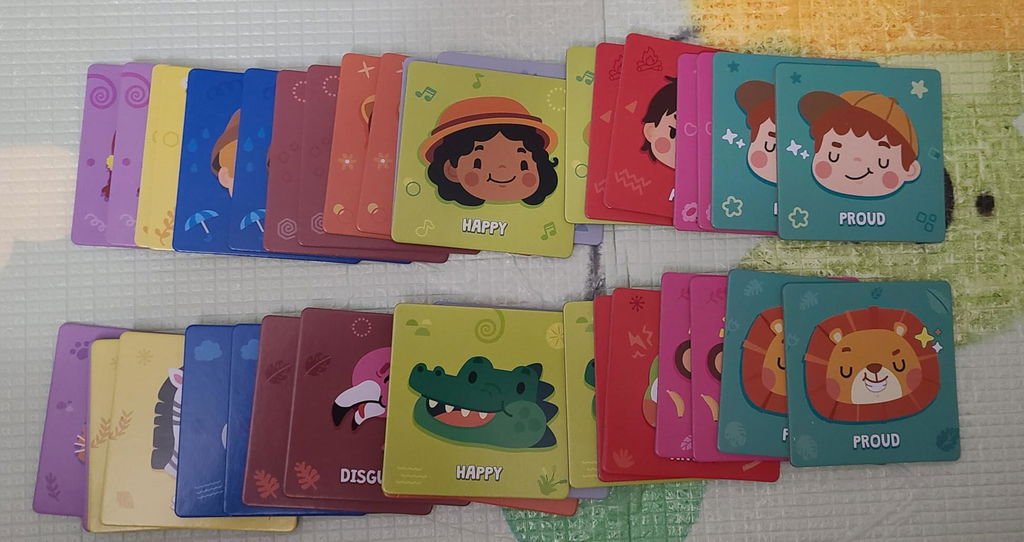
Great quality! Not thin or flimsy cards! More durable than the paper matching cards
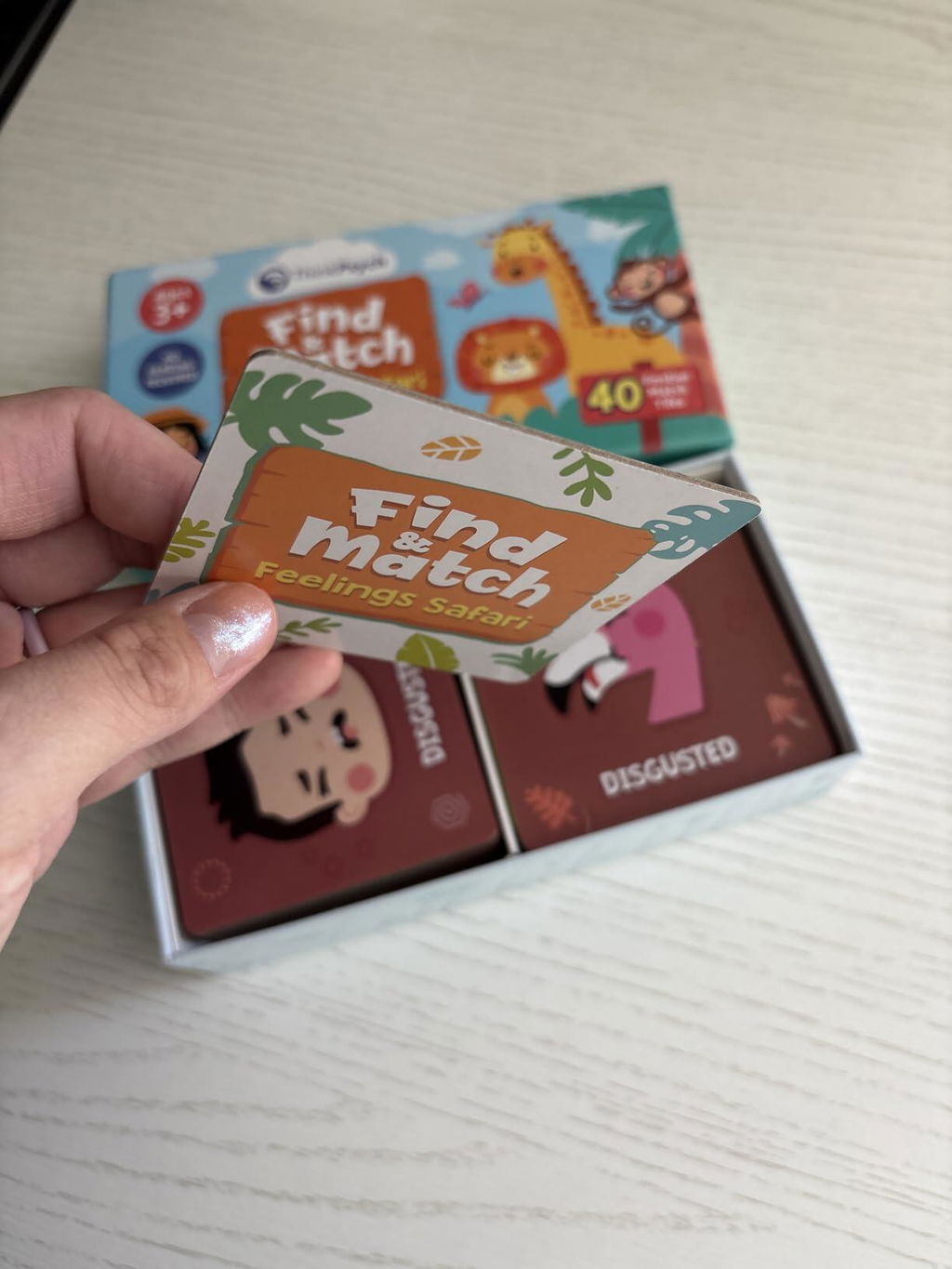
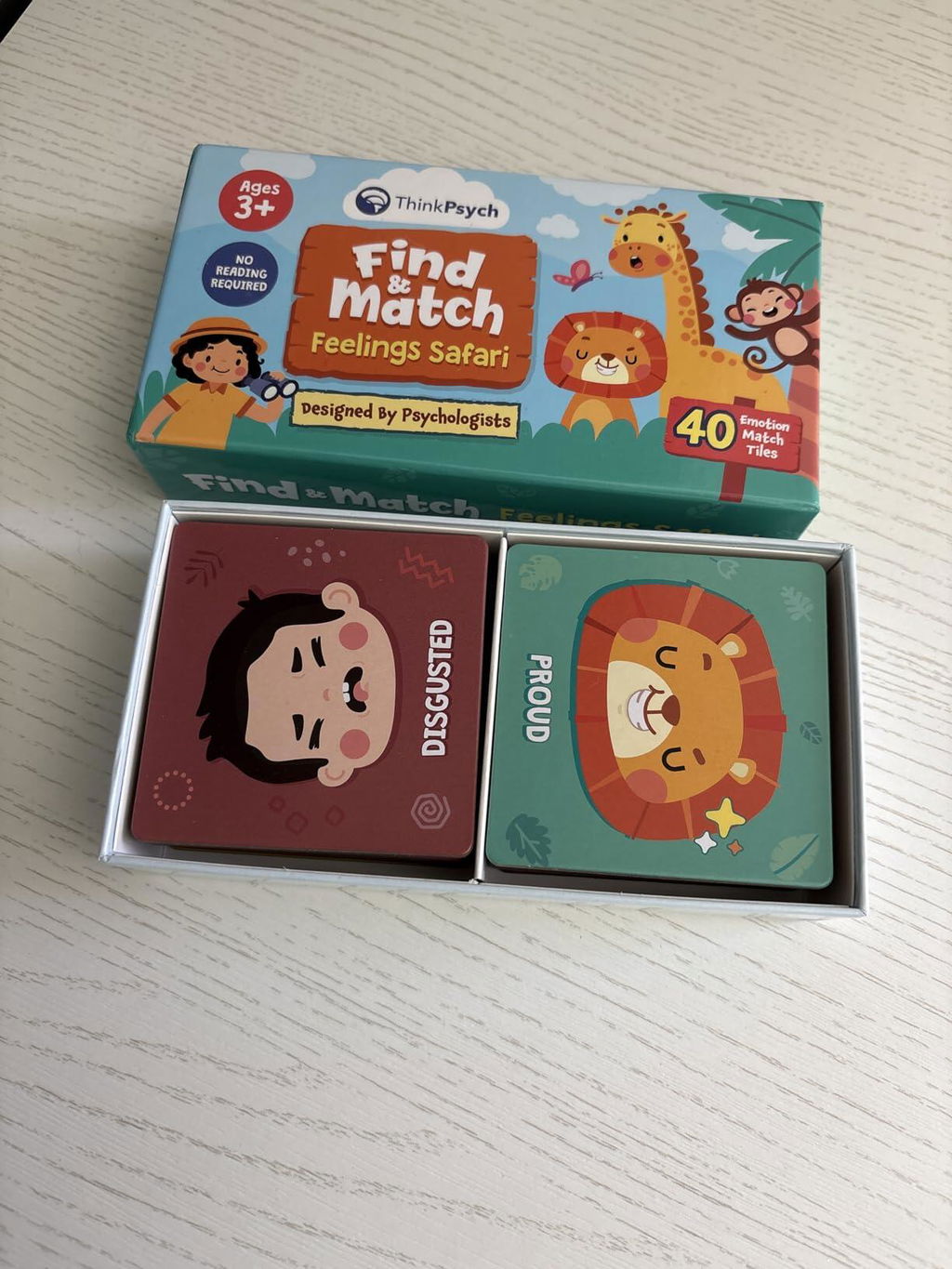
I love this game! It's a great game to teach emotional awareness. Not only can you play the matching game - match up the 2 pairs of cards - but you can also use the cards to play additional games like guess the emotion, for kids who don't read or matching toy animals to the feeling your child thinks that the animal is feeling, and why, to teach empathy or any other game you make up to talk about feelings. The cards are thick and well made. The pictures are cute and expressive. There are words on the cards but your child doesn't have to read to guess the emotion. All in all, a great game for kids to explore the wide world of emotions!
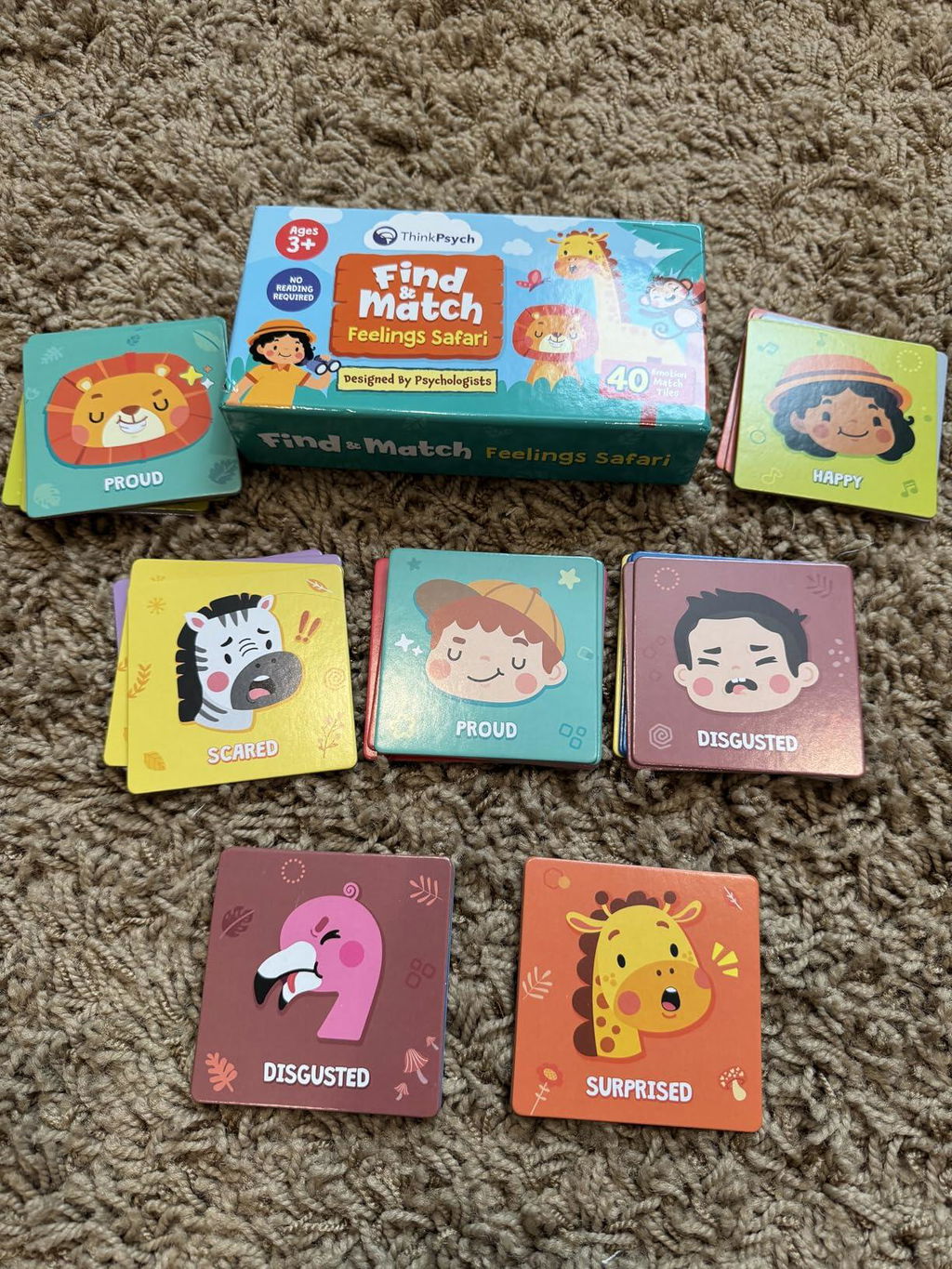
The game comes in a nice compact box only slightly larger than a checkbook. The cards are all thick and sturdy. They feel more solid than the memory game I grew up with. The pictures and expressions are vivid and child friendly. The instructions tell you the two different ways to play but also give ideas that give the play another level with sounds and stories. Then there's also suggestions for using it to talk about feelings. This is a great game for families but also great for in a professional counseling setting with play therapy. I would highly recommend this one.
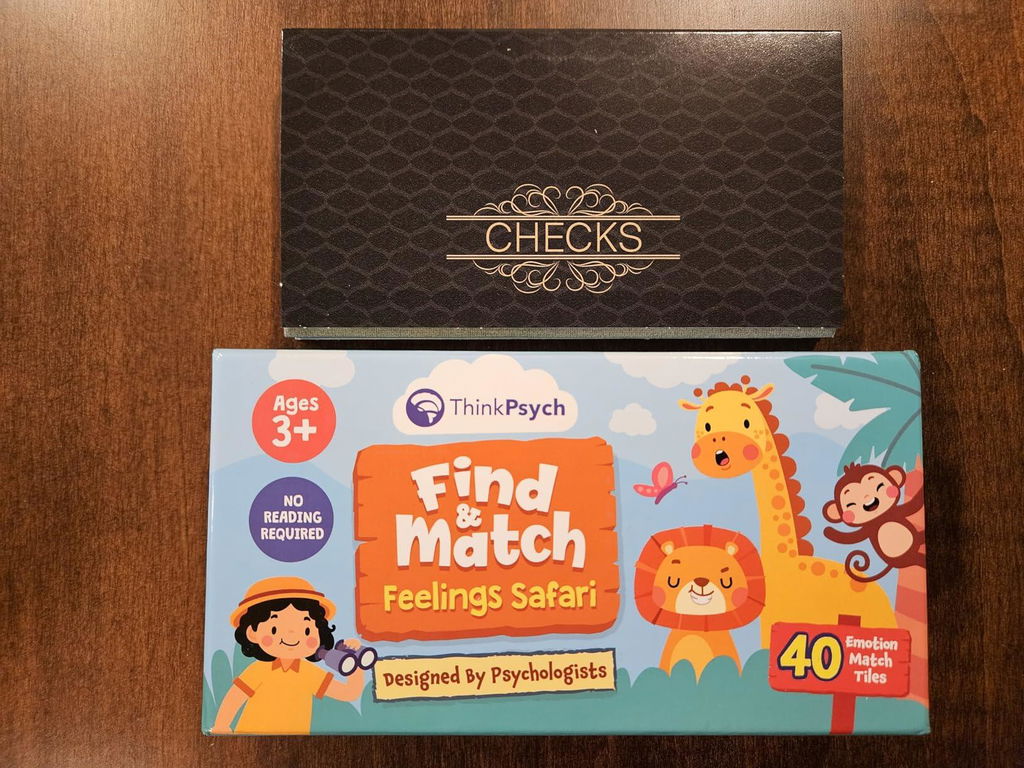
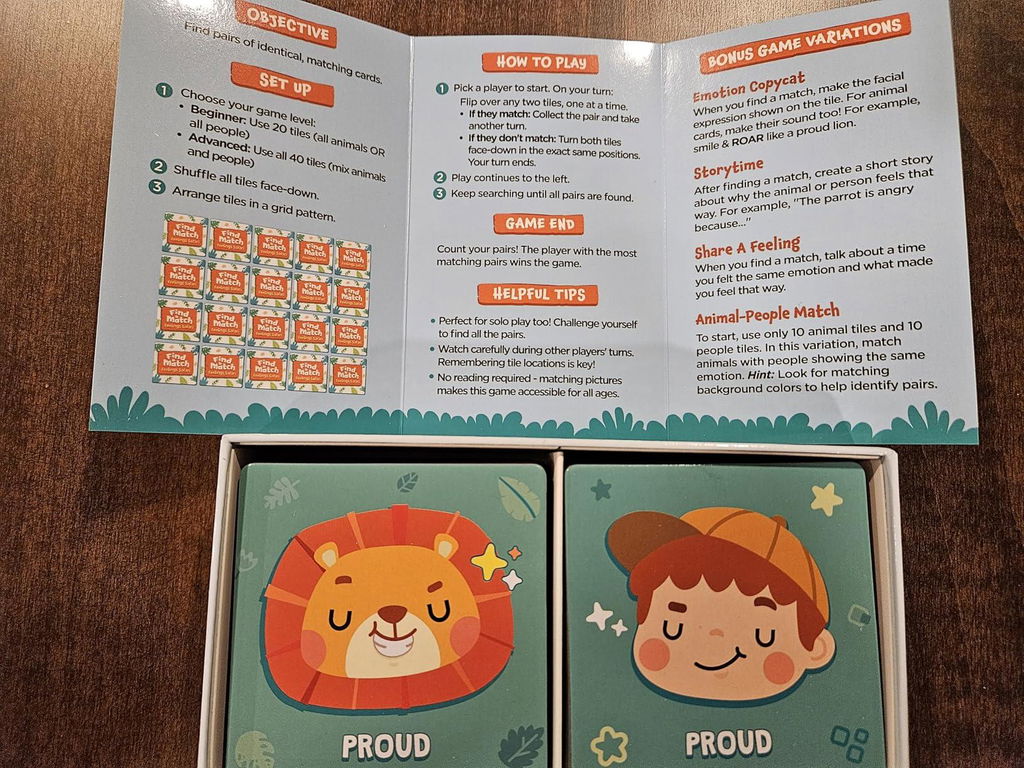
Thick cardboard tiles, quite sturdy, and fun to play with. There are two sets of cards; one with animals and one with people. It's a bit on the pricy side at about $20, but the tiles are good quality (as is the box, which to me is actually important as it's how I store the tiles) and worth the price if you're looking for a solid matching game.
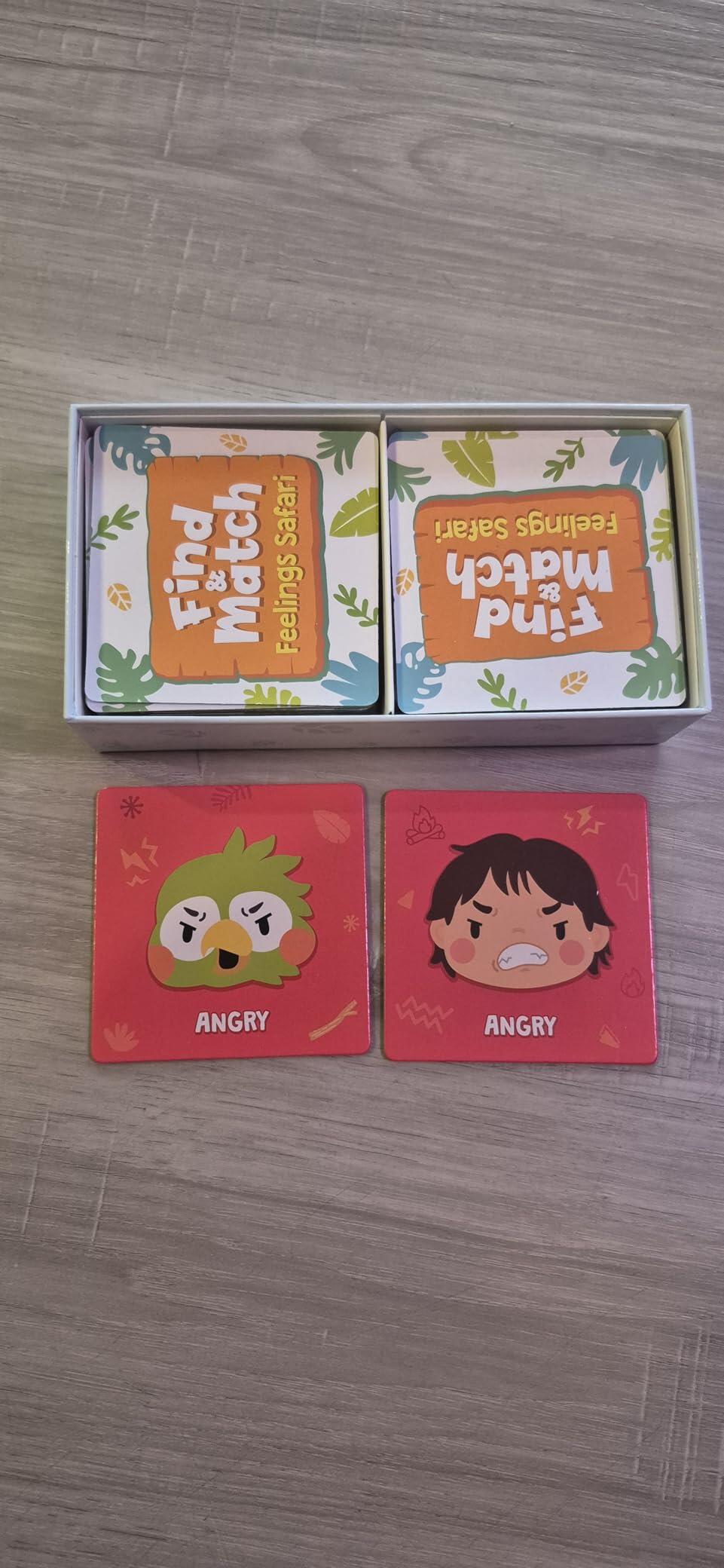
This is an amazing toy for toddlers and young kids. It comes with 20 animal and 20 human cards, which can be mix and matched by color or expression. Great for teaching kids different expressions and getting their memory going with a matching game. The cardboard is nice and thick, does not bend easily, and comes in a small compact box with instructions and a separator to keep the 2 decks apart.
Though my 2 year old is a bit young to make full use of the deck right now, she really enjoys all the colours and is getting better at matching them day by day. For the $20 CAD asking price, this is a great educational toy.
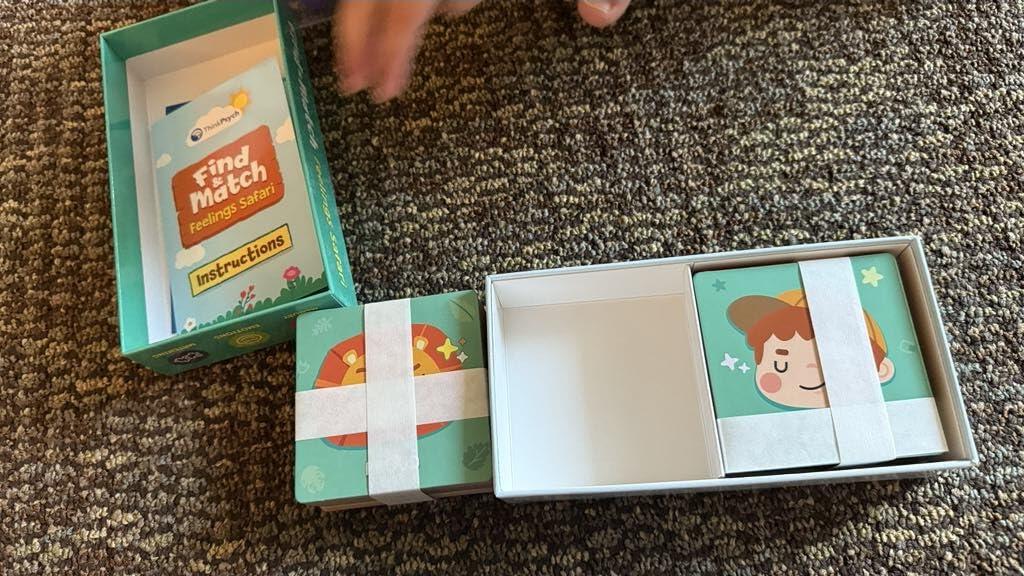
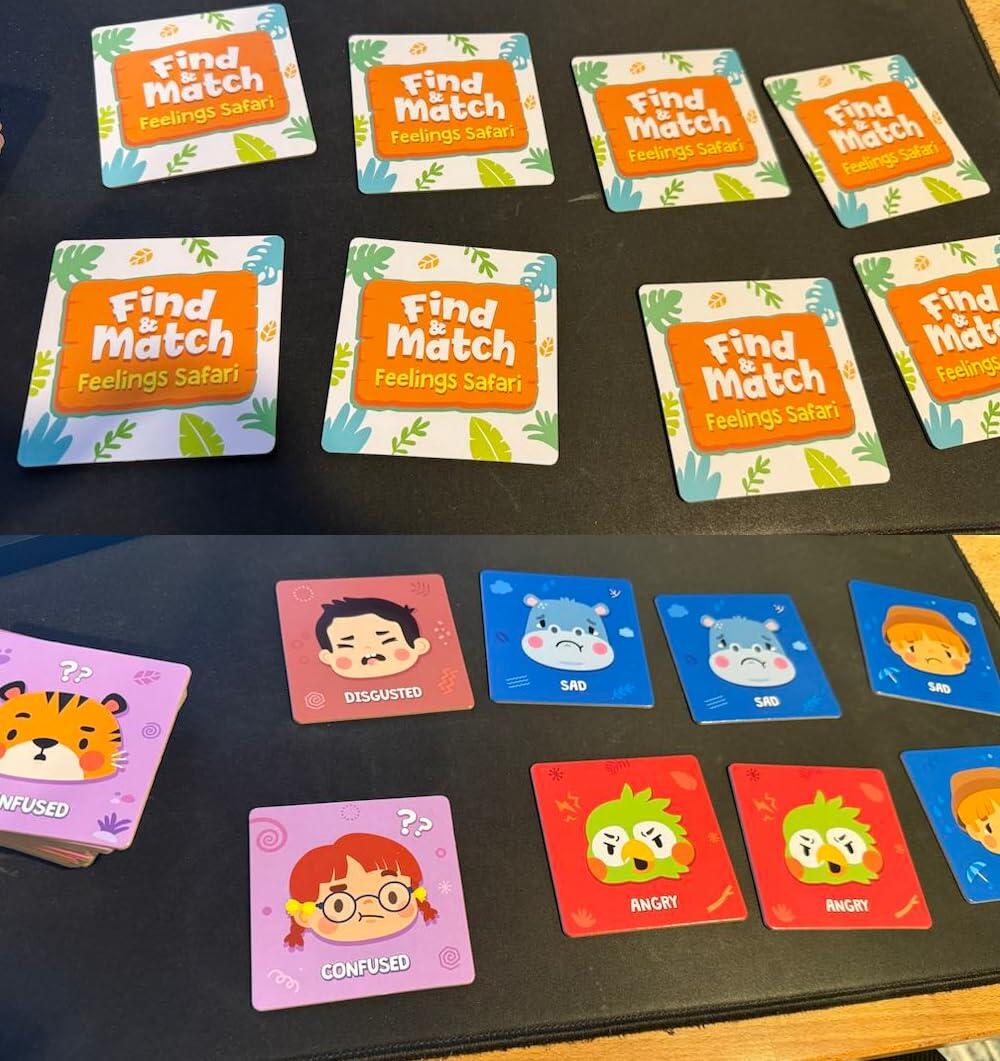
Our child is on the ASD spectrum and these are such great tool for at home use. Especially if you’re on wait lists for therapy or trying to find some things to work on at home — this is an amazing tool! Definitely recommend!