

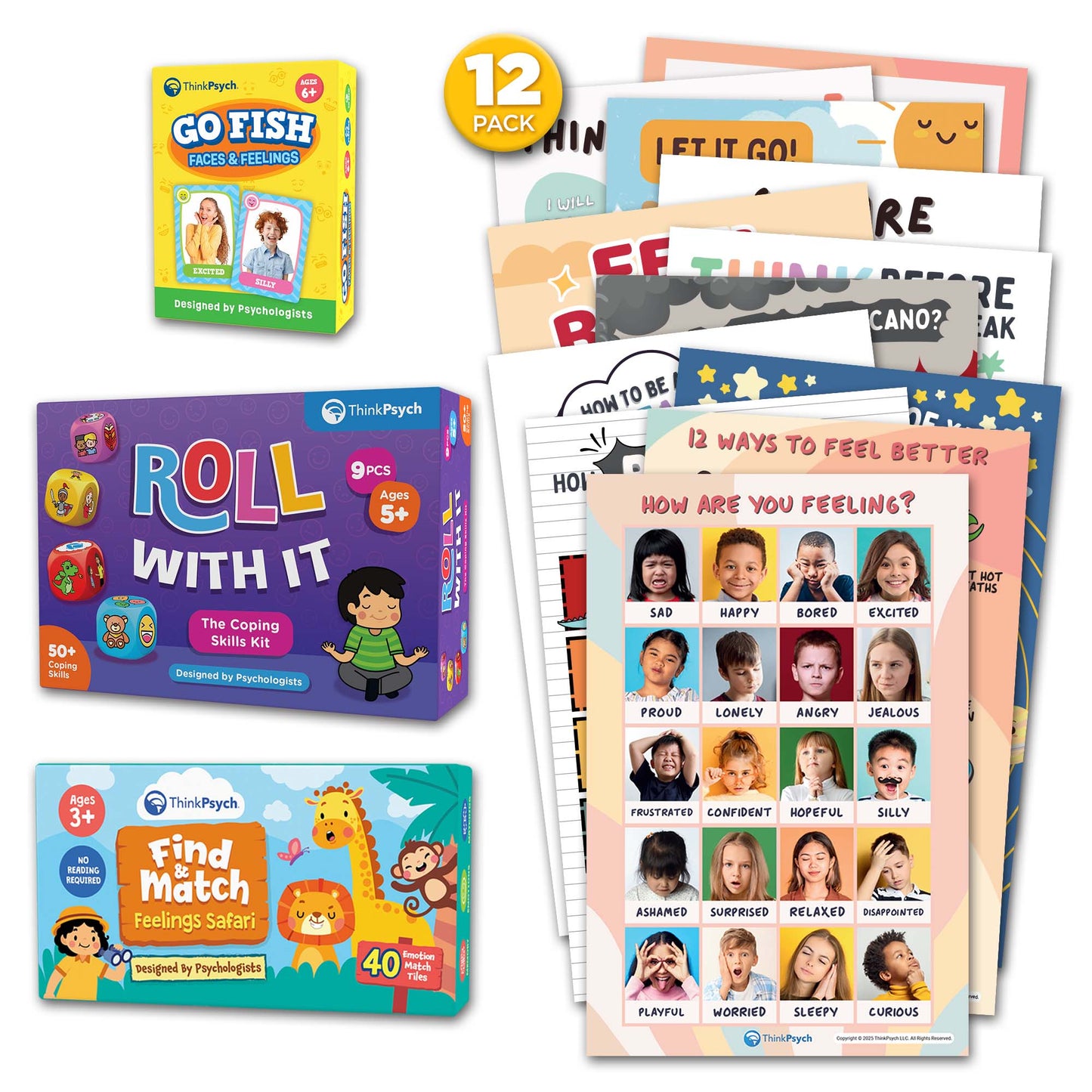
Emotional Regulation Skills Complete Collection
Emotional Regulation Skills Complete Collection


 30-day money back guarantee
 Free delivery on all US & Canada orders
 Developed by psychologists


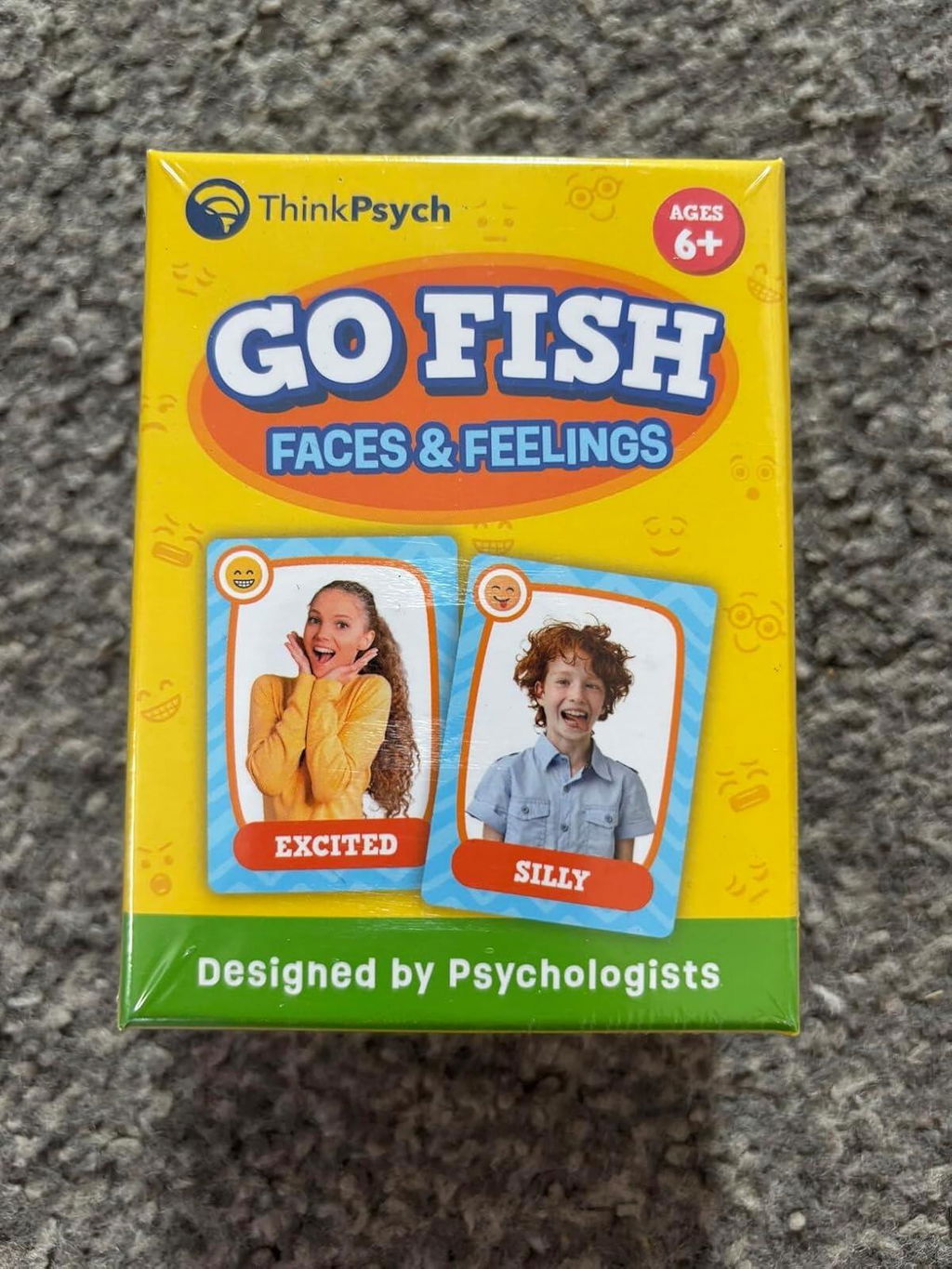
"We built this collection because emotional regulation isn't one skill, it's a sequence. Find and Match teaches kids to identify emotion words. Go Fish teaches them to express emotions. Roll With It teaches them how to manage and regulate."
How to use
- At Home
- In the Classroom
- In Therapy
FAQ
What's included?
What ages does this cover?
How do the four products work together?
Can this be used with children with autism or sensory needs?
Do I need to use all four products at once?



What Our Customers Think
The posters covered multiple areas and the kids like them.
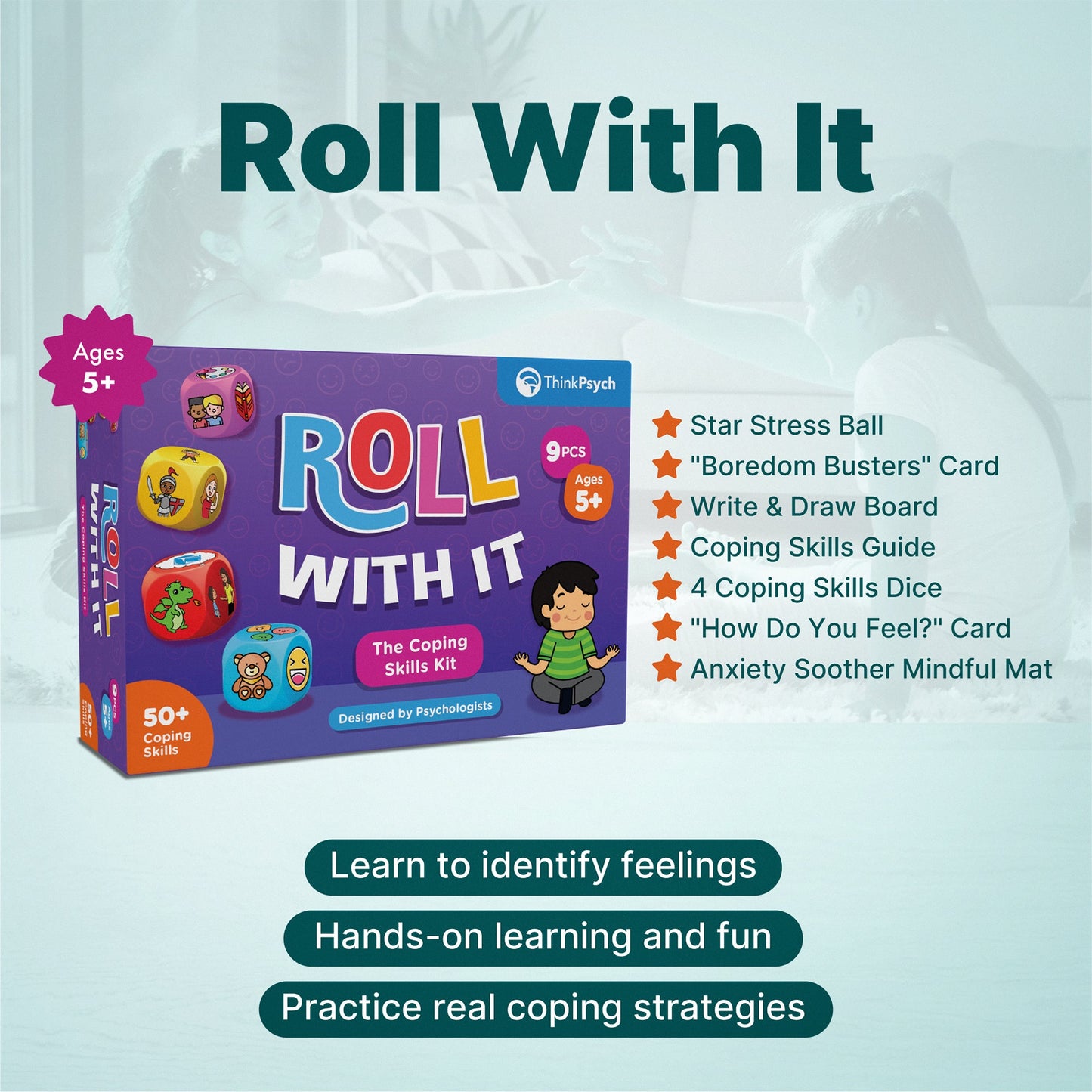
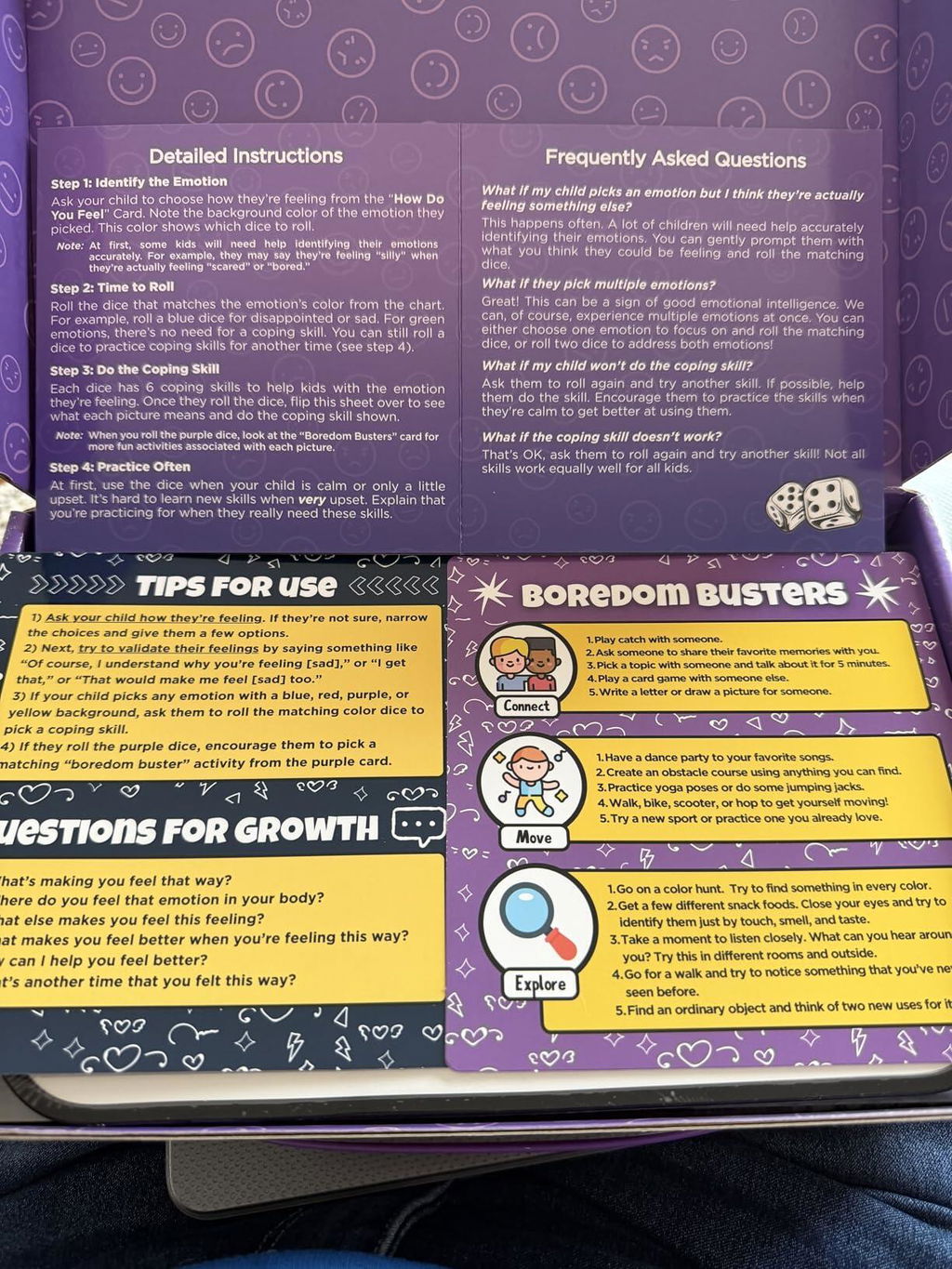
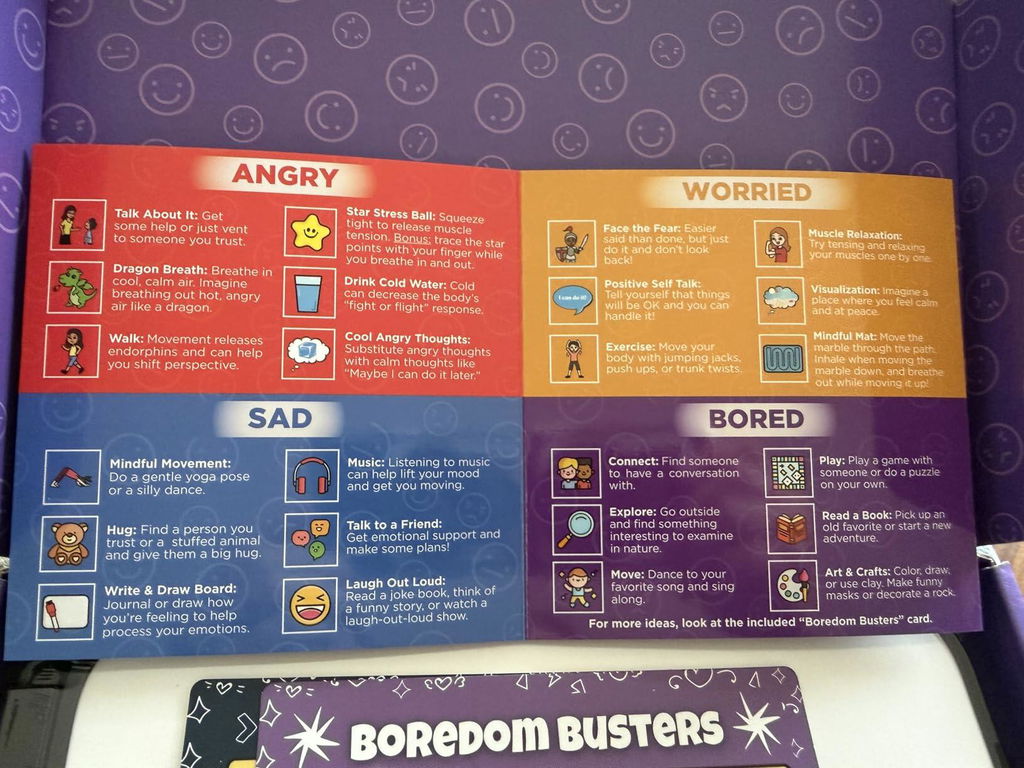
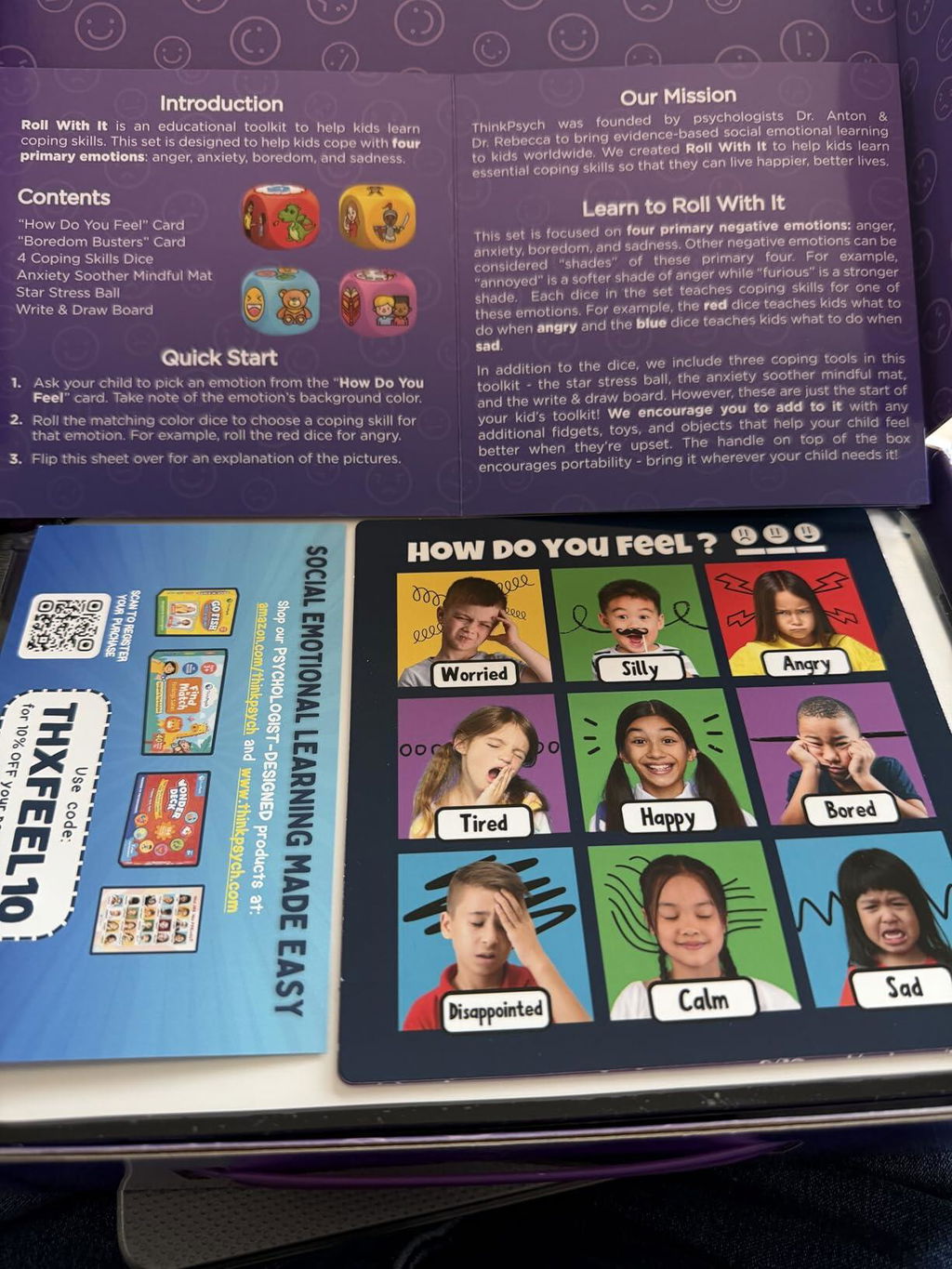
This is not a game. It's more of an aid or a teaching tool to help a child learn how to deal with feelings constructively. This is great for clinical settings as well as for the average parent teaching their child. First the child identifies how they're feeling from the emotions card. Then they roll the dice that's the same color as the background color with the emotion that they chose. Then you have them try to do the activity that they roll. There are instructions that explain each of the pictures on the dice. If the child resists doing that activity you can just have them roll again. Three of the activities objects are provided. They are, drawing on a white board, squeezing a stress ball and my favorite which is moving a marble through the path on a fuzzy blanket. Of course "boredom" seems to be the emotion that comes up the most. It's also the emotion that gets the most attention in this kit with a card dedicated to extra boredom buster ideas. All of the objects in this kit are well crafted. The pictures on the dice are clear and detailed. The instruction sheet is thick, glossy and durable as well. This kit is well made and well thought out.
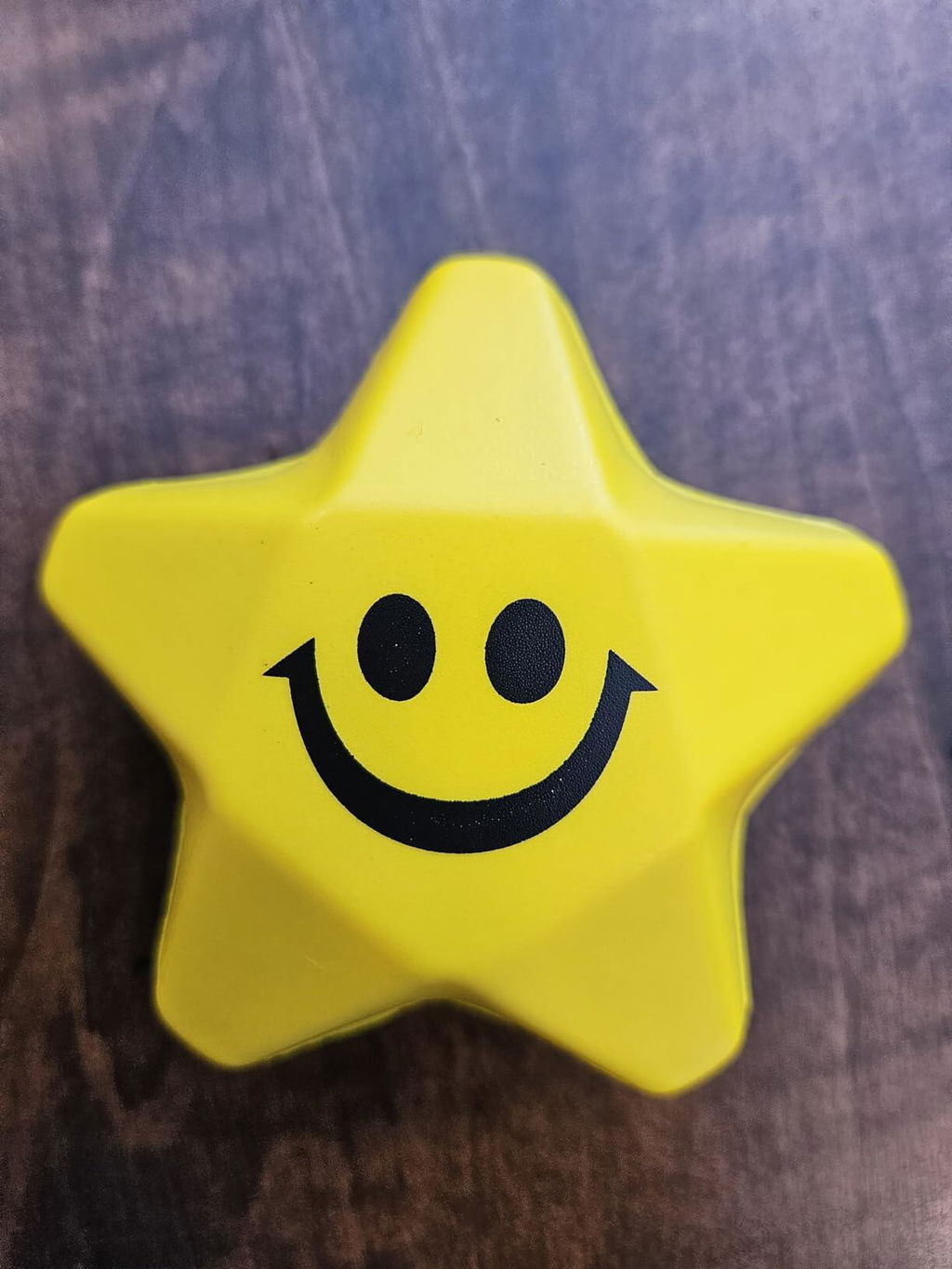
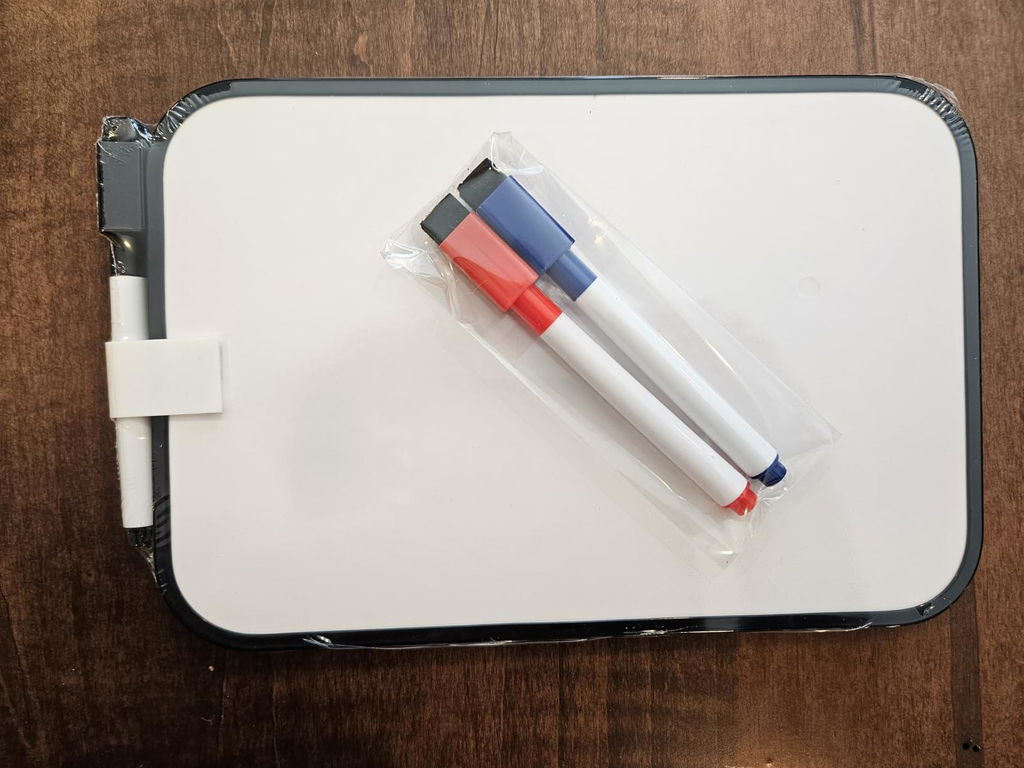
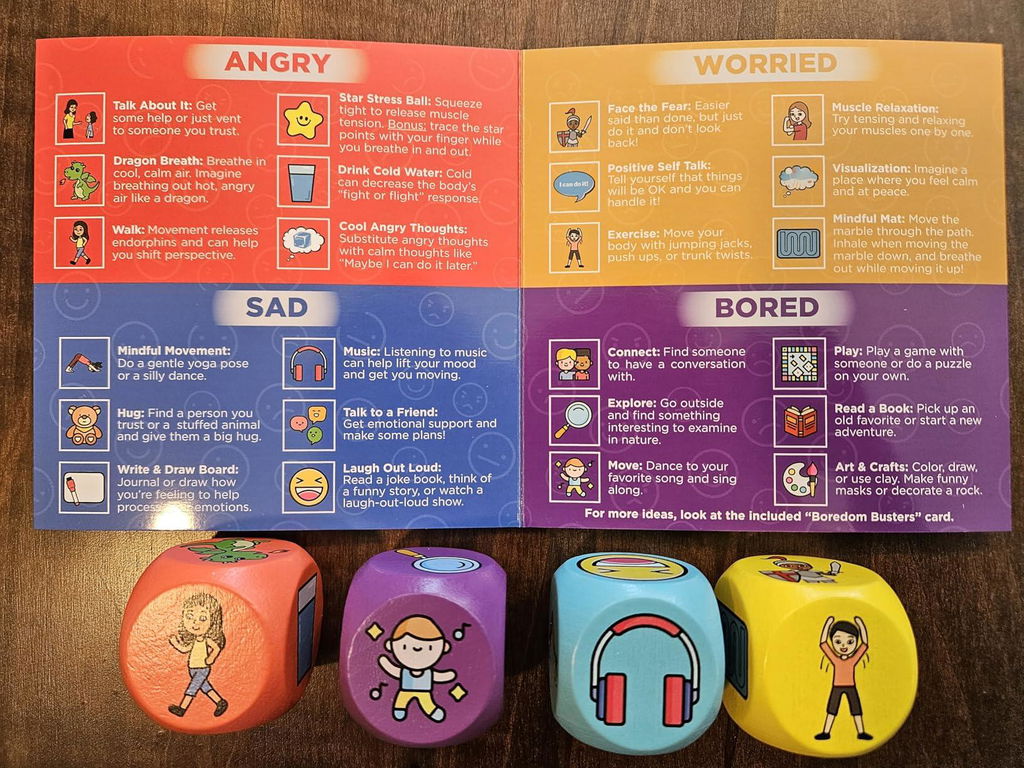

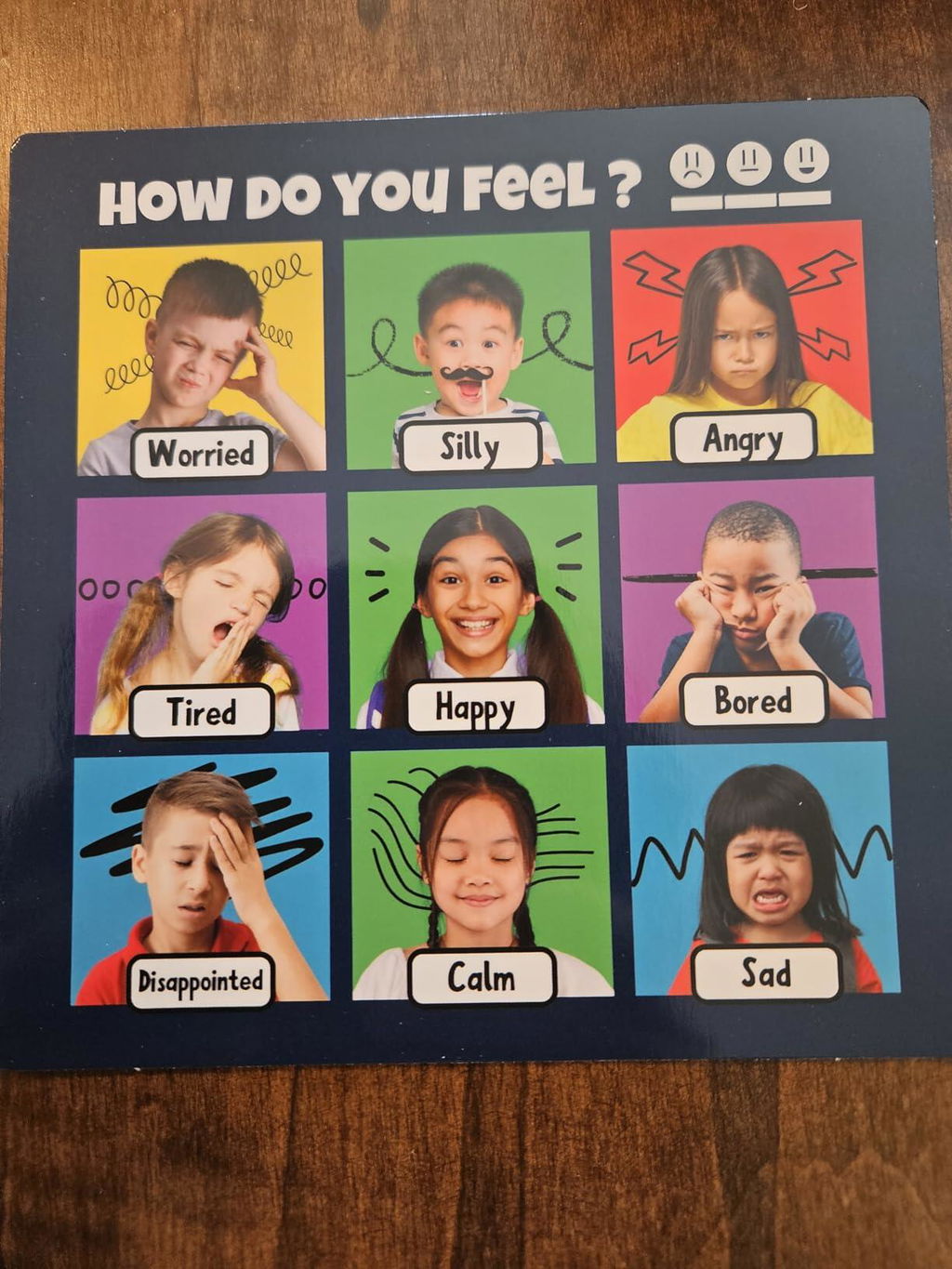
Some children seem to be born happy and resilient. Others, not so much. But emotional regulation and resilience can be learned, and this is a great way to help you teach it. One of the most challenging things to deal with regardless of the age of the person you are interacting with is uncontrolled emotion. Since children interact far less with others than they did in the past: think COVID restrictions, families with just one child, isolating computer games and other electronic distractions, and parents being reluctant to let their kids roam free in their neighborhoods, skills that were often learned in the natural course of the day are sometimes not being learned at all. This game can give you a point of departure for working on these "soft" skills that are critical to a student's emotional well-being and success. If the game doesn't click with your child, it's still a really useful tool for a parent. Read it all and keep the strategies in mind to help you help your child when they begin to lose control or are at loose ends. Parents often struggle to find resources when they are concerned about their children. This is one you might find useful on several levels.
Super cute twist on Go Fish! You act out the emotion of the card you wanna match. This would be great for teachers to have in their classrooms. Great illustrations and kids find it fun to act out the different emotions. Cards are vibrant and emotions are also labelled which is great in case you don't understand the emotion. Fun and educational!
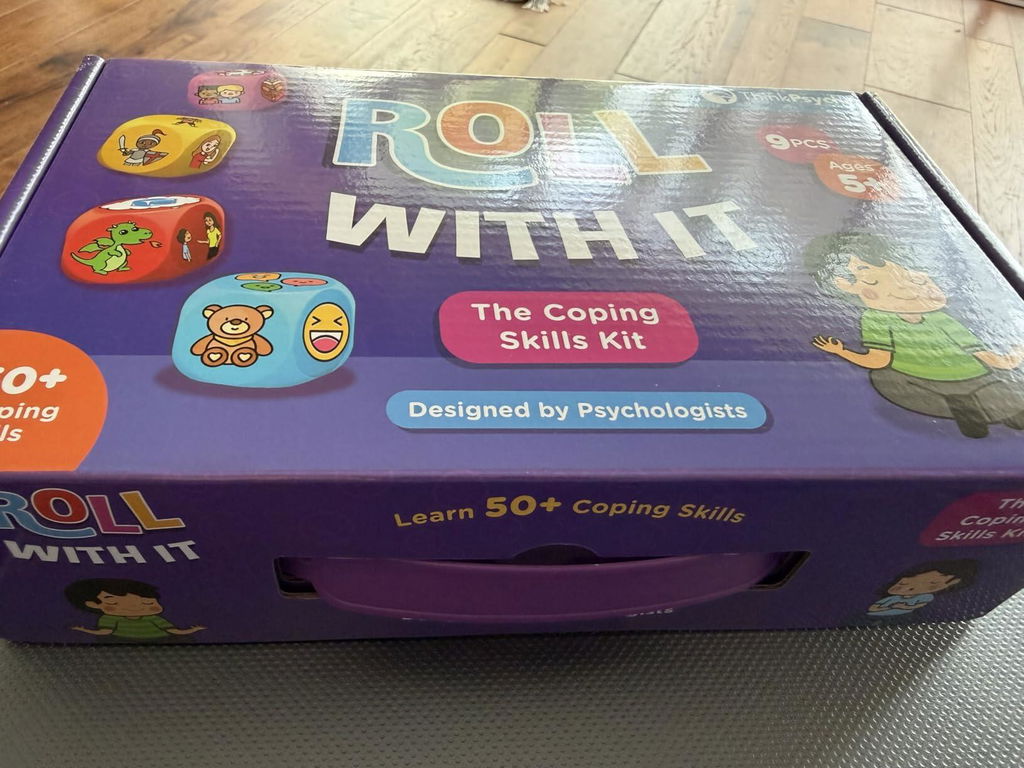
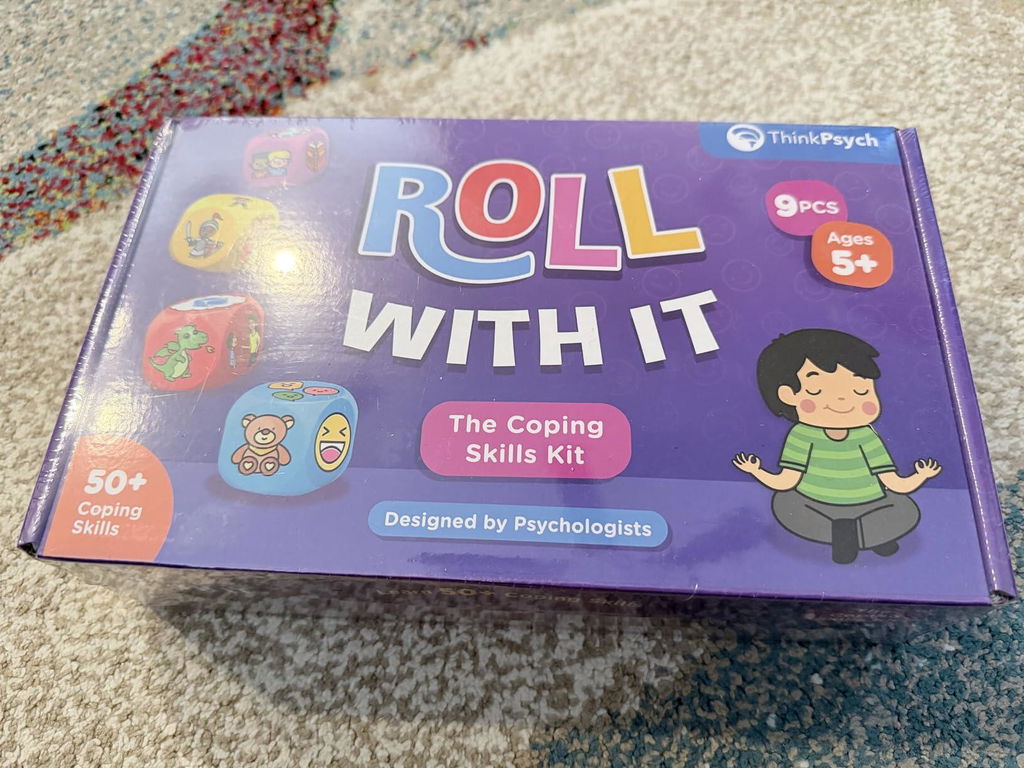
Impressive packaging, makes for a nice presentation when you first open it. Everything was included as described, and the storage box has a nice handle on it as well. The colors are vibrant and fun. I appreciated that the instructions weren’t preachy or condescending. It has very simple and straightforward instructions that leaves room for “real life” scenarios, like that fact that children can feel multiple strong emotions simultaneously.
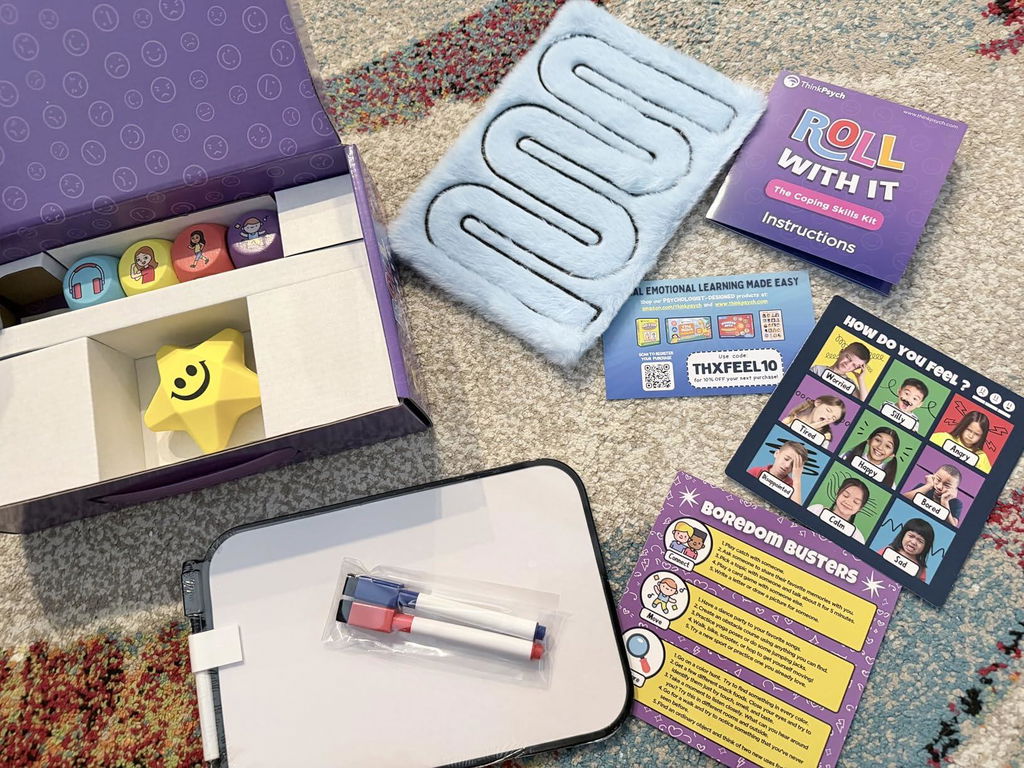
This is such a great idea—kids today really need this kind of calming intervention. I love how simple it is to use, with clear visuals and helpful suggestions that make it easy to implement. The soft fabric and marble inside are incredibly soothing and relatable for little hands.
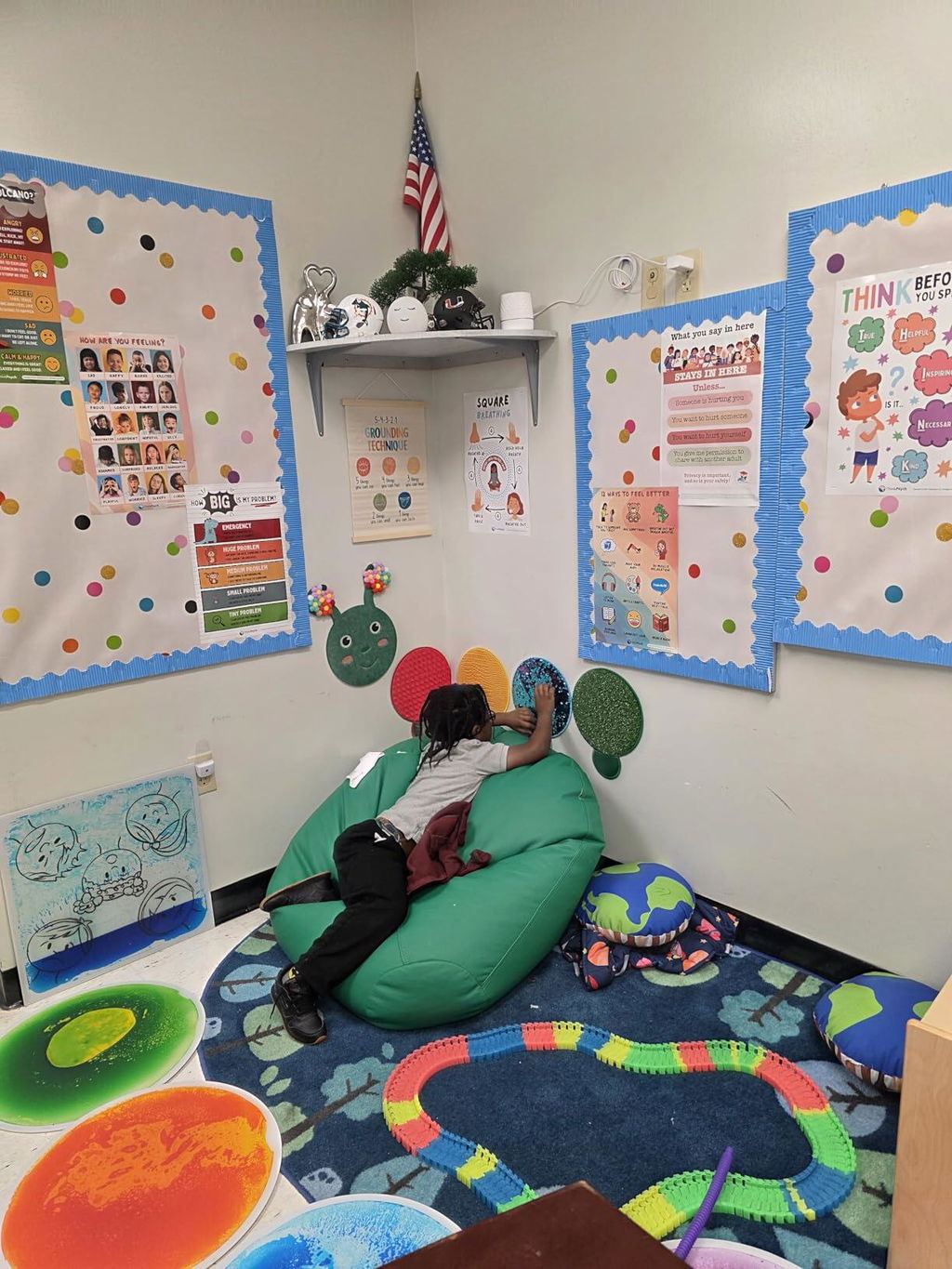
I think it's perfect for one-on-one use or in small groups, but probably not ideal for whole-class activities. It’s much better suited for parents, school counselors, or small therapeutic settings. As a teacher, I can see how this would be a wonderful addition to a calm-down corner or a take-home support tool.
Overall, a well-designed, meaningful resource. Highly recommended!

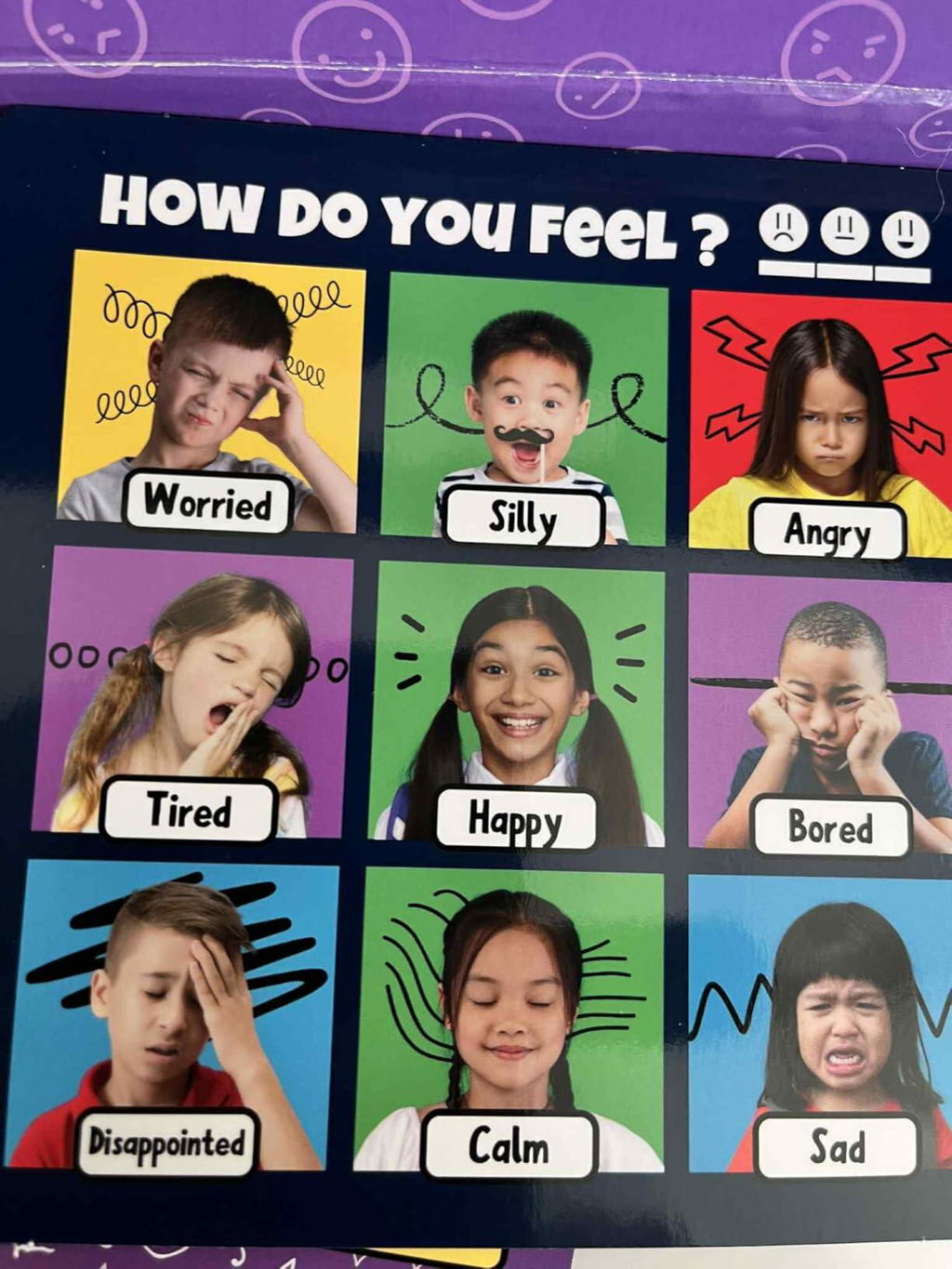
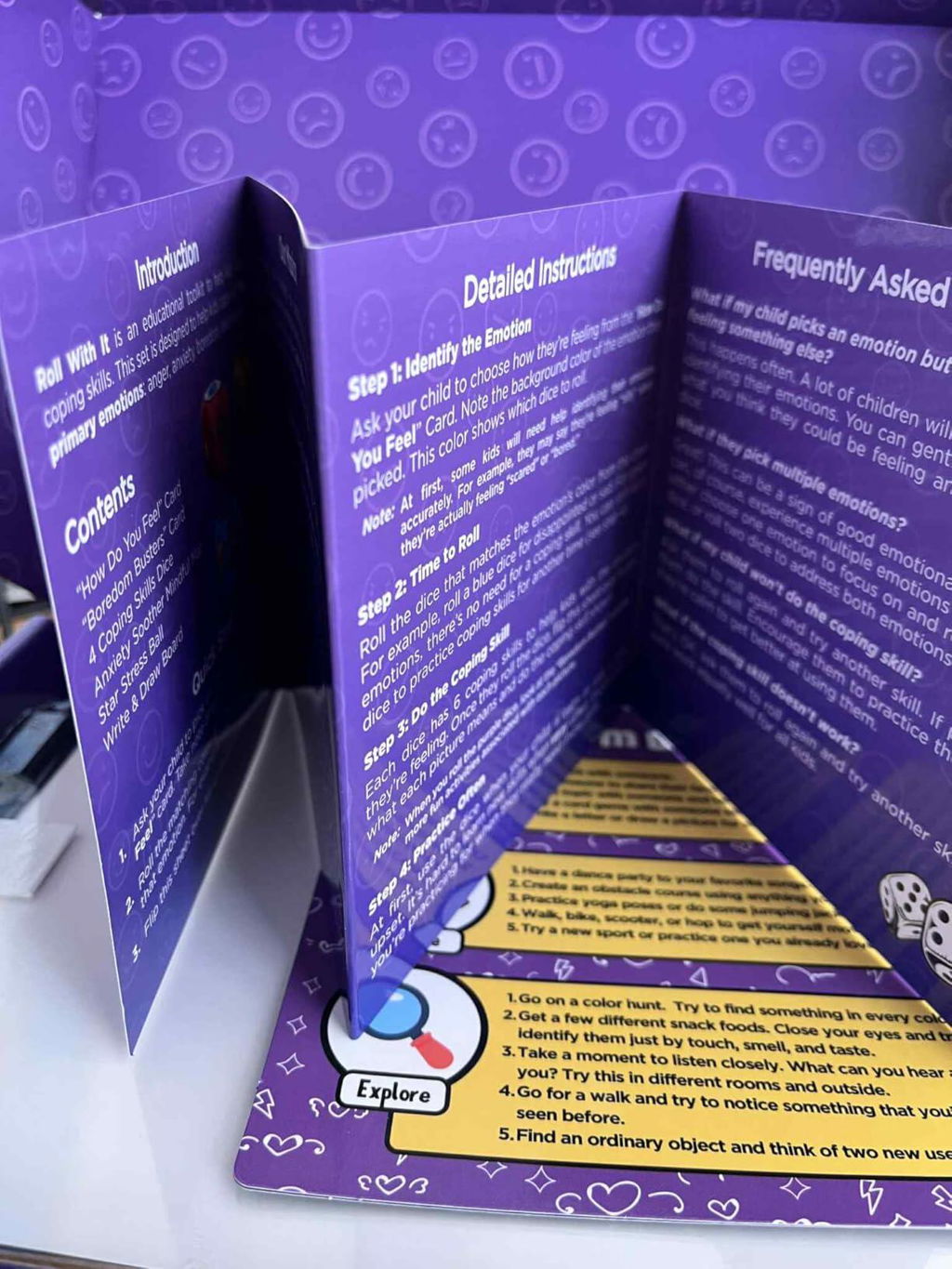
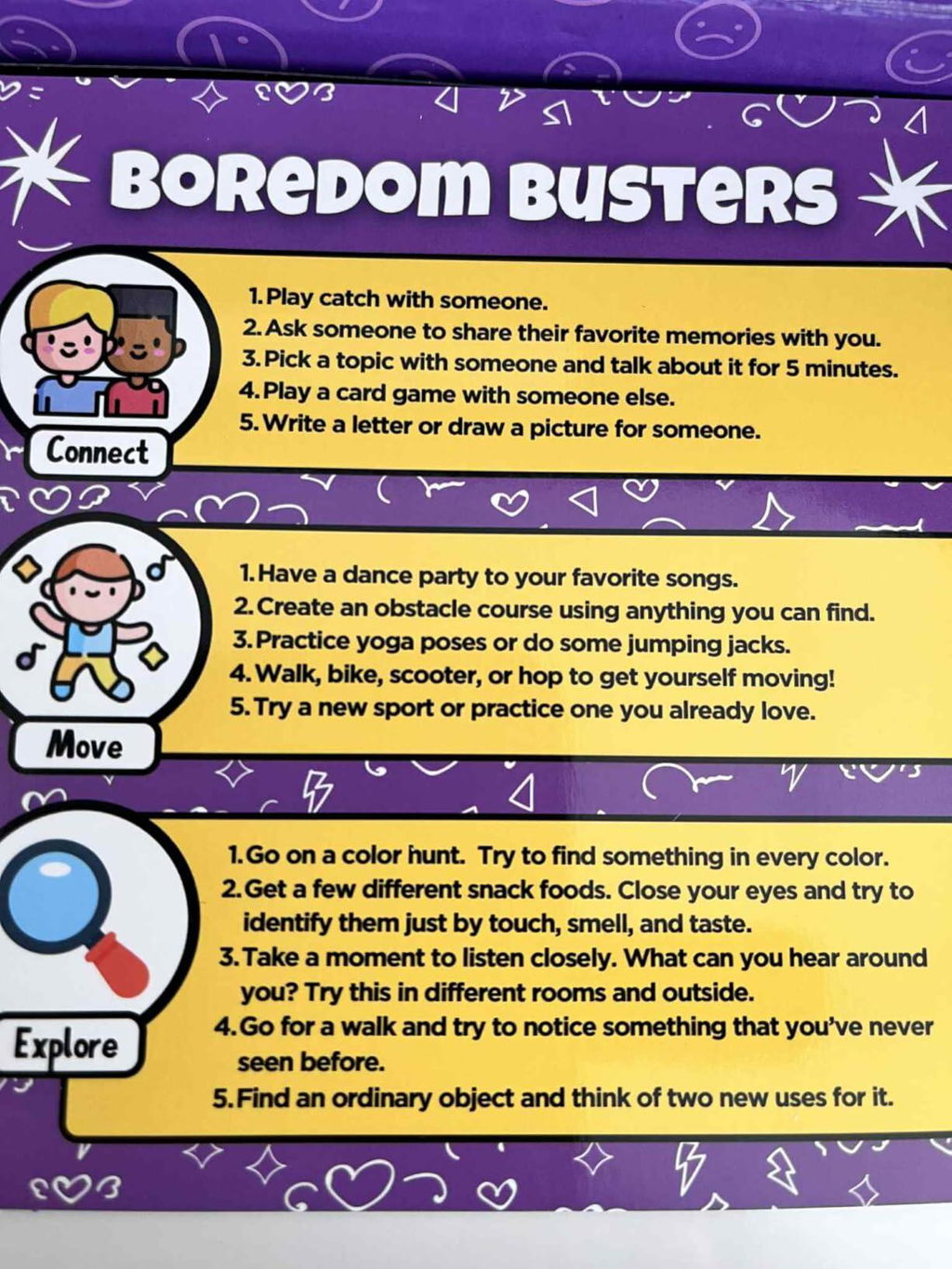
This is not a board game, but that's actually the beauty in it. You'll know that but your kids won't or at least my kids don't. They think its a game and my 6.5 year old, who has struggled with anxiety, loves to play with it. Our 3.5 year old loves to play it too and we just slightly modify some of the suggestions or read through the boredom busters and pick something that is more age appropriate.
When we first got this, we sat down and explained how it works to our son. He said he wanted to try it right away and we did some "practice" rounds. He didn't seem entirely interested in it, but that's likely because he was truly in the "green" feelings and not experiencing any of the red, yellow, purple or blue feelings.
The next time he started to have some big emotions we immediately suggested playing the game and he was willing to give it a try. Just the suggestion alone brought some calm to his feelings and let him break away from letting the emotions take over. After rolling the dice, and not being satisfied with the first few rolls, he landed on using the anxiety mat and he took his time breathing while moving the marble. He really enjoys using it.
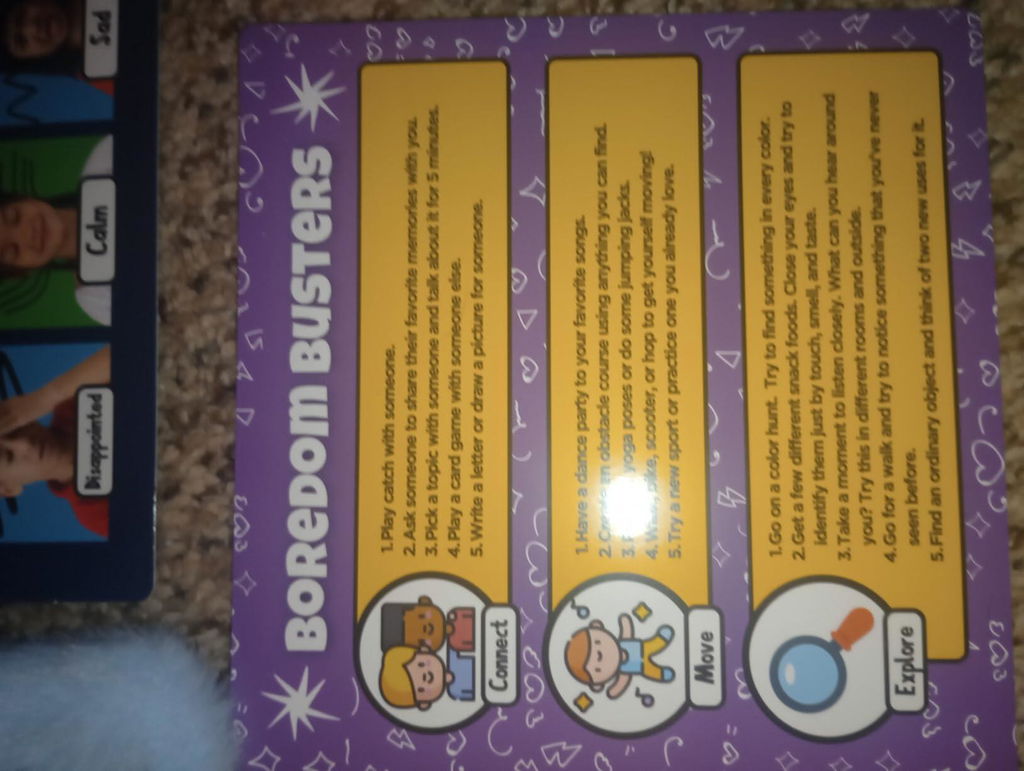
The big benefit we found with this is that it gives our children a choice to how they want to deal with their feelings instead of us suggesting something that works for us (even though we've suggested many of the coping strategies included) but may not work from them. It also lets them feel like its completely their idea. We just suggest the game but the coping skills are theirs to decide on. We also bring the boredom buster card in the car to keep the kids busy and they enjoy trying the different suggestions on it.
Overall, if you're a parent that wants provide your child a larger toolkit for coping with emotions and make it fun and engaging this is a great kit.
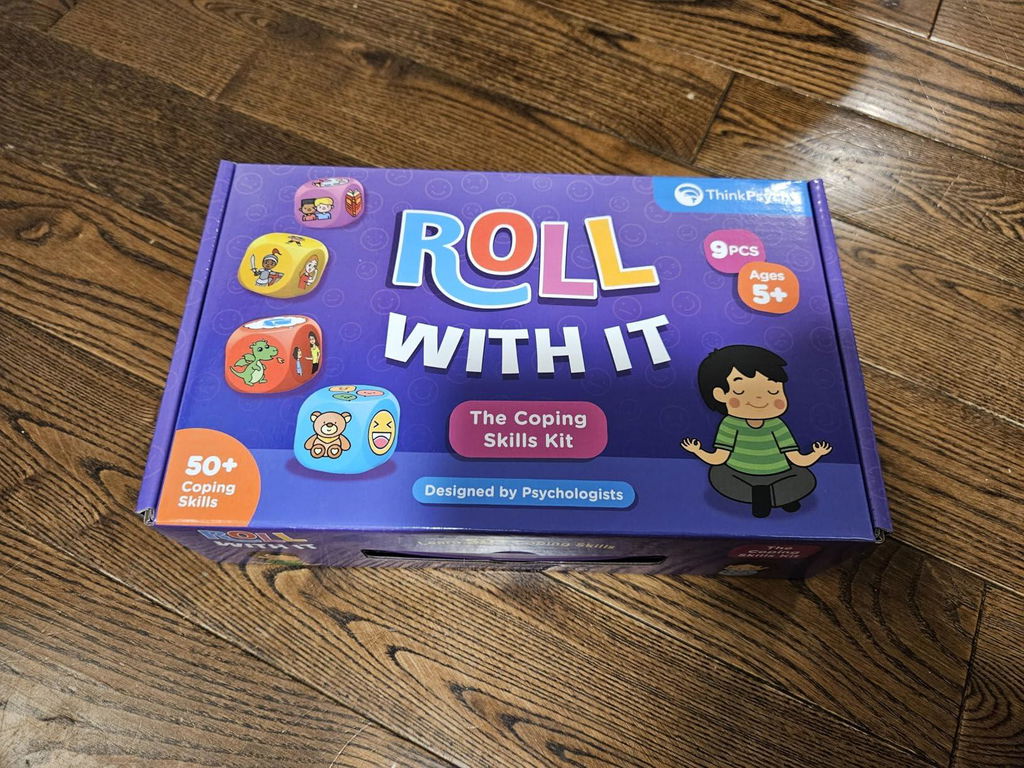
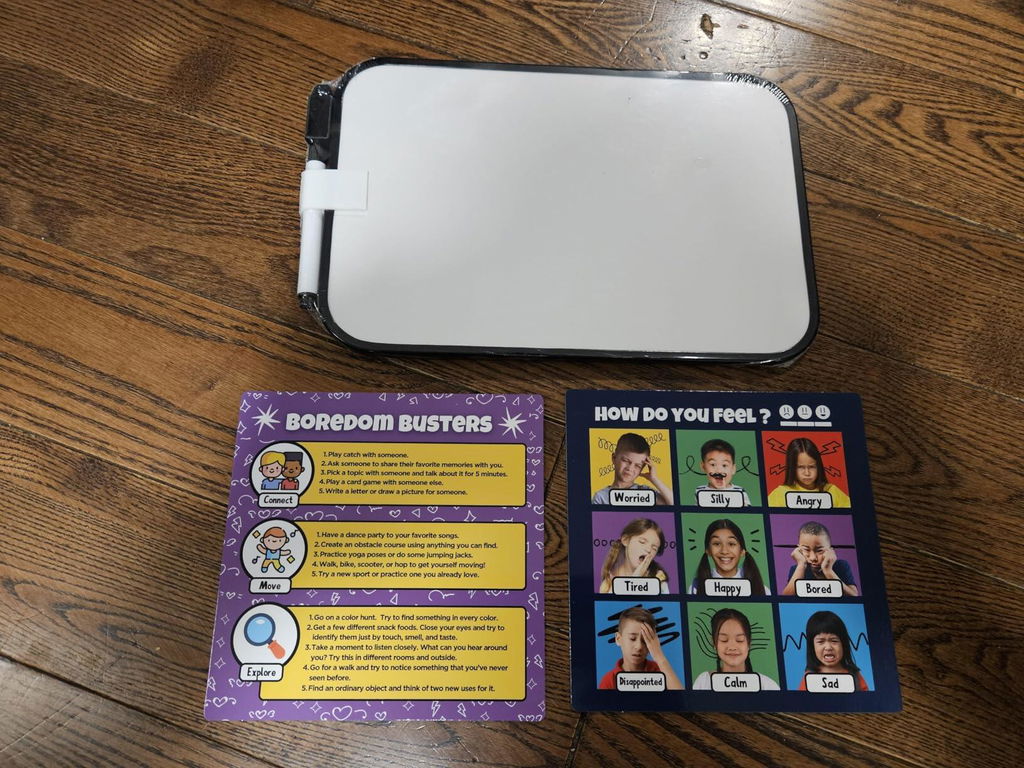
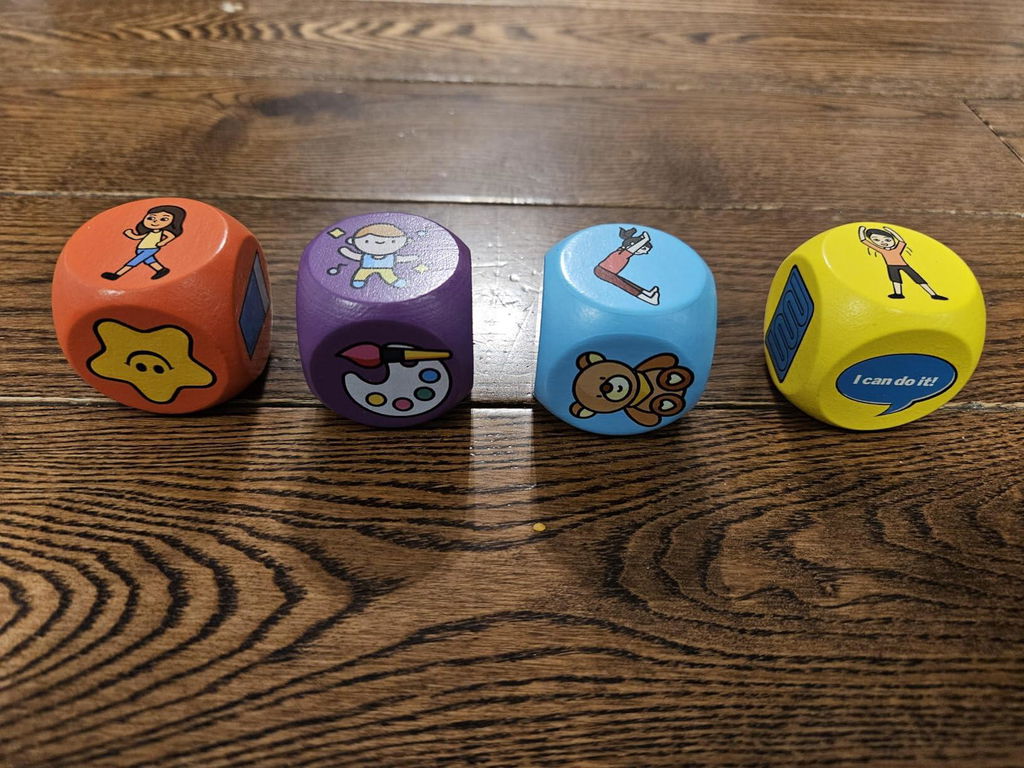
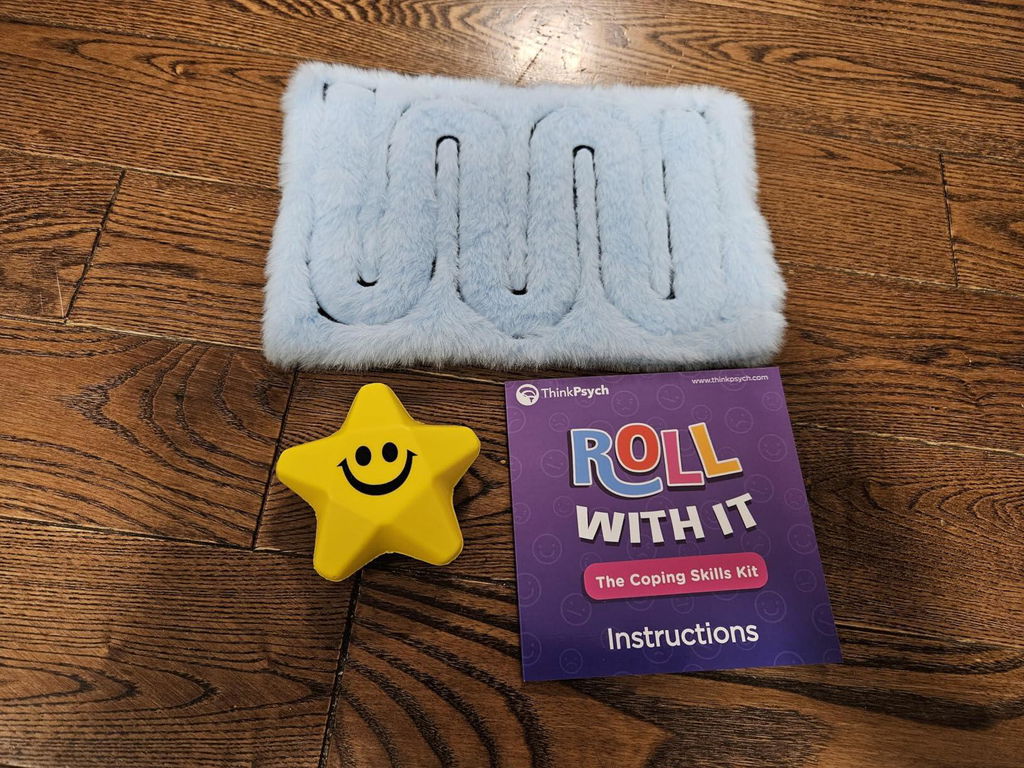
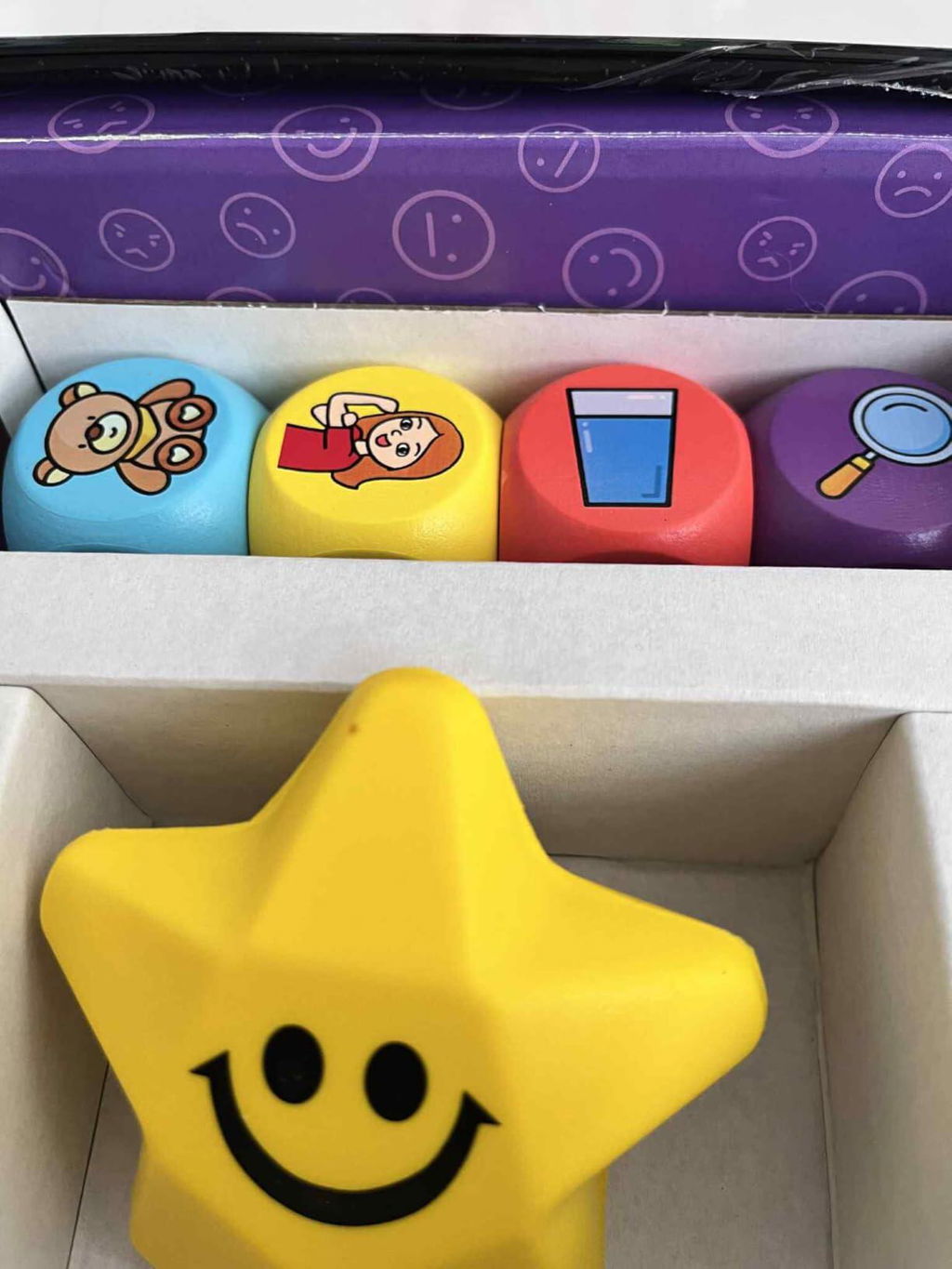
This is a fun and interactive game for anger management, stress relief and emotional learning. The dice are rolled to do different body, sound and relationship things. There are fidget toys and a stress ball shaped like a star. It is really easy to setup and use.
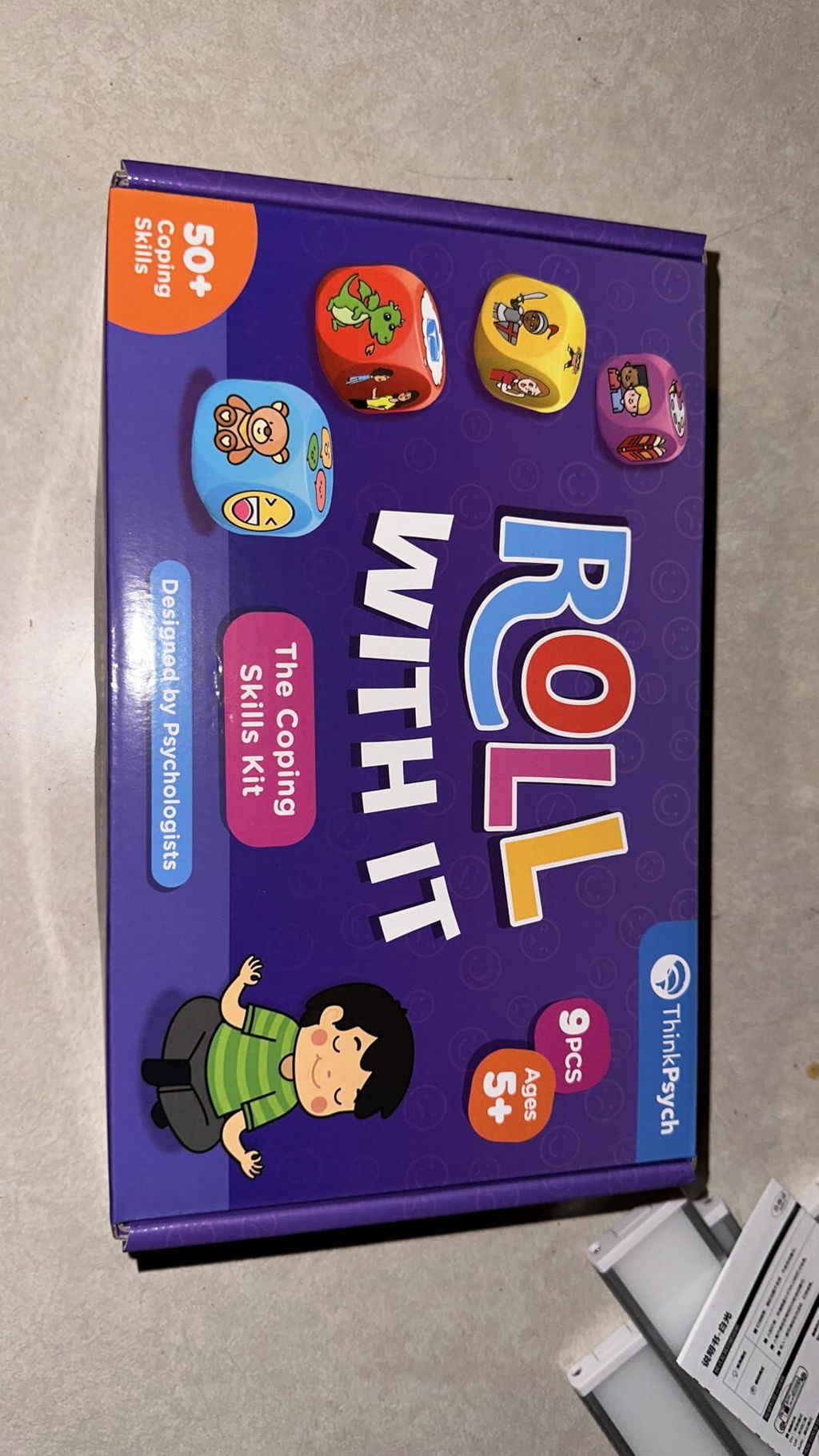
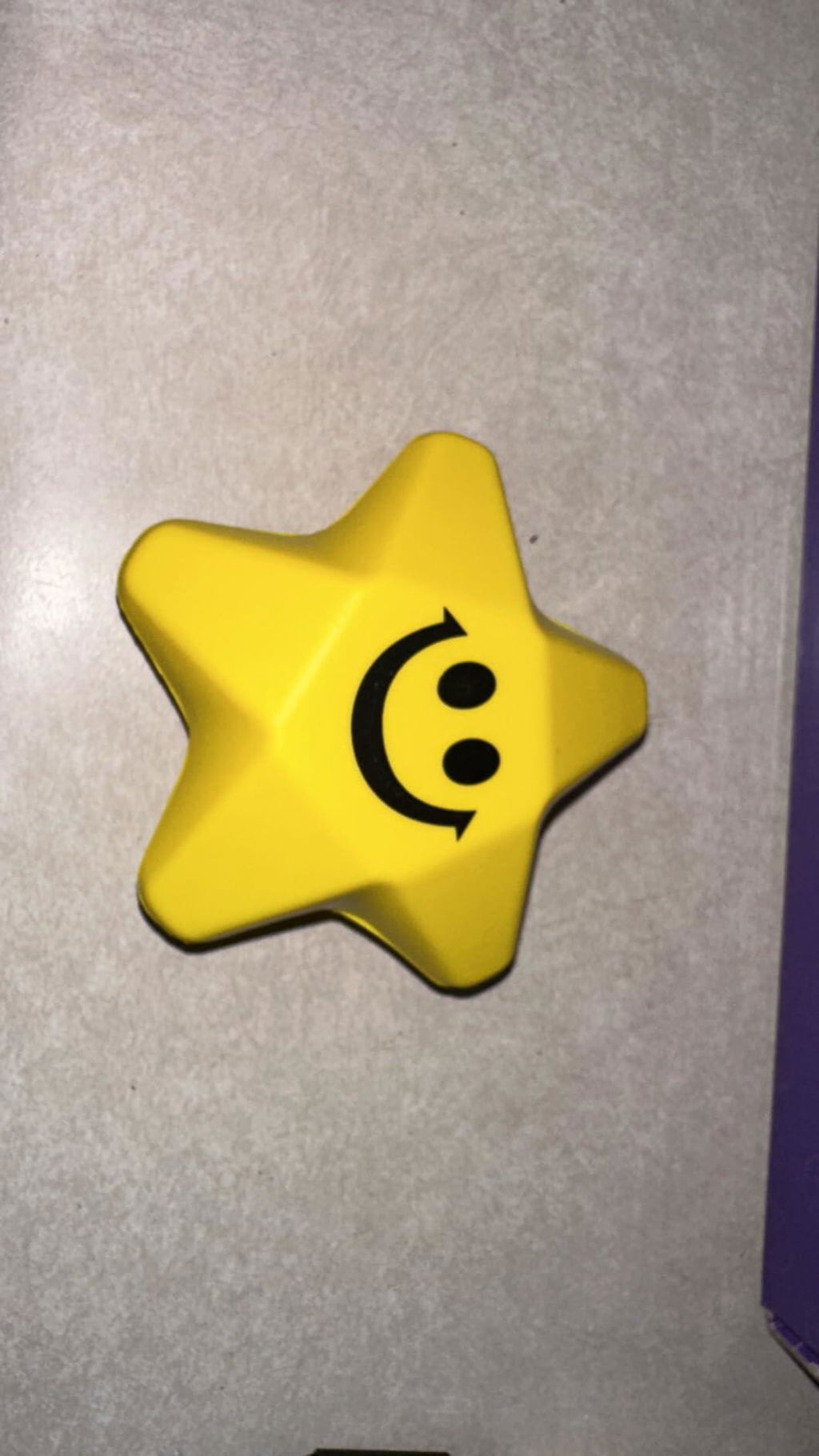
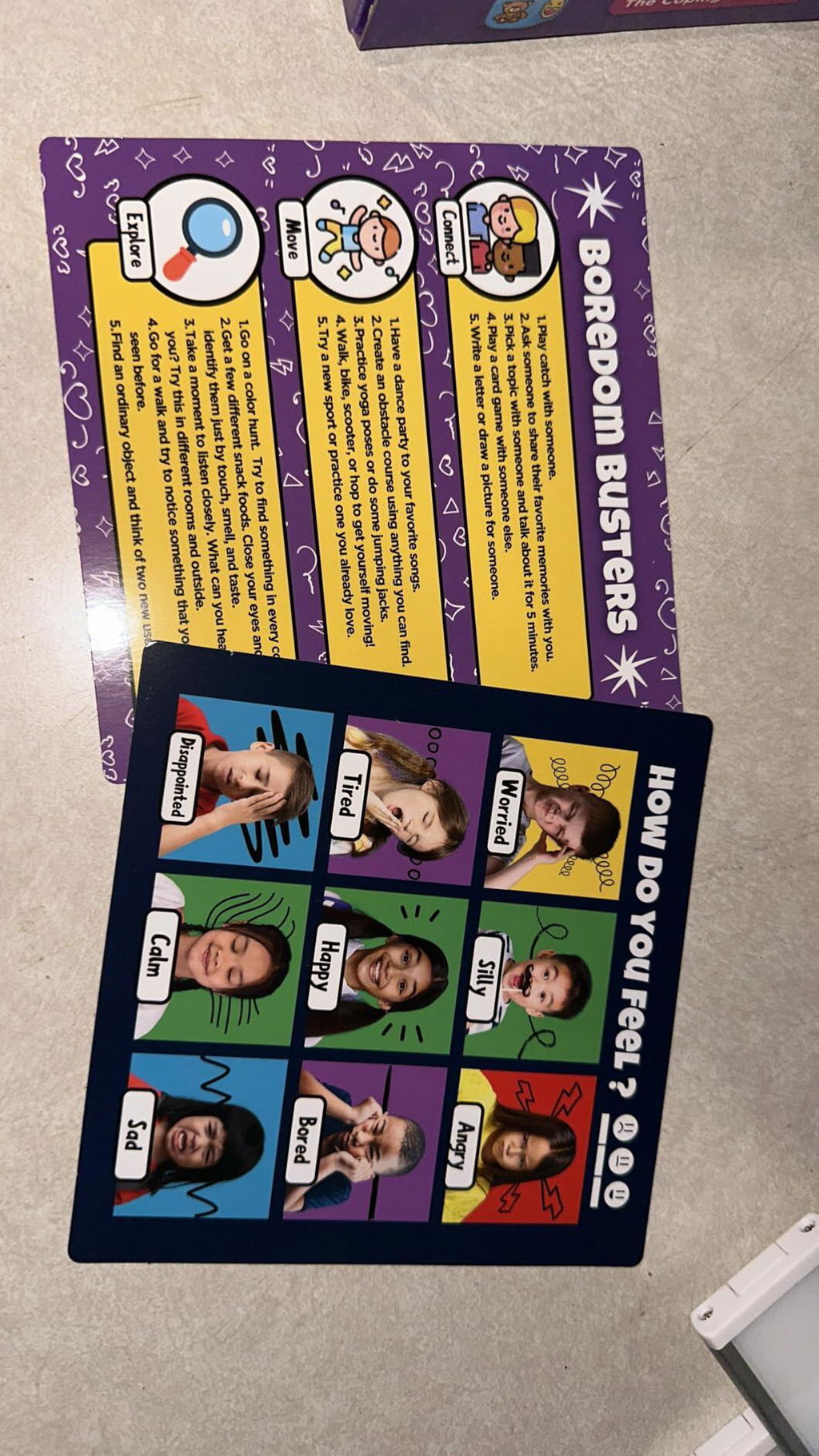
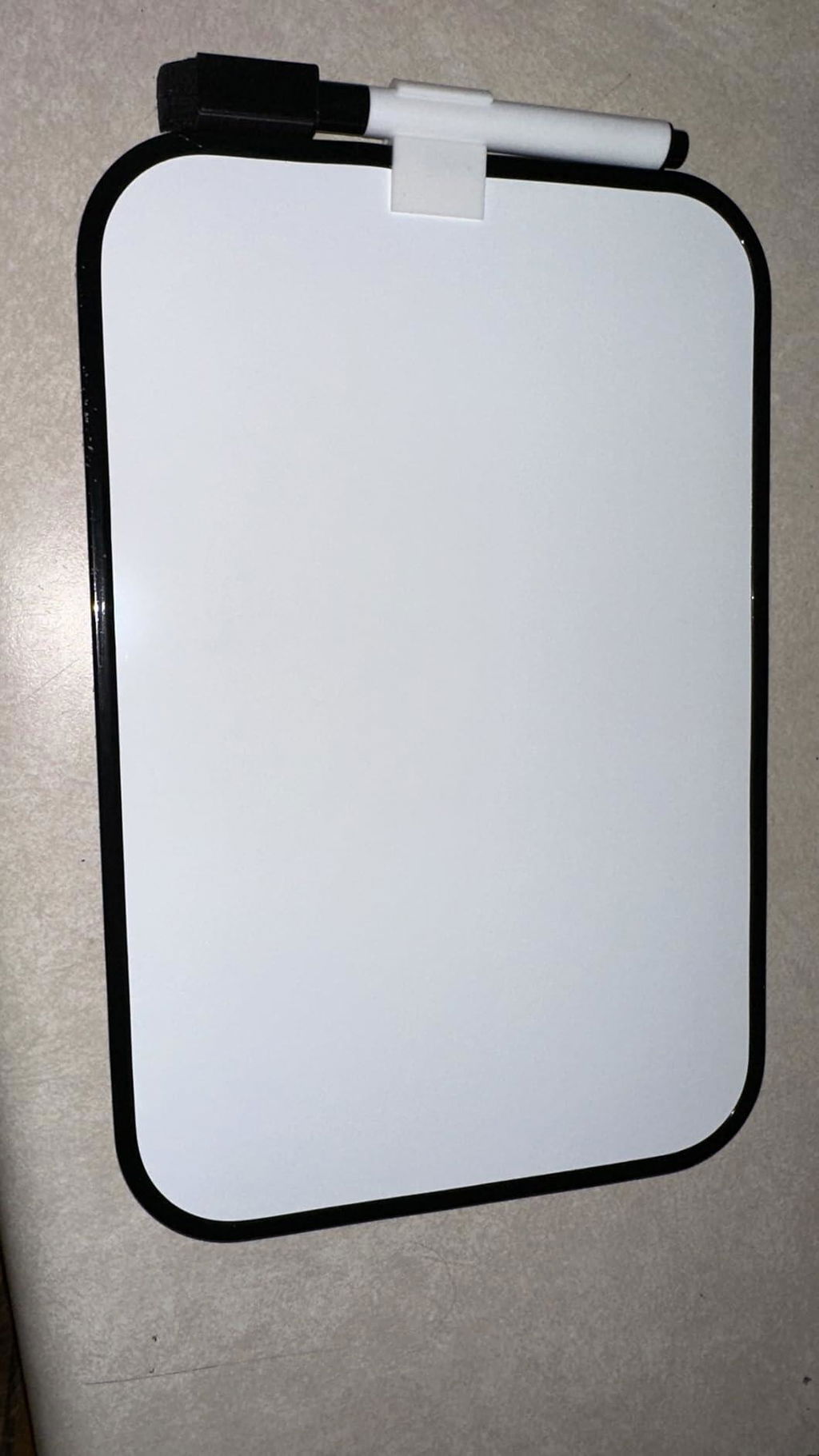
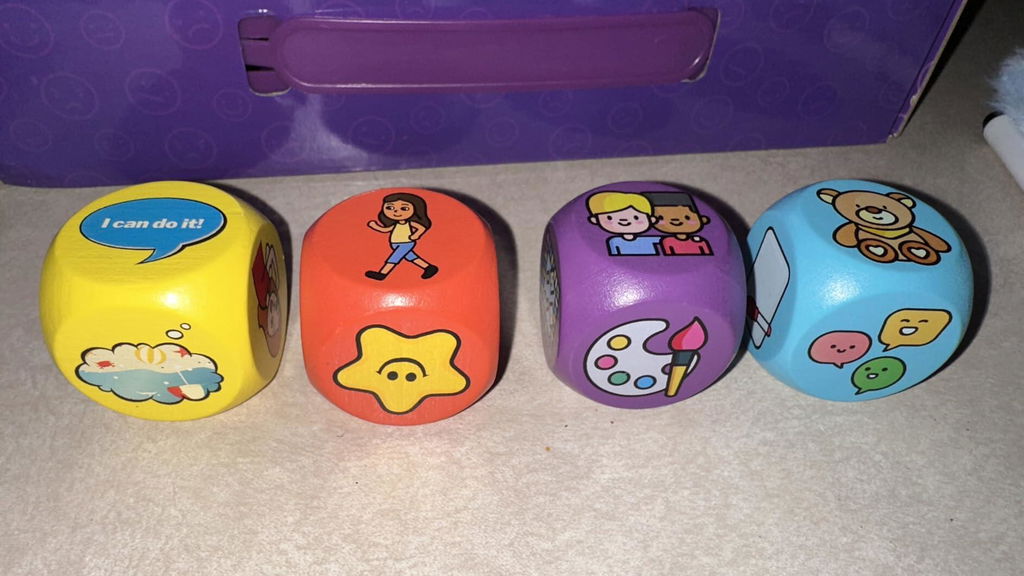
I bought this for a newly minted Educational Assistant (EA) that works in the elementary school system in Canada. I was also hoping that it would be helpful for another family member in their late teens, with autism.
I love the kit and thought I might want to keep it for myself (or modify it somehow for my own use) - which seems silly because this is obviously geared towards young kids- I would say younger school aged children. But there are times when I'm feeling... something... and I'm not quite sure how to get out of a funk (thank you perimenopause, I often live out the seven dwarves of feelings on a daily basis). This is a simple, ingenious way of identifying how I'm feeling, and then randomly (with oversized color coded die) choosing an activity to help soothe, comfort or take action.
There aren't a lot of negatives in this set. It's well thought out and easy to understand, without the need for long instructions. I am worried some of the components may not hold up to frequent, daily use in a school setting (especially the printing on the dice and the fuzzy hand meditation sheet- not sure what to call it but it's surprisingly helpful when anxious).
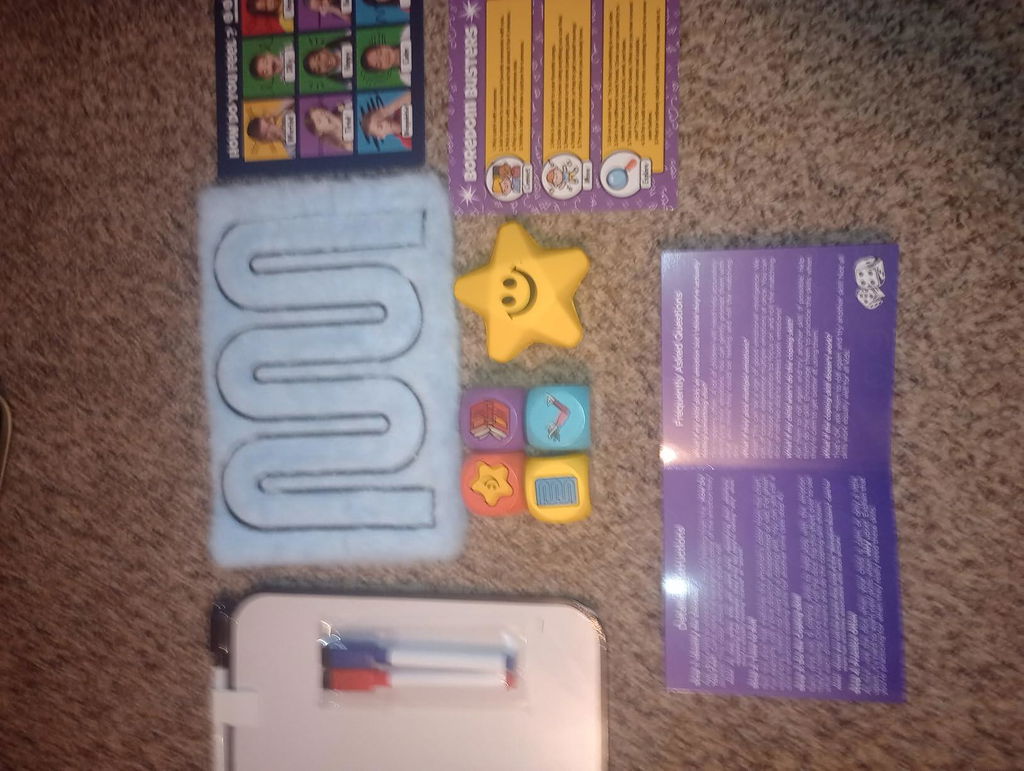
My only complaint- and it's a ridiculous one- is that there's space for five dice, but only four come in the set. This would drive me bonkers wondering where the fifth is, every time I used it.
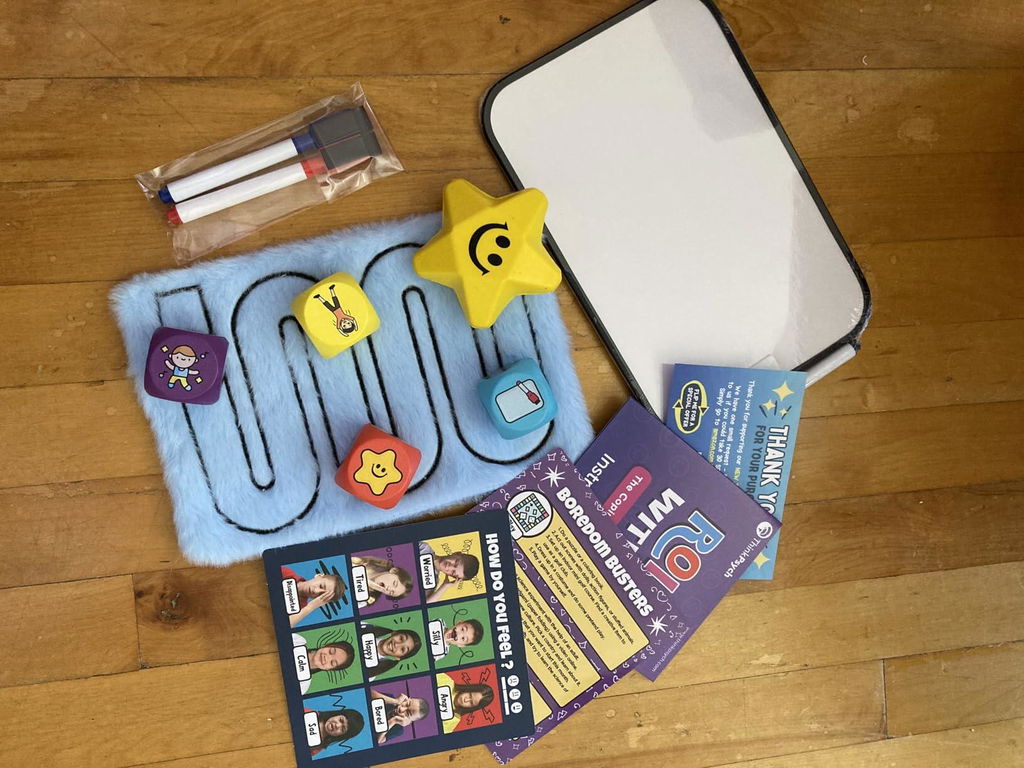
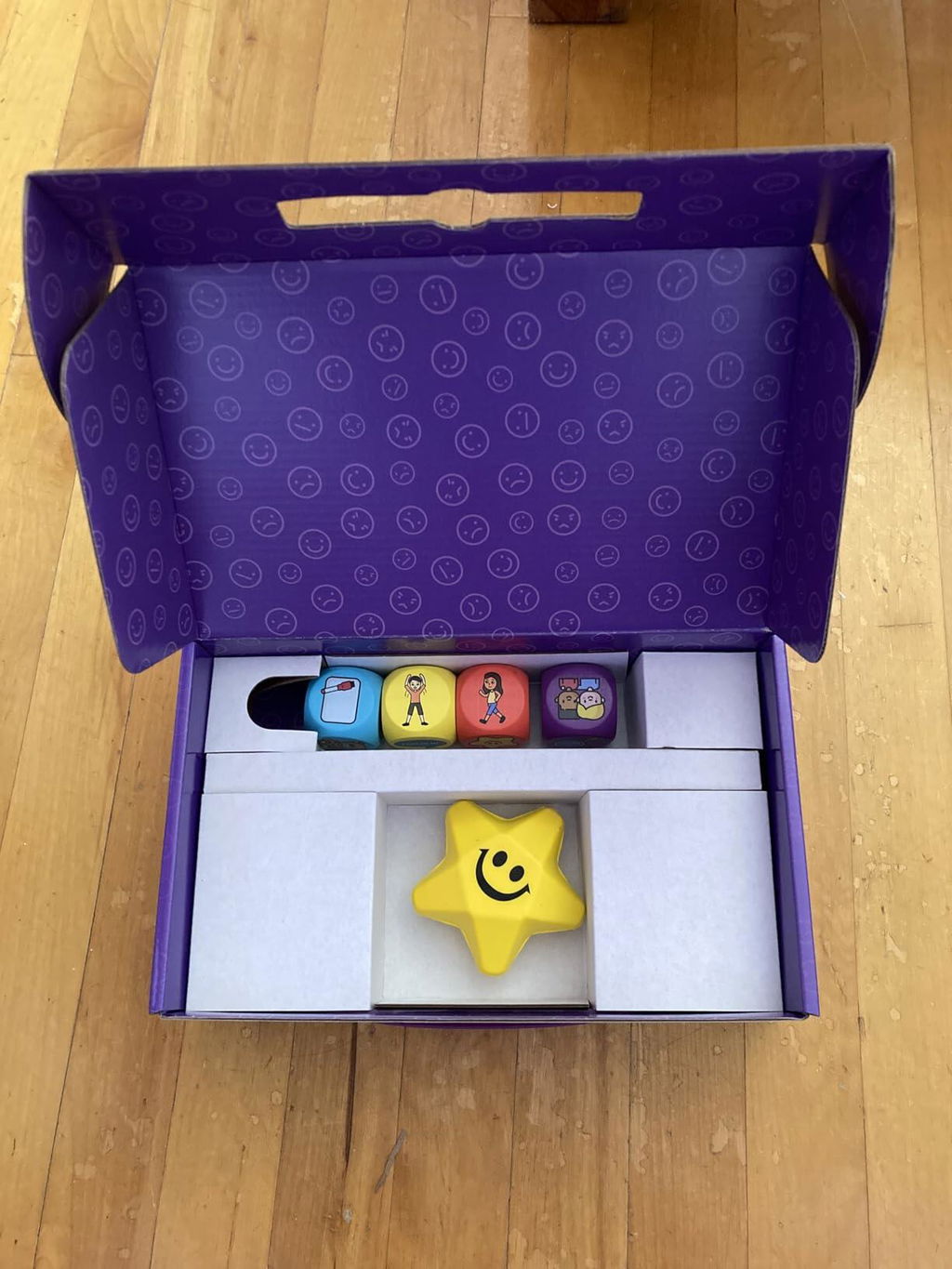
This is an extremely helpful CBT kit to have, for therapists or parents alike. You get the child to identify their feeling, and then they roll the dice with the matching colour to discover a coping skill that corresponds with what they are feeling. These coping skills range from talking about it, using the stress star, movement, listening to music, muscle relaxation, playing a game, plus many more.
I think this is an excellent tool to help kids understand exactly what they are feeling, to be more mindful, and to establish positive coping habits before becoming teens. My son’s favourite item in this kit is the mindful mat where you trace the path with your finger, or with a marble, focusing on your breathing. I’d highly recommend this kit!
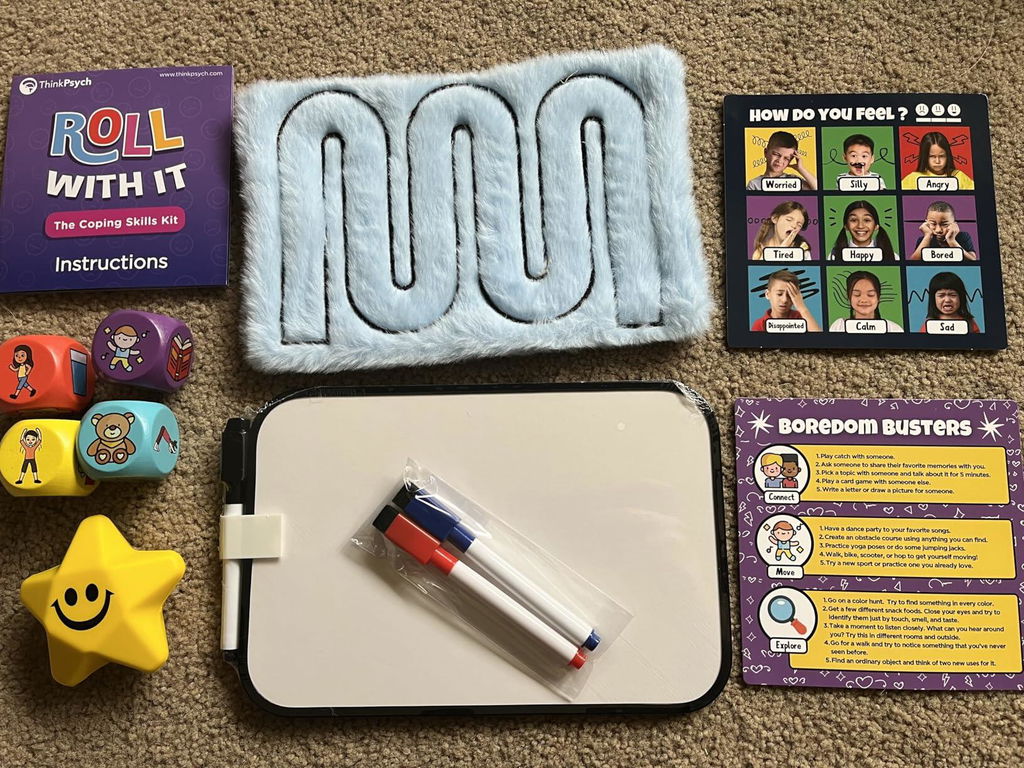
This coping skills kit is simple but thoughtful. It included color coded dice for different emotions and explanation of each skill on a card. The fidget toys are also high quality, and very satisfying for the touch. There will be some challenges like helping kids to recognize emotions and explain coping strategies, but worth having as a tool kit for learning.
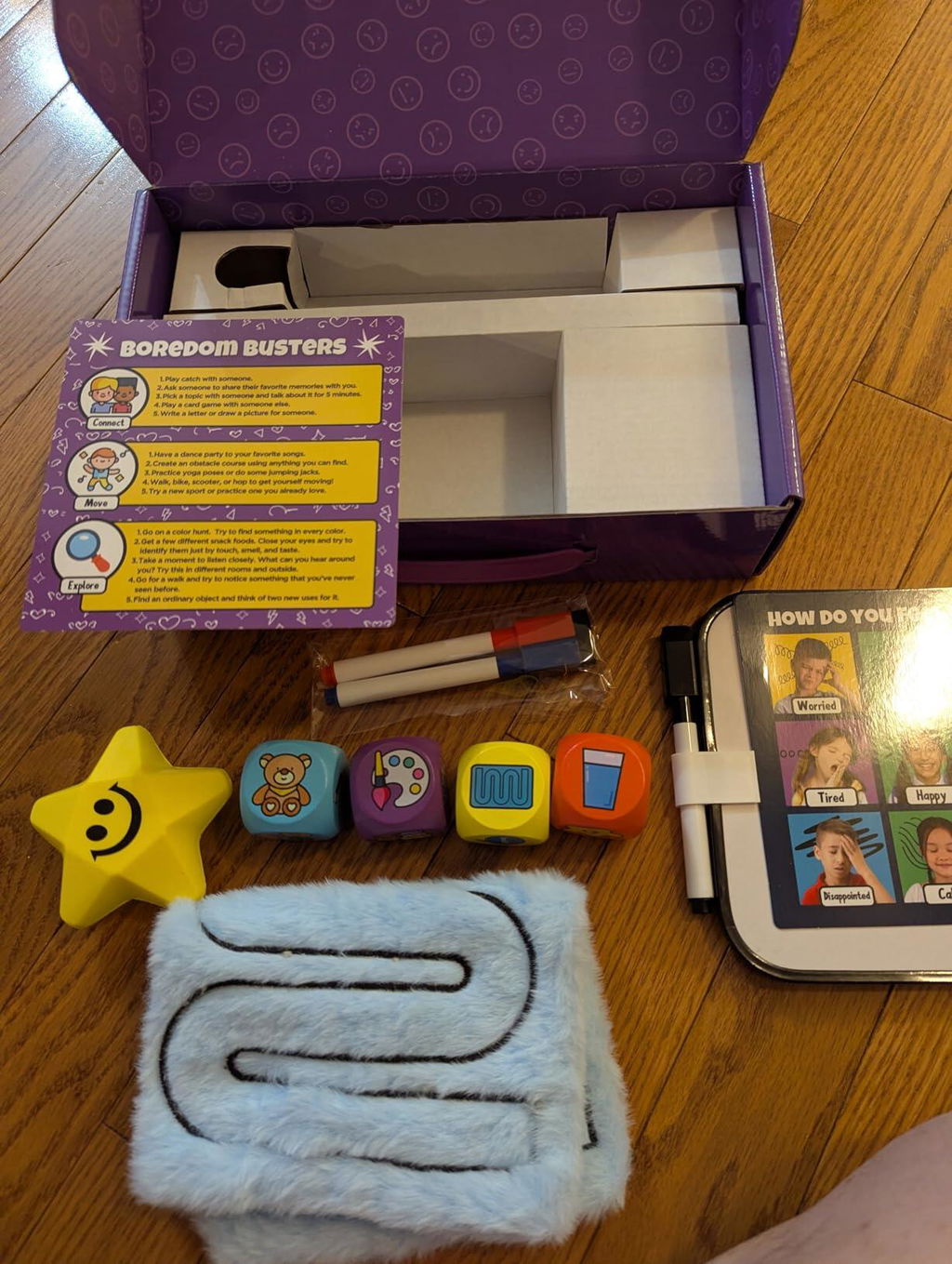
This definitely has a small learning curve for parents or non-professionals. Personally I think this can work for some adults too : ) (diagnosed late in life) I was instantly drawn to the blue mat. It's so soft and has a bead sealed within that you can push through the trail and back again. Very zen and calming... for any age. I love the bright colors, large dice, and the graphics are age appropriate.
The real benefit with this game is that it's a game amd and it can be used to redirect behavior while teaching coping skills and self regulation. As a parent of two neurodivergents, what works for one may not work for the other but the worst thing you can do is not try available tools, especially those created by professionals in the field.
Not everyone can afford CBT and other therapies for children and insurers are still only partially on board with coverage. For those parents, I especially say this may be worth a try and another tool in your belt.
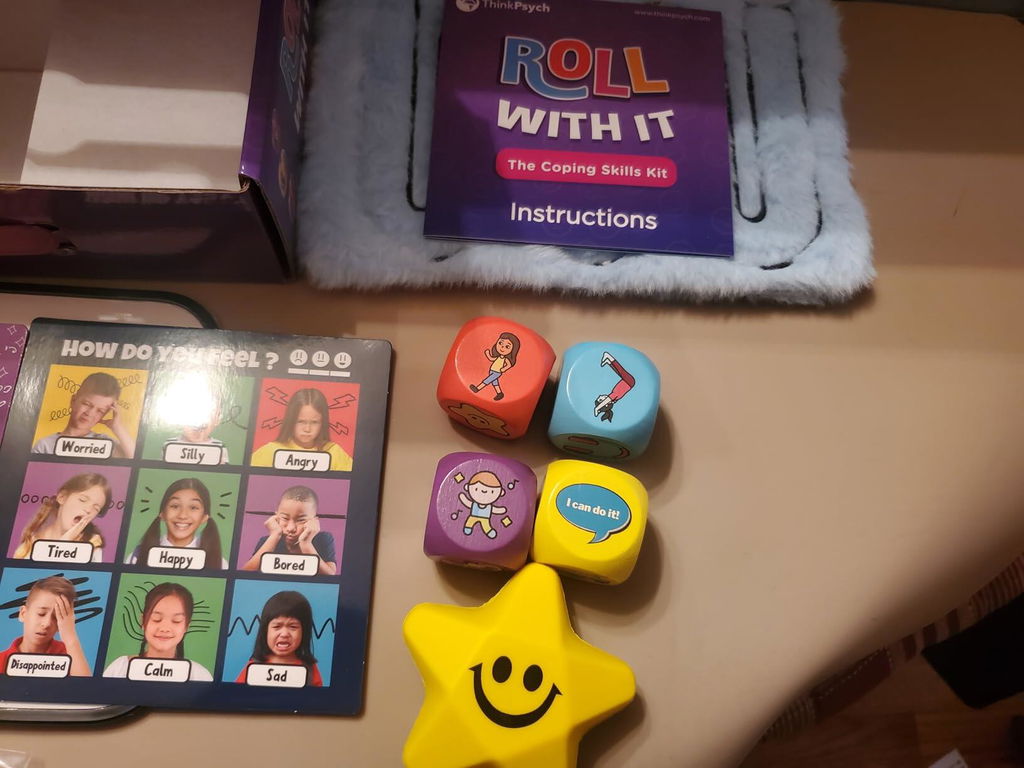
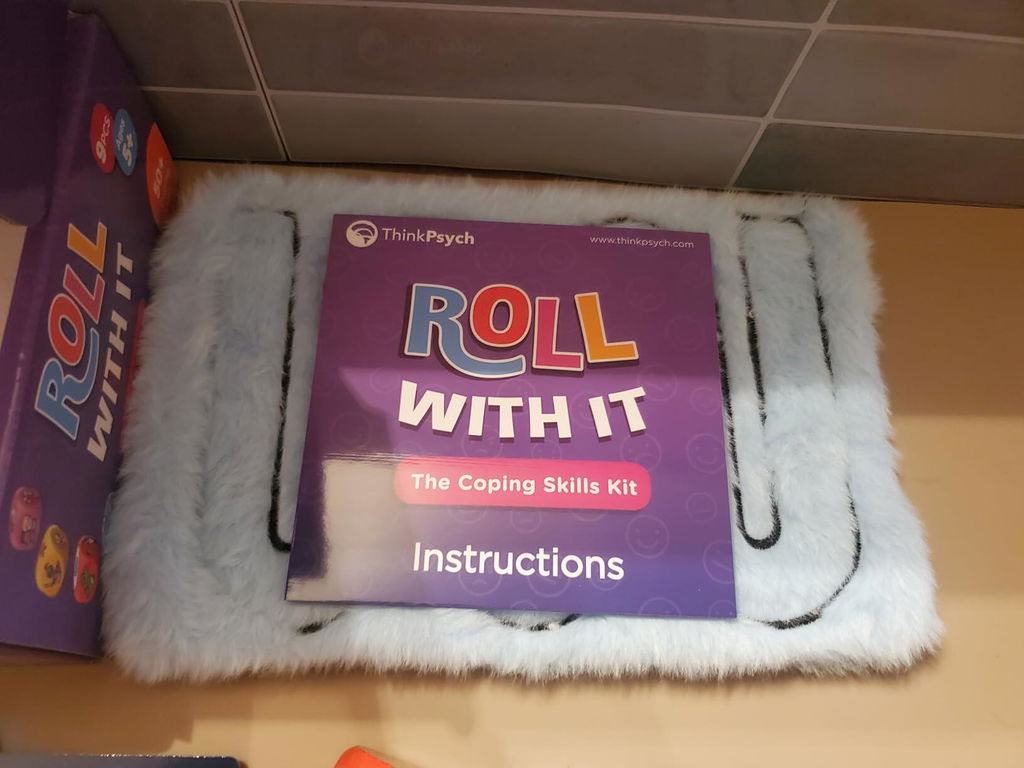
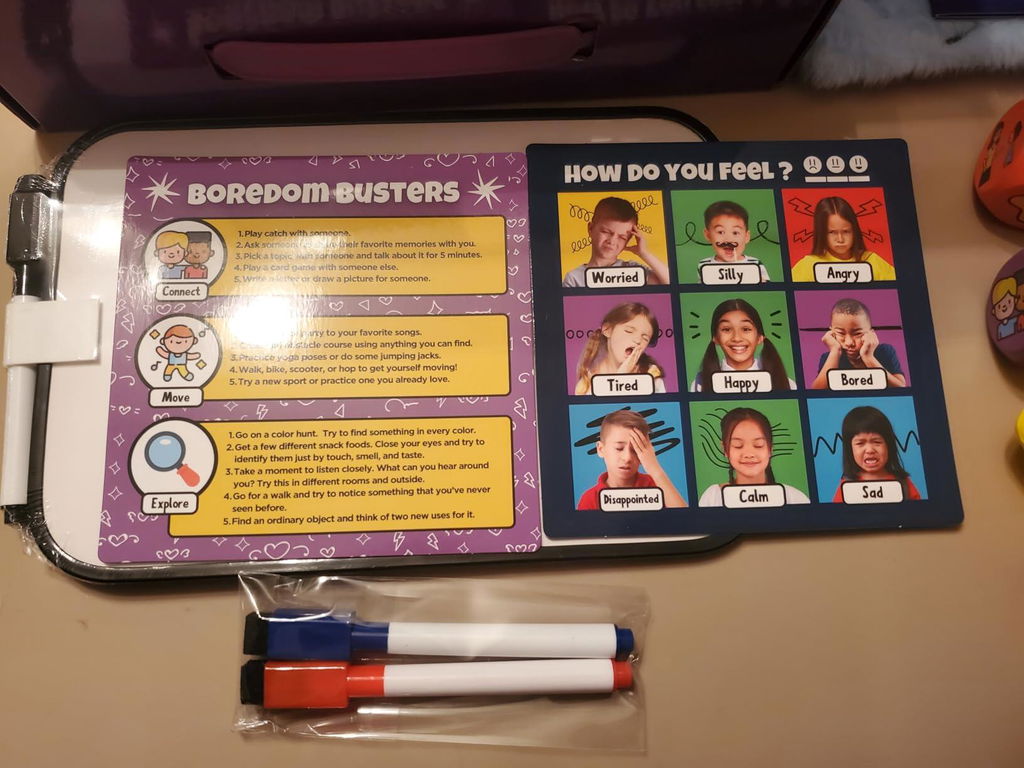
As a child therapist I love this game for the office. It has the play aspect to it while concepts such as mindfulness, emotional regulation, and coping skills are being taught.
For a game at home, it's a little complicated. I feel the parent needs some prep time to be taught in the skills of this game along with the ability to set aside everything else while playing this game. I find that so many parents are pulled in too many directions at home to be able to do this. There are other games that are a little less complicated for parents to play with their kids that may be better suited.
With that said, this would be a great follow up at home to compliment therapy:)
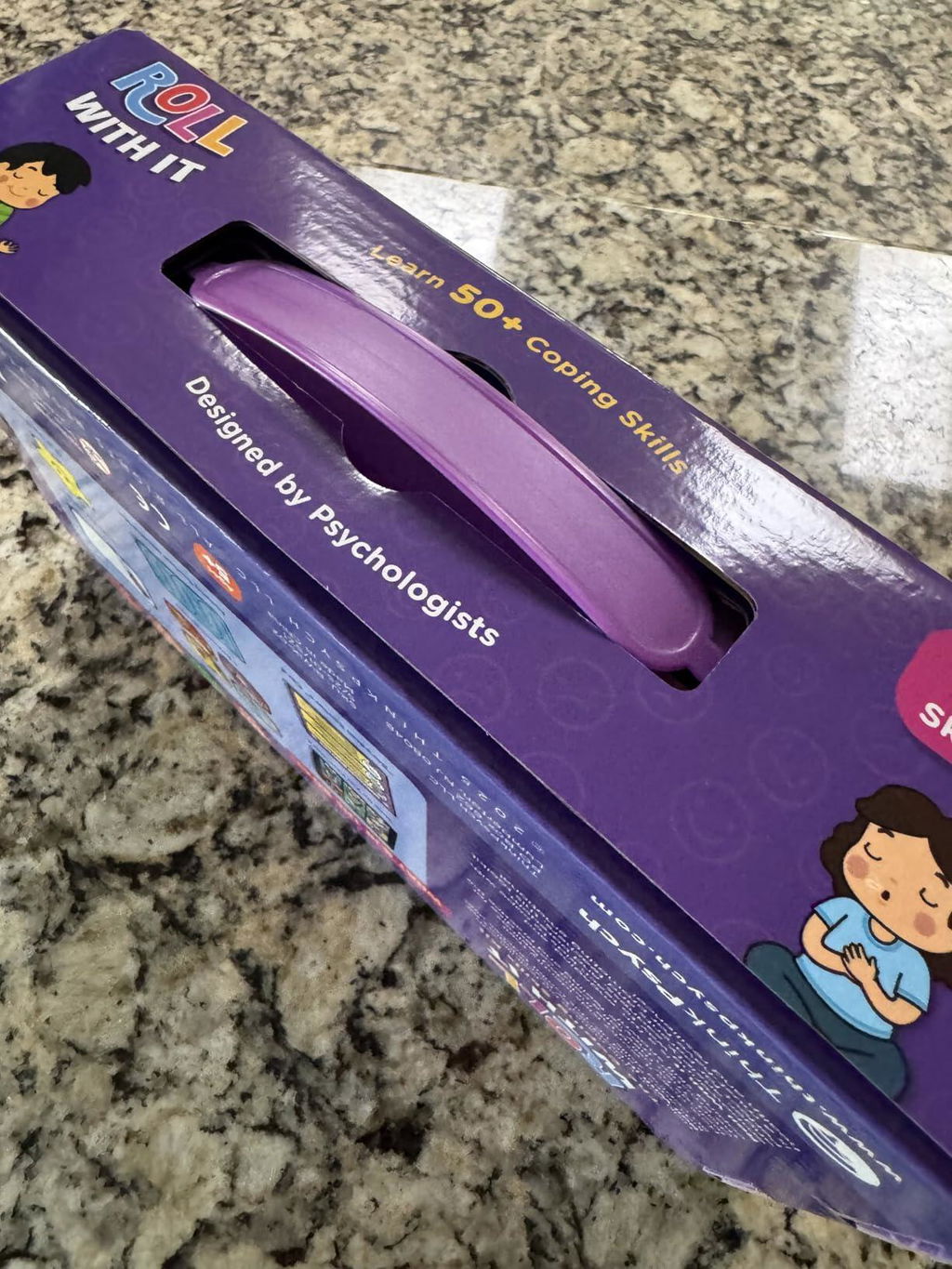
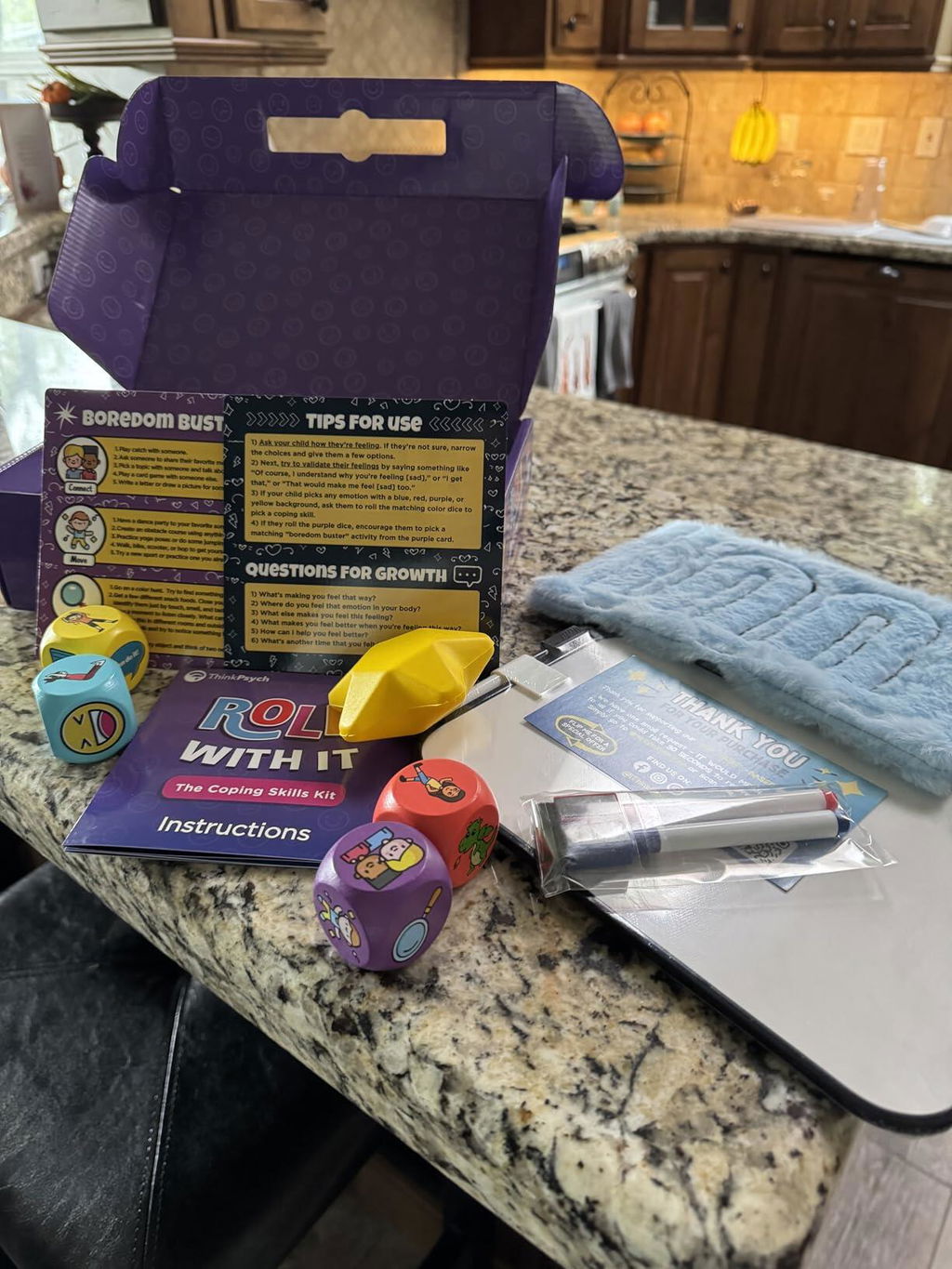
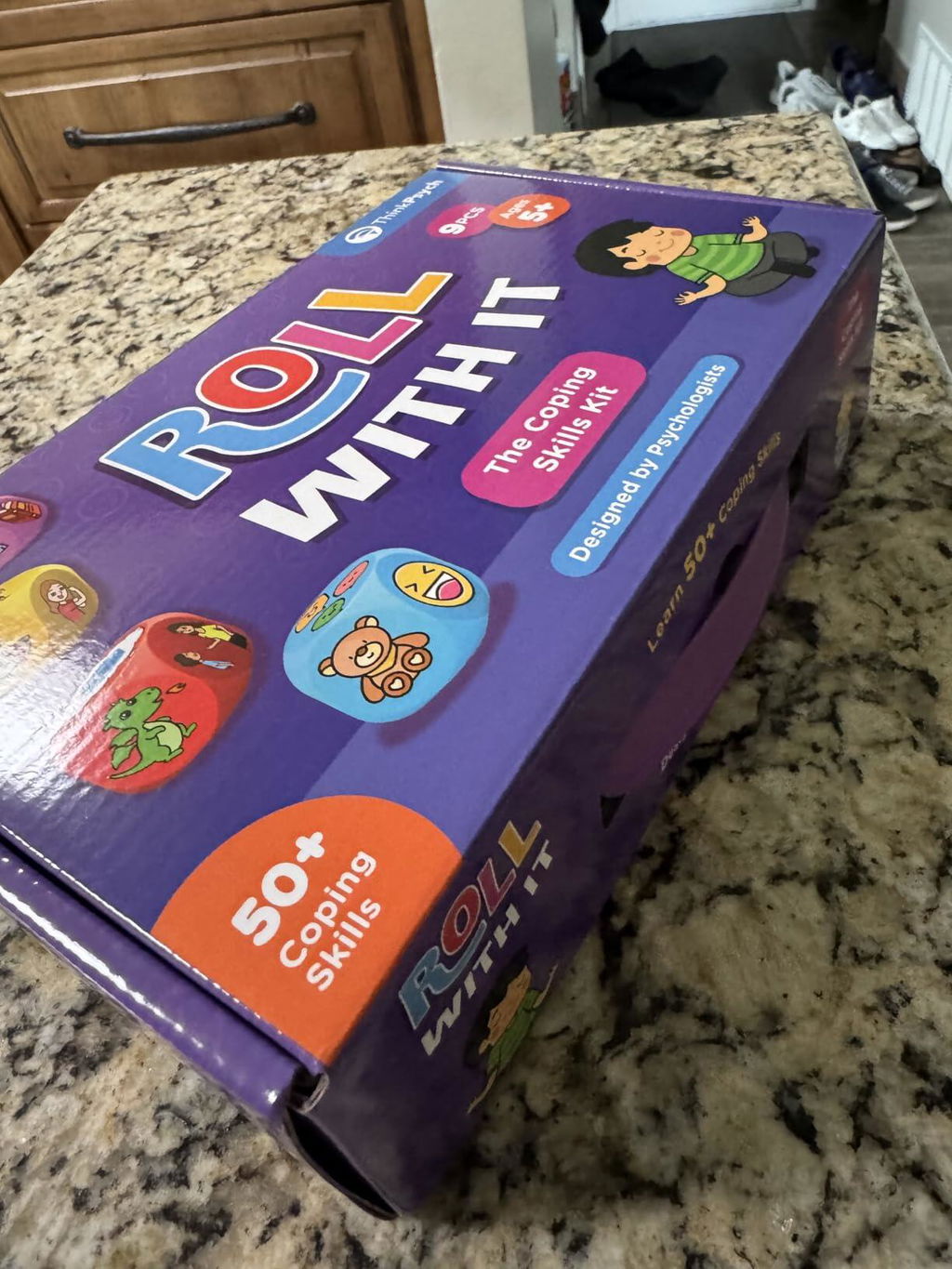
This set is well made and thoughtful. It comes with quality products, a multitude of coping skills, and definitely helps kiddos with emotional regulation. Great option for home use or a therapy office. Very helpful tool
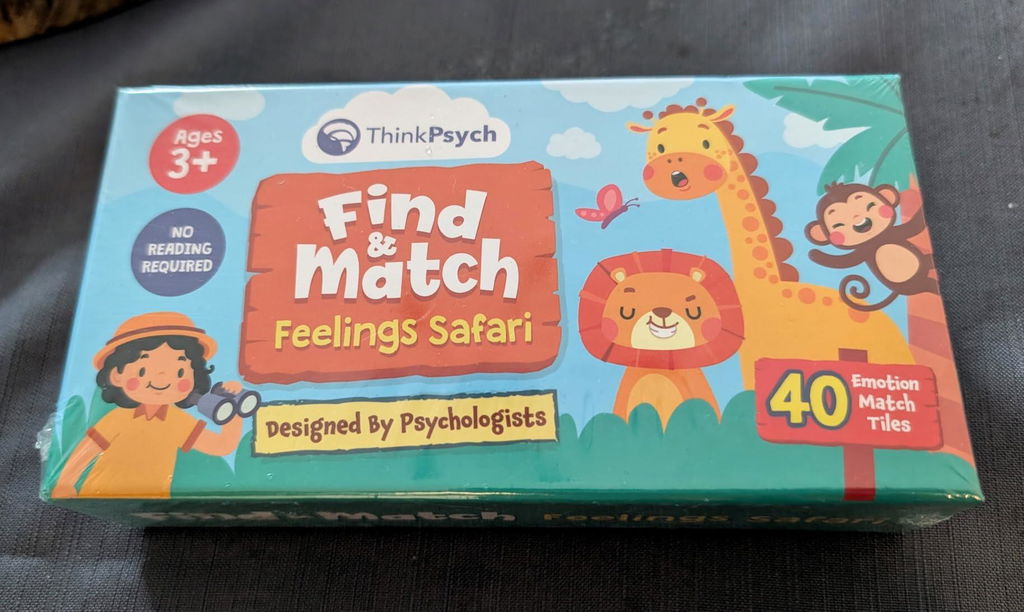
I got this find and match game for my 3‑year‑old and it’s been a fun, screen‑free activity, specially since he's been increasingly asking for more screen time. It’s simple to understand, you just match the cards either by the facial expression or by the character. The illustrations are bright and clear, so no reading is needed, and my kid picked it up right away and I personally like the art style.
It comes with 40 thick, laminated tiles that feel sturdy and are easy for little hands to handle without roughing them up. If you have a cottage or chalet, this would definitely be a fun game to bring along to keep the young ones entertained. Overall, it’s been a nice way to mix playtime with a bit of learning without a high cost.