
Mindfulness Games for Kids
A mindfulness game is any game that asks a child to notice what is happening in their breath, their body, or their surroundings. That might mean holding a yoga pose to ask for a card, following a short guided meditation printed on a card, or rolling a die that lands on a calming strategy to try. Here at ThinkPsych, we like to come up with creative ways to help kids develop critical life skills like mindful awareness!
For younger kids who would rather move than sit still, Go Fish: Yoga! is often the easiest way in. For kids 8 and up who are ready for a quiet practice, Mindfulness for Kids: Space Edition offers short guided meditations they can read and do themselves. And for the moments when a big feeling has already arrived, Roll With It gives your child a hands-on way to choose something calming to do. Here is how each one works, with the details worth knowing before you buy.
Quick comparison
| Game or tool | Best for | Ages | Format |
|---|---|---|---|
| Go Fish: Yoga! | Mindful movement for kids who love to move | 5+ | Card game, 2–6 players |
| Mindfulness for Kids: Space Edition | Short guided meditations for kids | 8+ | 52 meditation cards |
| Roll With It Coping Skills Kit | Picking a calming strategy when upset | 5+ | Coping dice kit |
| Escape from Anger Mountain | Practicing coping skills, together | 6+ | Board game, 2–6 players |
| Feelings & Coping Skills Posters | A visual reminder on the wall between games | 3+ | Laminated posters |
| Moments of Gratitude | A gratitude habit for teens (and parents) | 13+ | 52 reflection cards |
Start with mindful movement
Plenty of kids find sitting still and breathing slowly a lot to ask, at least at first. For them, mindfulness may come easier through movement. Holding a pose asks a child to notice where their weight is, what their arms are doing and how their breath changes when they wobble, which is a great introduction to mindfulness.
Go Fish: Yoga! (ages 5+, 2 to 6 players) puts that inside a game your child probably already knows. Each card shows a yoga pose, and instead of asking “do you have a tree?” you act the pose out to ask for a match. Pairs are worth points, and 10 bonus movement-challenge cards add extra points along the way. The poses are beginner-friendly and shown right on the card, so pre-readers can play and no mat or instructor is needed. Best of all, the grown-ups have to do the poses too, which tends to lead to lots of laughs! If yoga is landing well, we go deeper into how yoga can help children build self-regulation skills, with a few simple poses to try.
When you want a short, quiet practice
Once a child can read comfortably, a short guided meditation becomes something they can do on their own.
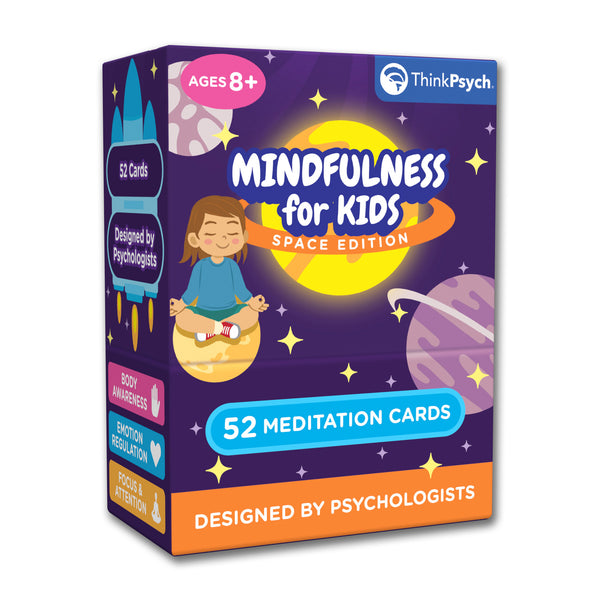
Mindfulness for Kids: Space Edition (ages 8+) is a deck of 52 space-themed guided meditations, each one a complete practice of about two to five minutes. The cards are organized into seven categories covering practices such as breathing awareness, body scans, sitting meditation and loving-kindness, and the space theme turns each one into a small journey through the stars. You draw a card, prop it on the included display stand and follow along. The cards are oversized and written in plain language, so no meditation experience is needed, and younger children can join in with an adult reading aloud. It works well folded into a routine you already have, such as winding down before bed. For more on building the habit, see our guide to helping kids start a daily meditation practice.
When a big feeling is already here
Mindfulness is easiest to learn when everyone is calm, and hardest to use when it is needed most. Choosing a strategy in the middle of a meltdown is a lot to ask of anyone. That is where having something ready, and already practiced, can help.
Roll With It Coping Skills Kit (ages 5+) is built around four coping dice that point your child to more than 50 coping skills, from calming breaths to creative expression. The kit also includes a “How Do You Feel” card, an Anxiety Soother mindful mat, a write-and-draw board, a star stress ball and an instruction guide. The dice take the choosing away, which may be the most useful part when a child is already upset: they roll, and the die tells them what to try. Many families teach it during a calm moment, then leave it out as a calm-down tool a child can go to on their own.
Escape from Anger Mountain (ages 6+, 2 to 6 players) brings the same idea to the family table. Players roll and move to escape the mountain before frustration wins, using real coping strategies along the way. Its 125 cards cover coping skills, affirmations, sharing prompts and movement activities, and the each game takes about 30 minutes. A board game also brings a small, real dose of frustration with very little at stake, which is a fairly safe place to practice staying calm. For the bigger picture, our post on helping an overwhelmed child manage big feelings covers what to do in the moment.
Keeping it visible between games
A game teaches the skill. A reminder on the wall can help your child find it again later, without you having to prompt them.
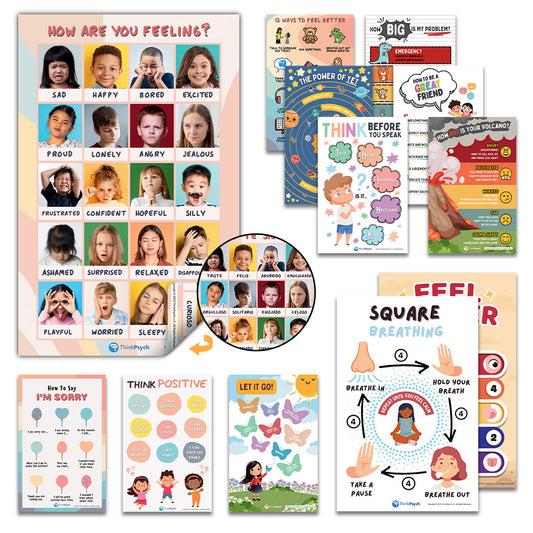
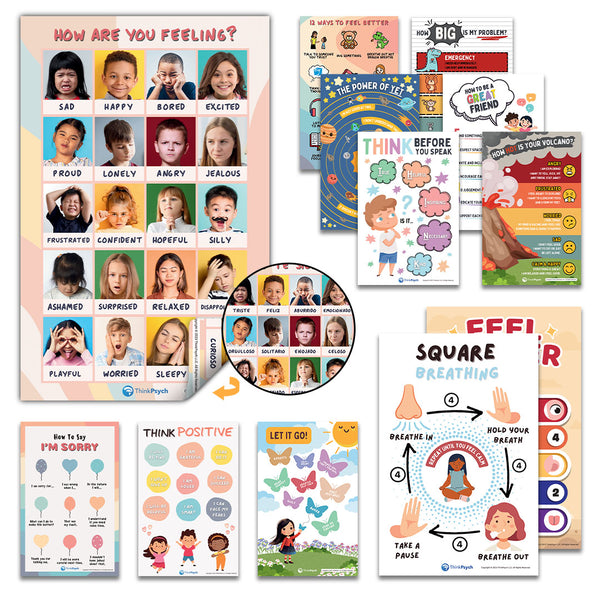
Feelings & Coping Skills Posters (ages 3+) are 11×17 laminated posters with English on one side and Spanish on the other. The two-poster set covers 20 emotions and 12 coping strategies, using real photos of children rather than emojis, and the larger 6- and 12-poster sets add more social-emotional topics. You can write on them with a dry erase marker and wipe them clean, so they hold up near a calm-down corner or on a bedroom wall. Pairing a poster with a game your child already enjoys can help the strategies stick, since they will recognize them from play.
For tweens and teens
Older kids often enjoy mindfulness more when it is not presented as a lesson. Two options tend to suit them. The Space Edition cards above are written so kids 8 and up can read and lead the meditations themselves, which gives a tween some ownership over when and how they practice.
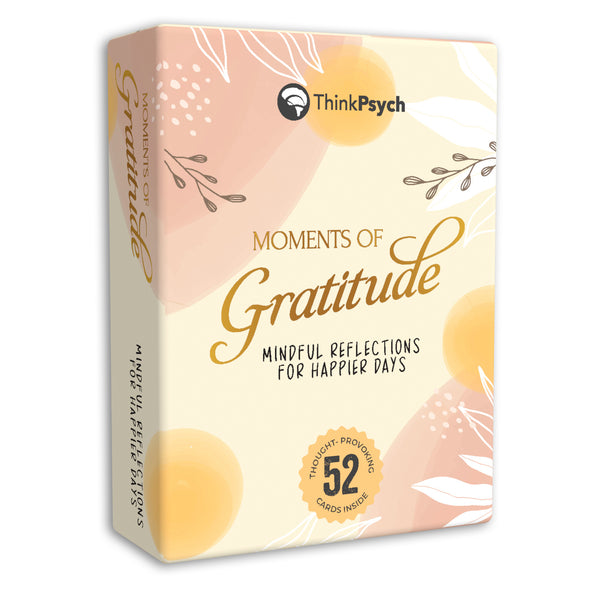
Moments of Gratitude (ages 13+) is a deck of 52 reflection prompts for building a gratitude habit. Teens can use it solo, as a journaling companion, or as a group activity, and takes just about five minutes a day. Gratitude is a close cousin of mindfulness: both ask you to pause and pay attention more deeply. It is also a nice one for a parent to do alongside a teen rather than assign. If you want a few no-materials ideas to try first, our list of easy mindful moments for kids includes breathing games and a simple body scan.
Building a set
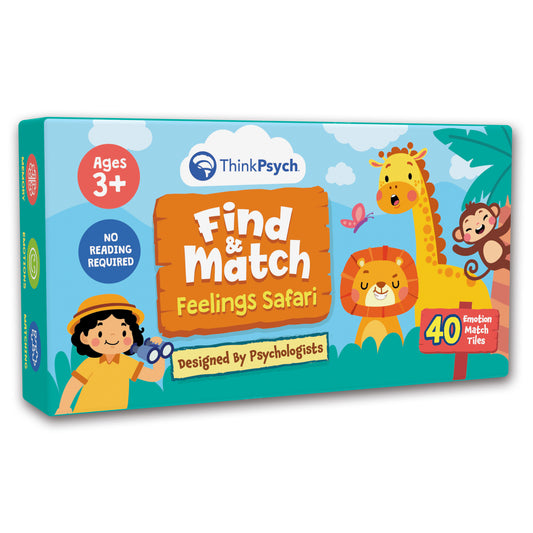
If you would rather start with a set than a single game, the Emotional Regulation Skills Complete Collection pairs Roll With It and the 12-pack of bilingual posters with two of our feelings games, Find & Match: Feelings Safari and Go Fish: Faces & Feelings. If naming emotions is the step before calming them for your child, our guide to feelings games for kids by age and stage covers those in more detail. From there, the mindfulness and wellness collection and the emotions and coping skills collection are the places to browse.
Frequently asked questions
What are mindfulness games for kids?
Mindfulness games are games that build noticing the present moment into how they are played, through breathing, body awareness, or a short guided practice. Examples include acting out yoga poses in a card game, drawing a card with a short guided meditation, or rolling dice that land on a calming strategy.
What age can kids start mindfulness?
Simple breathing and movement activities can work for preschoolers, especially when they are playful and short. Movement-based games like Go Fish: Yoga! suit ages 5 and up, while sitting meditations that a child reads and leads independently, like Mindfulness for Kids: Space Edition, are designed for ages 8 and up.
How long should a mindfulness activity be for a child?
Short is usually fine, especially at the start. A practice of a few minutes that a child is happy to repeat is likely to do more than a long one they resist. Each Space Edition meditation runs about two to five minutes, which is an easy length to fold into a bedtime routine.
Does mindfulness actually help kids?
The research is encouraging but modest. A 2019 meta-analysis of 33 randomized controlled trials with more than 3,600 children and adolescents, by Dunning and colleagues, found small benefits for attention, executive functioning, anxiety and stress, depression and behavior across all of the trials. In the trials that compared mindfulness with another active program, the benefits held for mindfulness, depression and anxiety and stress. Individual games are usually not trialed on their own, so it is fair to say the overall approach has support.
Do I need to know meditation or yoga to teach my child?
No. Games and cards designed for kids usually carry the instructions themselves. Go Fish: Yoga! shows every pose on the card, and each Space Edition card walks through one complete practice in plain language. It often helps a great deal if you join in rather than supervise.
Sources
- Dunning, D. L., Griffiths, K., Kuyken, W., Crane, C., Foulkes, L., Parker, J., & Dalgleish, T. (2019). Research Review: The effects of mindfulness-based interventions on cognition and mental health in children and adolescents, a meta-analysis of randomized controlled trials. Journal of Child Psychology and Psychiatry, 60(3), 244–258.