
Best Therapy Games for Kids (and When to Use Each One)
If you work with kids, you already know games are not just a reward at the end of the session. They can be the foundation of a great session! A game gives a child a reason to practice a skill they would refuse to practice if you asked directly, and it gives you a window into how they handle turn-taking, frustration, and losing while they play.
The hard part is not deciding to use games. It is choosing the right one when you have twenty minutes, a specific goal, and a kid who's not ready to open up.
So this guide is organized around what you are actually working on, rather than by product category. Each section covers what the skill looks like in practice, which games fit it, and the details that decide whether a game works in your setting: age range, number of players, and how much reading it asks of a child.
Quick comparison
| Game | Best for | Ages | Players |
|---|---|---|---|
| Go Fish: Faces & Feelings | Naming and acting out emotions | 6+ | 2–6 |
| Feelings Bingo | Naming and acting out emotions in a group | 5+ | 2–6 |
| Find & Match: Feelings Safari | Feelings words with pre-readers | 3+ | 1–4 |
| Roll With It Coping Skills Kit | Practicing coping strategies | 5+ | 1+ |
| Escape from Anger Mountain | Anger and frustration tolerance | 6+ | 2–6 |
| Chat Chains | Conversation and social skills | 8+ | 2+ |
| Dive In | Rapport and family sessions | 5+ | 2+ |
| Talent Jam | Confidence and being seen | 8+ | 3–6 |
| The Exposure Deck: Social Anxiety Edition | Exposure work for social anxiety | 13+ | 1+ |
| Moments of Gratitude | Gratitude practice | 8+ | 1+ |
When you are working on naming emotions
This is a foundation skill, and it is where most kids referred for emotional or behavioral concerns are actually stuck. A child who cannot label the difference between frustrated and embarrassed cannot use a coping strategy for either one. We go into why this one comes first in why teaching children to identify emotions is important.
The first question to answer here is whether a child is able to read. A game that requires reading turns a feelings activity into a literacy assessment for the pre-readers and struggling readers who often need this work most. These three games all have visual cues that remove the need for a student to be able to read to play.
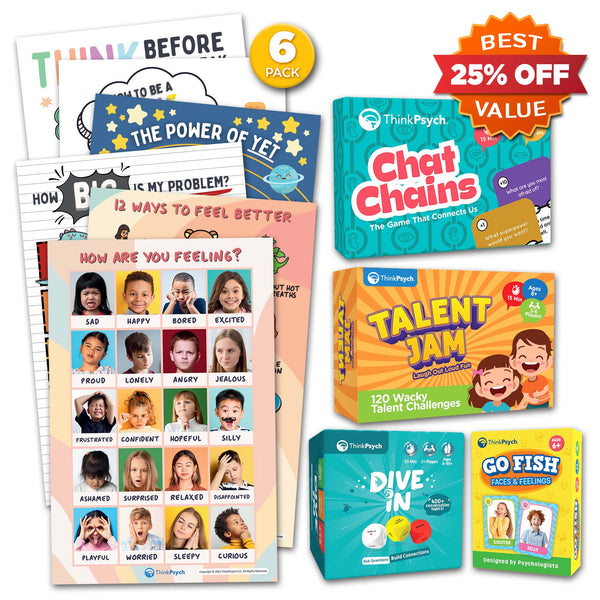
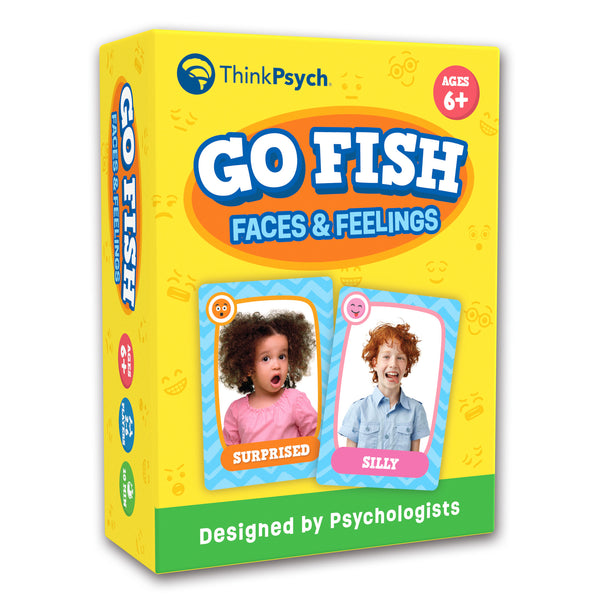
Go Fish: Faces & Feelings (ages 6+, 2 to 6 players) works because kids act out feelings to collect cards rather than naming them from a word list. The set includes 56 cards, 10 challenge cards, and 22 tokens, and plays as either Go Fish or Memory Match, which gives you two ways to play from one box. Good default for individual sessions and small groups.
Feelings Bingo (ages 5+, 2 to 6 players) is the better pick when your group is bigger or your attention span is shorter. Kids act out emotions to indicate the next draw, which leads to lots of laughs. The deck spans human emotions, animal characters, and expressive objects, which gives lots of variety to the game. No reading required.
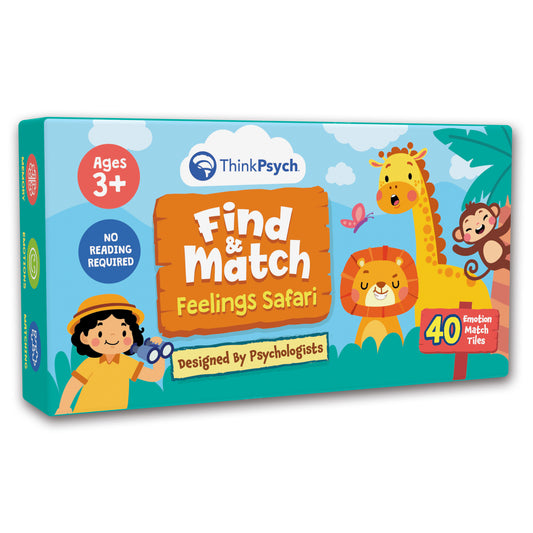
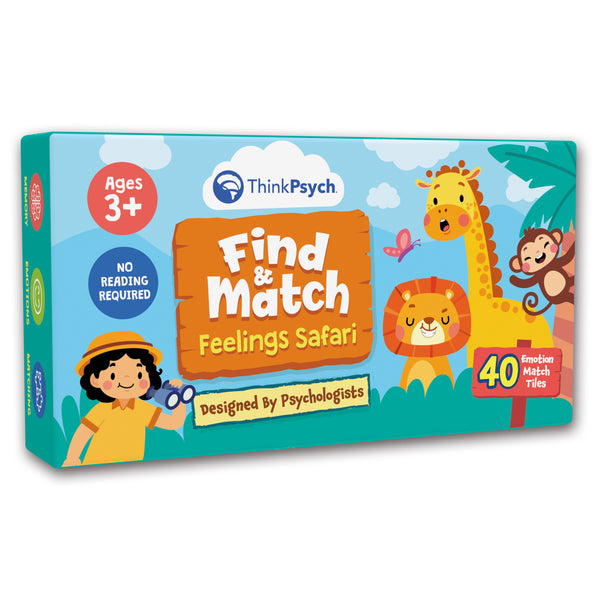
Find & Match: Feelings Safari (ages 3+, 1-4 players) covers 10 core emotions across 40 laminated tiles using expressive animals and children. It is the right choice for early childhood and for any caseload where durability matters. Best of all, kids can play by themselves or with their parents to continue practicing.
When you are working on regulation and coping
Naming feelings comes first, but regulation is usually what the child needs to make real progress. The trouble with coping skills work is that it can stay abstract and not generalize to every-day life.
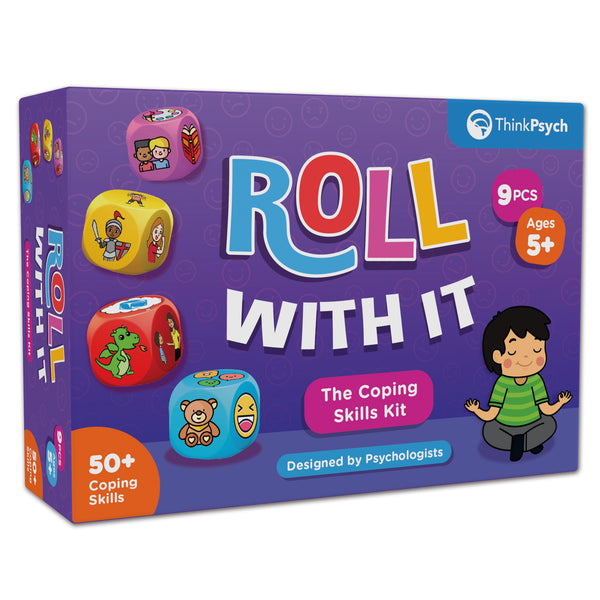
Roll With It Coping Skills Kit (ages 5+) is a nine-piece kit built around coping dice, with a feelings identification card, sensory mat, stress ball, and guide covering more than 50 coping strategies. The dice do the work that a strategy list cannot: they remove the choice paralysis of "what should I do" and they make it fun to pick and do a coping skill.
Escape from Anger Mountain (ages 6+, 2 to 6 players) is the one to reach for when frustration tolerance is the target rather than coping vocabulary. Players move down the mountain using real coping strategies they draw from multiple colorful card decks. The board game format is doing something specific here: it produces genuine frustration in the room, safely, which is the best way to practice tolerating it.
Both fit naturally into counseling sessions and classroom SEL blocks. If anger is the specific target, we have more strategies in anger management tips for kids.
When you are working on conversation and social skills
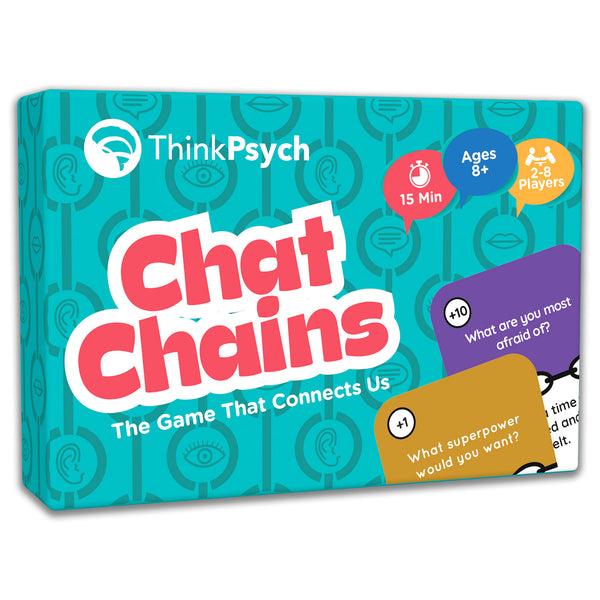
Chat Chains (ages 8+) is a unique conversation game that helps kids to "see" the building blocks of a conversation. You start with a topic card, and then add question and answer cards to build the conversation chain. There are 150 conversation topics designed to cover a lot of topics that are important to kids, teens, and even adults. If you have one social skills tool and a mixed caseload, this is the one that stretches furthest.
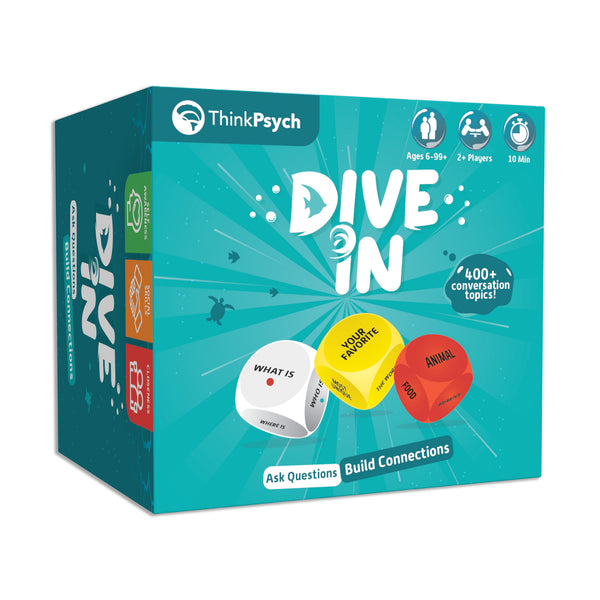
Dive In (ages 5+) uses dice to construct a conversation topic/question and cards to go deeper. There are over 450 topics in all. Its real strength is family and multi-generational sessions, because there are two "levels" built into each card to let a seven-year-old and a parent play the same game without either being talked down to.
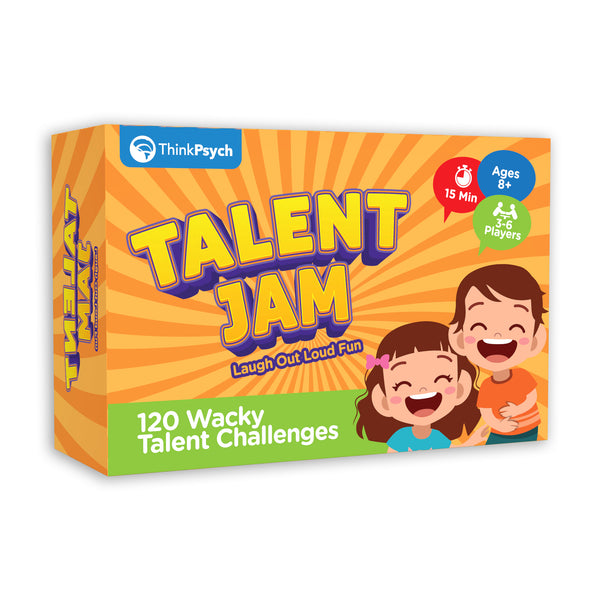
Talent Jam (ages 8+, 3 to 6 players) targets something narrower: the willingness to be seen. 120 performance challenges across drawing, singing, acting, and movement, with one performer and multiple voters each round so nobody sits idle. This is a confidence and expressive risk-taking tool rather than a conversation tool, and it is particularly useful with selectively quiet or socially anxious kids once rapport is established.
When you are doing exposure work
The Exposure Deck: Social Anxiety Edition (13+) is the outlier in this list because it is a clinical tool rather than a game. It holds 150 ready-made exposure challenges spanning conversations, public speaking, assertiveness, daily life, and social media, and ships with a therapist guide, a client quick-start guide, and a reference card. Designed by Lauren J. Hoffman, PsyD, using exposure therapy principles.
The practical value is that it removes the blank-page problem. Building a fear ladder from scratch with an anxious teen can take up valuable session time and can produce a ladder that skips straight from easy to impossible. Working from a fixed set of graded challenges makes the pacing conversation more concrete and fun. For younger kids facing the same worries, helping a child cope with worry or fear covers the everyday version.
When you are building gratitude habits
Moments of Gratitude (ages 8+) contains 52 questions that help kids, teens, and adults develop a gratitude practice. Research has demonstrated that intentional gratitude practice has positive benefits for improving mood, reducing stress, and increasing resilience. These cards can also work great as a two-minute closing ritual at the end of each session.
Not sure where to start?
If you are building a kit from scratch rather than filling a gap, the Counseling & Therapy Toolkit and the full therapy games collection are the places to start. For school-based work, the Elementary School SEL Toolkit and Middle School SEL Toolkit are grouped by grade band. And if you work from a CBT frame, our roundup of CBT games for kids covers that angle in more depth.
Frequently asked questions
What are the best therapy games for kids?
It depends on what you are working on. For naming emotions, Go Fish: Faces & Feelings and Feelings Bingo work without reading and suit ages 5 and up. For regulation and coping, the Roll With It Coping Skills Kit and Escape from Anger Mountain teach and rehearse specific strategies. For social skills, Chat Chains works across a wide range of ages and ability levels.
What therapy games work for a 20-minute session?
Chat Chains would be our top pick. Go Fish: Faces & Feelings and Find & Match: Feelings Safari both play in short rounds you can stop cleanly. Board games such as Escape from Anger Mountain run closer to 30 minutes and fit better in a longer block or across two sessions.
Which therapy games work for non-readers?
Feelings Bingo, Go Fish: Faces & Feelings, and Find & Match: Feelings Safari are all designed to be played without reading. Kids act out or match images rather than reading prompts, which keeps the activity focused on emotional skills rather than literacy.
Are therapy games evidence-based?
Play-based intervention has a substantial evidence base. Bratton and colleagues' meta-analysis of 93 controlled studies found a mean effect size of 0.80, and school-based SEL programming shows gains in social and emotional skills alongside academic achievement across 213 studies. Individual commercial games are generally not themselves trialed, so the evidence supports the method rather than any specific product.
Do therapy games work over telehealth?
Card-based and prompt-based games adapt well to video sessions, because the clinician can hold and read the cards. Games requiring shared physical components, such as board games and bingo, are harder without a duplicate set at the client's end.
Sources
- Bratton, S. C., Ray, D., Rhine, T., & Jones, L. (2005). The efficacy of play therapy with children: A meta-analytic review of treatment outcomes. Professional Psychology: Research and Practice, 36(4), 376–390.
- Durlak, J. A., Weissberg, R. P., Dymnicki, A. B., Taylor, R. D., & Schellinger, K. B. (2011). The impact of enhancing students' social and emotional learning: A meta-analysis of school-based universal interventions. Child Development, 82(1), 405–432.