

Counseling & Therapy Toolkit
Counseling & Therapy Toolkit


 30-day money back guarantee
 Free delivery on all US & Canada orders
 Developed by psychologists


"What makes the Counseling and Therapy Toolkit different? We didn't just bundle five random products. Every item in this collection is something we'd put in our own therapy room on day one."
How to use
- In Individual Sessions
- In Group Therapy
- In School Counseling
FAQ
What's included?
What ages is this for?
How do the products work together in a therapy setting?
Can these be used for social skills groups?
Is this suitable for kids with autism or anxiety?




What Our Customers Think
The posters covered multiple areas and the kids like them.
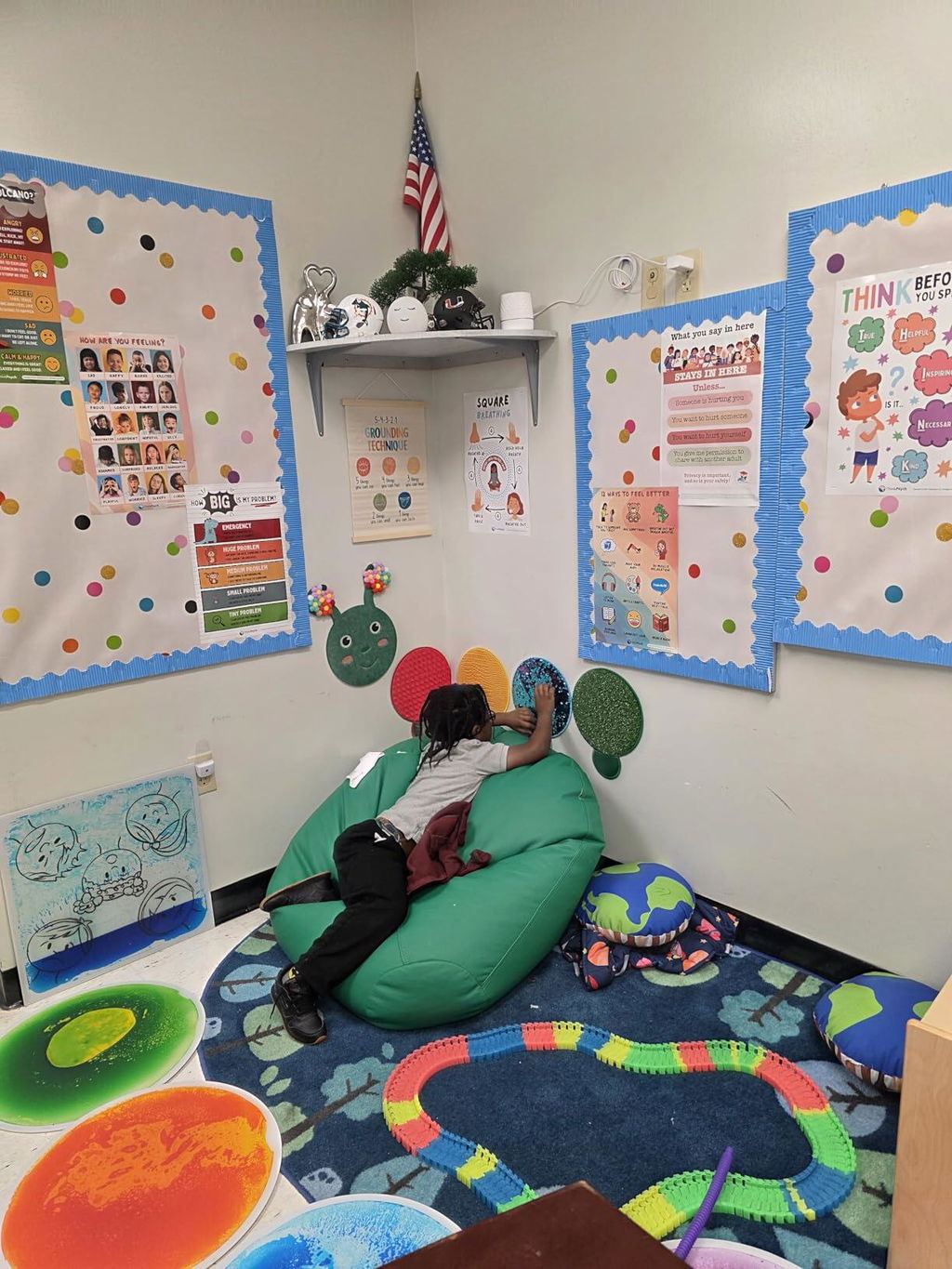
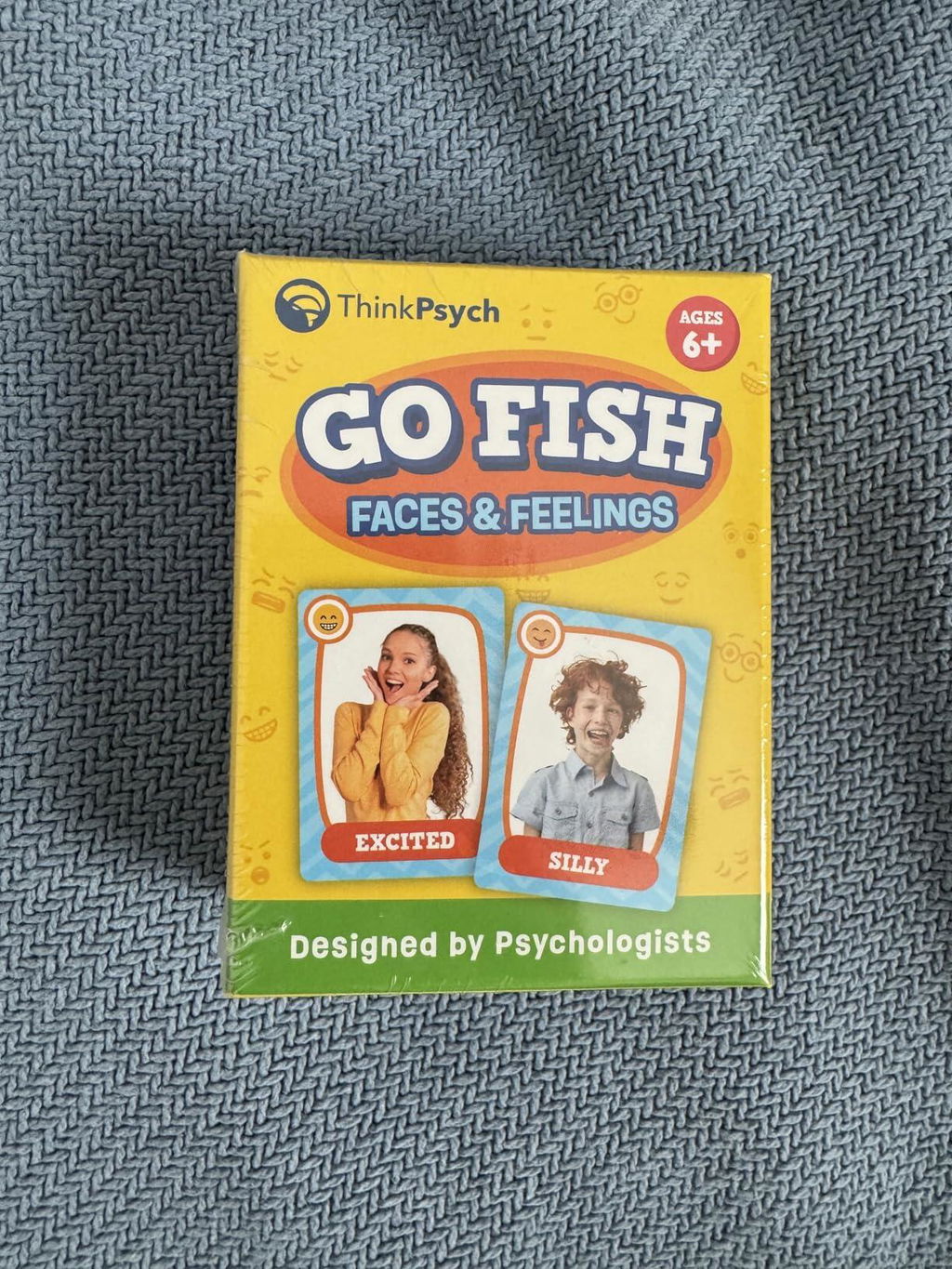
Super cute twist on Go Fish! You act out the emotion of the card you wanna match. This would be great for teachers to have in their classrooms. Great illustrations and kids find it fun to act out the different emotions. Cards are vibrant and emotions are also labelled which is great in case you don't understand the emotion. Fun and educational!
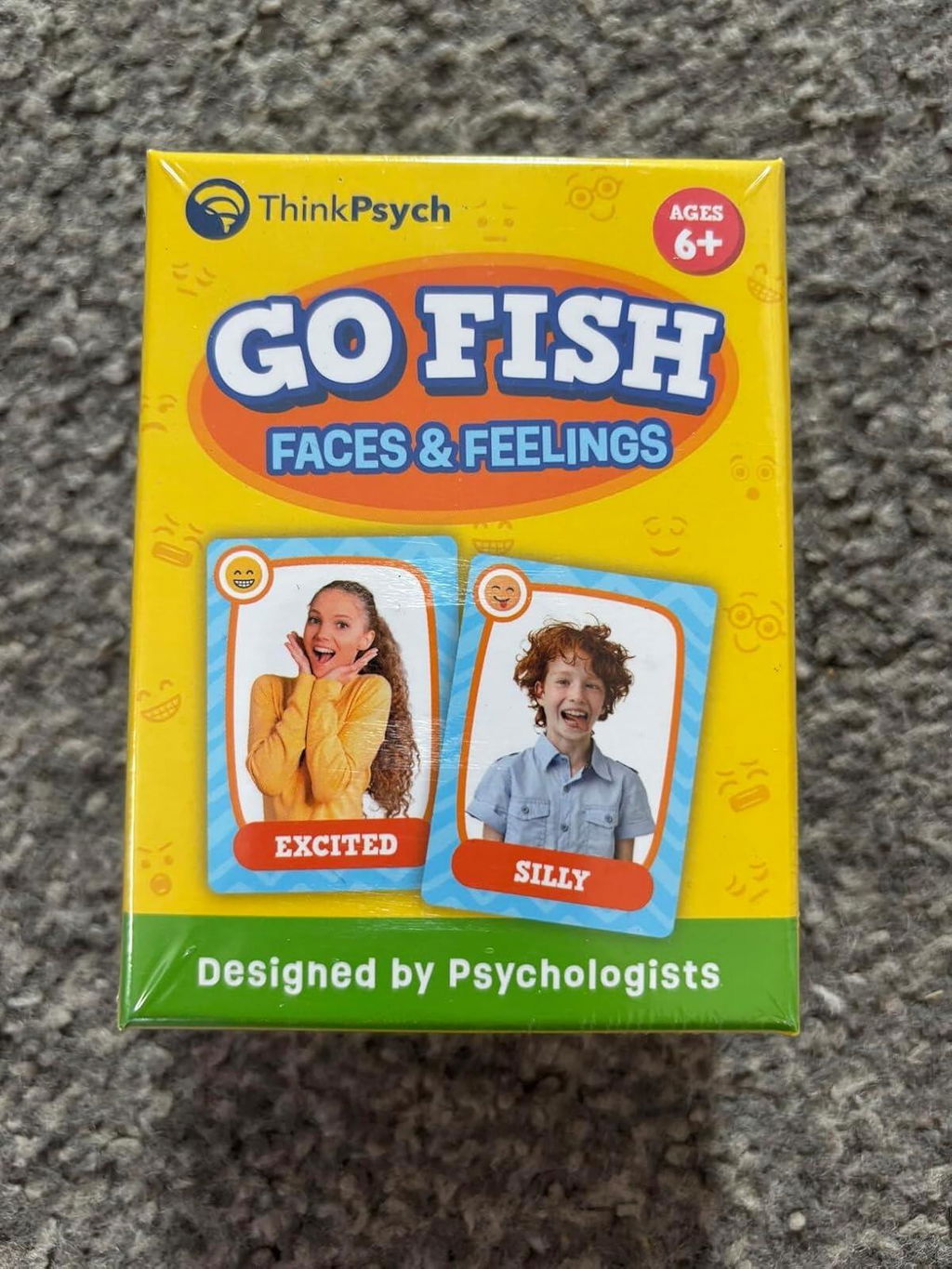
I got this card game to use in my classroom. It’s a nice twist on the classic Go Fish, by adding emotions to help teach children about the various feelings they may be experiencing. Game play can range from 2 to 6 players and the optimal age is 6 and up. Each session doesn’t take very long to play, and children can act out the feelings to collect cards which is a learning experience with real-world value. The cards are made well and have many different pictures of children expressing various emotions. I’m looking forward to playing this version of Go Fish with my students this year.
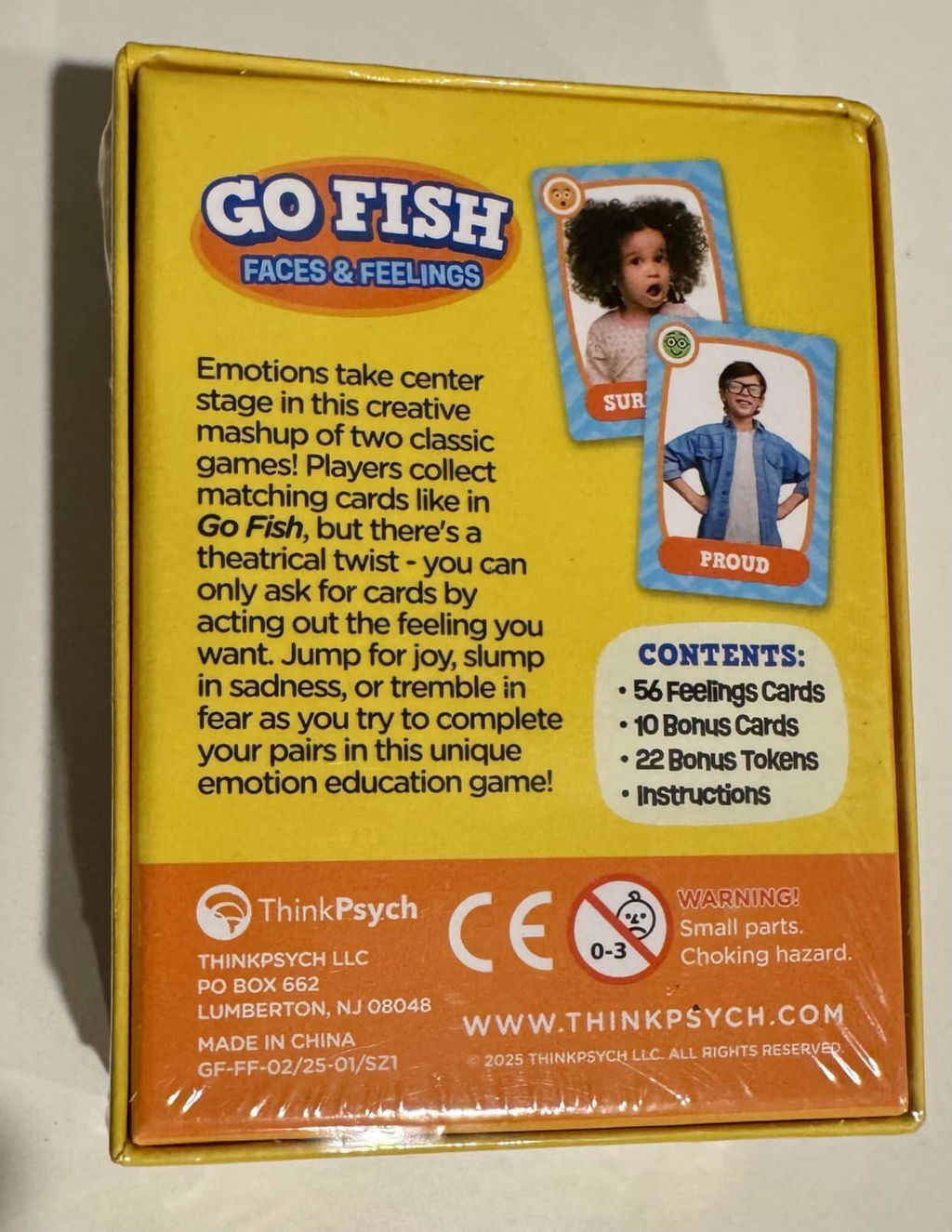
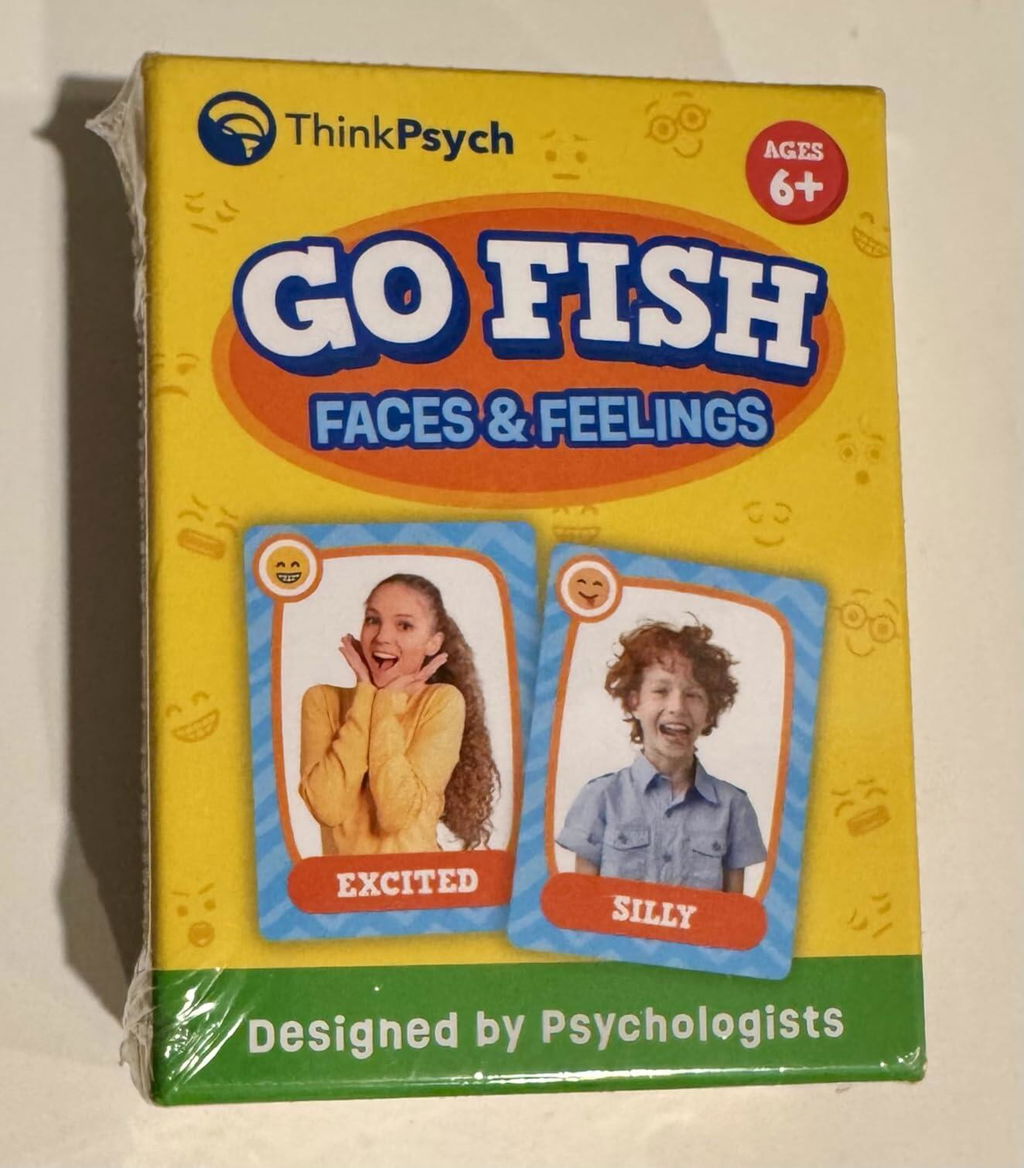
This game is a major disappointment, especially for a product designed to be a social-emotional learning tool. The concept of combining the simple game of Go Fish with different faces and feelings is a great idea in theory, but the execution is a complete failure.
The core issue is that the game is massively overcomplicated. This isn't just my opinion; I had several other adults read the instructions, and every single one of them came to the same conclusion. The rules are so convoluted that they completely miss the mark for the targeted age ranges, despite the instructions including different variations for different ages.
Instead of being a fun and simple way to teach children about feelings, the game is too confusing for young kids to grasp, and far too difficult for adults to explain to them. Ultimately, what should have been a simple and effective tool is rendered unusable by its overly complex design. It's a shame, as the potential was there, but it was lost in a sea of unnecessary rules.
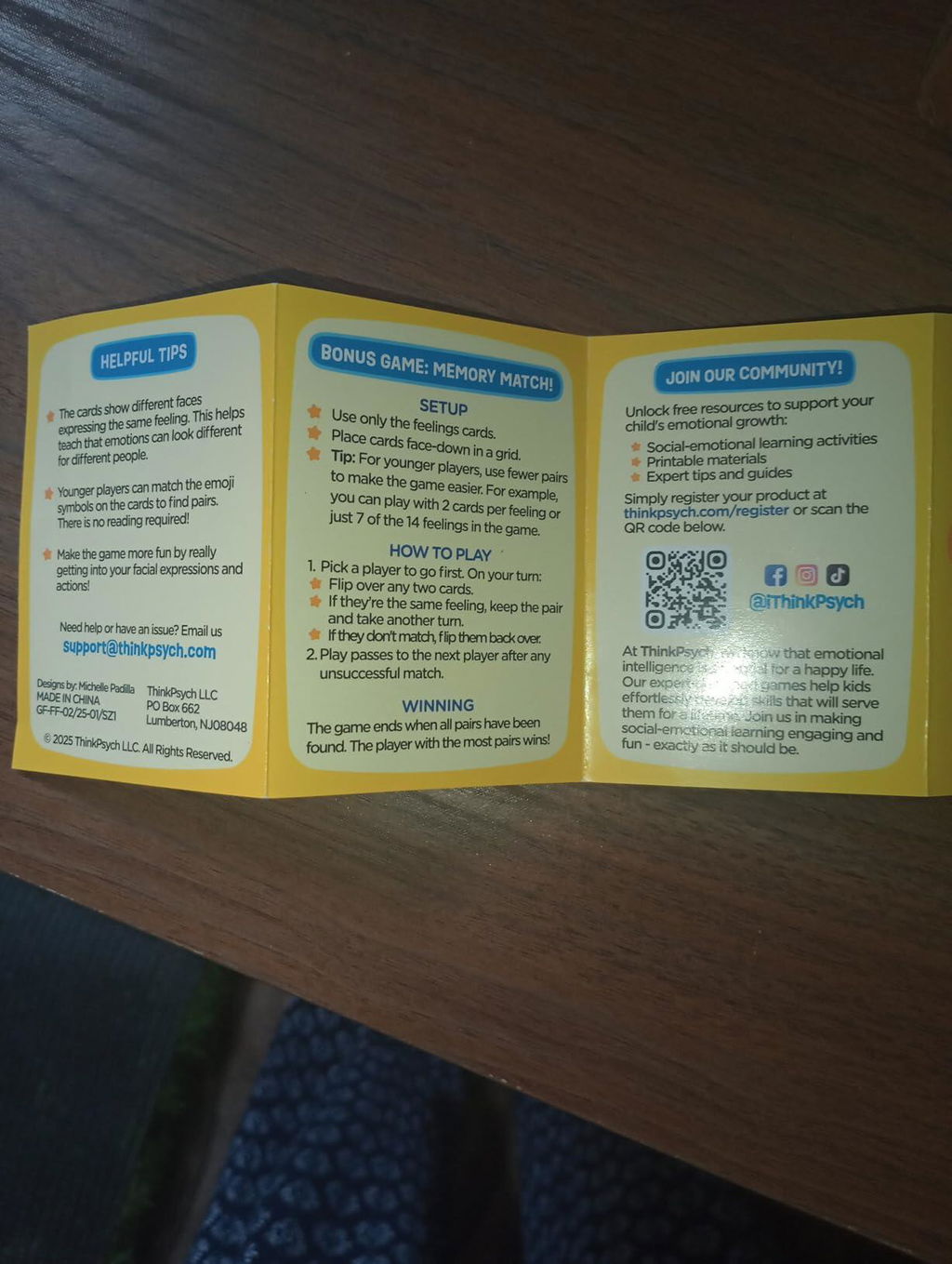
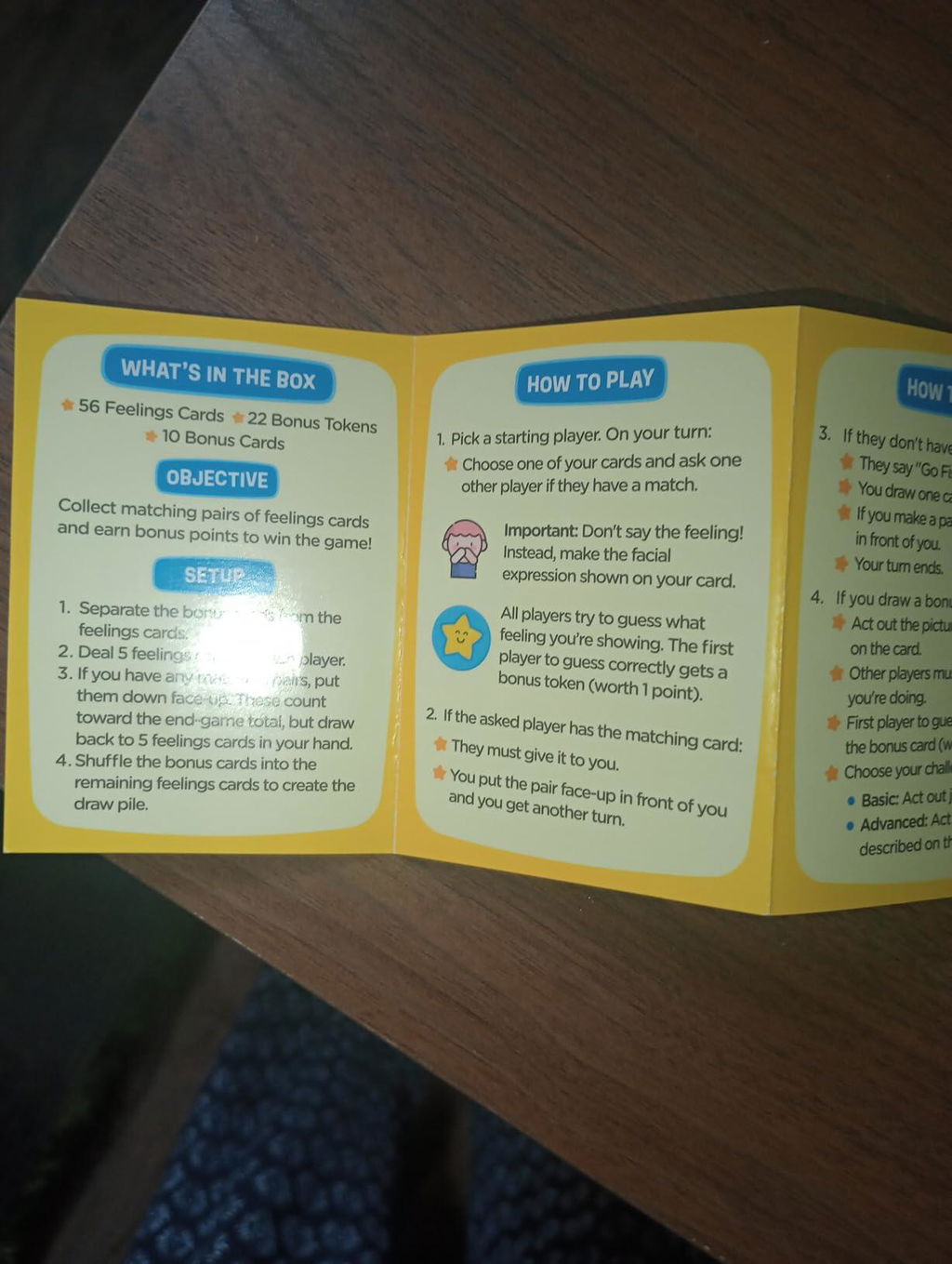
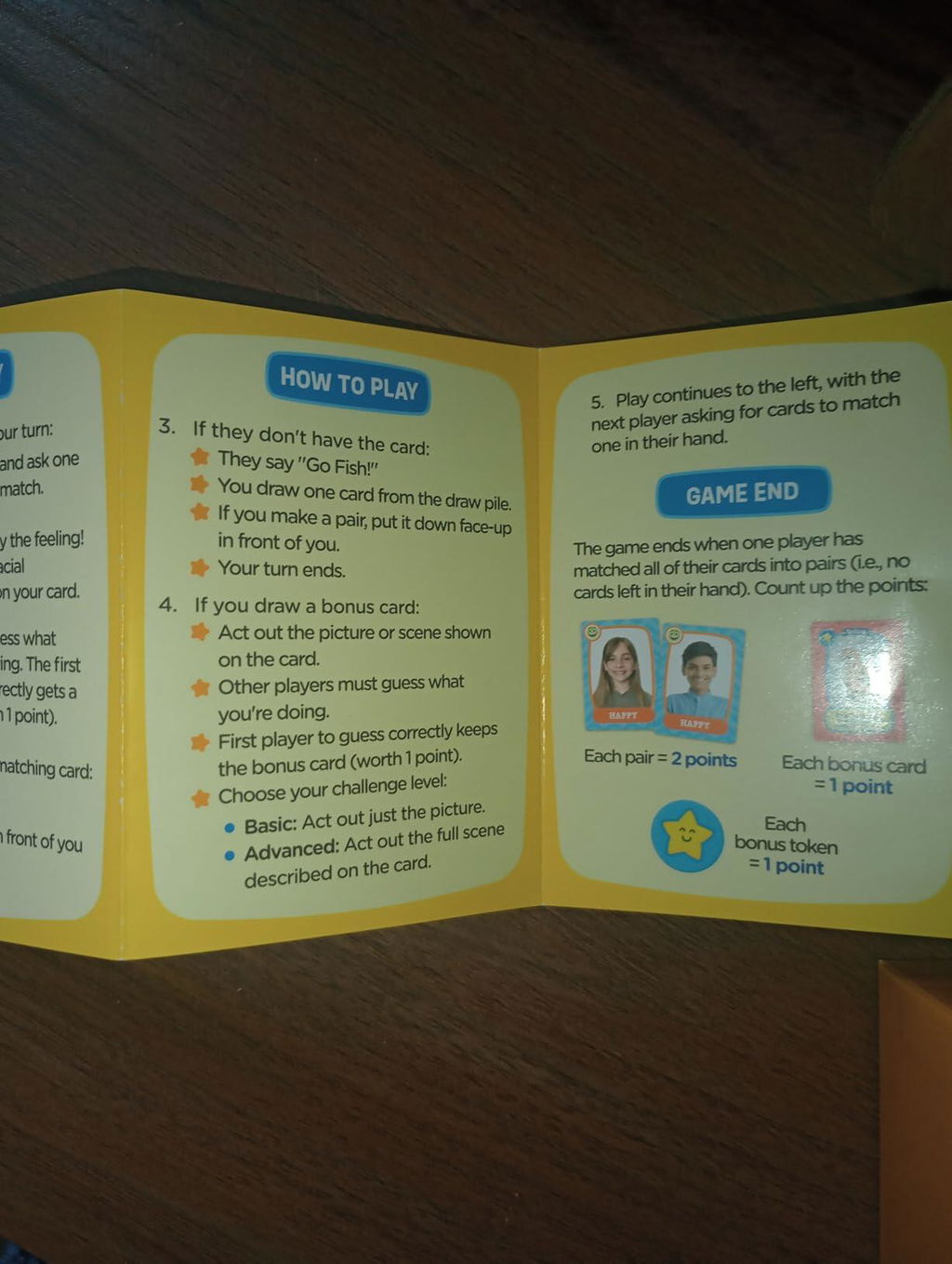
This Go fish game is interactive and fun, especially once everyone gets the hang of it. It's a bit different from the regular Go Fish, as it focuses on facial expressions and emotions which makes it great for social emotional learnings. It did take us a little time to understand the difference between different emotions and match the expressions, but once we got going, it turned into a great group activity. Its a nice way to engage kids and adults while teaching emotional awareness. This a great game for classroom and home with some serious fun.
The downside is, the learnings curve to understand those emotions might make it confusing. You need patience to continue playing and once understood, it is a good fun game.
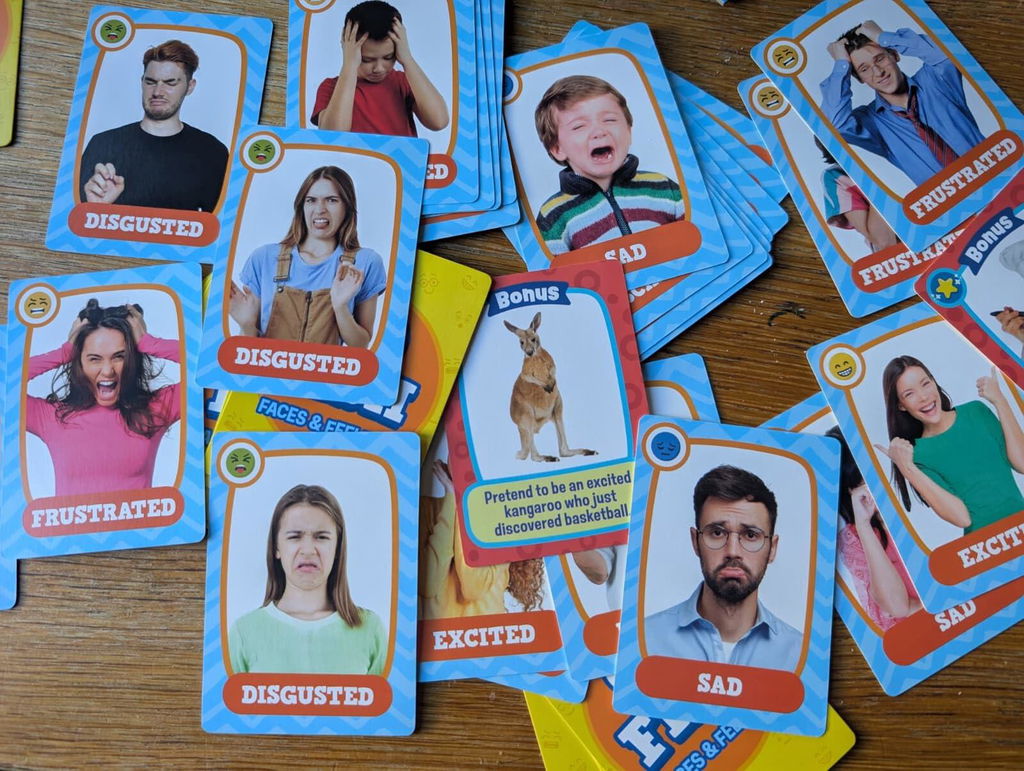
This GoFish set of emotions cards is excellent for helping neurodivergent individuals children to identify emotions and body language of themselves and others.
The cards are split between cards with photos on them and scenarios.
These work well with ABA and other therapeutic models.
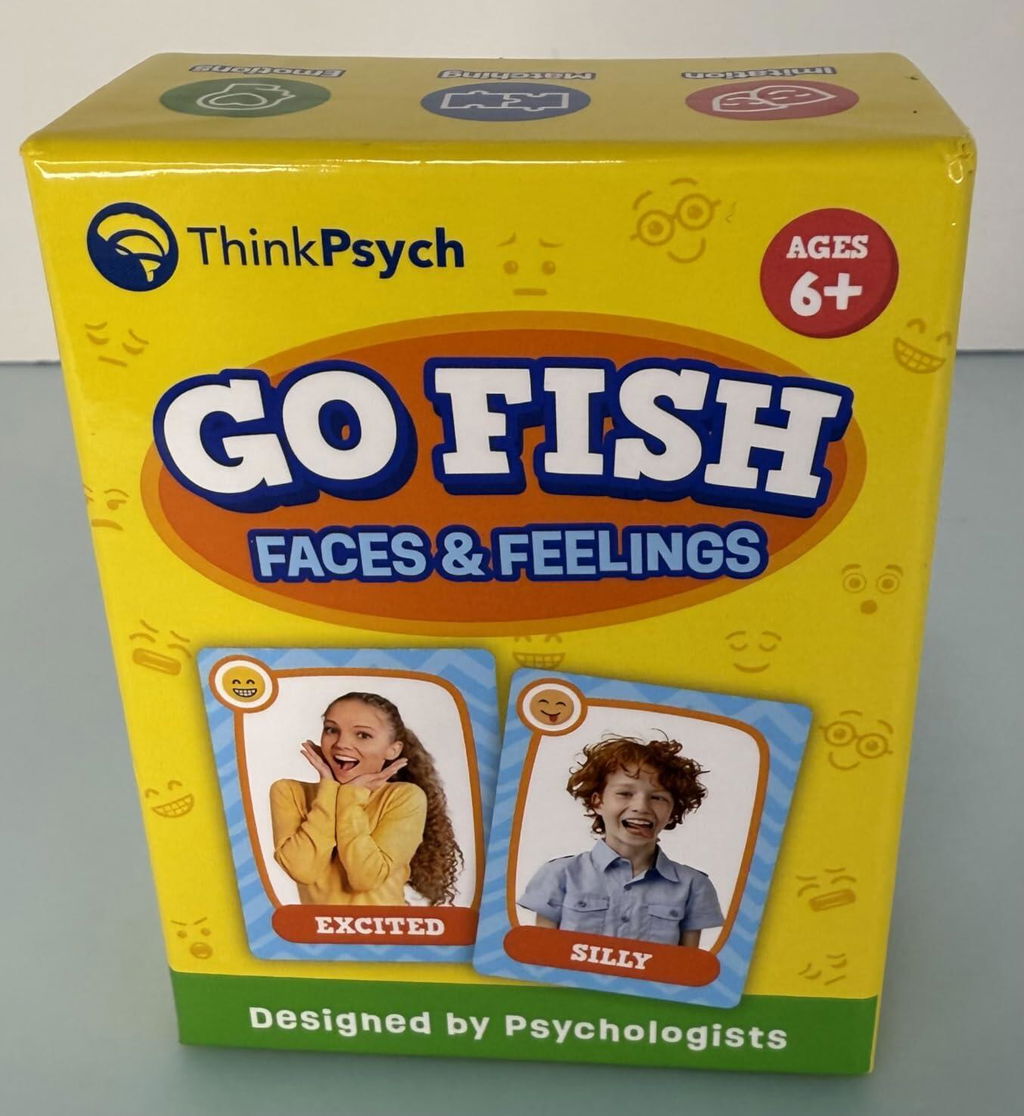
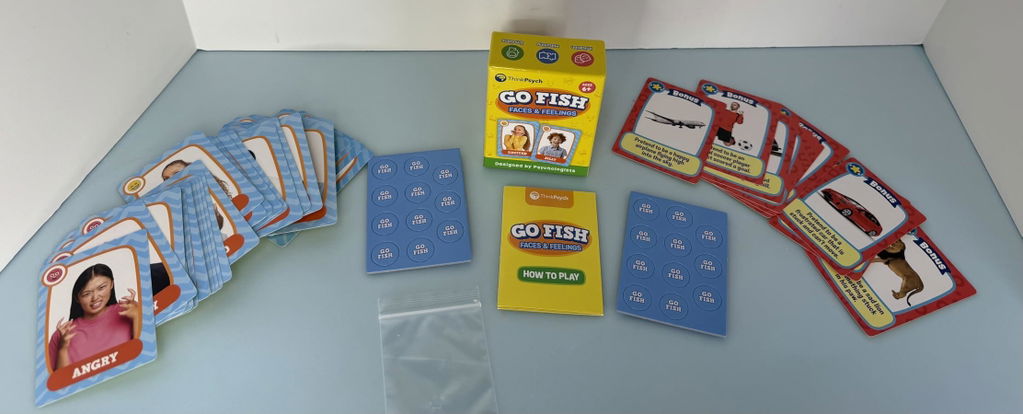
This Go Fish game is such a clever and meaningful take on the classic. Instead of just matching animals or colors, you’re matching feelings and using real photos of real kids. My toddler loved it I love that it naturally opens the door for conversation. It’s been a great tool for discussing emotions at home, and I also plan to use it in small groups when I tutor K–1 students. It’s perfect for working on social emotional skills in a fun, engaging way. Great concept, well executed, and so helpful for encouraging kids to name and talk about their feelings. Have already recommended it to a few other teacher friends!
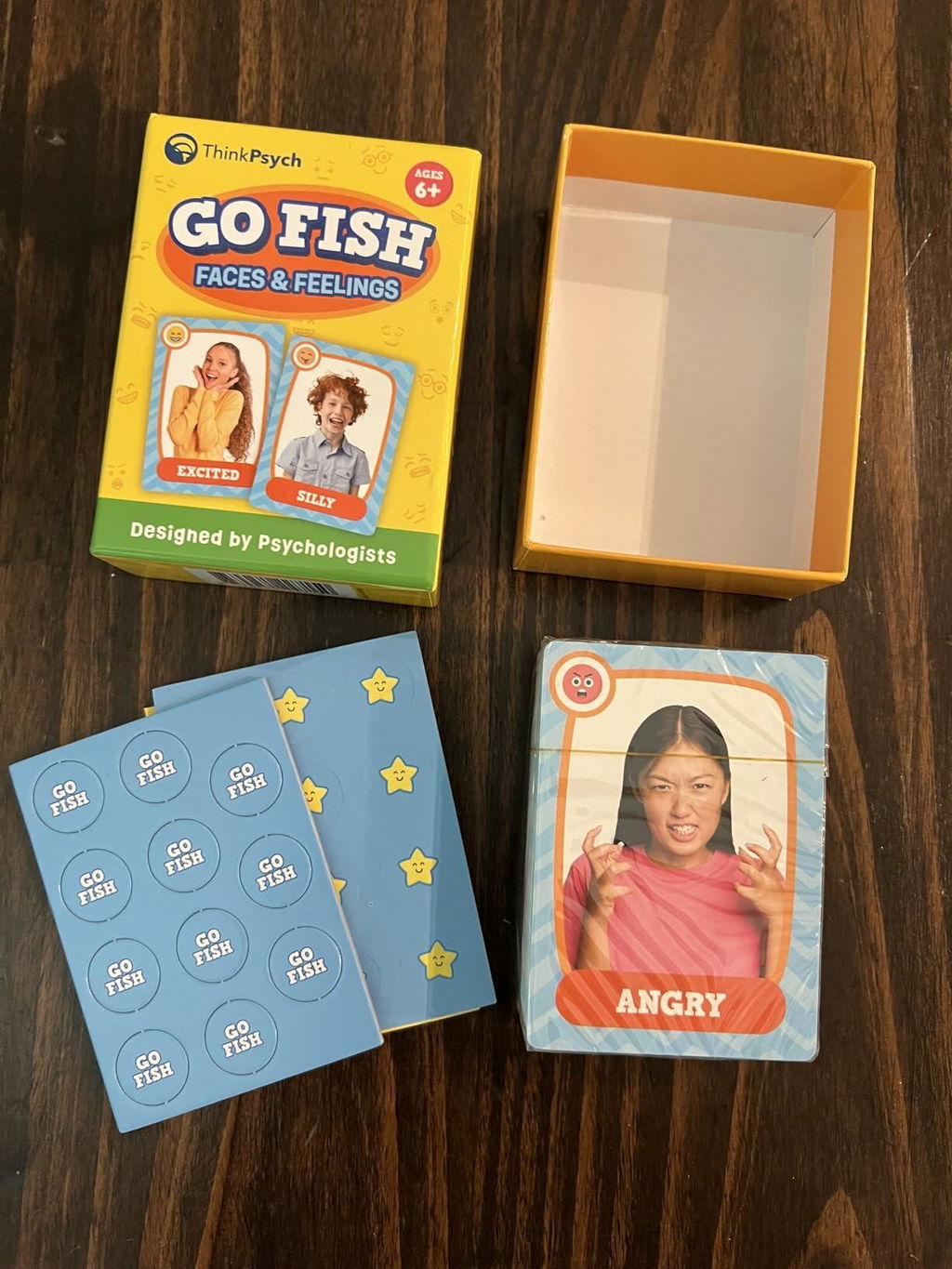
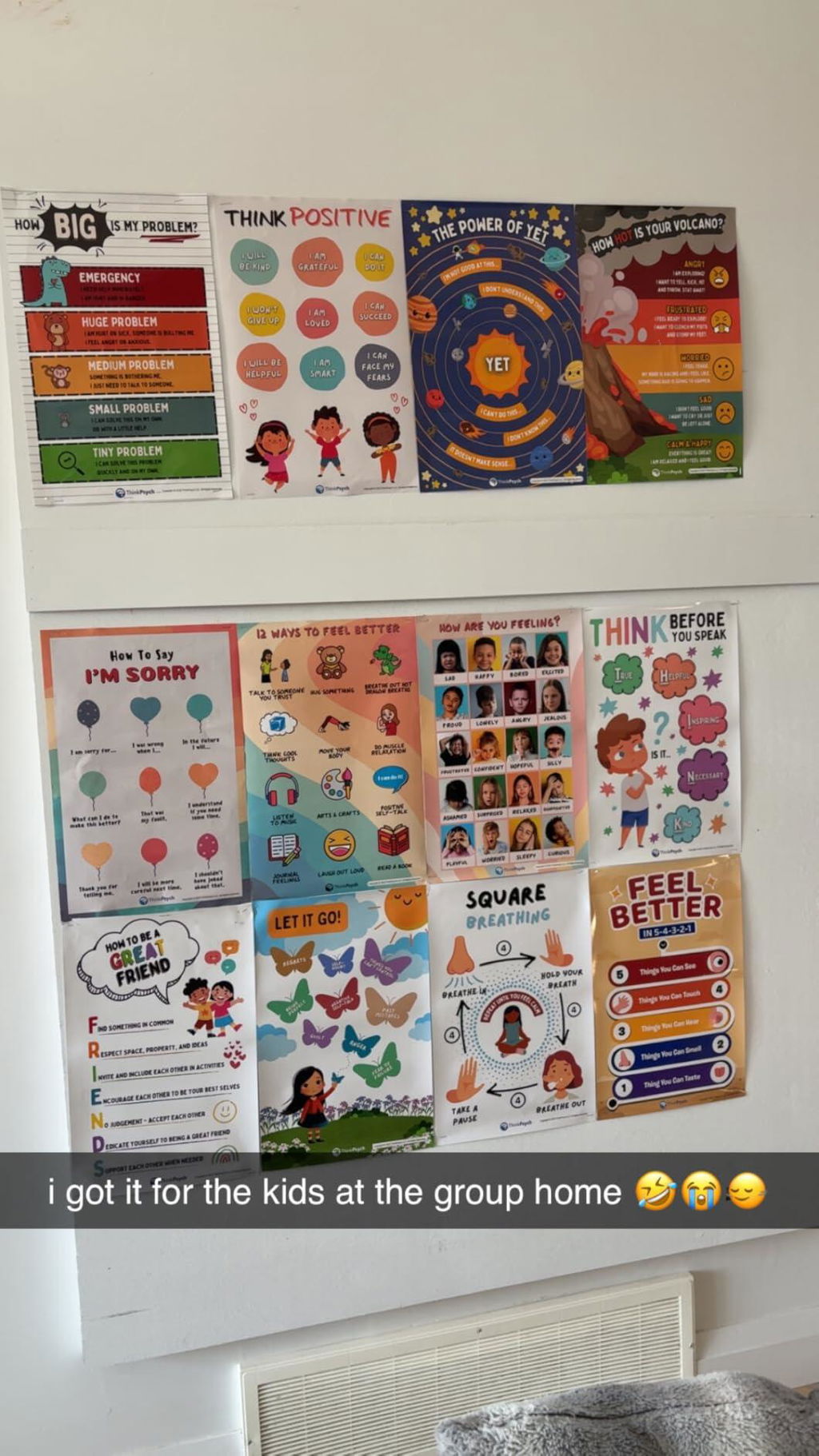
perfect i work in a group home and im always referencing it
This is a well designed card game. The more I look at it the more I like it.
The card game can be played using Go Fish type of rules, or a memory matching game. So it is a 2 in 1.
The cards are colourful and printed in detail. They feel like regular playing cards and are easy to shuffle.
What I liked is that each card is unique. At first I thought that they would simply reprint identical cards and you would match them, but this is not the case. There are 14 different feelings/expressions, and for each one, there are 4 cards. For each card, there is a different photo. So no two cards are identical. This gives children more changes to try to recognize facial expressions and body language.
What makes this game even better is that the instructions tells the kids to act out the emotion and not just to demand a card. This becomes training for the kids to learn to express their emotions in a way that others can understand, and also to learn to read other people’s emotions and body language. So this is a great benefit.
I did find that some expressions on the photos seem a little exaggerated in terms of hand placement or mouth and eyes opening. Then also, some expressions are somewhat similar such as scared-surprised, happy-excited, etc. but that is understandable due to overlap and some similarities. You can tell the cards apart by the emoji and the title.
A great card game to teach children expressions.
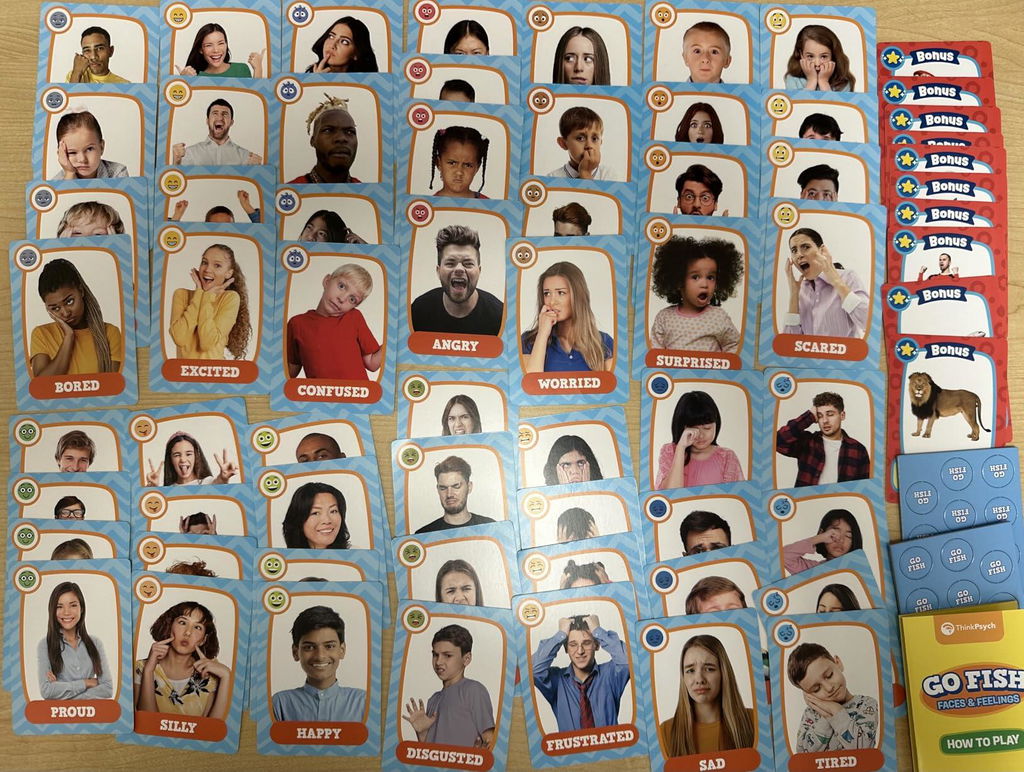
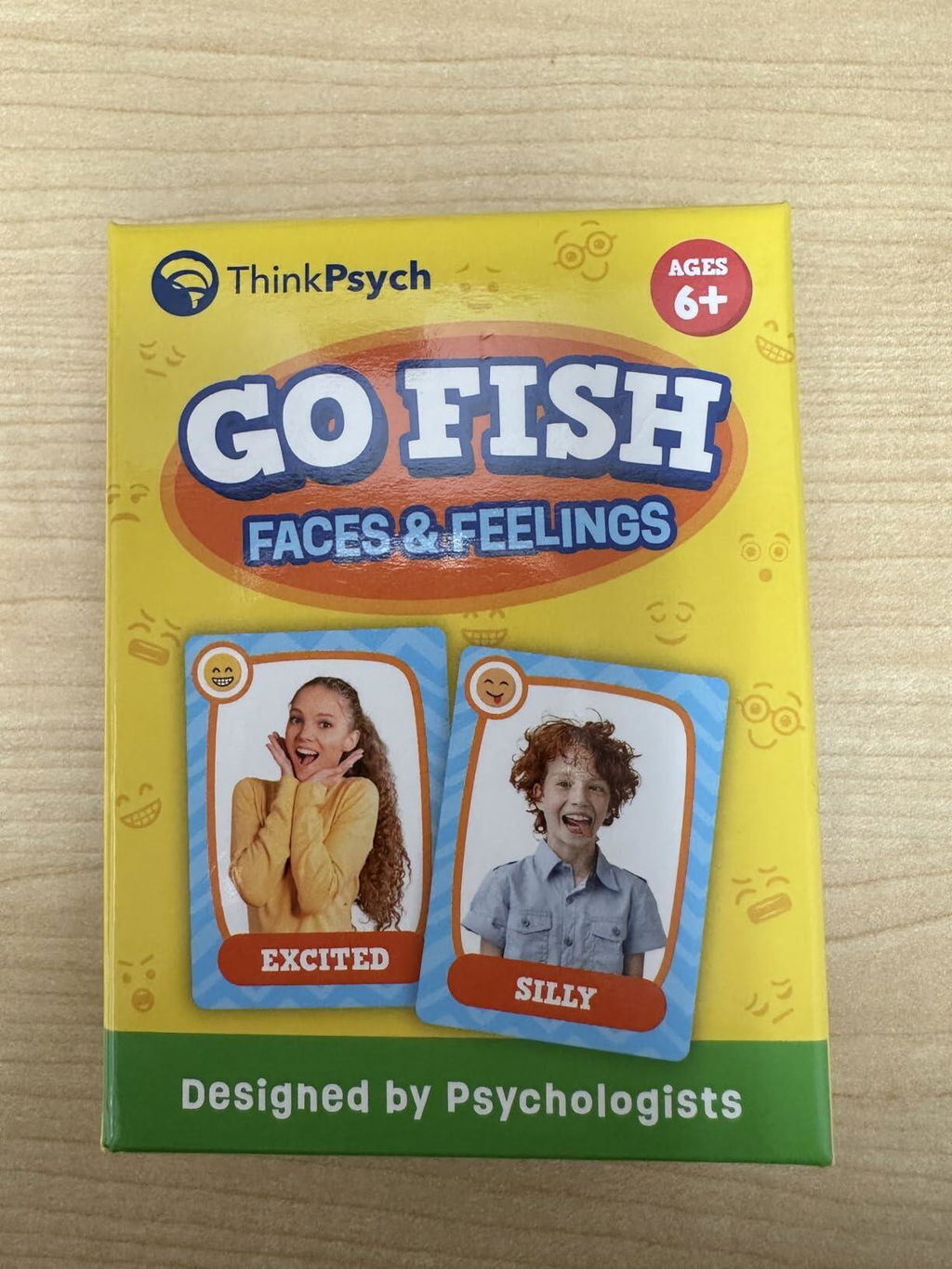
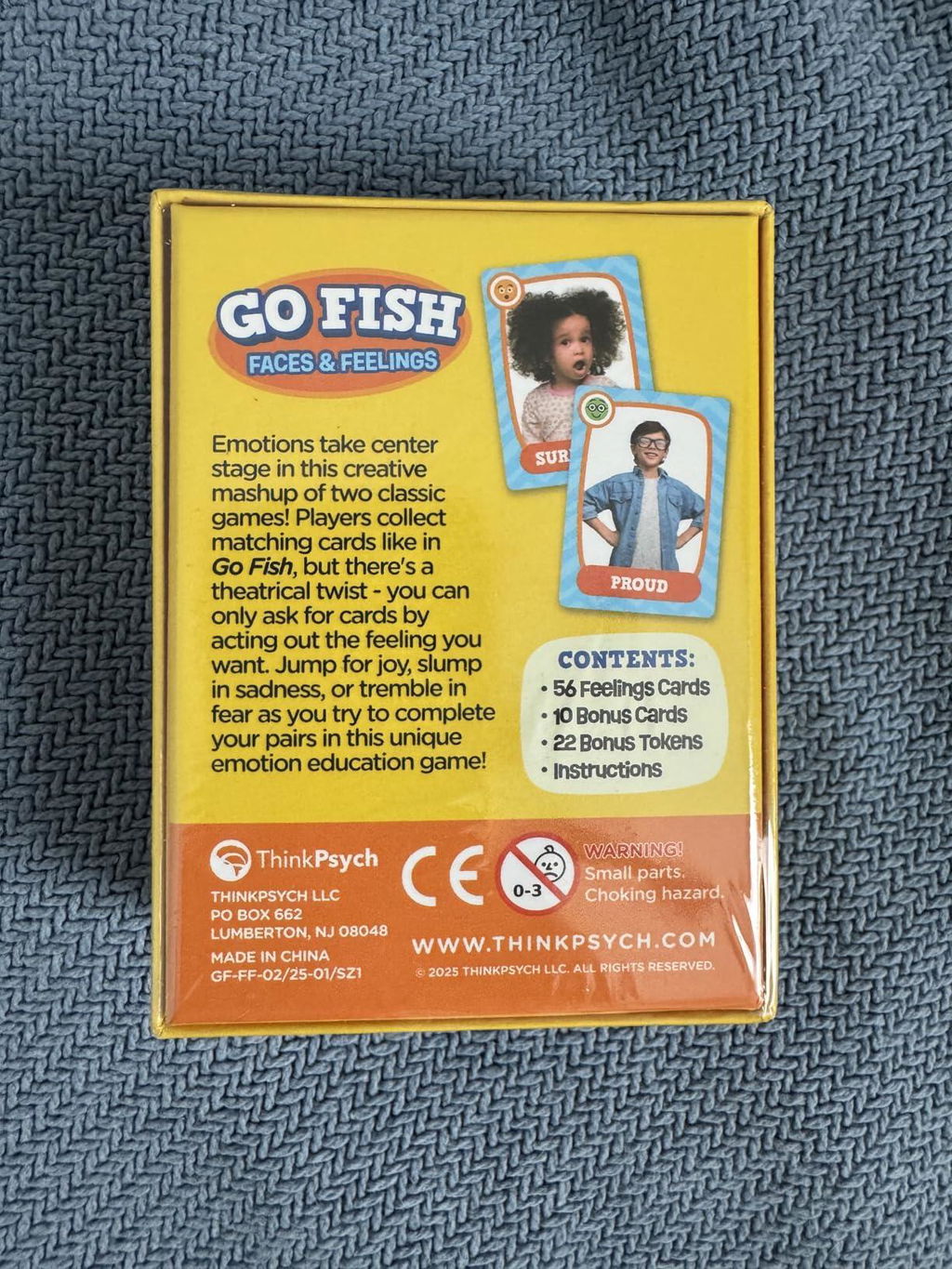
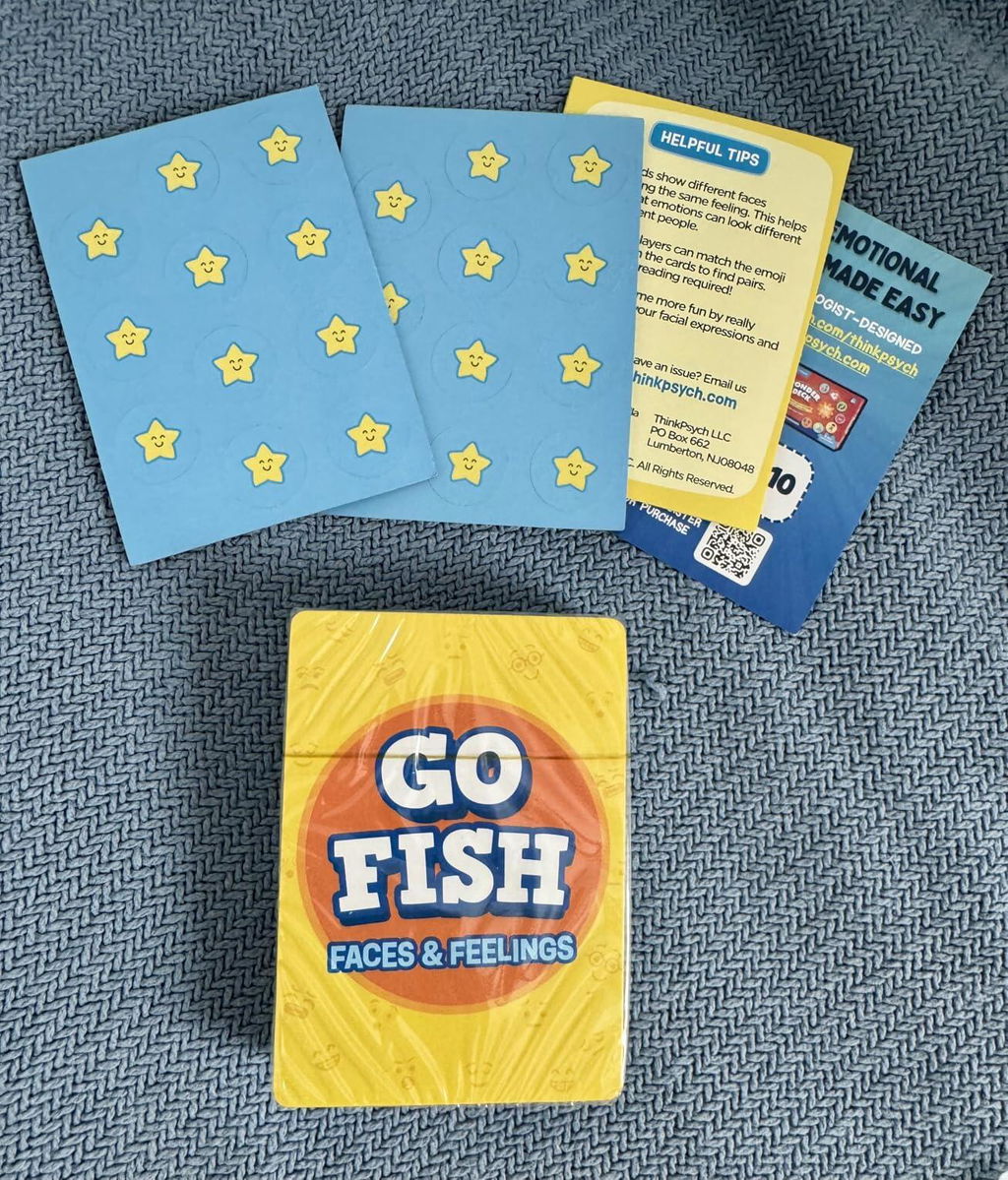
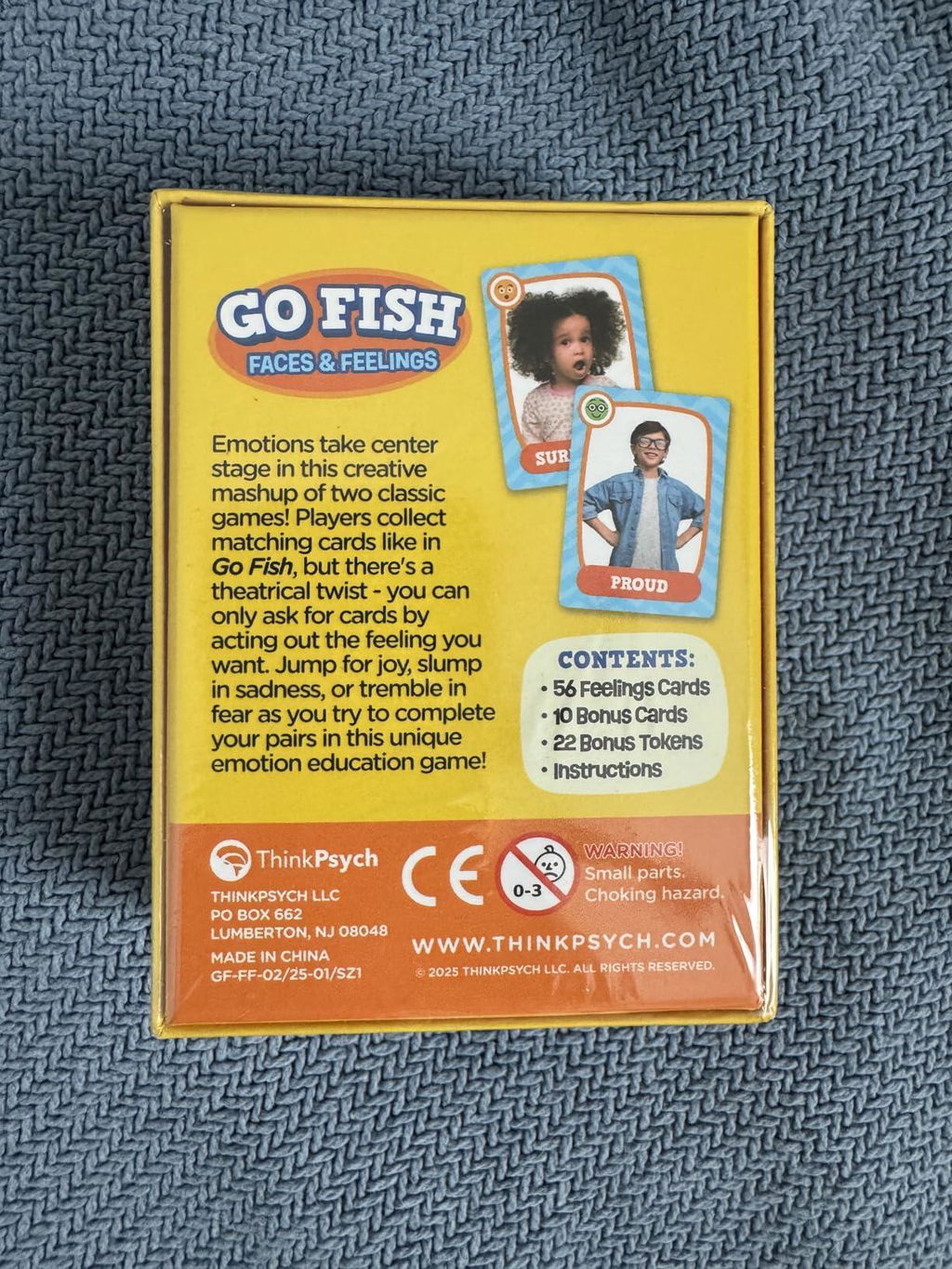
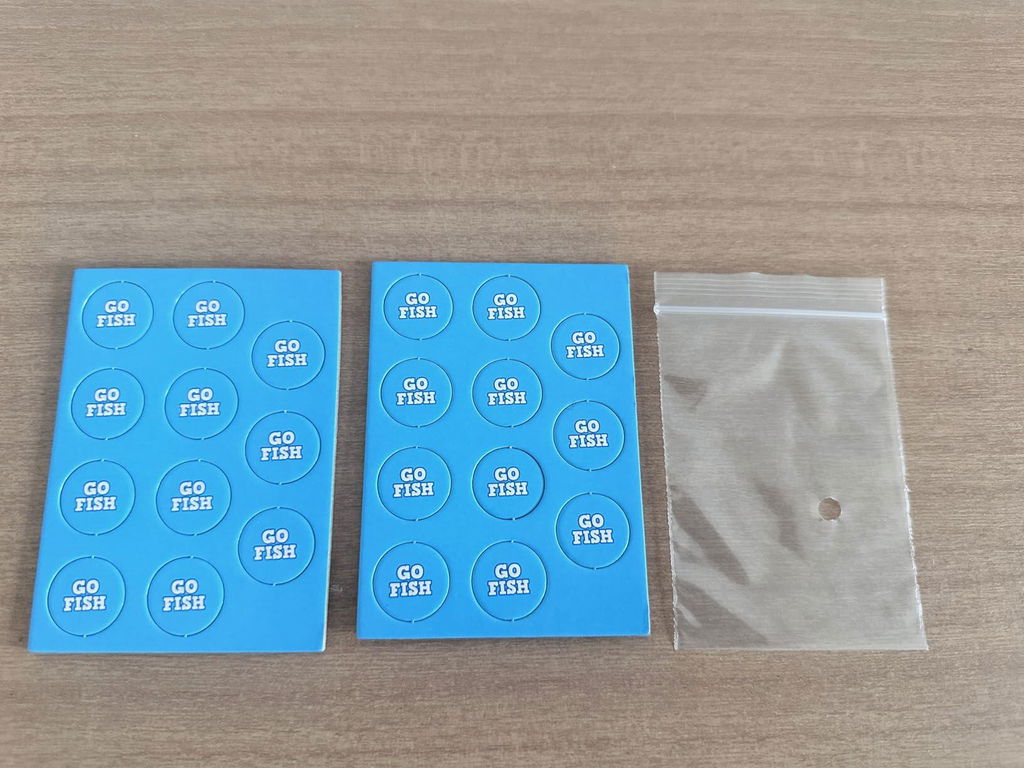
I recently ordered this go fish card game. The package includes 56 Feelings cards, 10 bonus cards, 22 tokens and instruction guide. This is a social emotional learning card game for kids. Each card has bright and clear pictures along with emoji. The bonus cards have fun activities. The cards are thick and easy to hold. This is a simple and fun game to play with kids and spend some quality time together. This card game is helpful for kids to learn their emotions through play. Overall it is good.
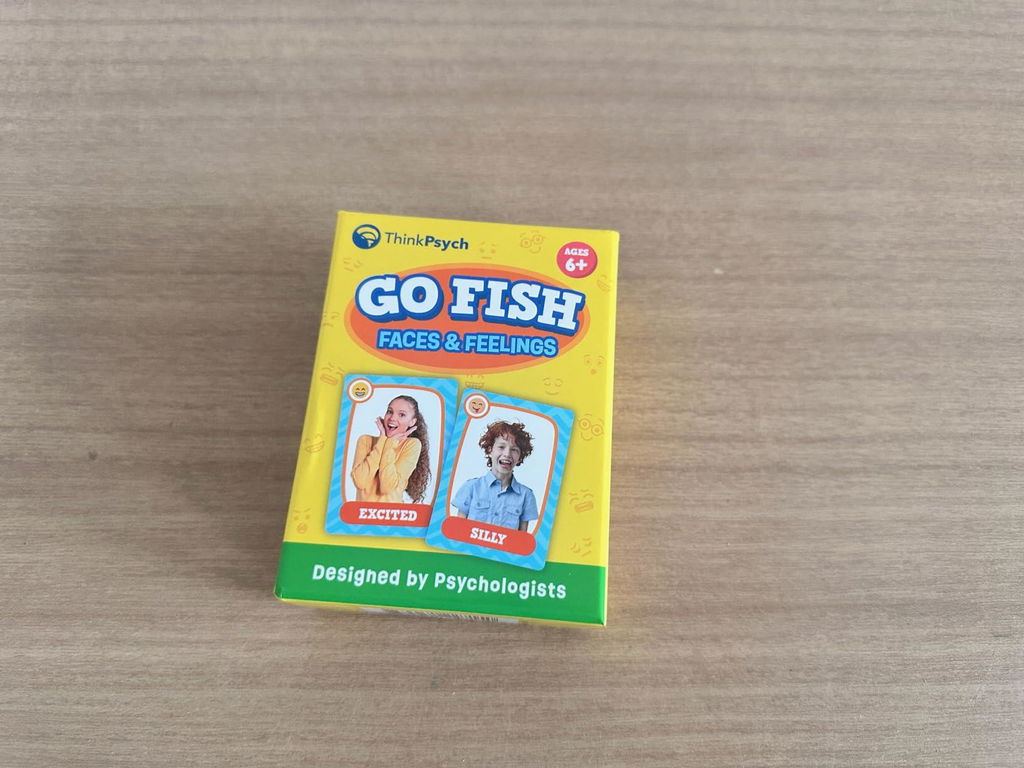
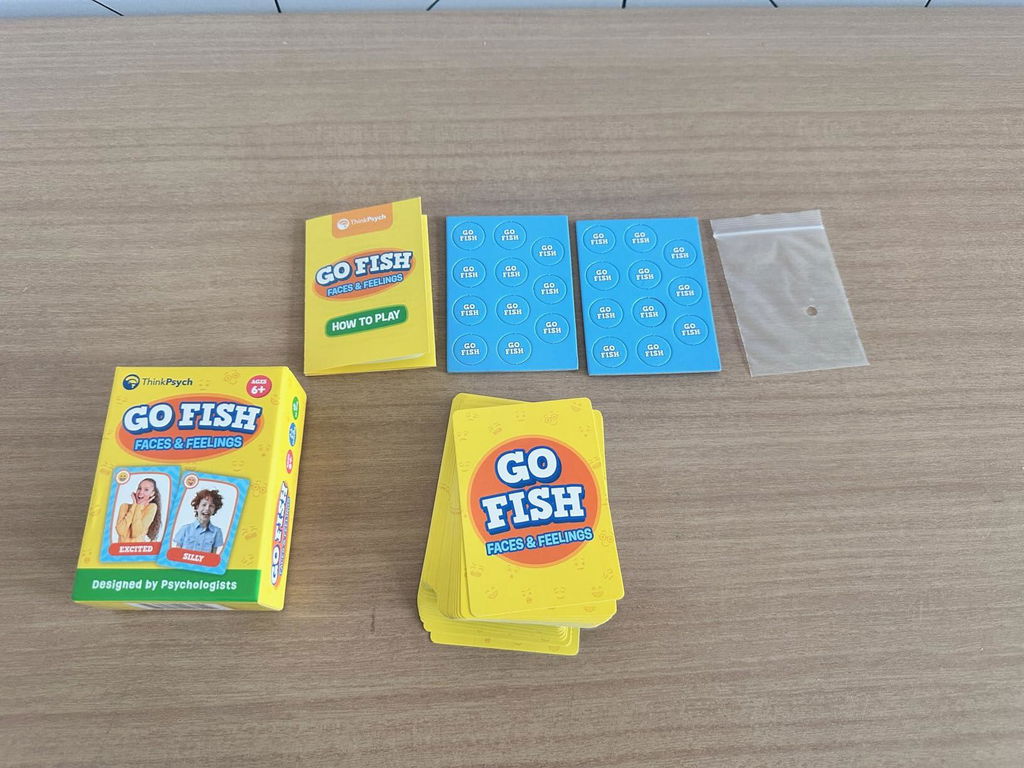
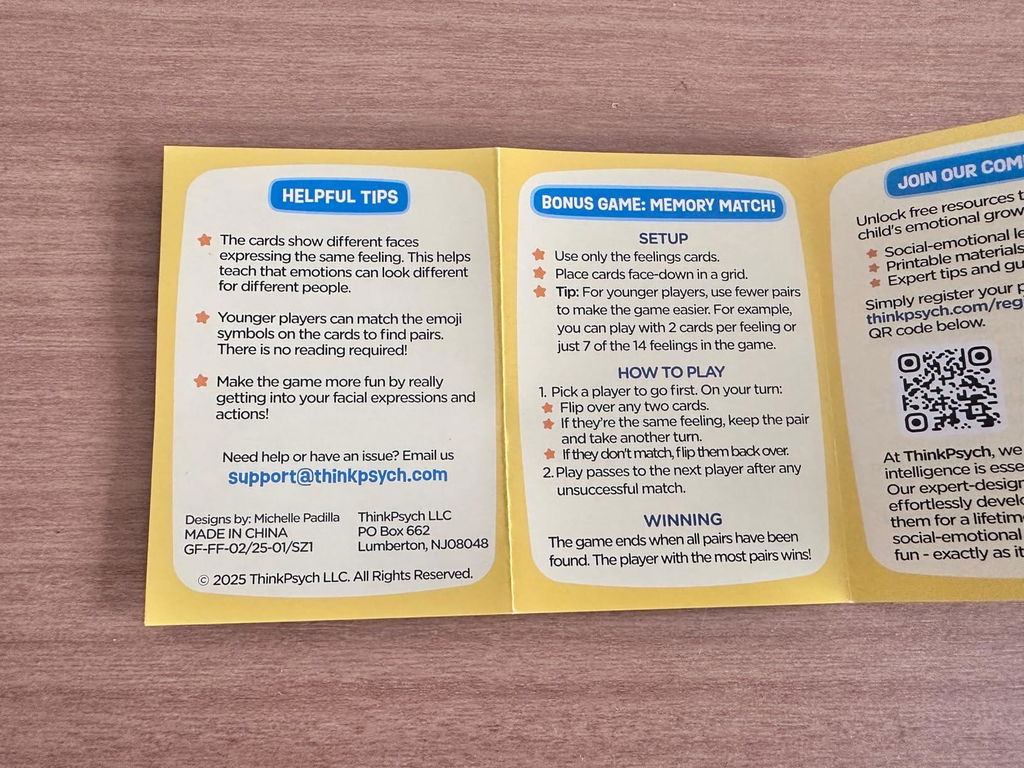
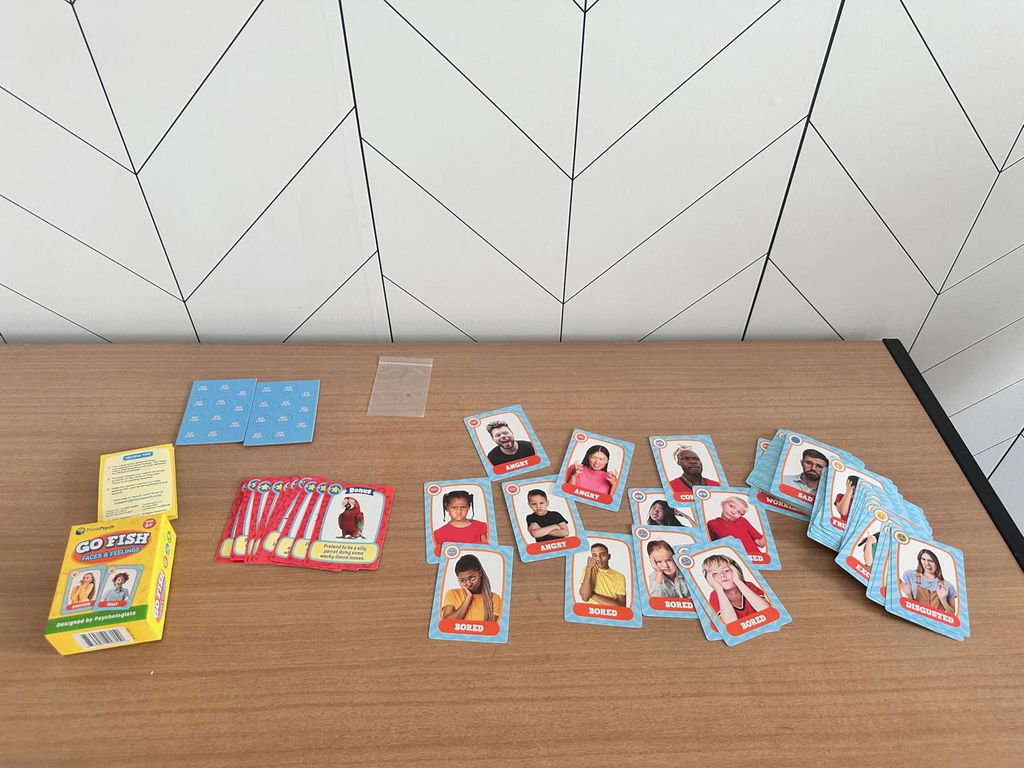
This game is a unique, refreshing and fun way to teach children feelings and emotions. It's a great way to learn what different emotions look like in a fun and entertaining way that gets the whole family involved.
I also really like that there are different people representing the different feelings on the cards. For example, for the "sad" feeling cards, there are four different people with four different sad faces. It is the same for every emotion. They also have some pictures of children and some of adults.
The storage box is really sturdy, the directions are clear and the game was easy to understand. For us, the game lasted about 30 minutes.
I would highly recommend this resource.
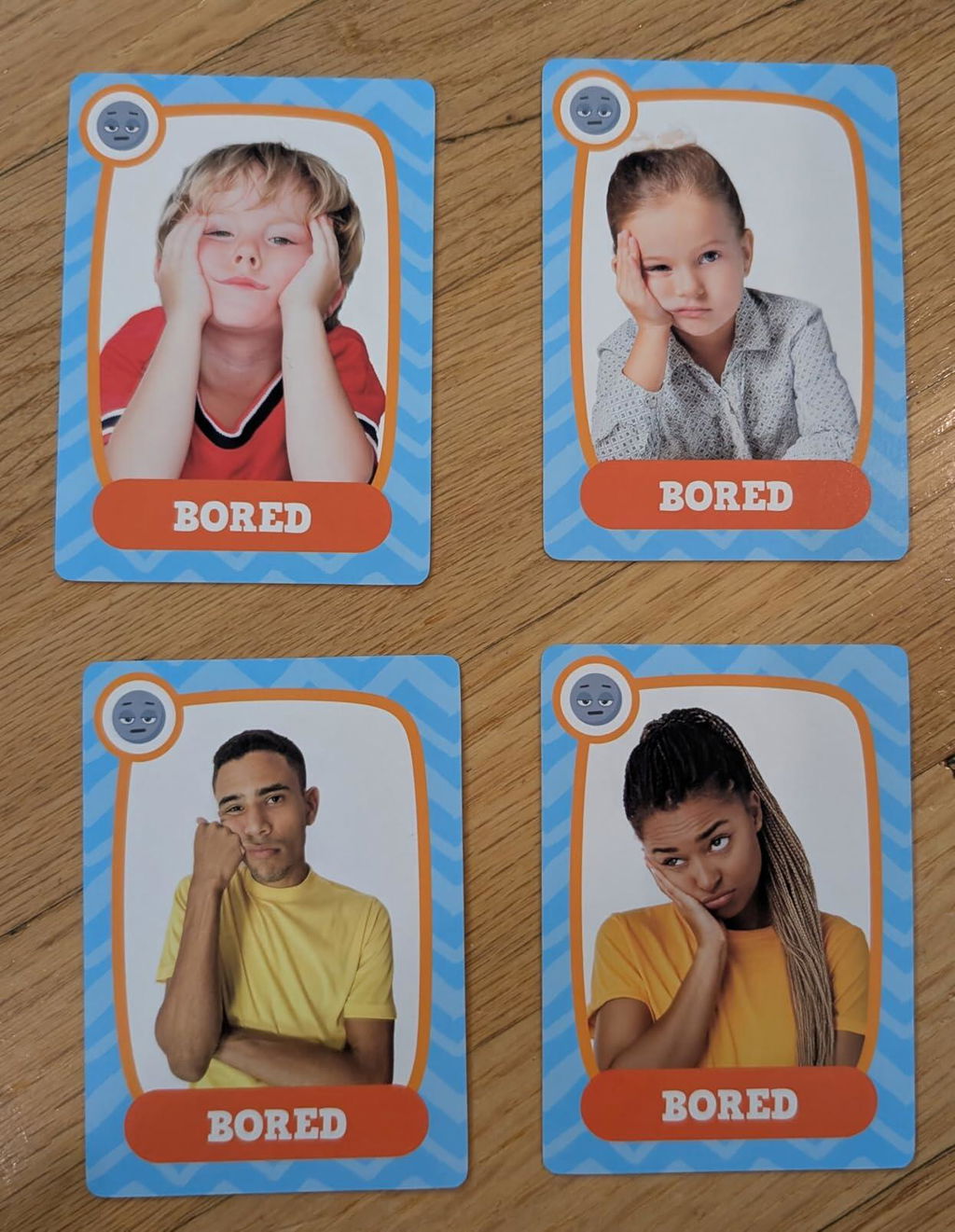
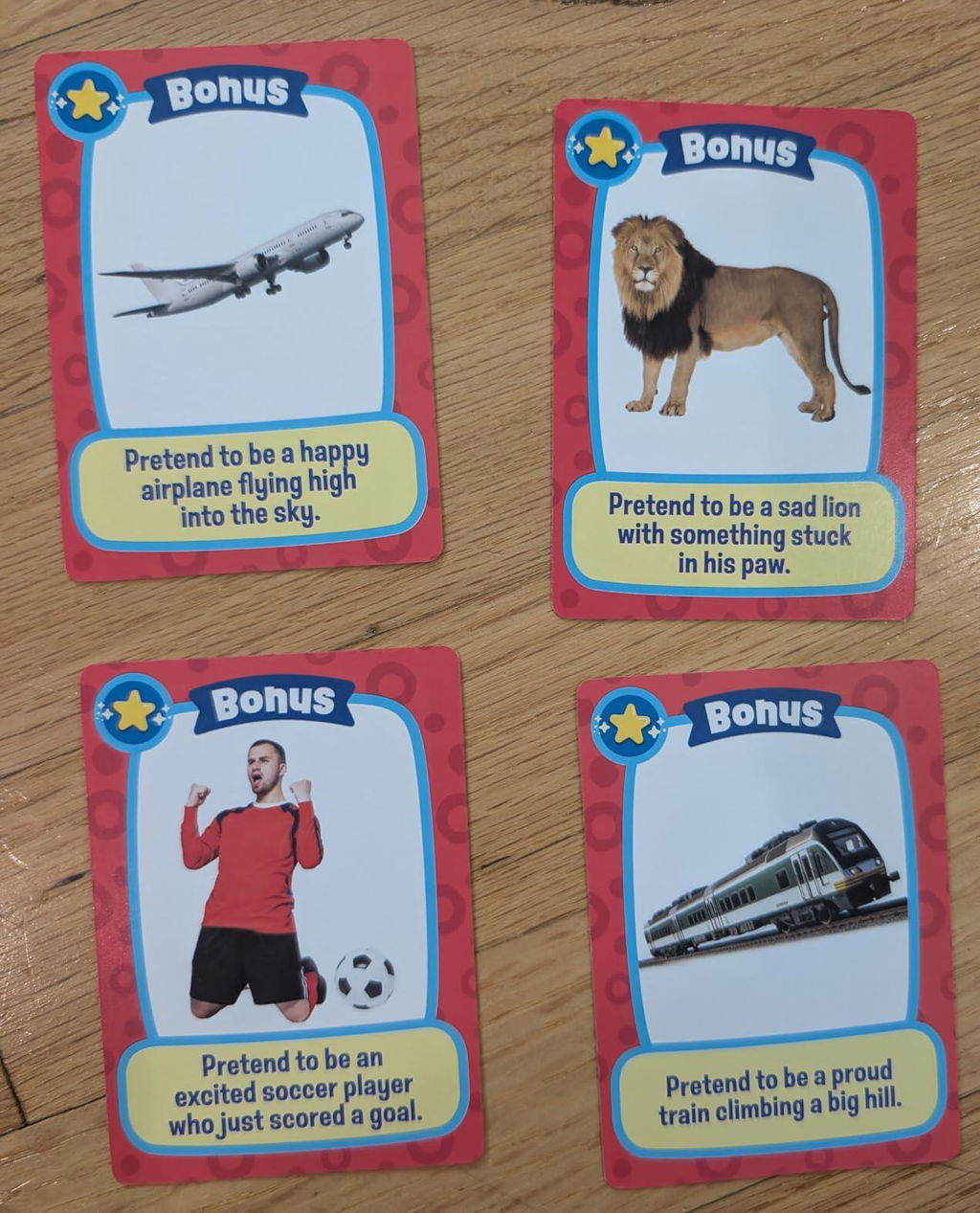
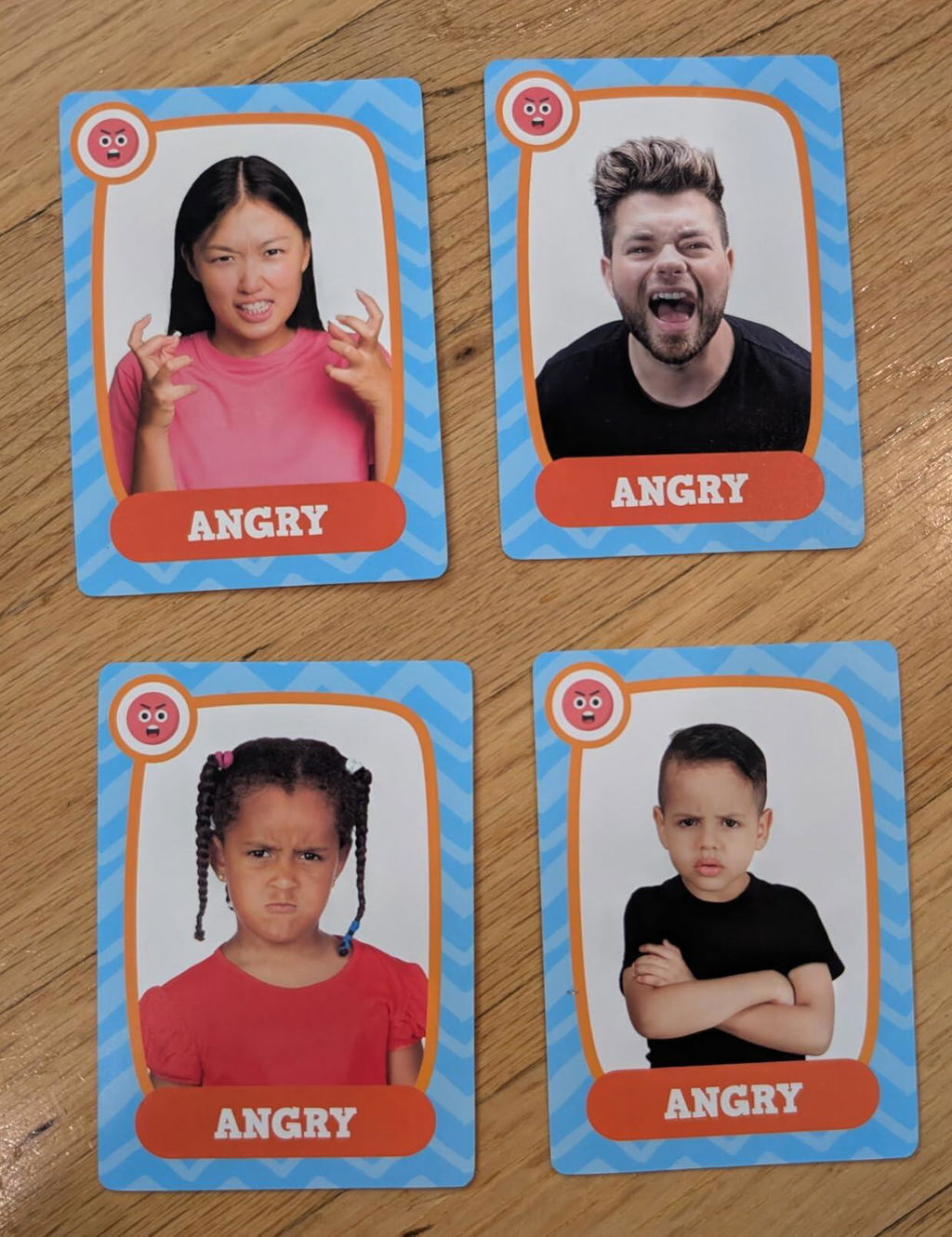
This is really a two in one game. It can be played as Memory, or as a fun interactive twist on Go Fish. The cards are a pretty normal playing card size featuring lots of emotions, plus some bonus acting activities. To play Go Fish, instead of asking for a card with words, players make the expressions on the card they want to ask for, and everyone playing can try to guess what it is. Whoever guesses correctly gets a star token, which counts as a point for scoring. The bonus cards are scattered throughout the fishing deck, and whoever draws one acts it out immediately for others to guess and potentially win the card. I was playing with three kids, including a young one, and an older ND one, and we not only had a lot of fun, but this was a VERY helpful way to practice and learn emotions and expressions! We had some moments of laughing so much it was hard to act out some of the solemn expressions! Well thought out and I would highly recommend!
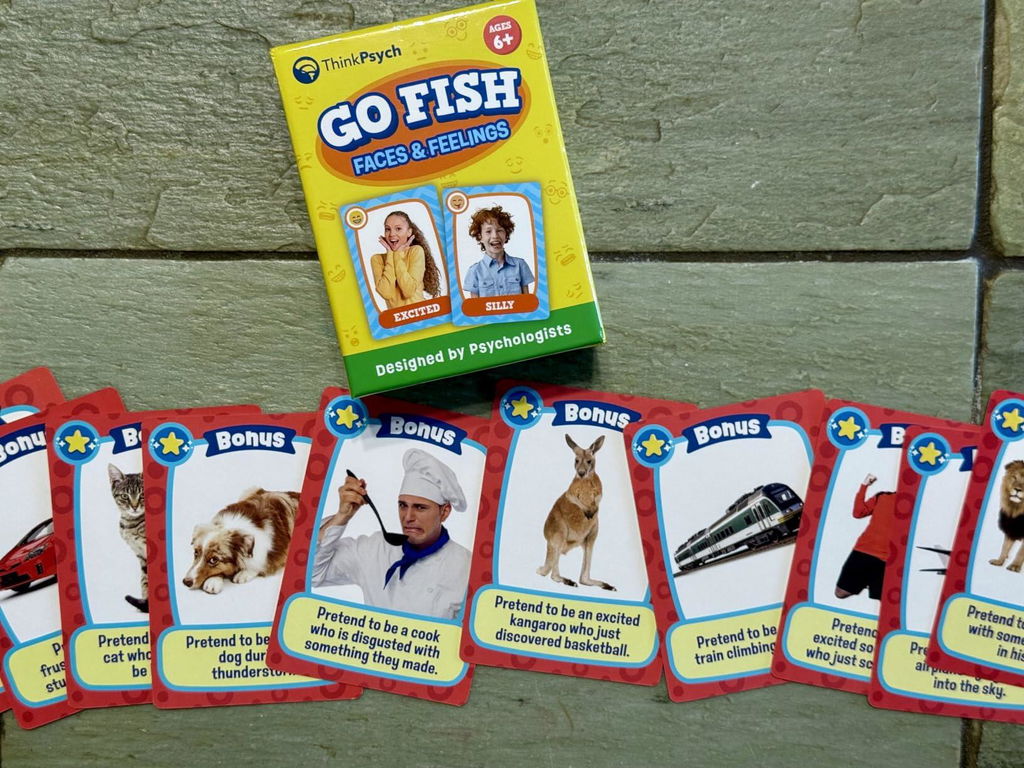
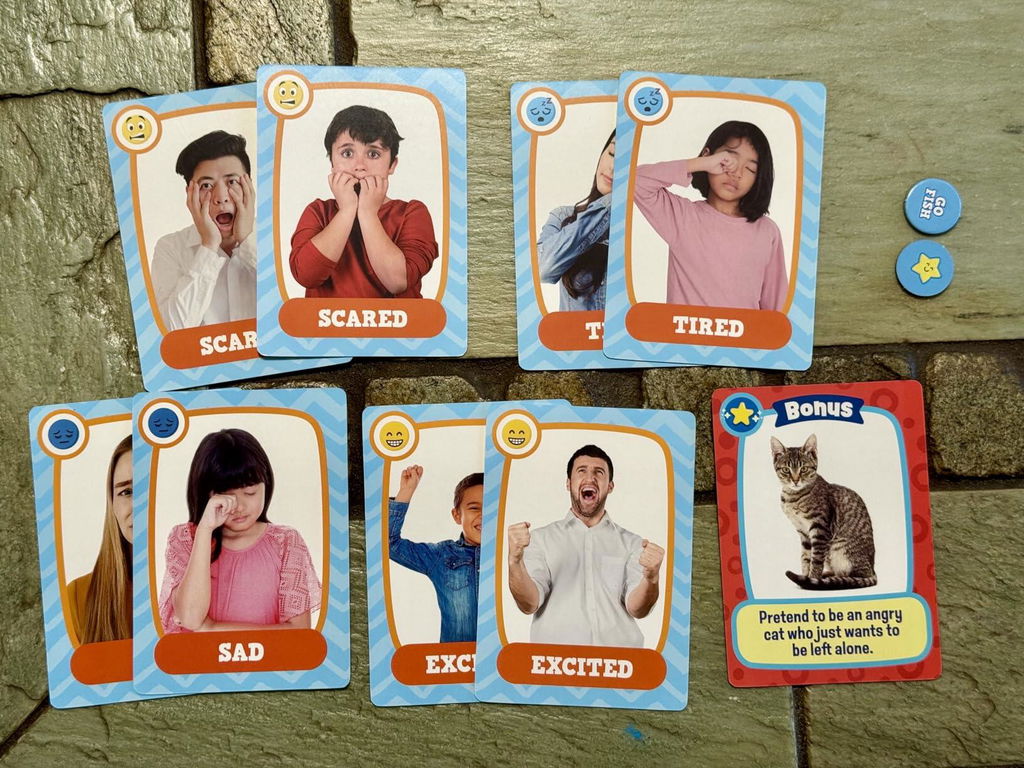
With seven kids, finding a game that everyone enjoys can be tough but this one is a hit! The fun twist on “Go Fish” had them acting out emotions and had everyone laughing, from my little ones to the older kids. It’s super interactive and keeps the whole family engaged. The cards are great quality, and the game brings so much energy and excitement to our game nights. Definitely brings lots of fun!
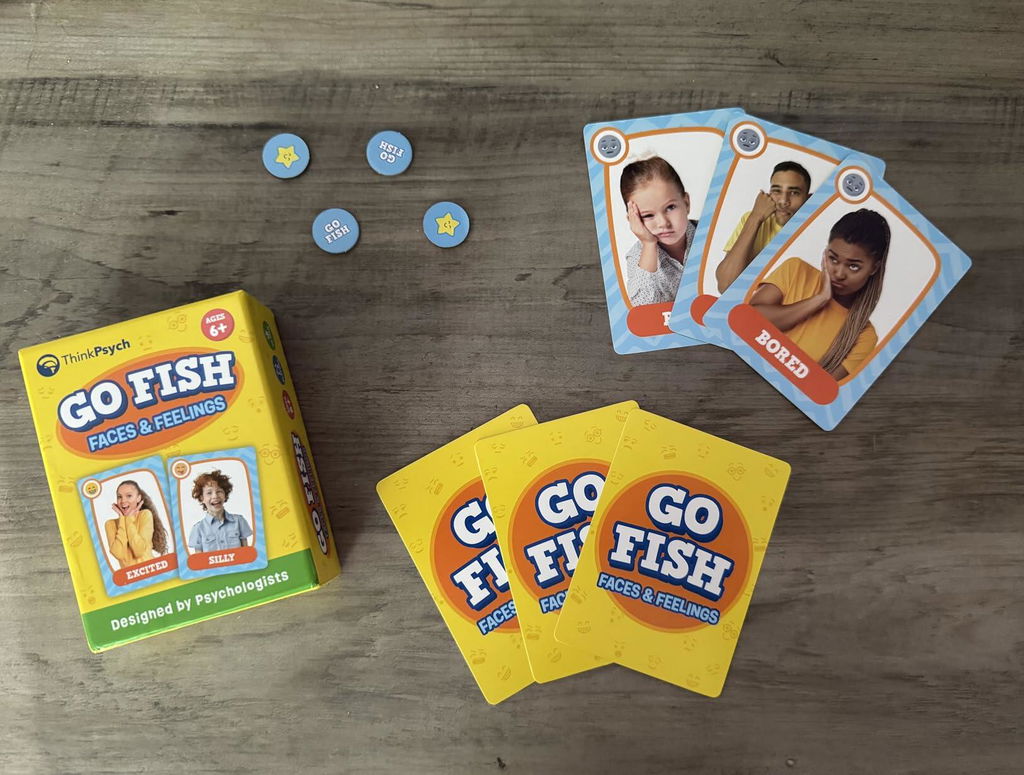
Perfect game for ages 6 and up. Easy to follow instruction in a very easy game to learn how to play. Kids will be entertained for hours and will want to continue playing and having fun. It's not your regular Go fish game as it has faces and feelings rather than their original Go fish game.
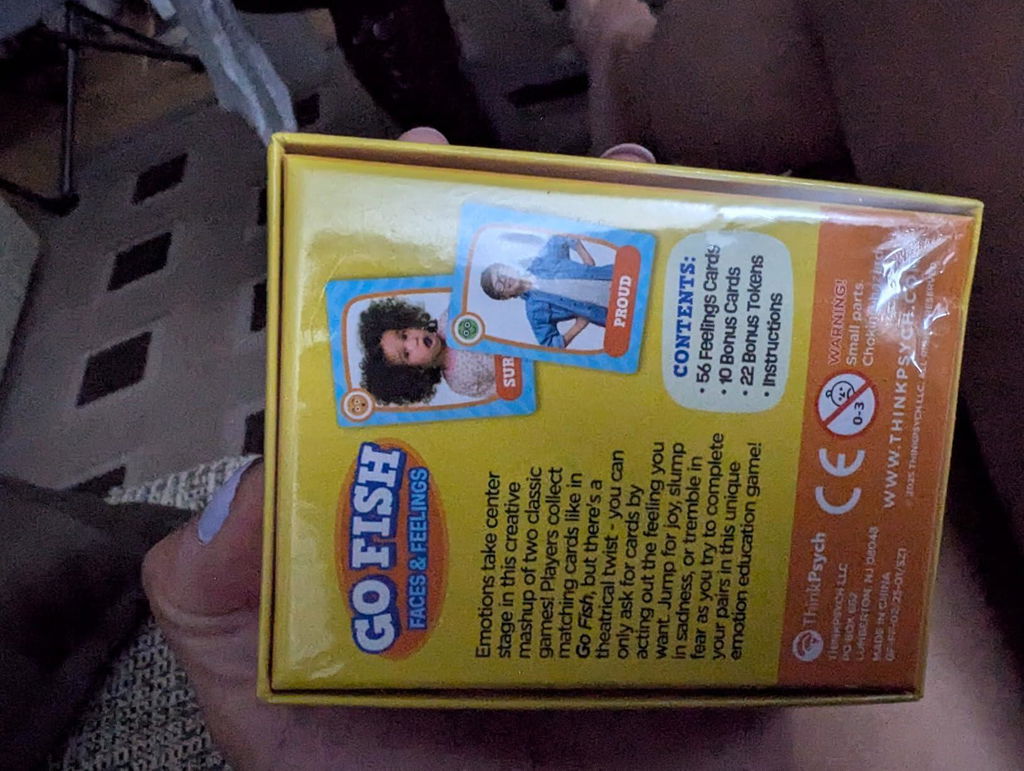
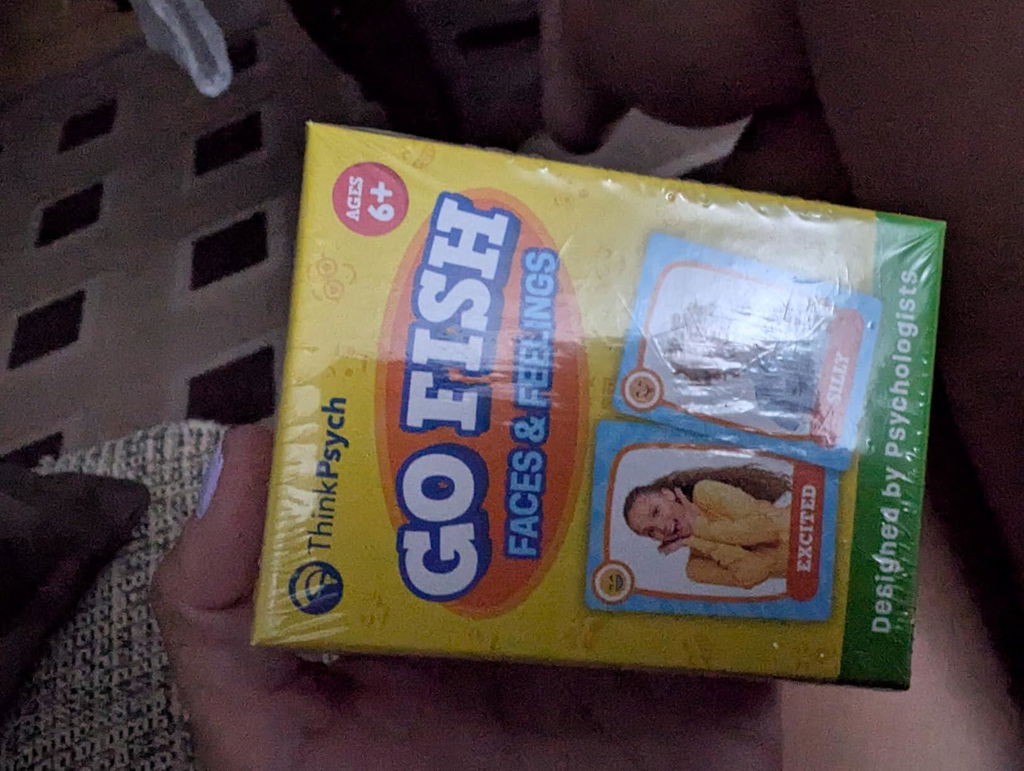
I am an early childhood educator, and social-emotional learning is one of the most important topics that we teach in the classroom. We already have a set of feelings cards that have illustrated faces of children - but these cards will probably replace them. This is a great catalog of images, and I absolutely love the diversity! There is a wide range of model selection (different skin tones and adult/child), as well as four different expressions of each emotion. Having icons in the upper corner for children to use if they cannot identify the emotion or read the word below was a great design choice too, as it means this set can be used for even younger players (age 4+). I wish the word bubbles had followed a similar unique color scheme to make the linking even more obvious. The activity cards are silly, and may get stale quickly, but I appreciate their inclusion. They will help prevent the game from getting stale too quickly.
My only concern is that the card quality is a bit thin -- not cheap -- but children can get fidget and bend things easily. These might get sleeved or put through the laminator before I pass them out. Or maybe I just buy a second set for the future. These cards will almost certainly become a staple in my classroom.
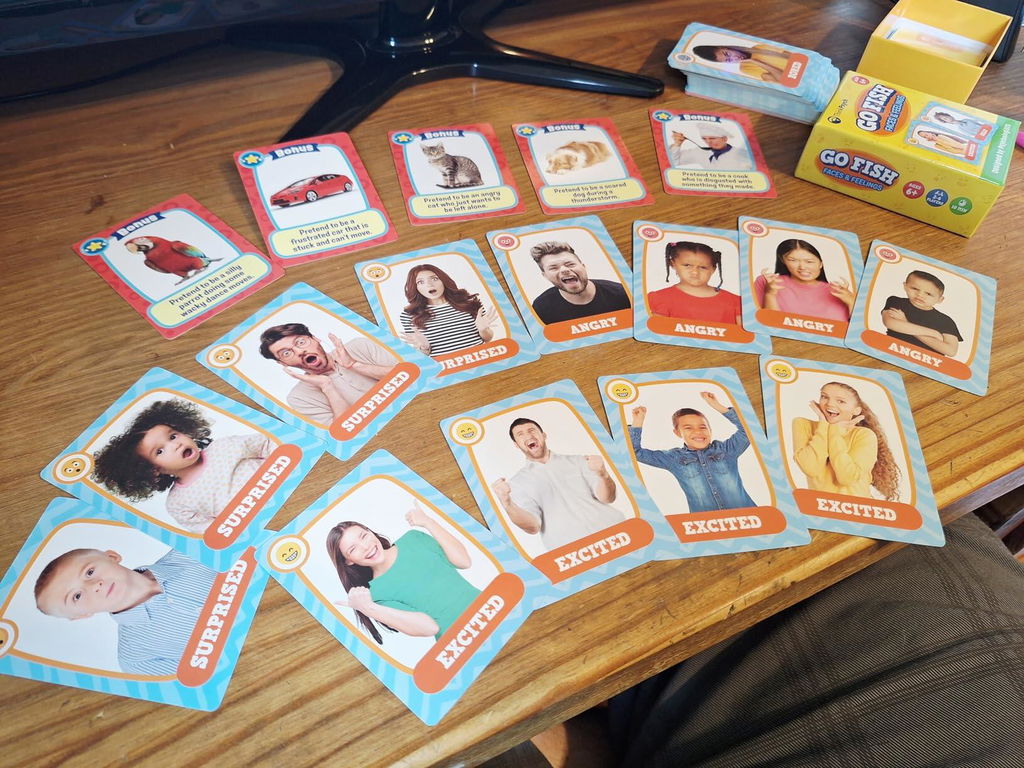
I knew the moment I saw this I wanted to get it for my granddaughter and I to play. She is 7yo now but she has always had a hard time expressing emotions. I suspect she may be slightly on the spectrum so over the years I have tried to come up with small ways to help her. We love playing Go Fish so this seemed like a perfect way to combine our love of the game and helping her.
I have to say it was a little bit of a failure the first time, not because of the game but because I found out it is even harder than I realized for her to express facial emotions. She would revert back to vocal stimming or just walking off which is okay for the first time playing. It was obviously overwhelming for her and helped me know how to approach it from now on.
As for the game itself, I think it is set up wonderfully and I enjoyed teaching her how to play. Using my own face to express and show her how to play and relate to the cards was fun and she enjoyed the silliness of it. She did like the idea of earning the little tokens and I think those were a great idea for them to include.
I hope that the more we play this the more her emotional intelligence grows. I want her to be able to express herself in healthy ways so that she can thrive and be able to ask for what she needs as she grows.