
The Five Components of Emotional Intelligence
Emotional intelligence is the ability to recognize what you are feeling, manage those feelings, understand other people, and then use all of that to guide how you think and act.
Psychologist Daniel Goleman popularized the idea in his 1995 book Emotional Intelligence, where he described it as five components: self-awareness, self-regulation, motivation, empathy, and social skills. The term itself was coined a few years earlier, in 1990, by researchers Peter Salovey and John Mayer.
If you work in a school or a therapy setting, you may have a different five in mind. CASEL, the organization behind most social-emotional learning curricula in US schools, uses its own set of five core competencies. The two frameworks overlap a great deal but they are not the same, and the differences trip people up often enough that we compare them side by side further down.

The five components of emotional intelligence
They tend to build on each other, starting with self-awareness.
1. Self-awareness
Self-awareness is the ability to notice an emotion while you are having it, and to see how it is coloring your thinking. It sounds like the easy one and it is usually the hardest, because strong feelings make self-awareness more challenging. If you want to go deeper on this one on its own, we have a longer piece on what emotional awareness is and how to teach it.
For example: being able to say "I'm frustrated" when hitting a roadblock. If you can name what is happening, you have something to work with.
2. Self-regulation
Self-regulation is what you do with a feeling once you have noticed it. It is not about suppressing emotion, and Goleman's point was close to the opposite: people who regulate well stay in contact with what they feel and then get to choose their response.
For example: pausing after losing a game instead of flipping the board. Taking a minute to pick an alternative action such as deep breathing, saying "good game", or having a sip of water.
3. Motivation
In Goleman's model, motivation means an internal drive to pursue a goal for its own sake, rather than for money, status, or to stay out of trouble. People strong in this component tend to keep going after a task stops being immediately rewarding, and to treat setbacks as information rather than endpoints.
For example: practicing an instrument because getting better feels good, not only because someone is watching you.
4. Empathy
Empathy is reading what another person is feeling and taking it seriously, even when your own reaction would be different. It is the difference between hearing someone and understanding them, and it is what makes the other four components useful to anyone besides yourself. It is also more teachable than people expect, and we have a whole guide on how to teach empathy to kids.
For example: noticing a classmate or coworker sitting alone and going over. Empathy tends to develop later than self-awareness, and it can be learned with practice.
5. Social skills
Social skills are the practical expression of everything above: starting a conversation, reading a room, disagreeing without damaging the relationship, and repairing things when they go wrong.
For example: joining a conversation in progress without seeming rude or interrupting. Harder than it seems without practice.


Goleman's five and the CASEL 5, compared
If you have seen "the five components of emotional intelligence" listed two different ways, this is why. Goleman was writing for a general and largely corporate readership in 1995. CASEL built its framework for classrooms. They cover similar ground and divide it differently.
| Goleman, 1995 | CASEL competency | What differs |
|---|---|---|
| Self-awareness | Self-awareness | Closely equivalent |
| Self-regulation | Self-management | CASEL adds goal-setting and organization |
| Motivation | No direct equivalent | CASEL folds drive into self-management rather than naming it separately |
| Empathy | Social awareness | CASEL widens this to include understanding other cultures and contexts |
| Social skills | Relationship skills | Closely equivalent |
| No direct equivalent | Responsible decision-making | CASEL's own addition, about making caring and constructive choices |
If the classroom side is what you actually need, we go through CASEL's set on its own in the five types of social-emotional learning skills.
One more wrinkle worth knowing. Goleman himself revised the model later. In Primal Leadership (2002) he and his co-authors reorganized it into four domains rather than five: self-awareness, self-management, social awareness, and relationship management. That version sits closer to CASEL's, which is part of why the two frameworks get blended together so often.
Why emotional intelligence is worth building
The case for it is stronger than "it is nice to be self-aware." A meta-analysis of 213 school-based SEL programs covering 270,034 students found improvements in social and emotional skills, attitudes, and behavior, alongside an 11-percentile-point gain in academic achievement. Emotional skills do not appear to come at the cost of academic ones. If you want that contrast drawn out more fully, we compare cognitive and emotional intelligence in a separate article.
For adults the picture is similar in shape. Emotional intelligence is associated with better relationships, better conflict resolution, and more effective leadership. It also appears to be learnable, which is not true of every capacity we care about.
How to build each component
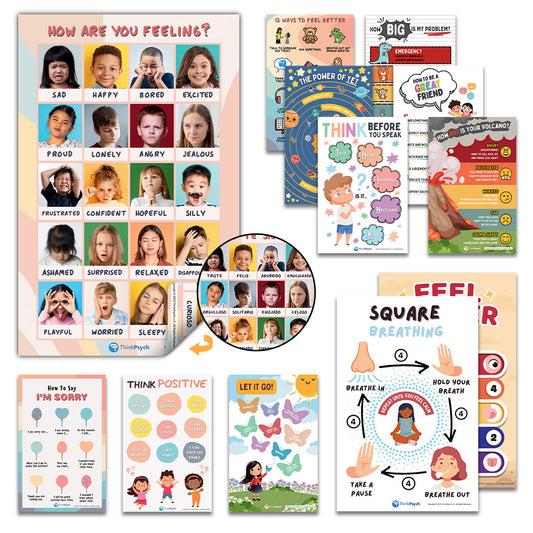
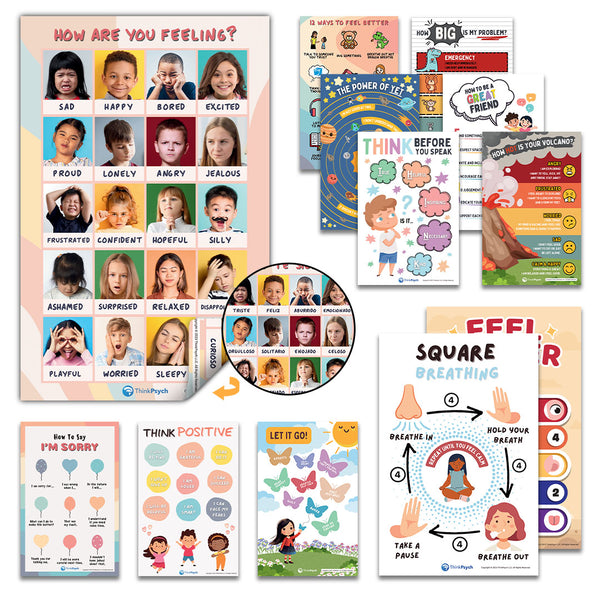
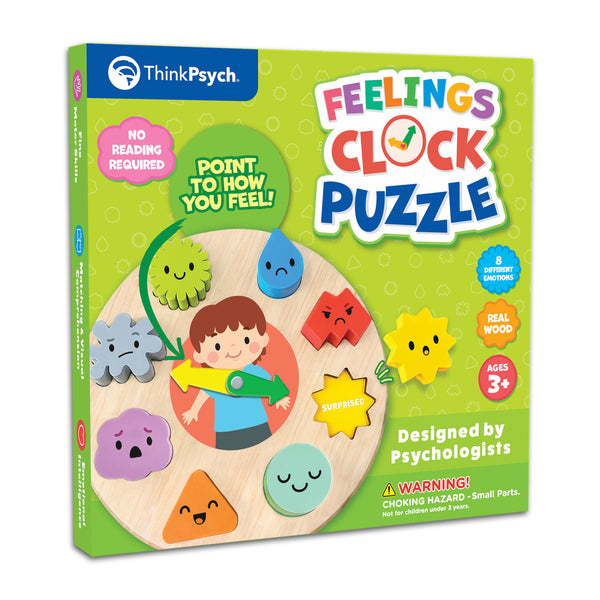
Self-awareness can start with putting words to what you are feeling on a regular basis, rather than only in a crisis. Take a few minute each day to write in a journal and expand on your daily experience. For younger children, the same skill often needs to be visual before it can be verbal, and there are a handful of daily habits that help. We also make a wide variety of games to help kids learn to develop more emotional awareness.
Self-regulation may come easier if a strategy has been rehearsed before it is needed. For adults, think about what has helped you to feel better in the past. Make a mental list and try to practice those skills before you need them. The Roll With It Coping Skills Kit is designed for kids ages 5+ and uses a unique dice mechanic to help them pick from more than 50 coping strategies.
Motivation often has more to do with noticing progress than with willpower. Keeping a visible record of small wins is unglamorous, and it seems to help both adults and kids.
Empathy can be practiced through perspective-taking, and stories are one of the easier ways in. Asking "how do you think she felt when that happened" during a book or a TV show helps to build that perspective-taking muscle.
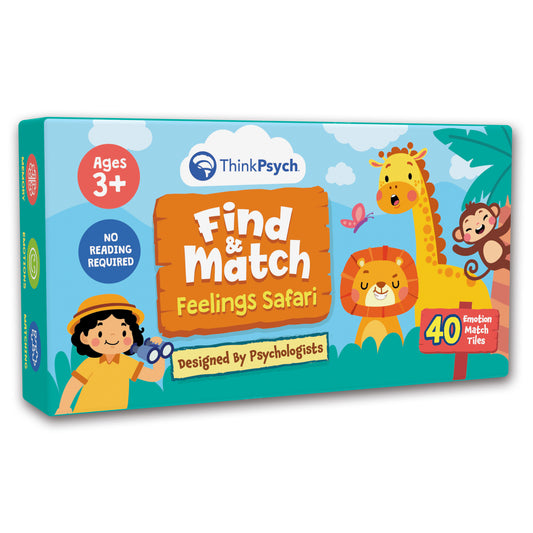
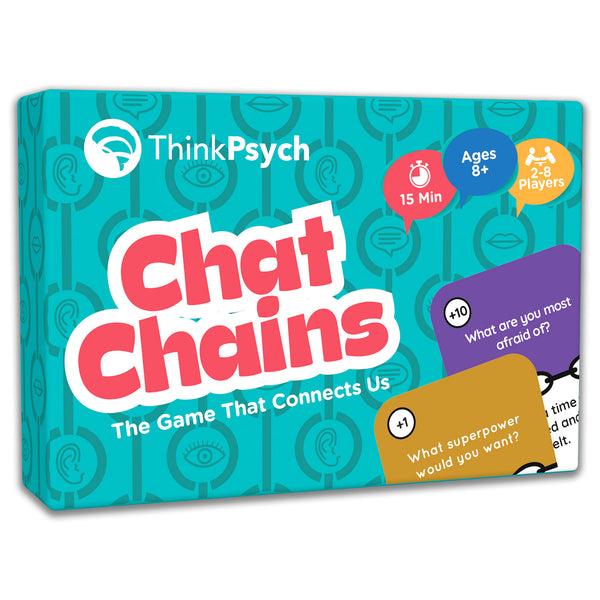
Social skills often respond well to low-stakes repetition. Chat Chains makes the structure of a conversation visible: you start with a topic card, then add question and answer cards to build a chain, so the back-and-forth becomes something you can see and practice. You can browse the rest of the social skills collection if you are looking for more of our social skills products.
Frequently asked questions
How many components of emotional intelligence are there?
Five, in Daniel Goleman's original model: self-awareness, self-regulation, motivation, empathy, and social skills. Goleman later reorganized his own framework into four domains, and CASEL uses a separate set of five competencies for schools, which is why you will find different lists depending on the source.
Who created the five components of emotional intelligence?
Psychologist Daniel Goleman described them in his 1995 book Emotional Intelligence. The term itself was introduced in 1990 by Peter Salovey and John Mayer, whose research Goleman drew on.
What is the difference between emotional intelligence and EQ?
In everyday use they mean the same thing. EQ, or emotional quotient, is an informal echo of IQ. It is not a standardized score in the way IQ is, and different assessments measure quite different things.
Are the five components the same as the CASEL 5?
No, though they overlap. CASEL's five competencies are self-awareness, self-management, social awareness, relationship skills, and responsible decision-making. The biggest differences are that CASEL treats responsible decision-making as its own competency and does not list motivation separately.
Can emotional intelligence be learned?
Yes. Unlike cognitive ability, which appears to be relatively stable, emotional skills respond to practice at any age. That is the premise most school SEL programs are built on, and the evidence for those programs is reasonably strong.
What are some examples of emotional intelligence?
Pausing to name what you are feeling before responding to a difficult email is self-awareness. Choosing not to reply until the next morning is self-regulation. Noticing that a colleague has gone quiet in a meeting and checking in afterward is empathy. Repairing a conversation that went badly is social skills.
Sources
- Goleman, D. (1995). Emotional Intelligence: Why It Can Matter More Than IQ. Bantam Books.
- Salovey, P., & Mayer, J. D. (1990). Emotional intelligence. Imagination, Cognition and Personality, 9(3), 185–211.
- Goleman, D., Boyatzis, R., & McKee, A. (2002). Primal Leadership: Realizing the Power of Emotional Intelligence. Harvard Business Review Press.
- Collaborative for Academic, Social, and Emotional Learning (CASEL). The CASEL 5. casel.org
- Durlak, J. A., Weissberg, R. P., Dymnicki, A. B., Taylor, R. D., & Schellinger, K. B. (2011). The impact of enhancing students' social and emotional learning: A meta-analysis of school-based universal interventions. Child Development, 82(1), 405–432.