

 30-day money back guarantee
 Free delivery on all US & Canada orders
 Developed by psychologists


"We built this puzzle to help kids learn about feelings every day. Something about the clock format just makes kids want to pick it up, spin the hands, and talk about how they're feeling."
How to use
- At Home
- In the Classroom
- In Therapy
FAQ
What ages is this for?
Why a clock design?
What emotions does it cover?
Is this appropriate for children with autism?
How durable is the puzzle?


Additional Product Details





What Our Customers Think
Customers praised this wooden emotion puzzle as "durable and helpful" for teaching feelings to young children. The chunky pieces are easy for small hands, with bright colors and clear facial expressions. Many use it in therapy, classrooms, and homes to help kids identify and express emotions. Some noted minor issues like stiff clock hands or limited long-term engagement.
I use this as a simple puzzle tool for building self awareness for emotional regulation with kiddos I work with in a pediatric OT setting. It's durable quality and simple to use. Great for opening a discussion on different emotions and comes with a guide to help provide ways to adapt it to kiddos based on their age and understanding.
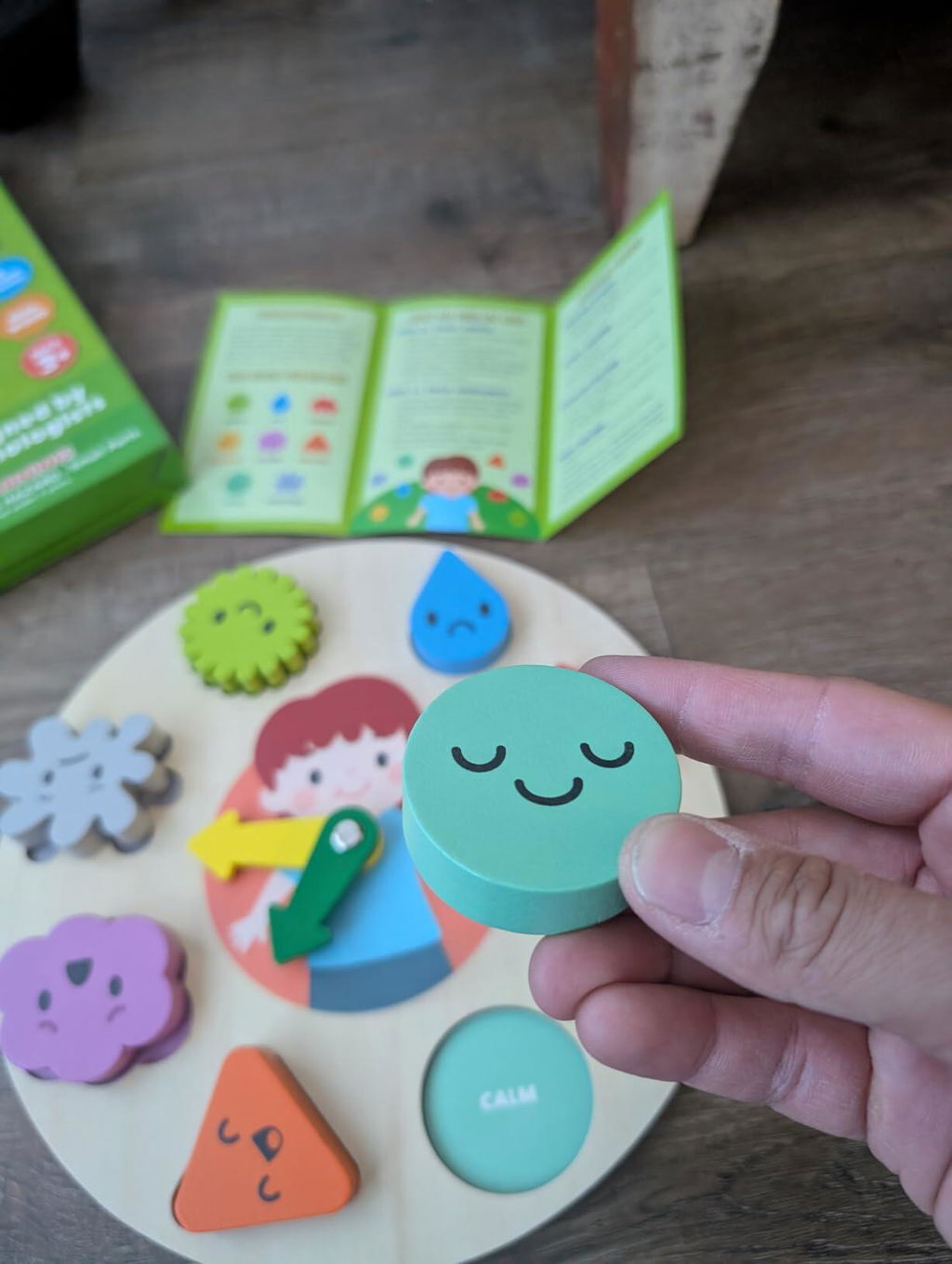
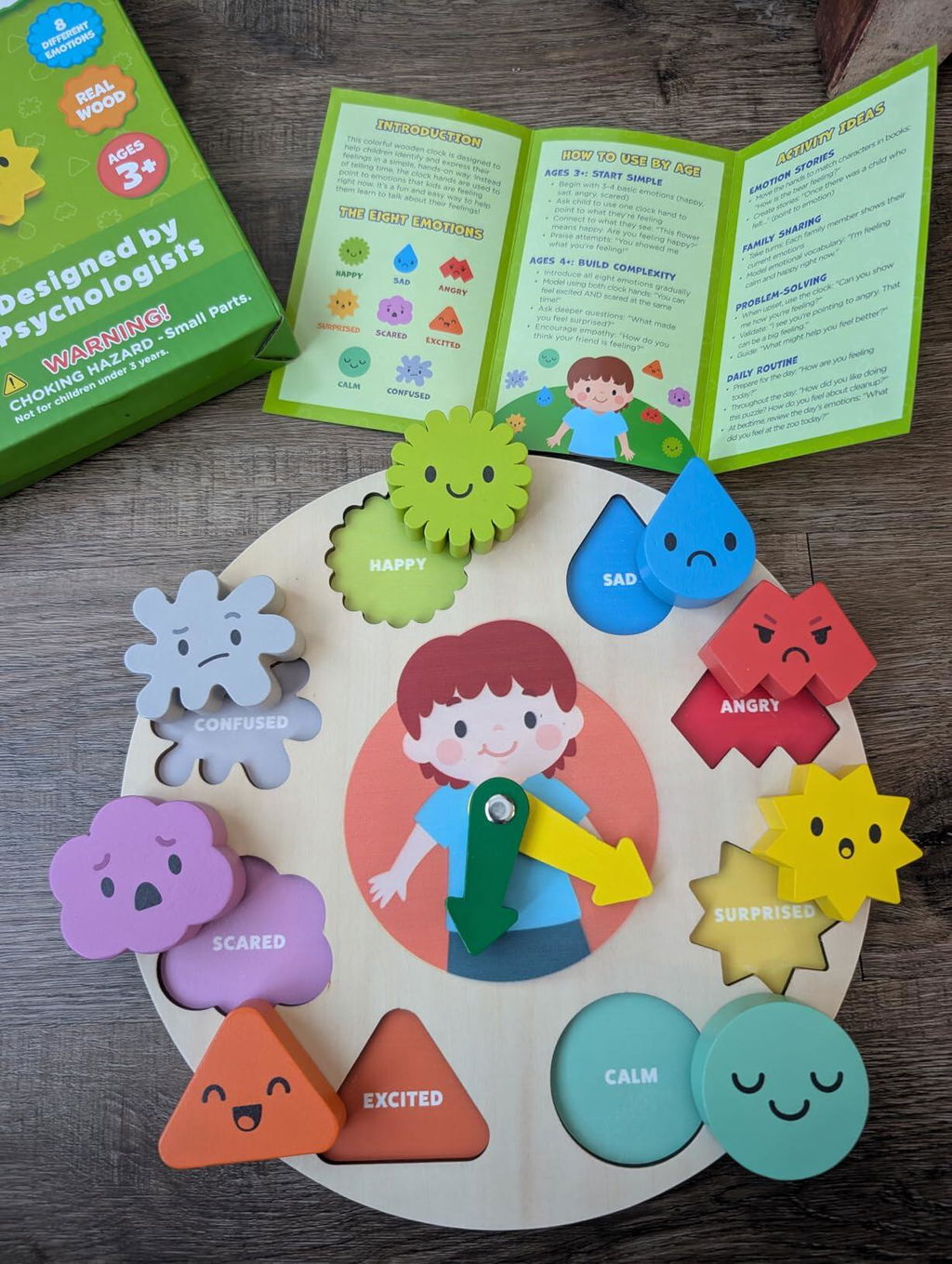
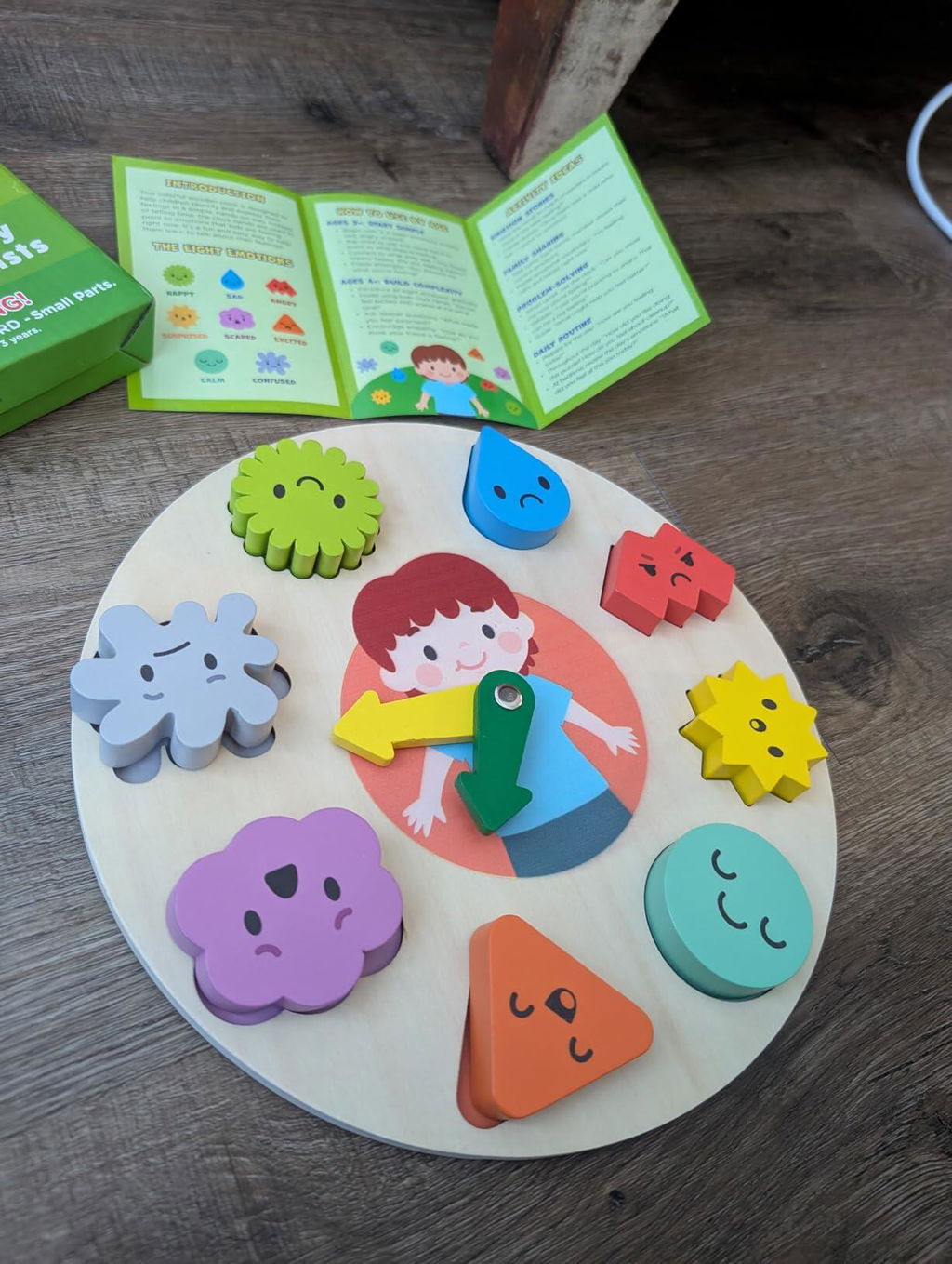
I got this feelings clock puzzle for my toddler. It’s very well made, with thick sturdy wood, and all the parts feel smooth and durable. The colors are bright and vibrant, and we haven’t had any problems with chipping or anything else. The faces and arrows are nicely sized for little hands to move. The words are printed under the faces, so kids don’t have to read to name their emotions, but after they pick up the matching expression they can see the word. I think this emotional wheel is a great idea, and will certainly be helpful for learning about feelings. I am satisfied with this chunky wood clock puzzle, and would definitely recommend it for kids to help express their emotions.
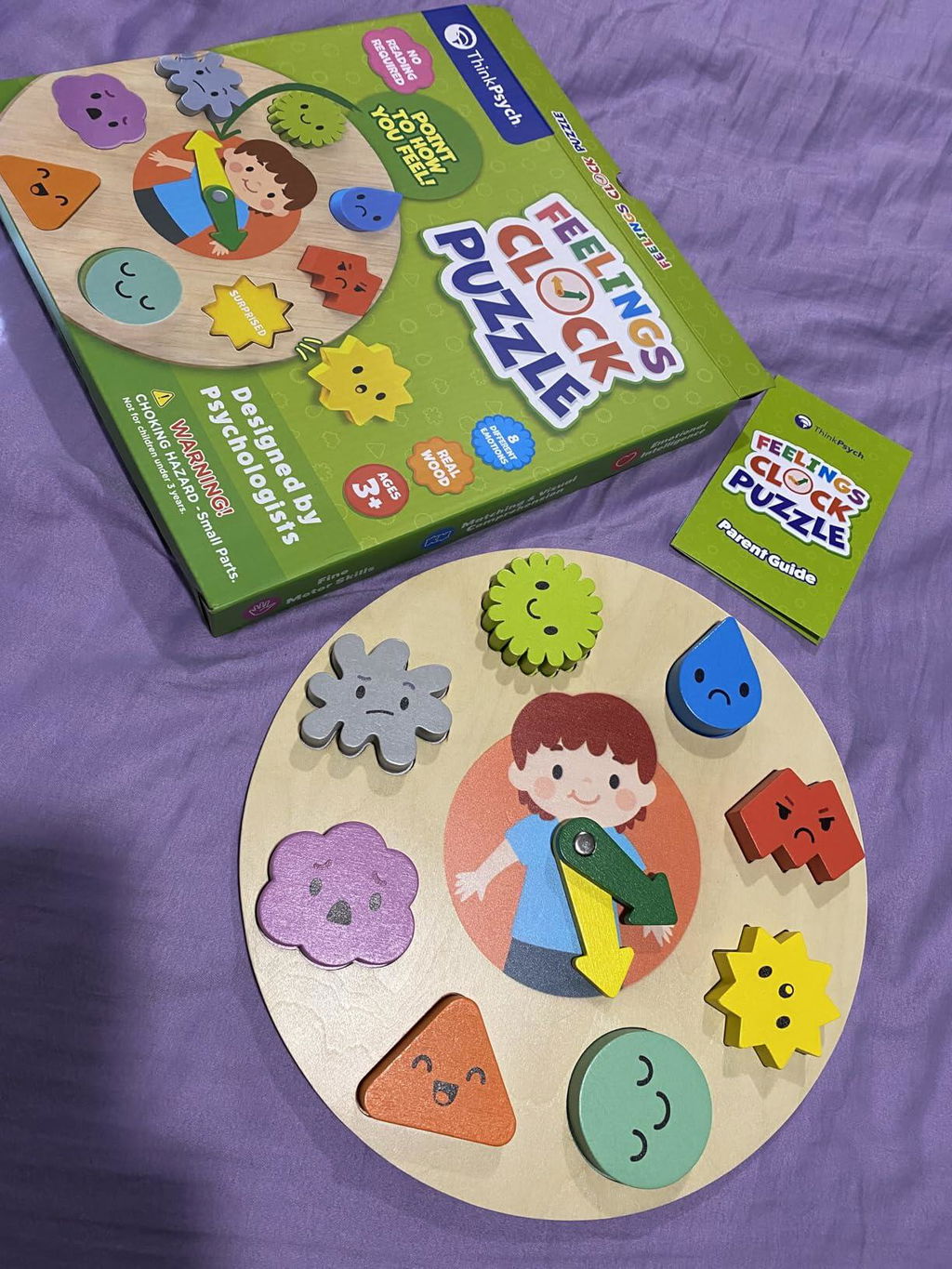
Great quality wooden puzzle. The wooden pieces are sturdy, smooth, and feel durable enough to hold up well with regular use. It’s also a thoughtful concept for introducing emotions and helping young kids build social-emotional awareness.That said, it didn’t hold my child’s attention for very long. While the design is nice, it feels a bit limited in terms of interactivity. After the initial curiosity wore off, there wasn’t much to keep them engaged or coming back to it. I am trying to create stories to go with it but honestly some sort of story book or more creative ways to use this product would be nice to include.
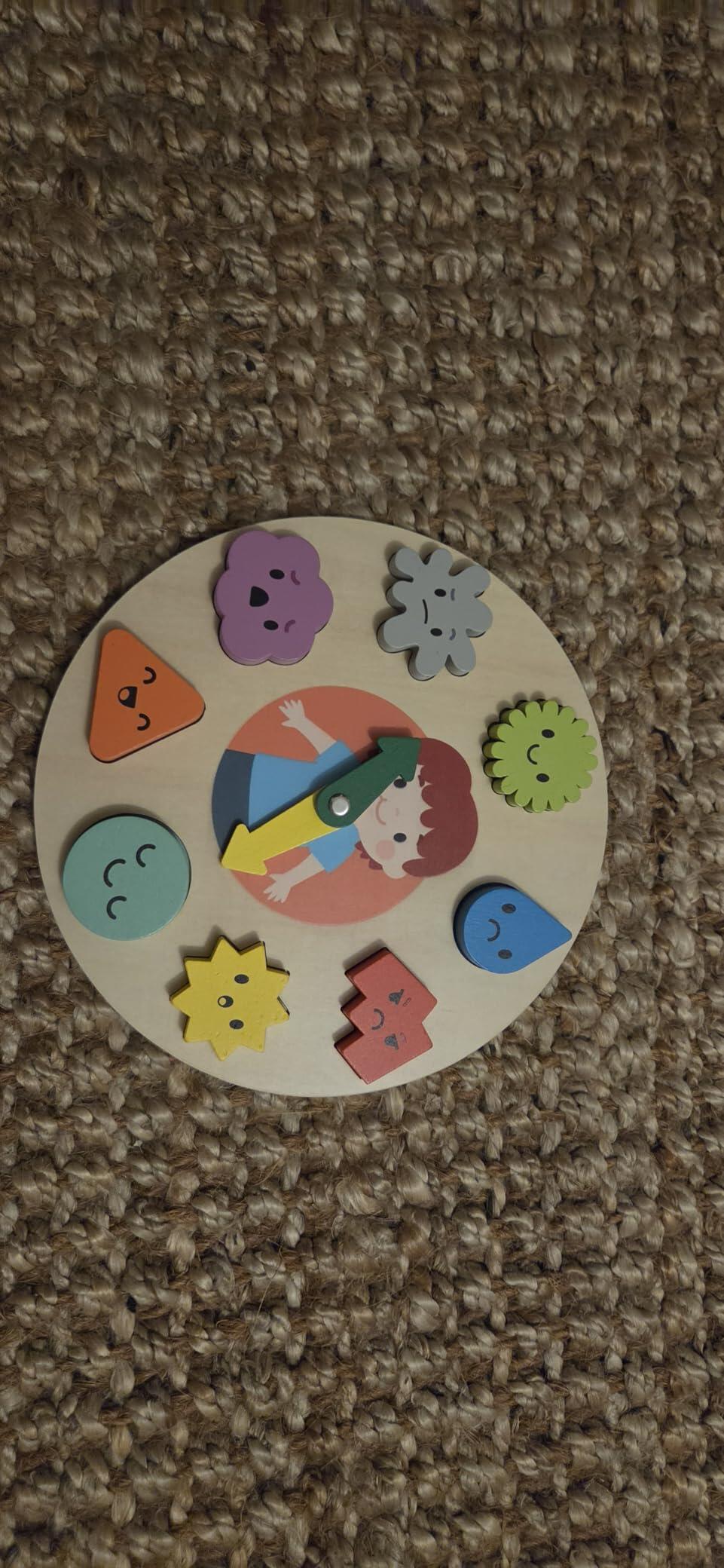
Our toddler is deep in the big feelings stage. To help them feel more in control of their autonomy and communicate their feelings with us, we got this puzzle.One of the key components of toddlerhood (personhood?) is being able to name the feeling. We love how this puzzle has the name of the feeling in the spot, and the faces on the puzzle piece are well-designed to convey the corresponding emotion. Our toddler picked up on some of them right away, while others haven’t been as heavy in rotation. The two hands of the clock are a little ahead of our current game, but our toddler does like to point the hands together towards current feelings. I would say this is probably best suited for older toddlers that are out of their exploring with their mouth phase, since anger and surprise are a bit pokey. All of the pieces are of high quality with no rough edges or splinters to be found, and the paint job has held up pretty well (we’ll revisit that longevity after a few months lol).Overall, this is a great purchase to help your little one feel more in control and learn their emotions at the same time! I anticipate we’ll be able to use this for quite a few years to come.
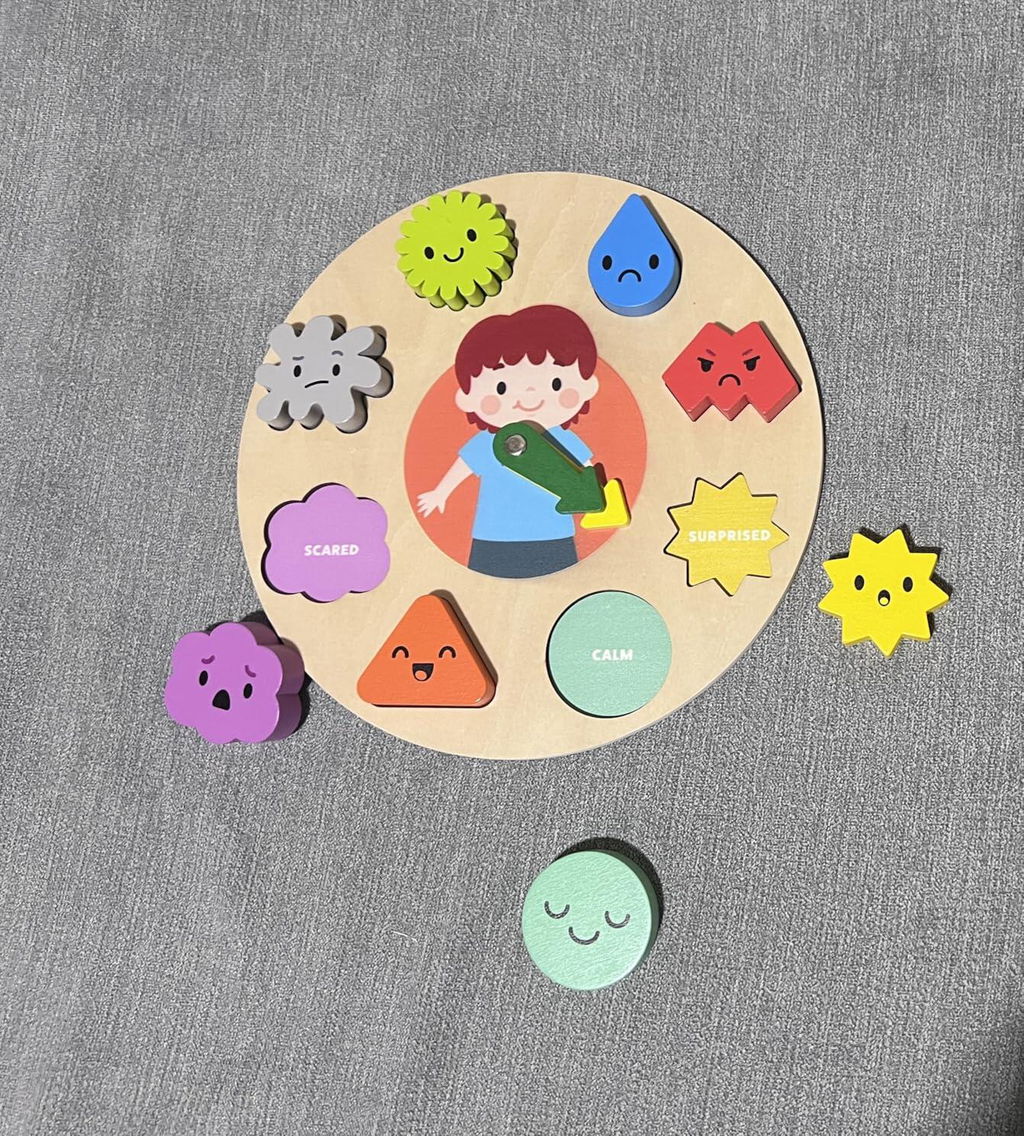
The ThinkPsych Feelings Clock Puzzle is like therapy in the form of a toy—minus the couch and awkward silences. With chunky, kid-friendly pieces and a bright, spinning wheel, it turns emotional meltdowns into teachable moments (or at least buys you a few minutes of peace). Each emotion is easy to spot, making it perfect for little hands still learning the difference between “I’m mad” and “I just need a snack.” This wooden feelings wheel isn’t just cute—it’s a legit tool for building emotional smarts, whether you’re a parent, teacher, or just trying to help a tiny human figure out why they’re suddenly sobbing over socks. Durable, colorful, and sneakily educational, it’s the kind of toy you’ll wish you had when you were three (or, let’s be honest, last Tuesday).
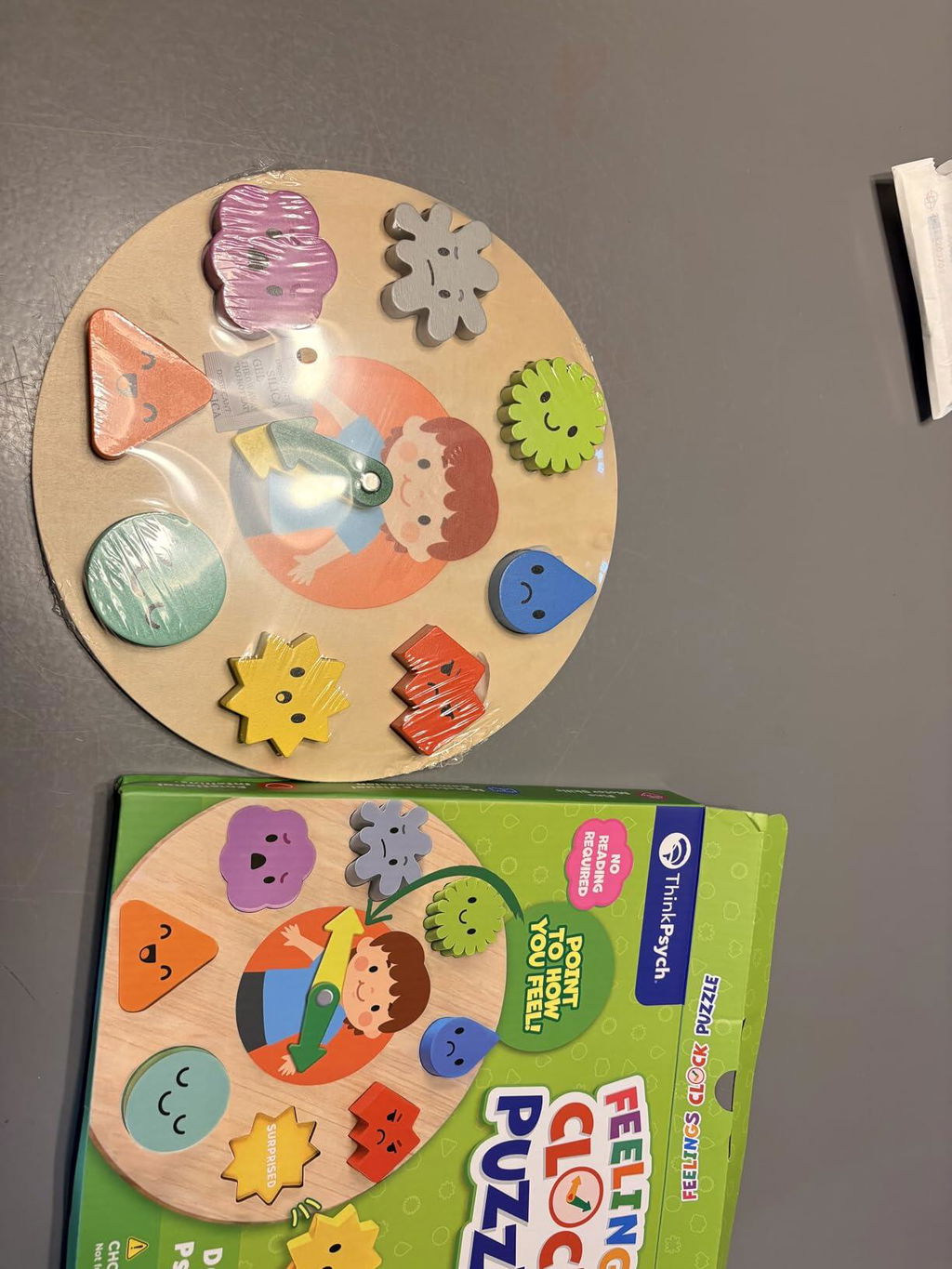
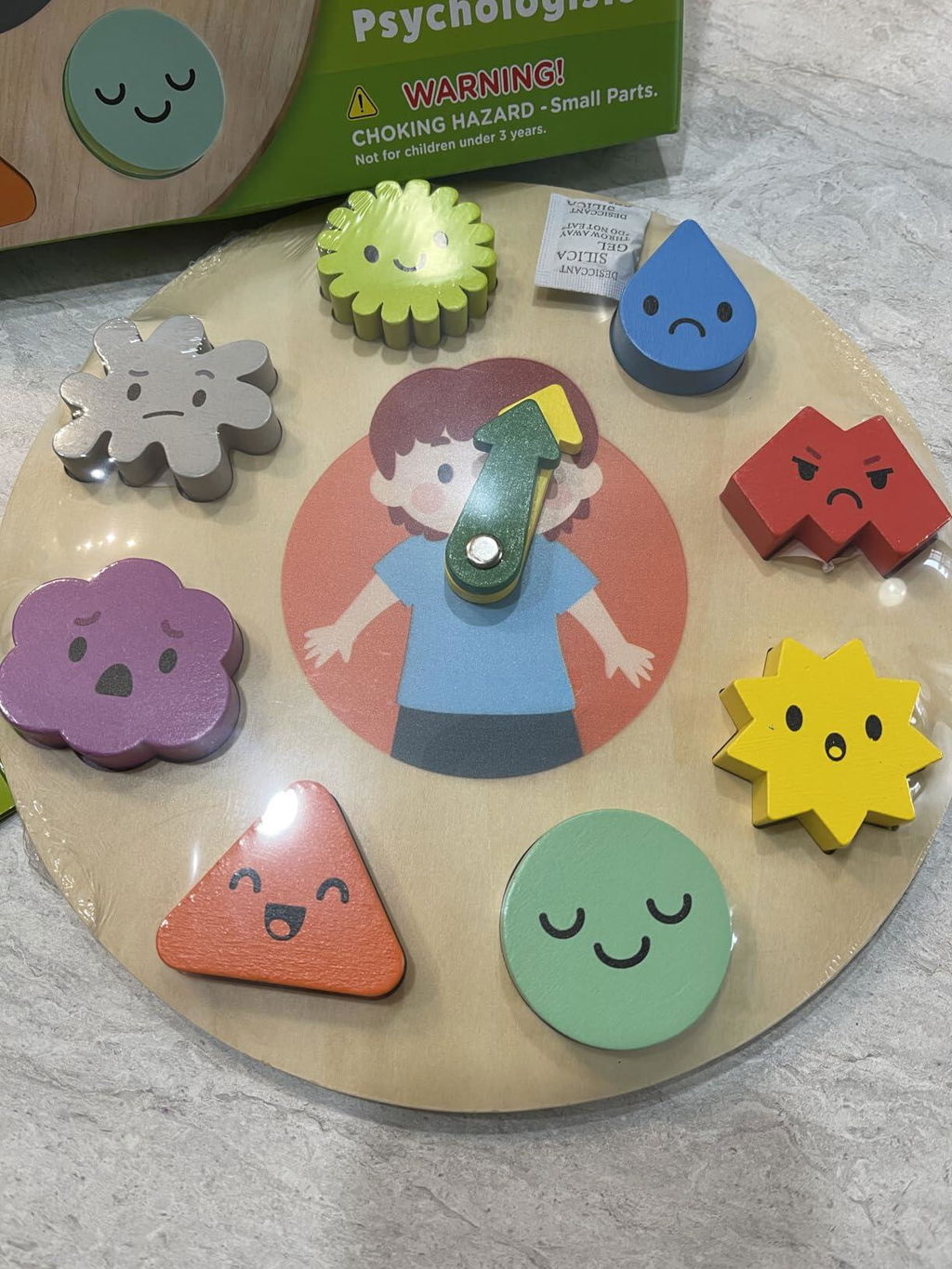
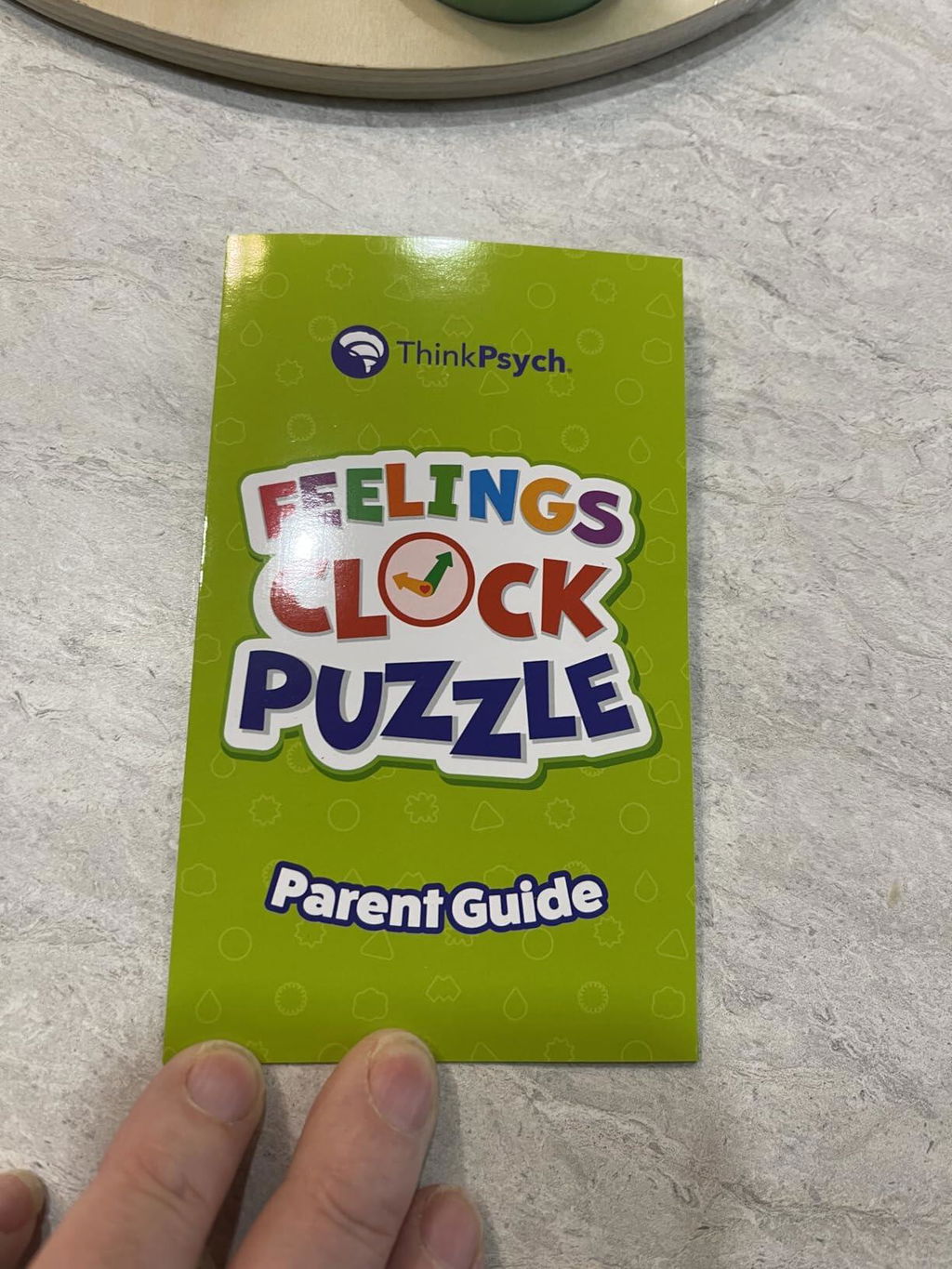
I tried out this ThinkPsych Feelings Clock Puzzle with my 2 year old granddaughter. The puzzle comes with a nice instruction book with ways you can use the puzzle and adapt it for different levels. My granddaughter recognizes a few feelings such as happy, sad, and scared so we started out talking about just those three.She did enjoy putting the other puzzle pieces into the puzzle. Most of the pieces only fit one way. “Surprised” and “happy” fit no matter which direction they are turned, which was a little frustrating for her as she wanted to get the mouth and eyes correct.The puzzle is made of layered wood and is nicely painted. When first taken out, the clock hands were stuck together but I was able to separate them. Each puzzle piece had a piece of paper under it which kept them from sticking but should be removed before using the game.The puzzle will eventually be used in a classroom of students with special needs. It is sturdy enough that it will last a long time and has a good assortment of feelings to use with the students.
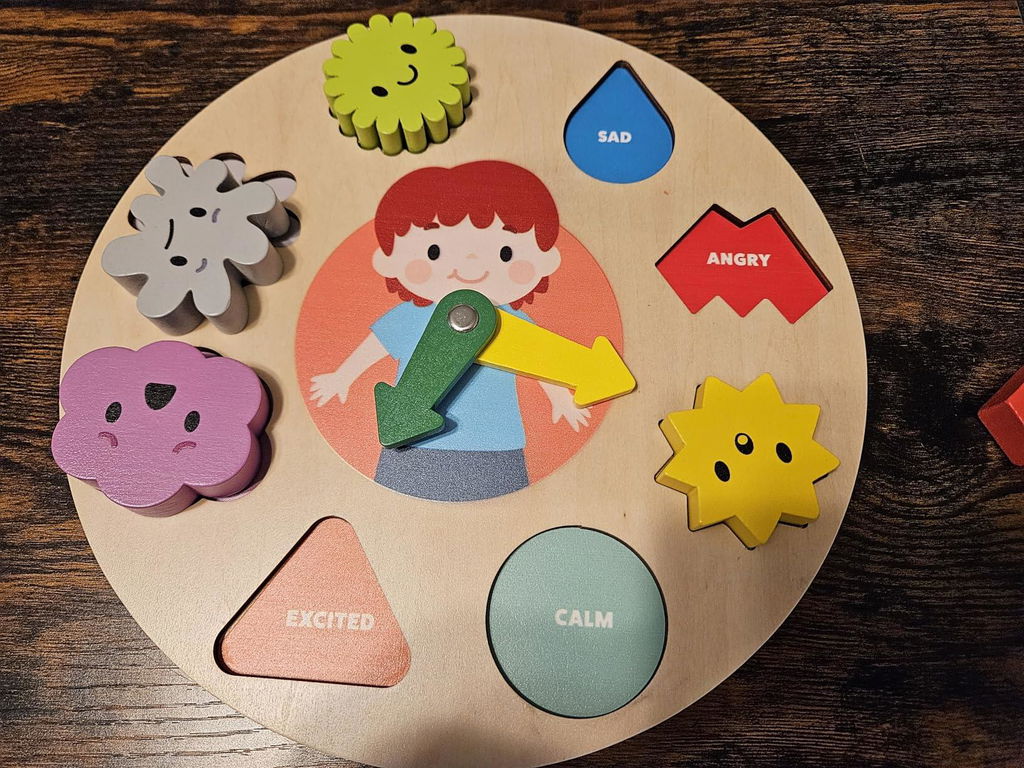
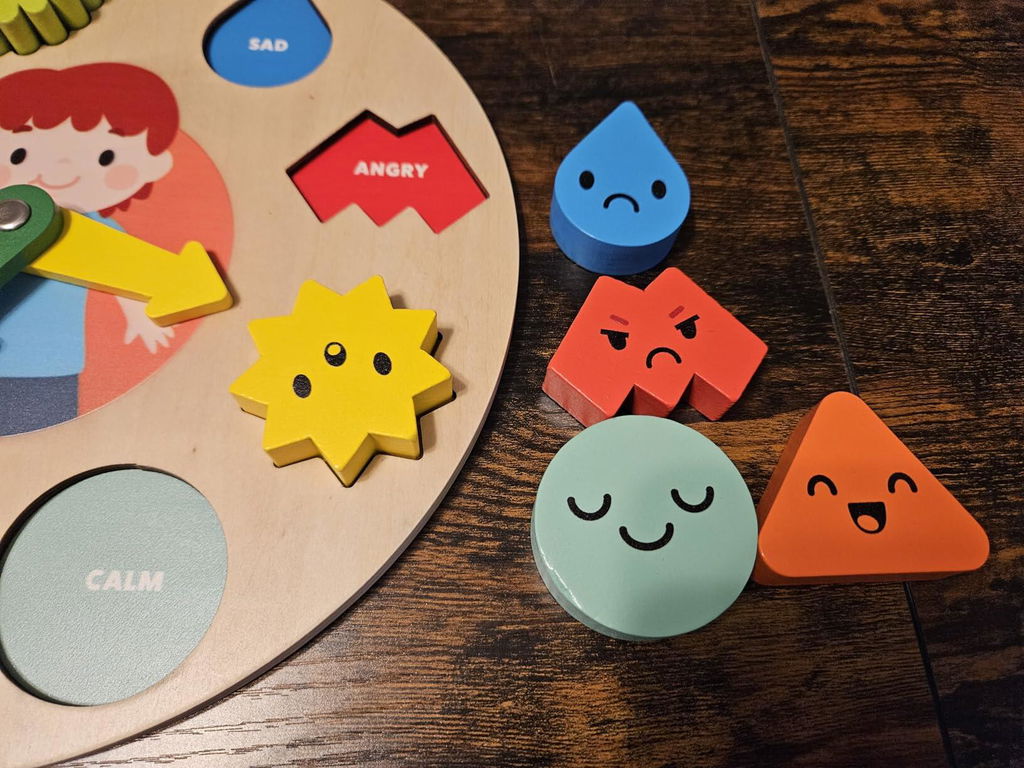
We really appreciated how simple and straight forward this toy is. It's perfect for introducing different feelings to the littles! Each piece of the puzzle has a face painted on the front to help them understand how they might be feeling, and then connecting it to the word itself (printed underneath on the puzzle board)The colors are bright and vibrant and well painted, and the pieces are smooth and easy for small hands to hold.It's also a smaller size (not too small!) so it's easy to store and add to a playroom that already has some toys in it.This is a great toy to add to a collection at home or at a preschool and I highly recommend it for younger kiddos, introducing feelings and how to express emotions is never done too early!
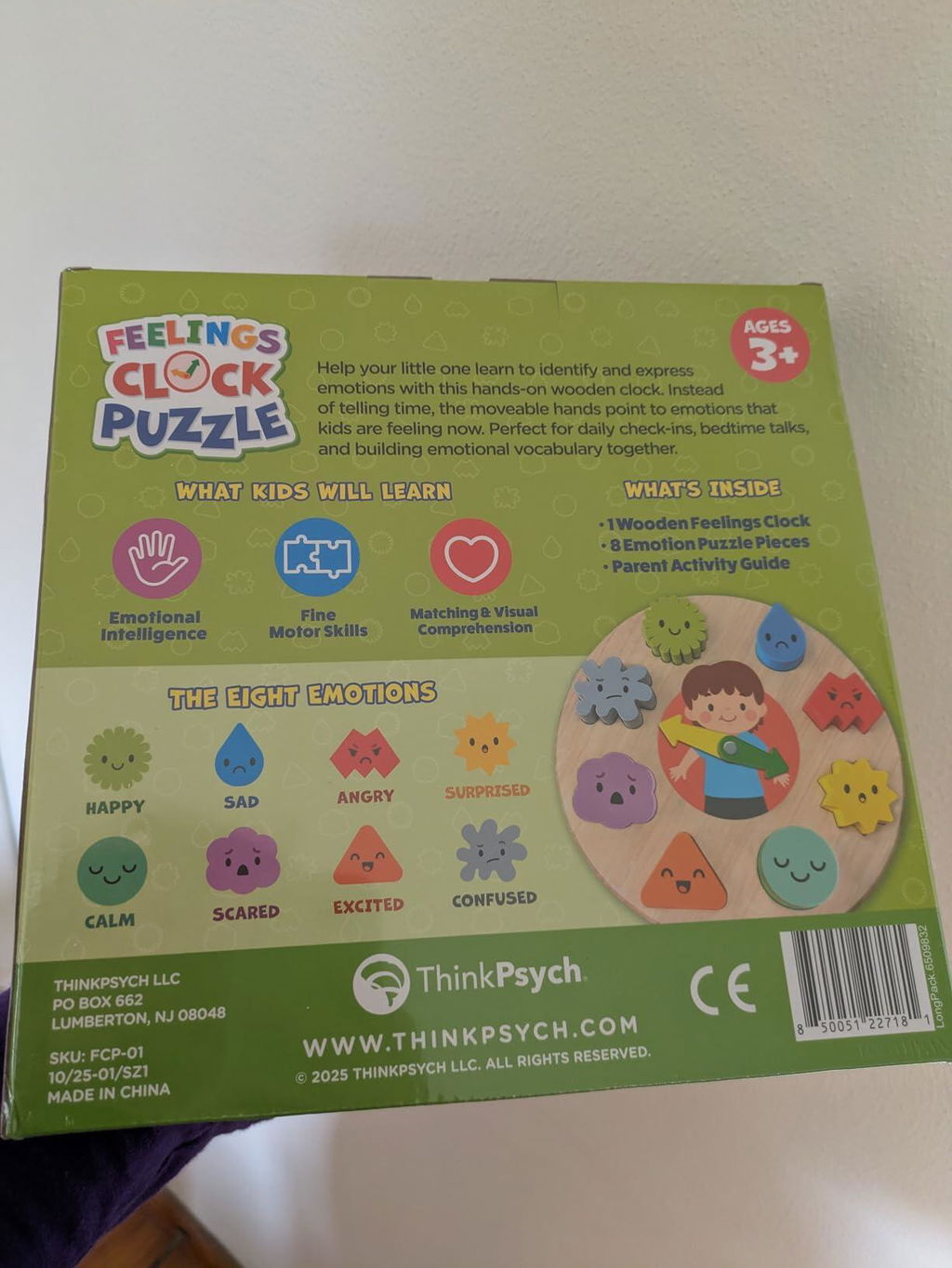
My 2.5 yr old absolutely loves this feelings clock puzzle! She was so excited when I first took it out of the box and it immediately caught her attention.She has been learning the names of different emotions and we have been working on helping her identify how she feels. This puzzle has really helped reinforce those skills in a hands on way. I love how colorful and visually engaging it is because it makes learning about emotions more inviting and fun for her.The puzzle pieces are thick and sturdy which makes them perfect for little hands. She is able to easily pick them up and place them correctly which has helped build her confidence while playing. I also like that it includes a clock feature which adds another layer of learning beyond just emotions.We have been using this puzzle throughout the day to talk about how she is feeling. She is able to point to the different faces and match them to her emotions which has been a great way to encourage communication and reflection. It has become a really nice part of our daily routine to talk about her day and how she felt during different moments.The size is also very convenient and easy to take on the go which makes it great for bringing along in a bag. The clock hands move smoothly and are easy to adjust while still staying in place once set.Overall this is a thoughtful and engaging tool for supporting early emotional learning and it has been a wonderful addition to our routine.
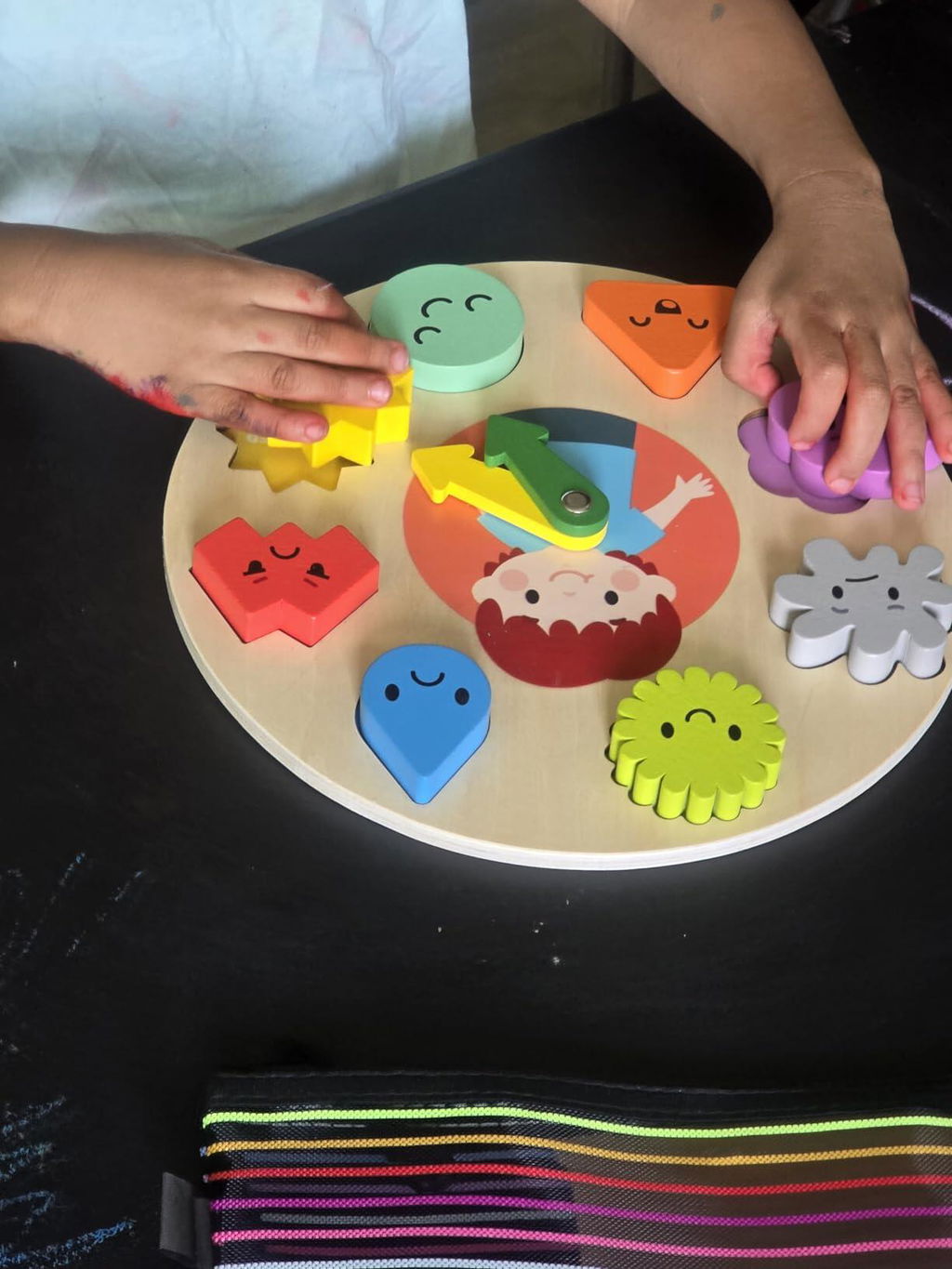
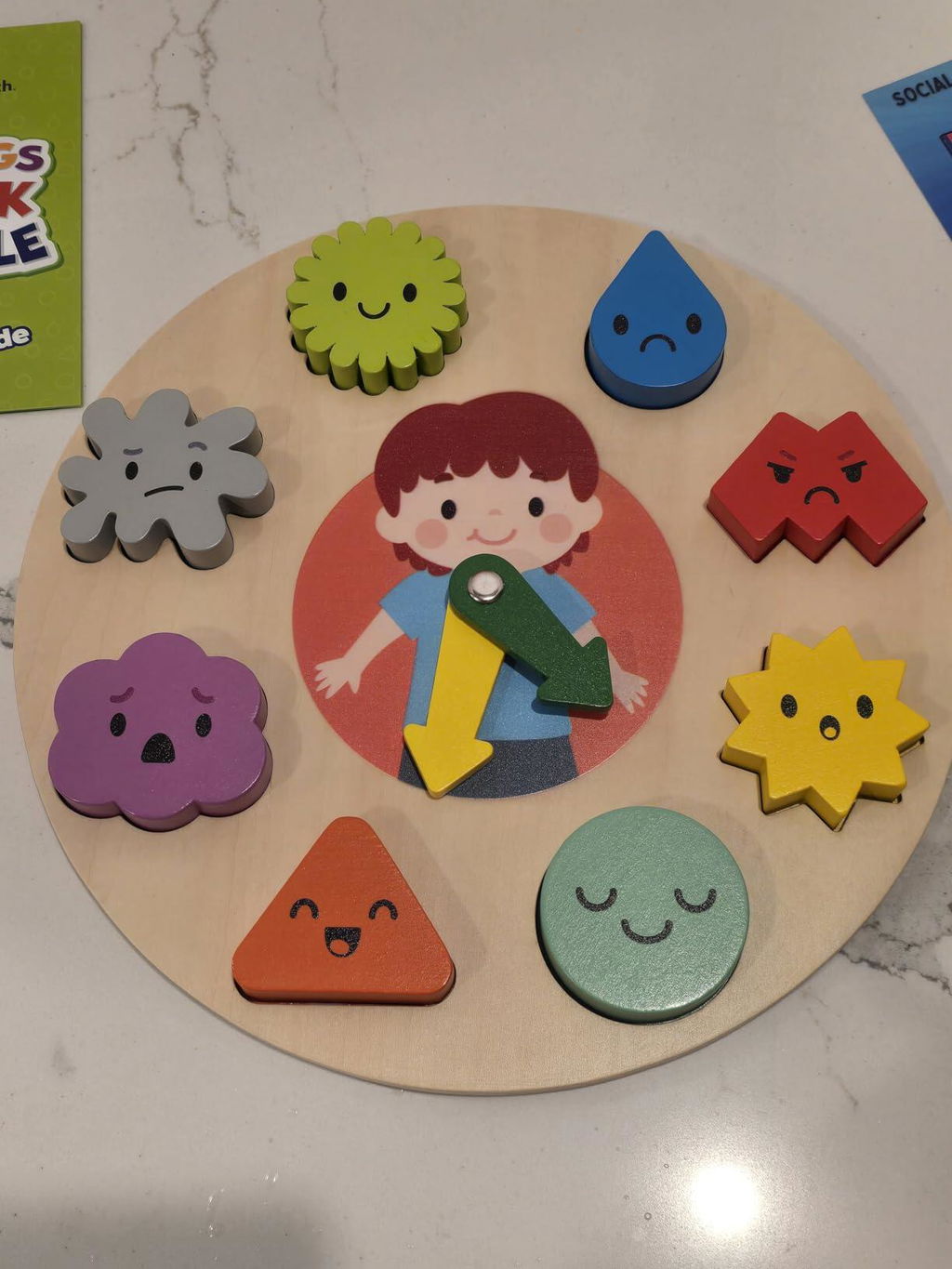
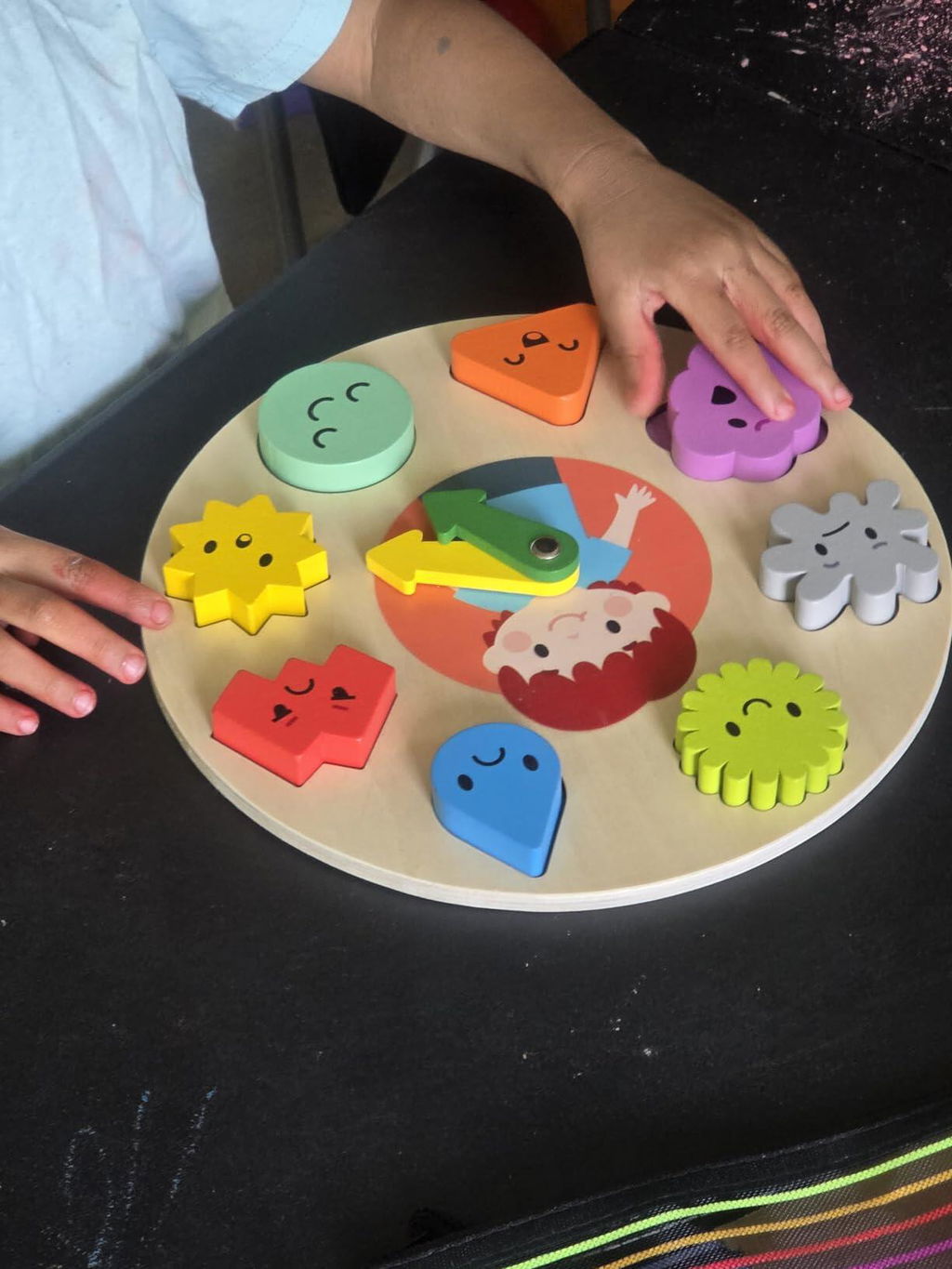
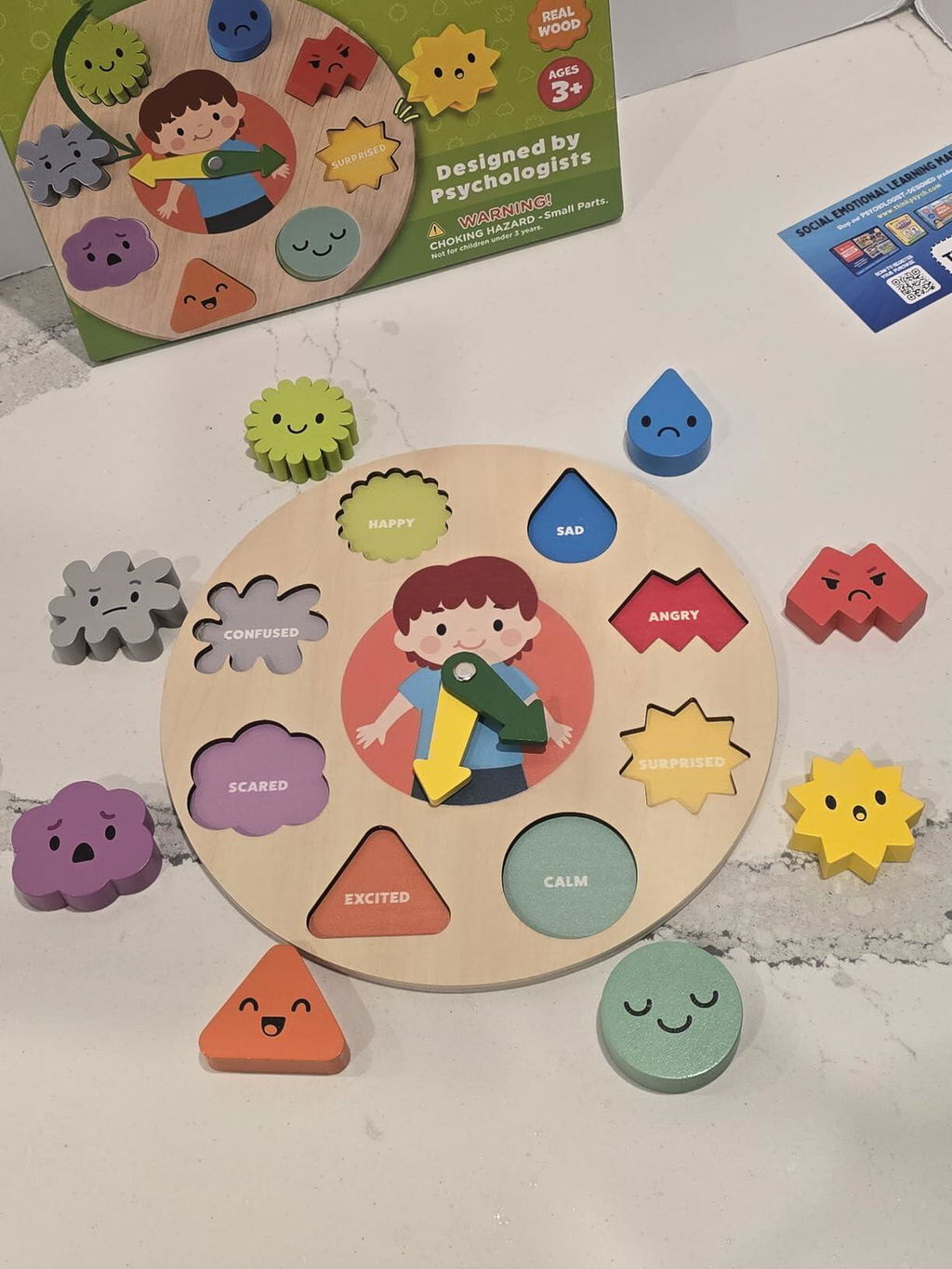
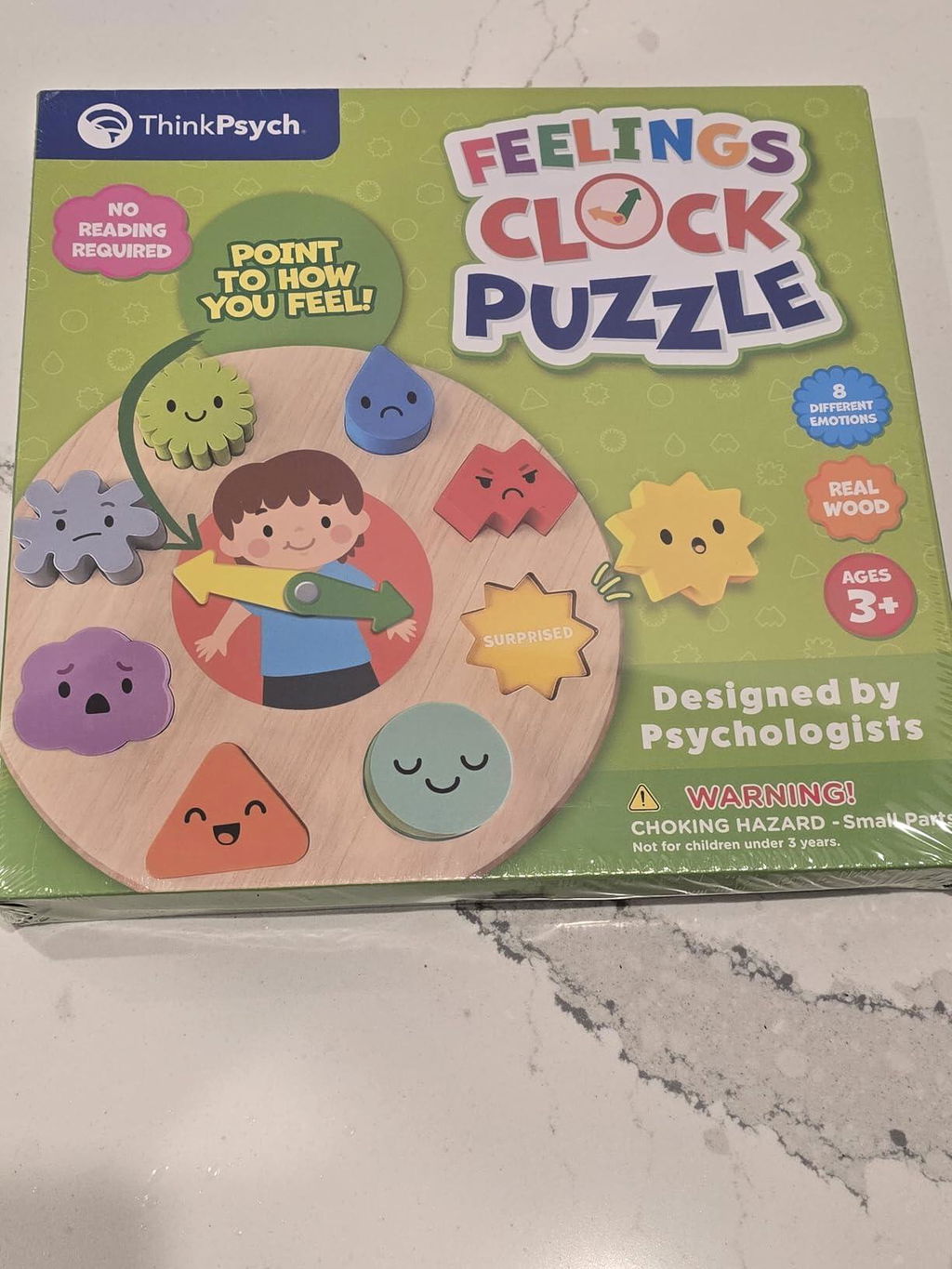
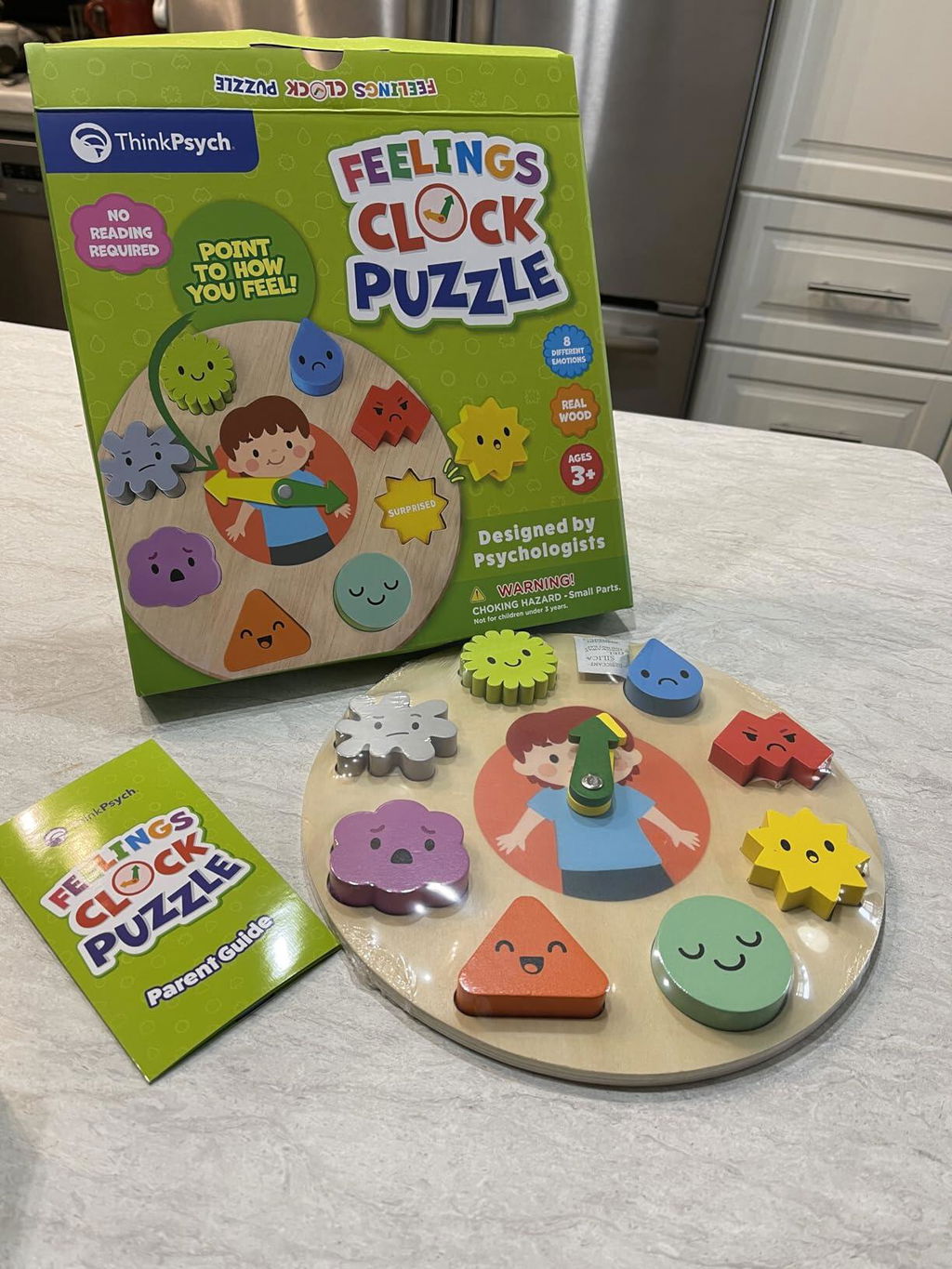
This clock-style feelings feelings wheel arrived neatly packaged in retail quality style box. Upon opening the box, all of the puzzle pieces are shrink wrapped into place, which makes it an appropriate choice for gifting.The puzzle itself is attractive, functional and painted in enticing colors to encourage kids to interact. The base and the puzzle pieces are made from fine quality, substantial wood and made to last.This toy is also an educational tool that can be utilized to help kids learn the proper words to express how they are feeling. This can be used anytime to engage your child but is primarily useful to help de-escalate a melt down by helping the child learn to verbally express how they are feeling. It is a progressive learning tool in that once the child learns all of the puzzle pieces and the words associated with those pieces, you can then teach then to use both "clock" hands to then use two words to express their feelings.I believe this puzzle is a very helpful tool for early childhood development and I like that it encourages communication on both the part of the child and the adult, offering an opportunity to bond in a meaningful way. So often children simply want to be heard, understood and validated. The ThinkPsych clock puzzle offers the opportunity for your child or grandchild to learn to use their words to properly express exactly how they feel.I appreciate the quality and thoughtful design behind this feelings clock and expect to use it with all of my current and future grandkids. I think it is well worth the asking price and highly recommend it.
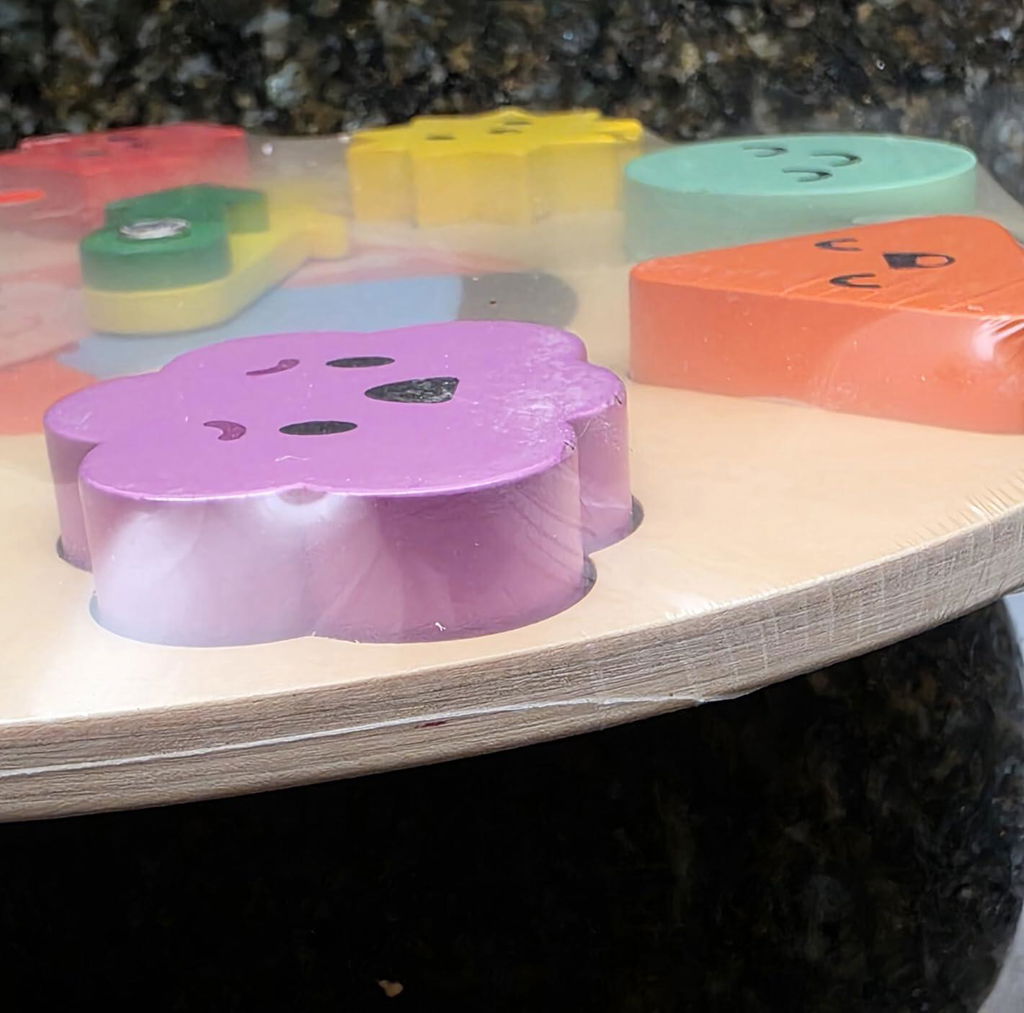
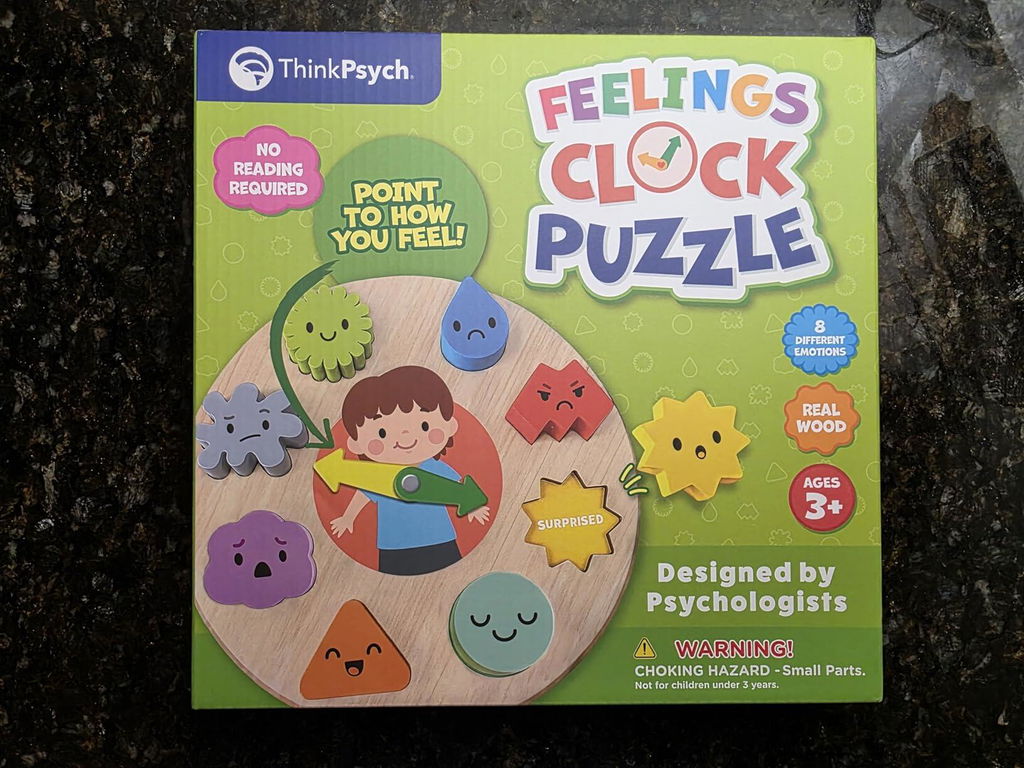
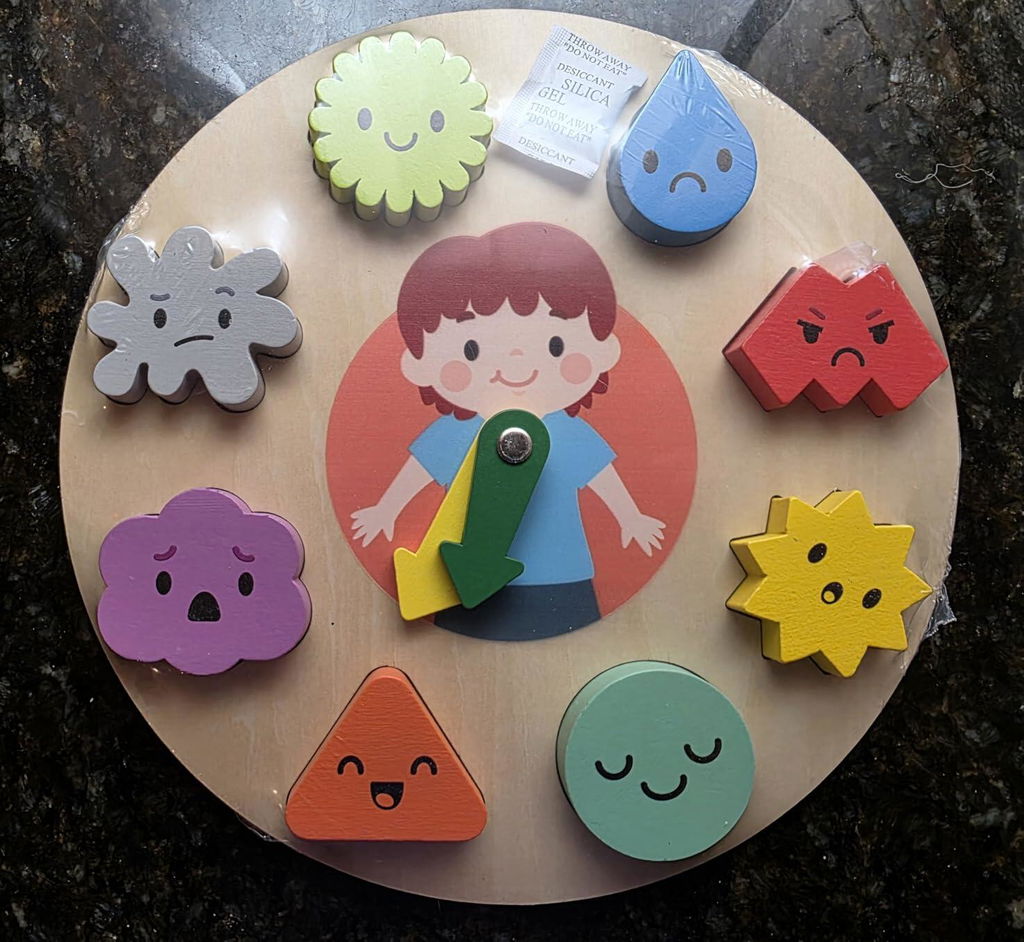
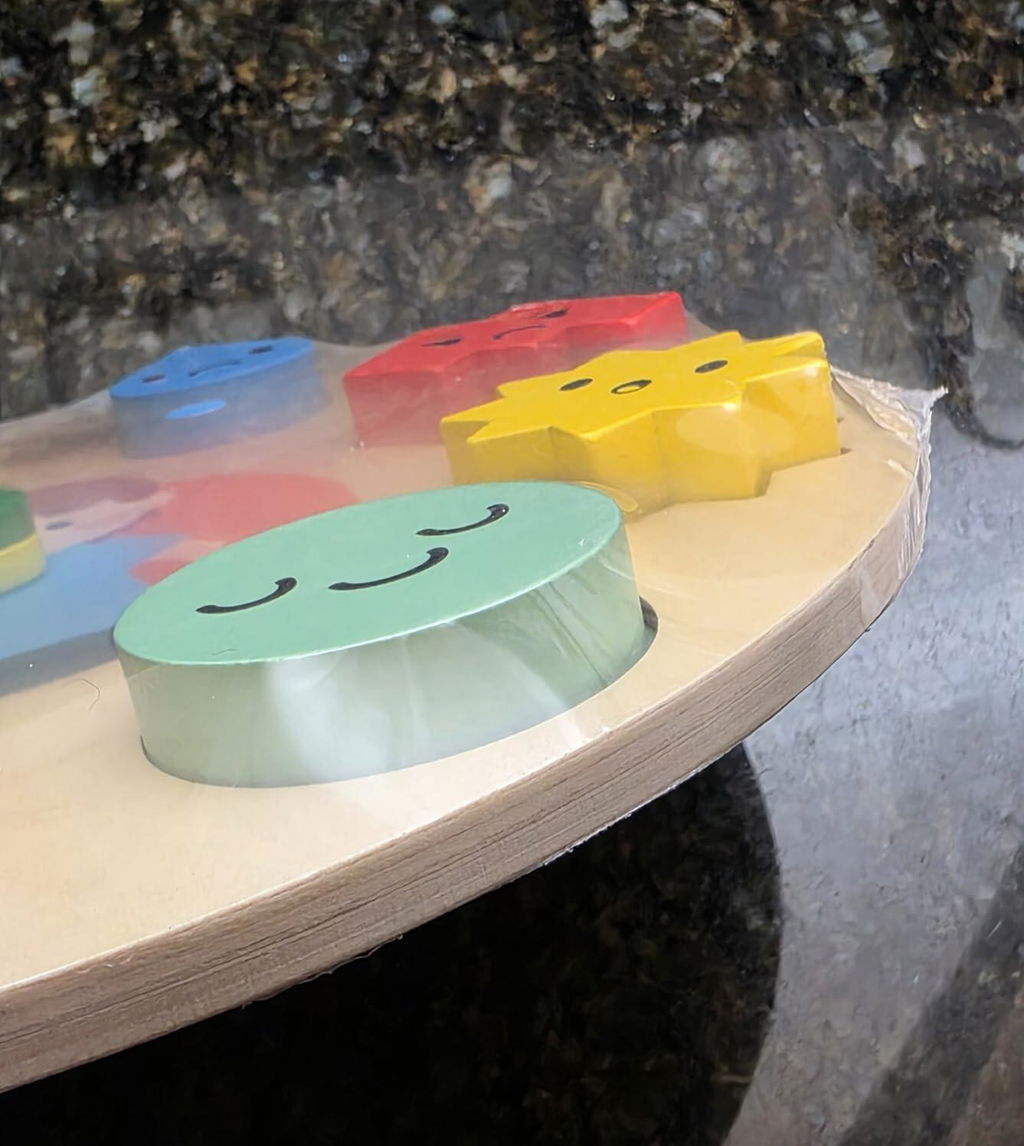
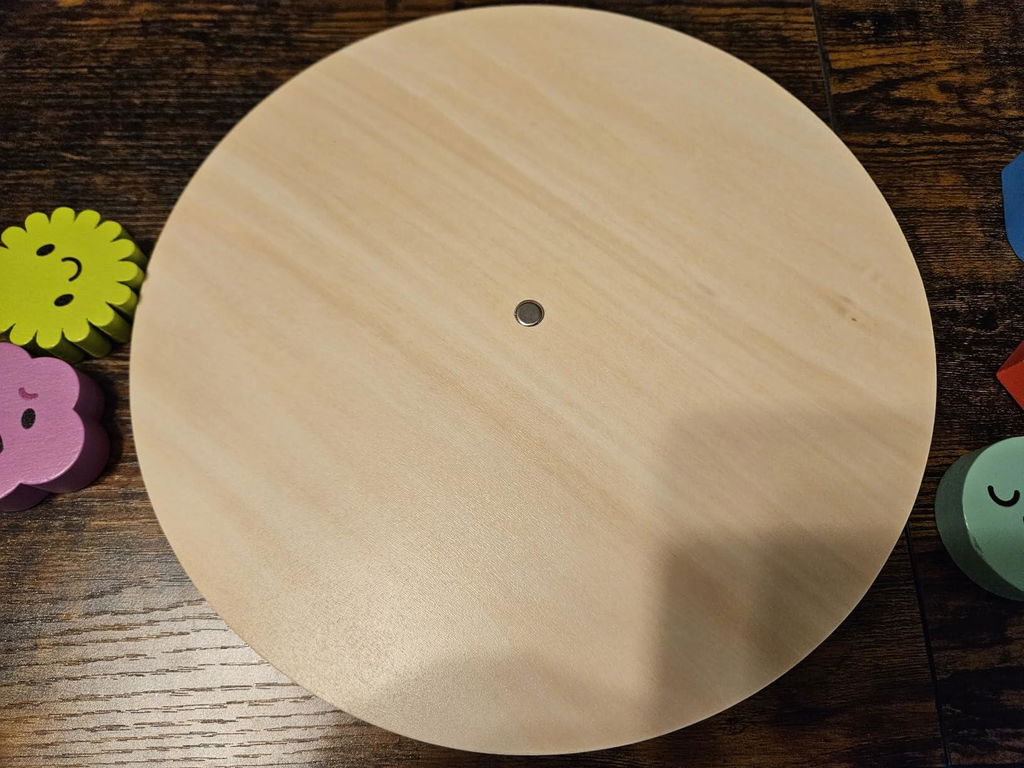
J’ai choisi ce puzzle d’horloge sentimentale pour l’offrir à ma nièce, qui accompagne un enfant de 3 ans dans l’apprentissage de la gestion des émotions. Je ne l’ai donc pas encore vu en action, mais j’ai pu examiner l’objet attentivement avant de l’emballer.Le puzzle est fabriqué en bois, avec une finition lisse et sans aspérités, ce qui est rassurant pour un jeune enfant. Les couleurs sont vives, bien contrastées, et les illustrations des émotions sont simples, expressives et faciles à distinguer. L’aiguille centrale est sur un pivot et semble se déplacer sans forcer tout en offrant assez de résistance pour rester en place une fois positionnée, ce qui est idéal pour de petites mains.L’arrière est en bois, probablement verni, et n’affiche que le pivot qui retient les aiguilles. Comme cet espace est complètement vide, j’aurais trouvé intéressant qu’il soit utilisé pour ajouter un petit jeu interactif ou de courtes histoires liées aux émotions, que le parent pourrait lire à l’enfant. Cela rendrait l’ensemble encore plus complet et exploiterait pleinement les deux faces du puzzle. Le concept est intéressant : chaque émotion est associée à une forme géométrique, ce qui permet à l’enfant de faire des liens visuels et tactiles. Le jouet ne nécessite pas de savoir lire, ce qui le rend accessible dès 3 ans. L’ensemble est suffisamment grand pour être manipulé facilement, et les pièces semblent robustes, adaptées à un usage répété.Ce type d’outil peut être utile pour aider un enfant à identifier ce qu’il ressent, surtout dans les moments où les mots manquent. Il peut aussi servir de support pour amorcer une discussion ou pour calmer une situation en invitant l’enfant à pointer ce qu’il vit. Le fait que le produit soit conçu par des psychologues ajoute un certain niveau de confiance quant à sa pertinence pédagogique.Le puzzle est présenté dans une boîte attrayante et bien illustrée, ce qui en fait un cadeau facile à offrir. L’ensemble semble durable et adapté autant à la maison qu’à un environnement de garde ou d’apprentissage.Toutefois, j’aurais trouvé utile que cette horloge puisse s’accrocher au mur ou à une porte, de façon à rester visible et accessible pour l’enfant. Cela lui permettrait de prendre lui‑même l’initiative d’exprimer son émotion en passant à côté. Lorsqu’elle est simplement posée sur une table ou un meuble, elle risque d’être moins dans son champ visuel. Un petit support ou chevalet pourrait aussi la maintenir bien en vue tout en restant à portée de main. Et pourquoi pas une version magnétique, à coller sur le réfrigérateur? Ce serait un emplacement naturel, bien visible autant pour l’enfant que pour le parent.Même si ce puzzle est conçu pour les jeunes enfants, je trouve qu’il pourrait aussi servir de clin d’œil amusant dans une maison avec des adolescents ou même entre adultes. Placé sur un comptoir ou un bureau, il peut devenir un petit indicateur d’humeur du jour — un moyen simple de dire “je suis en pleine forme” ou “journée plus difficile aujourd’hui”, et aussi une belle manière d’inviter quelqu’un à une conversation.Comme je ne l’ai pas encore vu utilisé par l’enfant, mon appréciation repose surtout sur la qualité matérielle, la conception et le potentiel éducatif. Je pourrai mettre à jour mon avis si ma nièce me partage son expérience après quelques semaines d’utilisation.
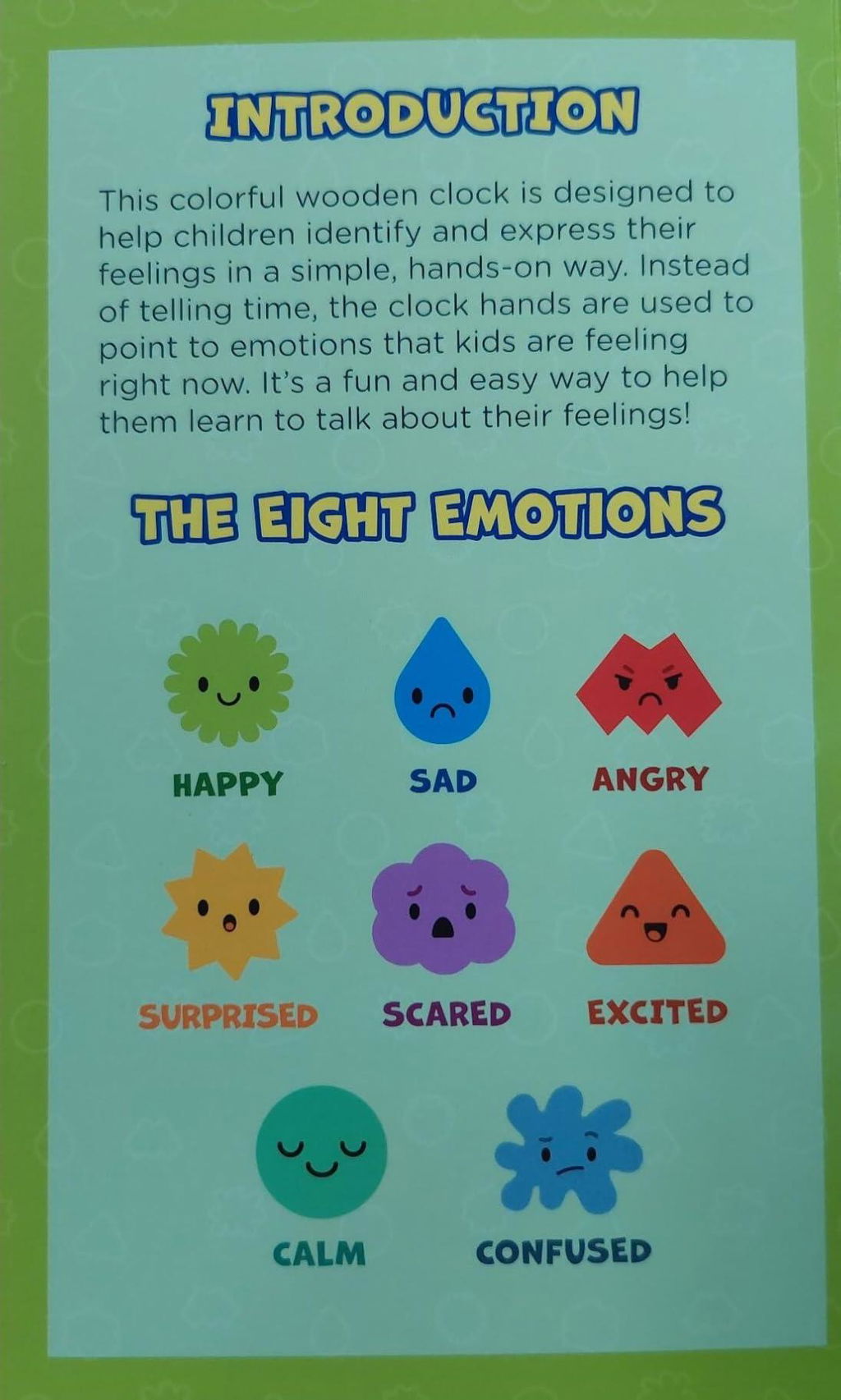
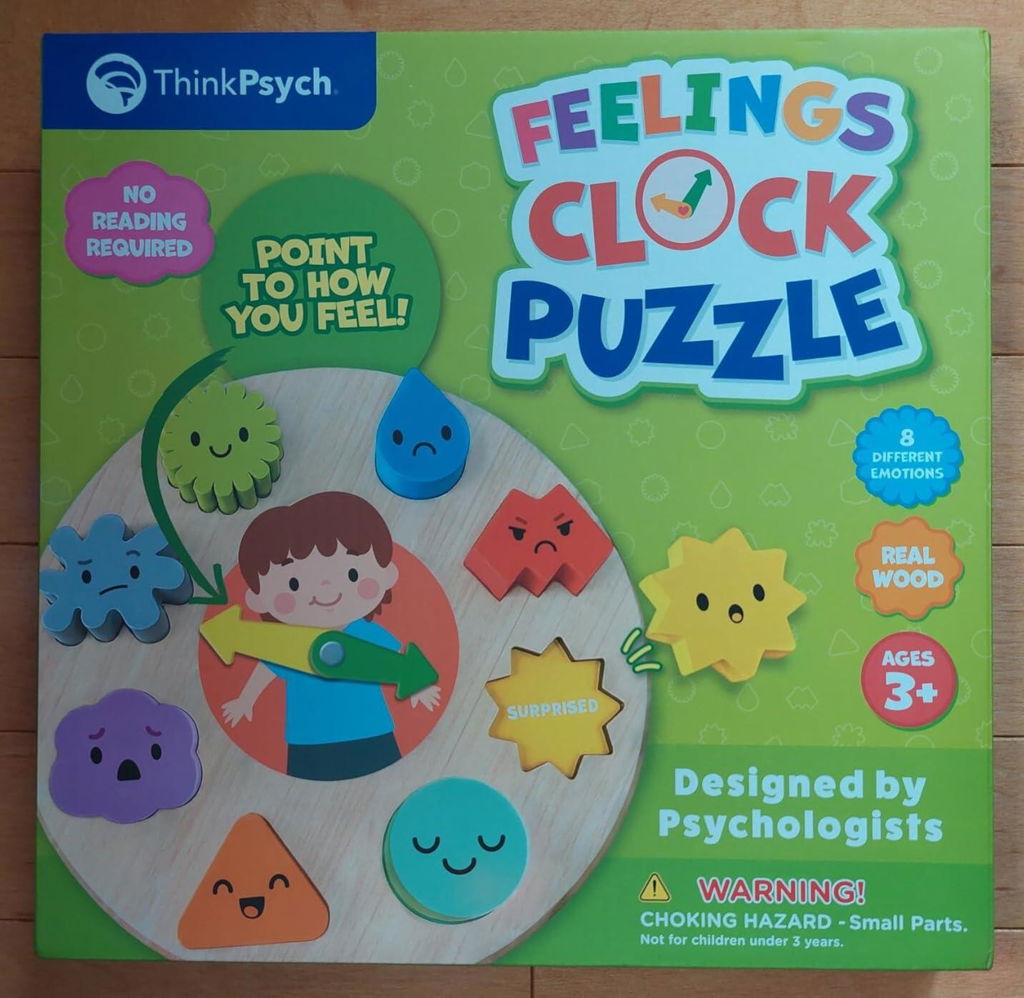
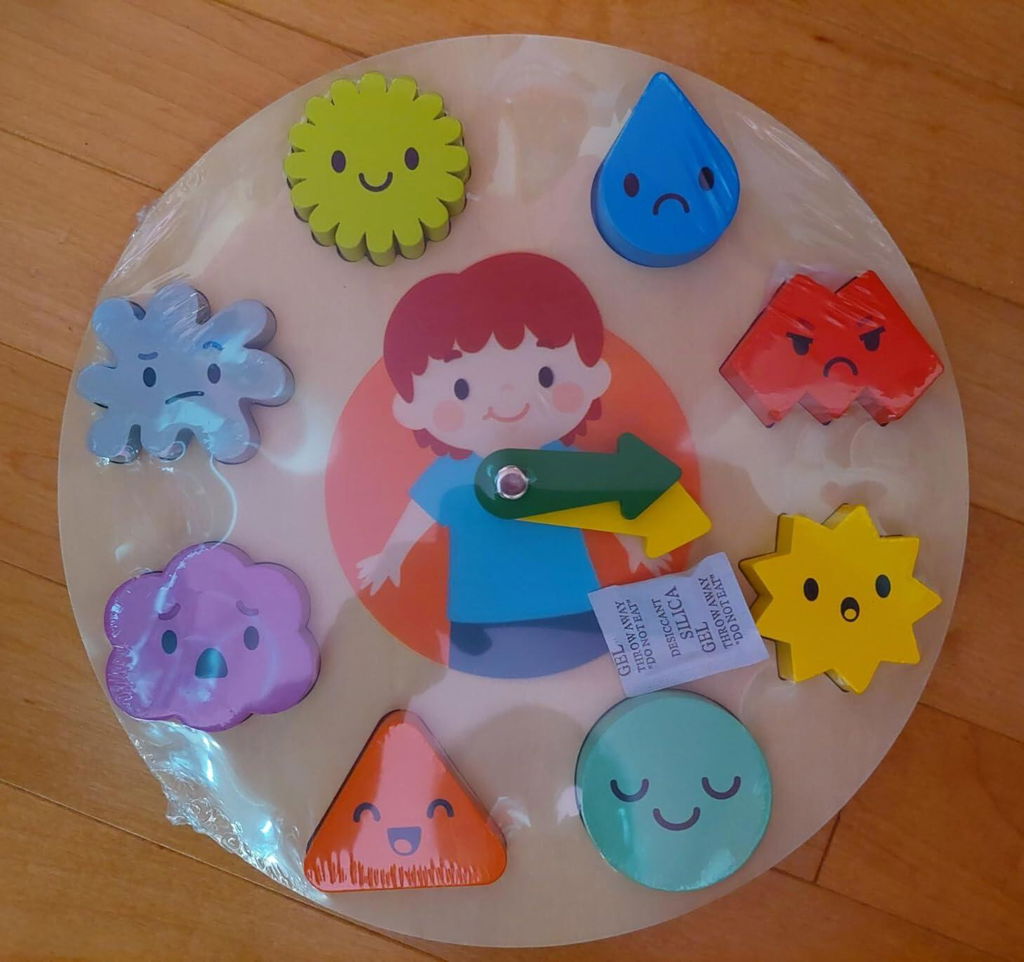
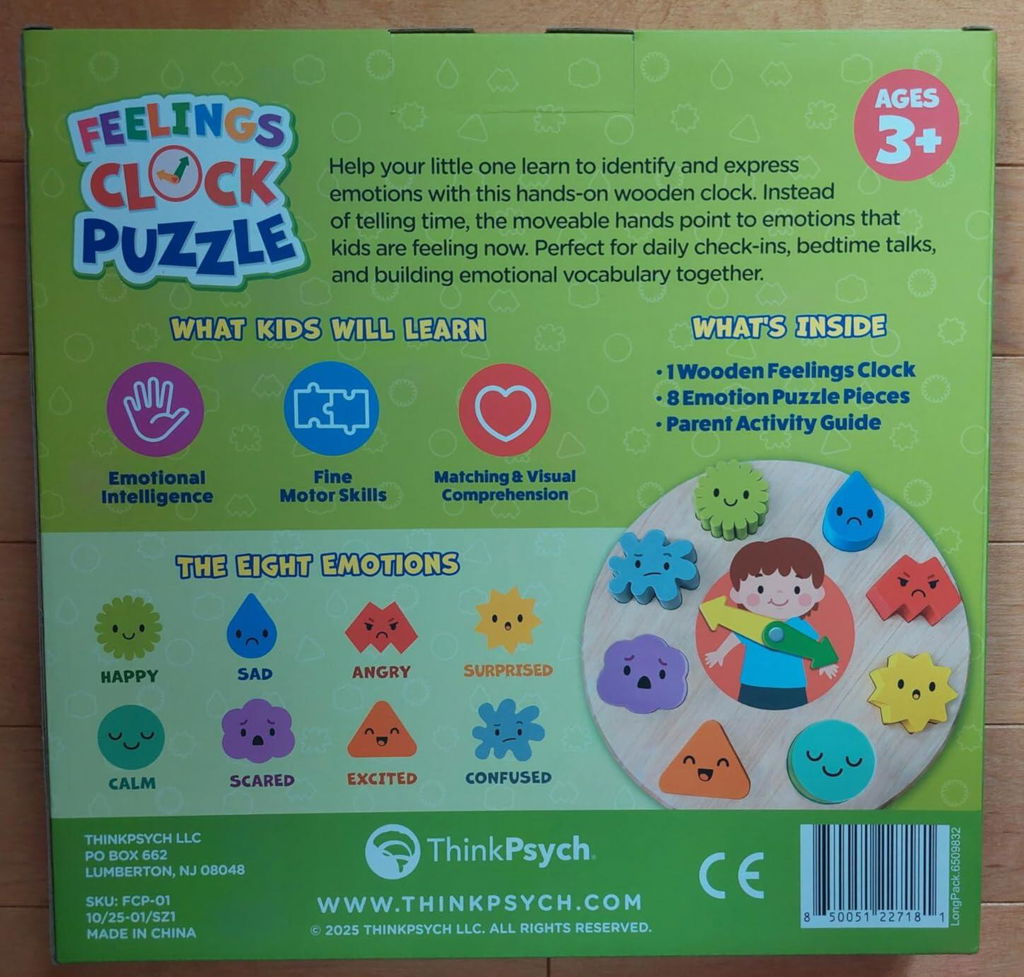
We’ve been working with my 22-month old on recognizing and expressing emotions, so this caught my attention right away. It’s a nice way to introduce those concepts in a more engaging, hands-on way instead of just talking about it.The “clock” style makes it feel a bit like a game, which helps keep kids interested. My toddler enjoys moving the hands and pointing to how they feel or making facial expressions to match the various emotions.As a bonus, it also works a bit like a shape sorter, which adds another layer of play. That's also something my toddler enjoyed other than the emotion-learning part.Overall, it’s a thoughtful toy that mixes learning with play in a simple, approachable way.
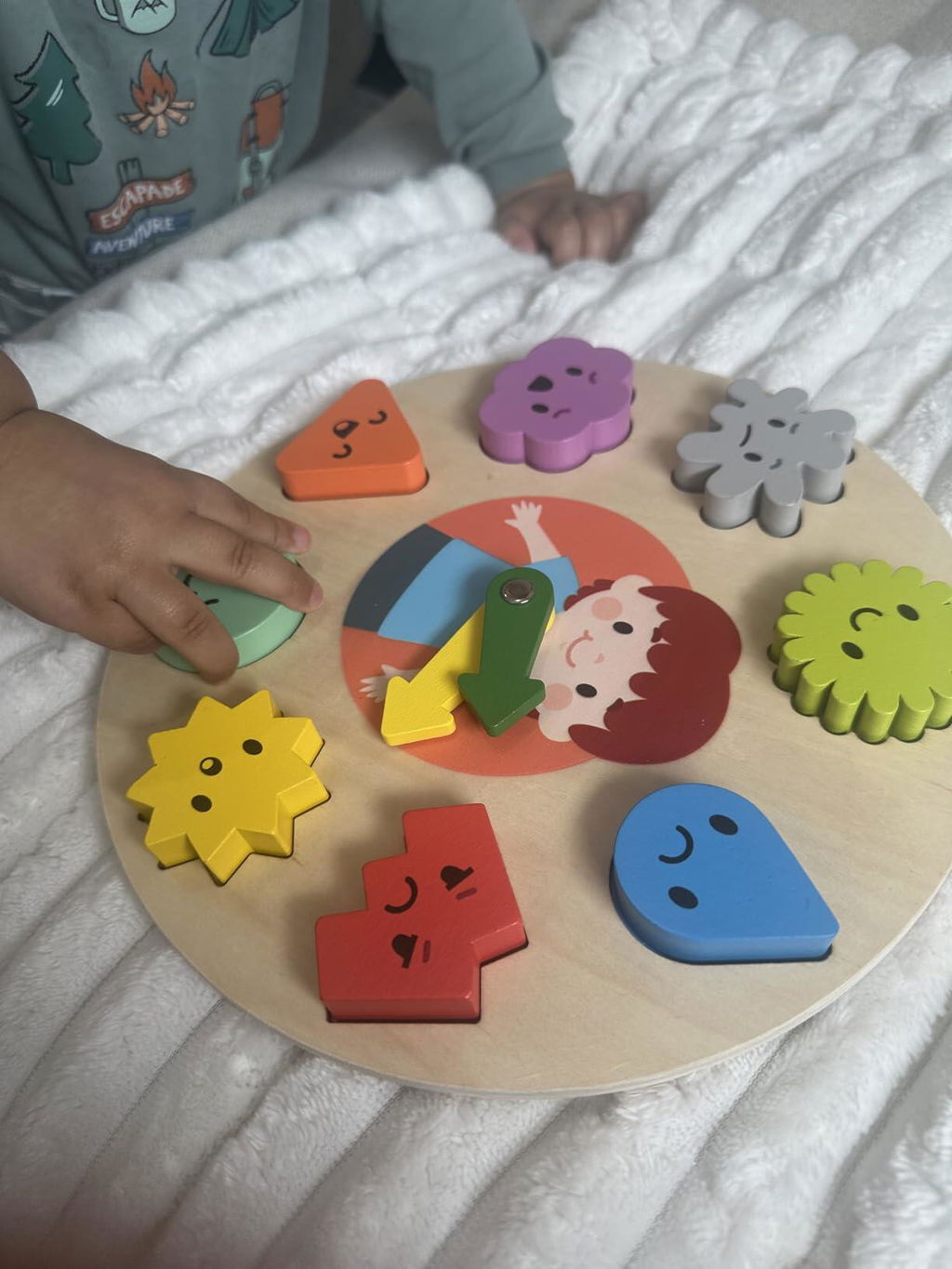
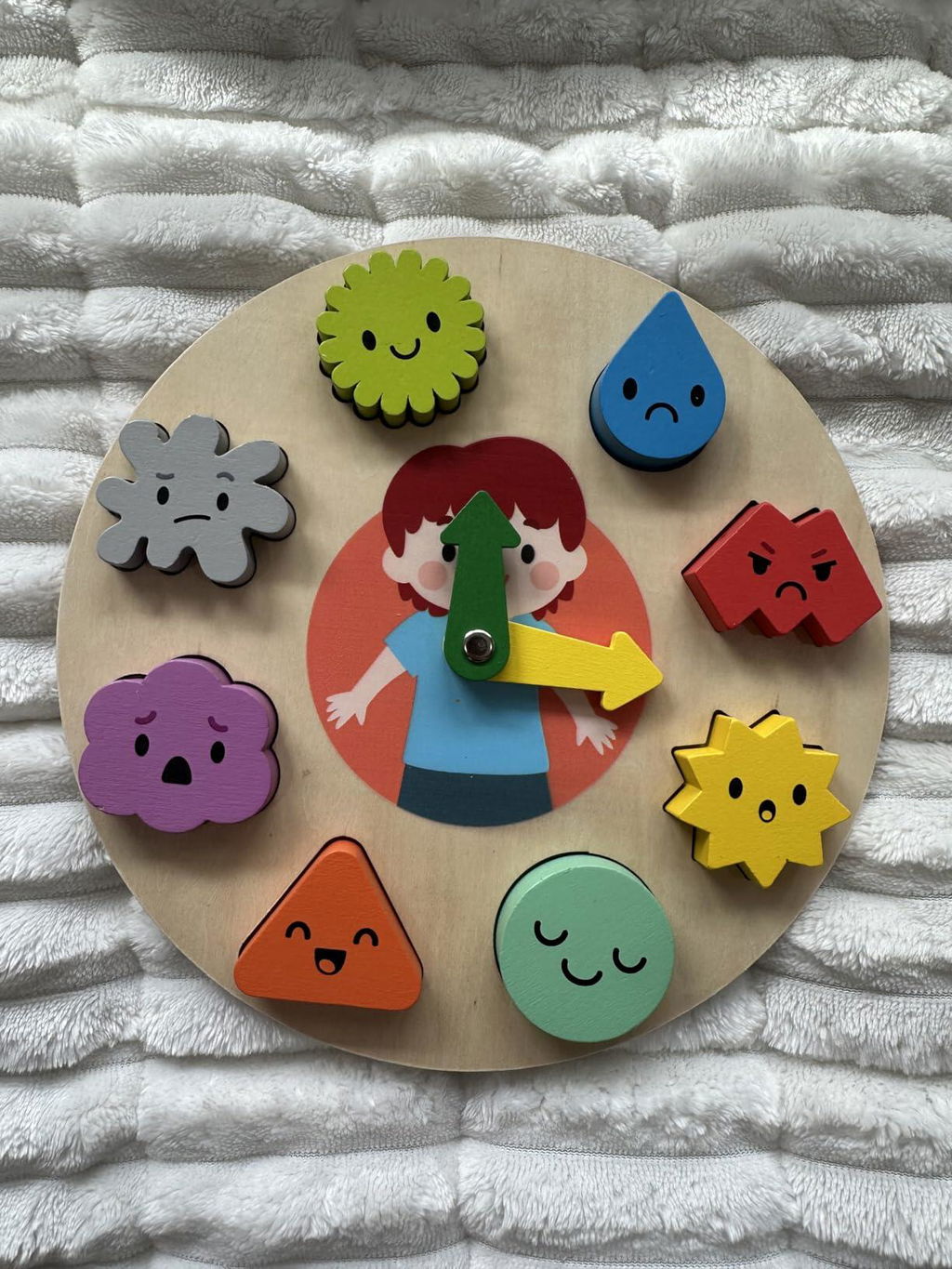
I got this feelings clock puzzle for my grandson, and it’s been really nice to use with him. The rotating hands and shaped pieces give kids a simple, hands‑on way to show how they’re feeling, which makes it easier to start conversations about emotions.The design is simple but effective. Each emotion has its own shape and printed label, so it works both as a puzzle and a learning tool. The wooden pieces are chunky, smooth, and easy for small hands to handle, and the board feels sturdy enough for regular play.Overall, it’s a thoughtfully designed and well‑made toy that works especially well for young children as a gentle way to learn about and express feelings.
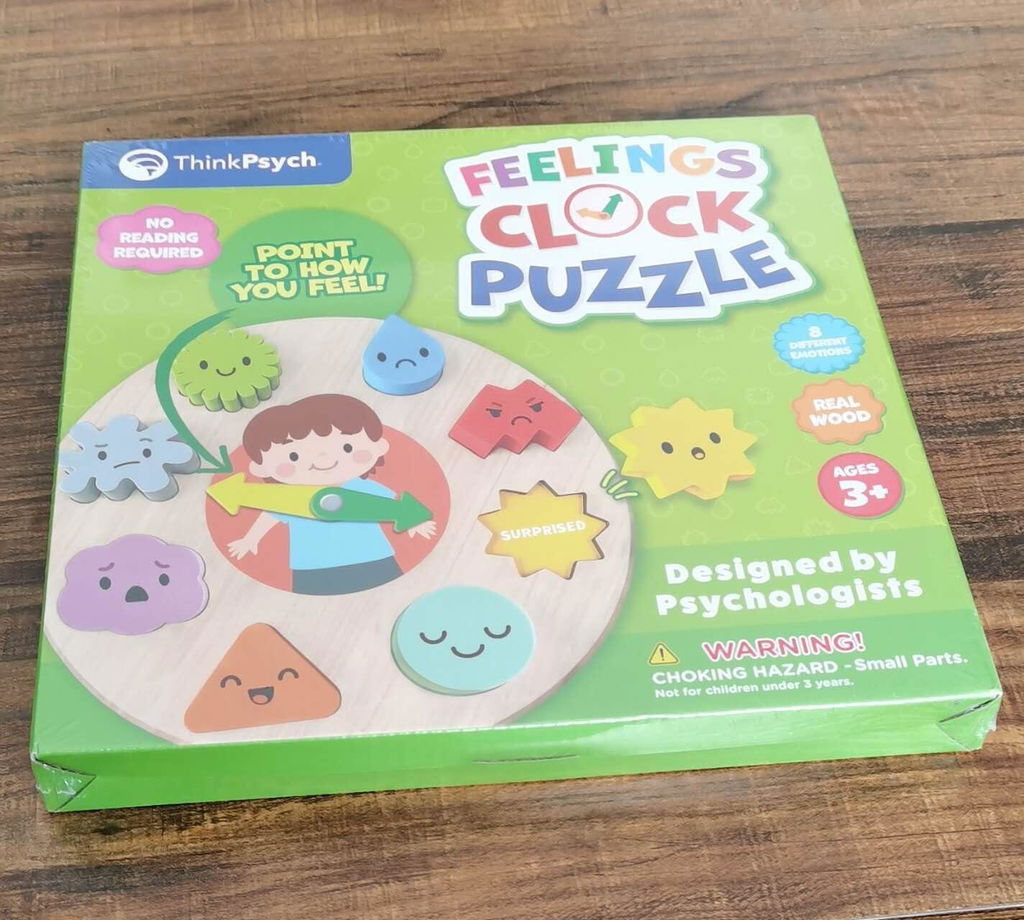
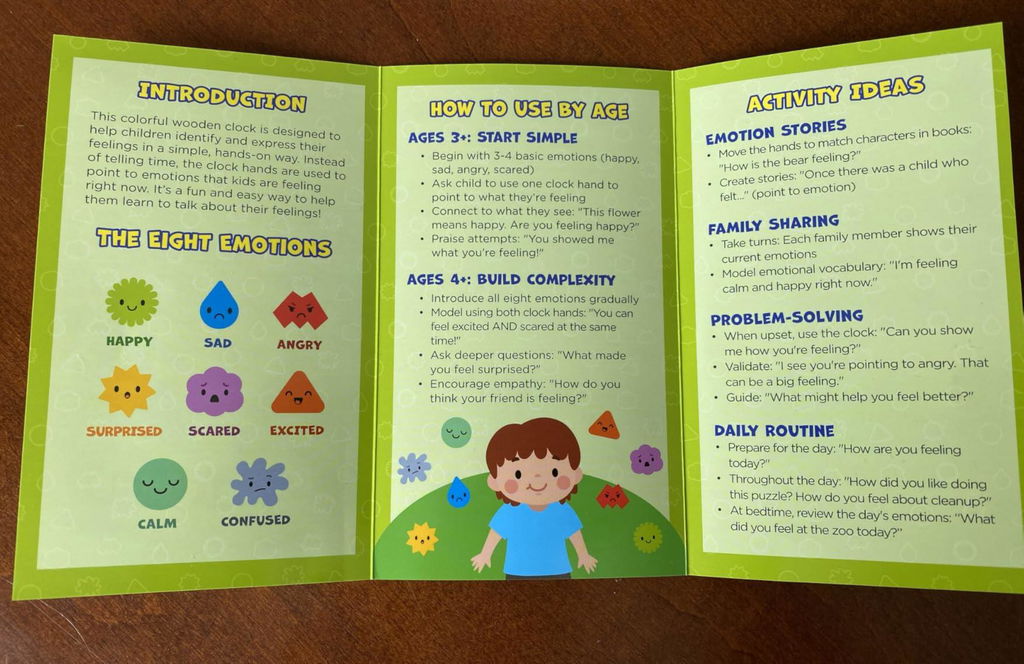
What a nice addition to our educational routine. The activity is designed around helping kids recognize and talk about their emotions, and you can tell it’s been put together with some real thought behind it. It even comes with a guide on when to introduce emotions to your kids, how many to introduce as well as activity ideas and tips and tricks. It's really well thought out.What I like most is how interactive everything is. It allows your child to connect with a face/feeling and point to that feeling to express to us what may otherwise be challenging. They learn to be comfortable with their feelings and learn that it is okay to have them. Through identification and understanding of what they are feeling, they can learn to cope and gain self confidence. It also deepens your connection with your child and opens the door to for some surprisingly good conversations.The quality of the tool is solid. It is made of solid wood with different emotional cut outs with their matching faces. I also really appreciate that it covers a range of emotions and situations, not just the basic happy/sad stuff.Great tool!
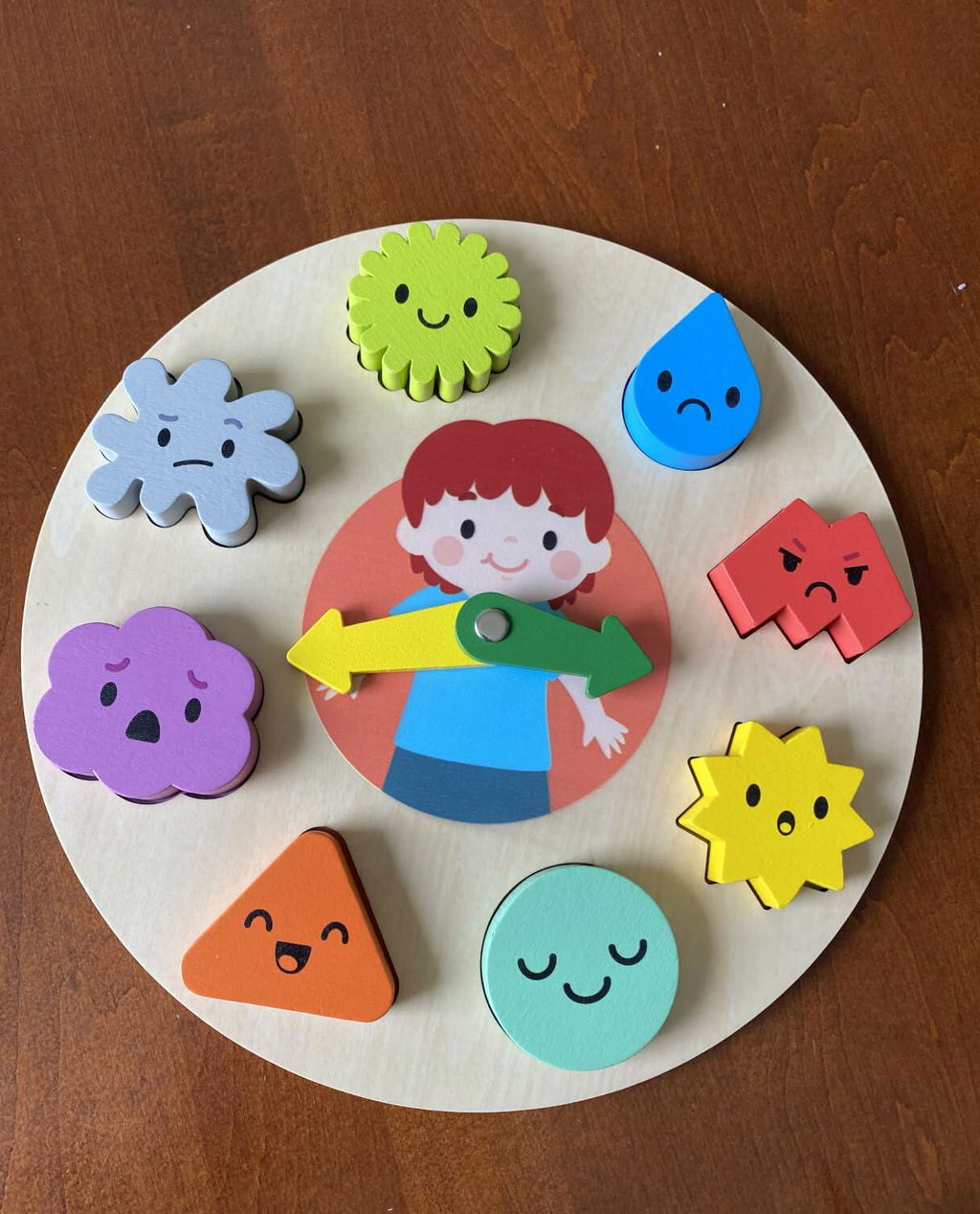
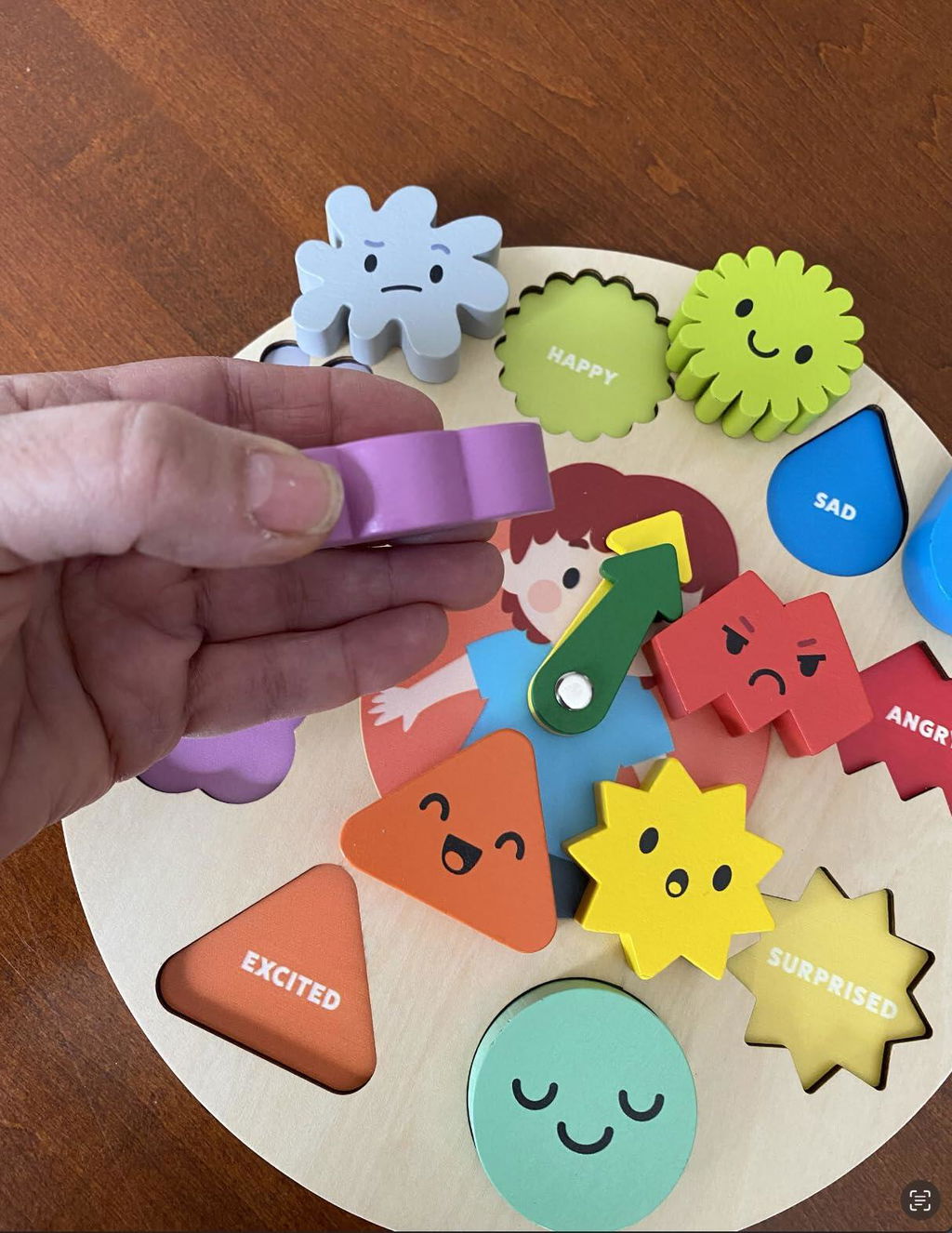
Generational QualityThis isn't your typical plastic toy that breaks in a week. It’s made of solid, chunky wood, giving it that "heirloom" feel that you just don’t see as much anymore. It’s built to last for years, making it the kind of piece you can actually pass down. It feels sturdy in your hands and can definitely handle being moved around by busy toddlers.Conversations Made EasyGrowing up, we didn’t really have things like this to help us talk about our emotions. This "clock" is such a gentle, human way to show a child that it’s okay to be angry, sad, or excited. By turning abstract feelings into something they can actually see and touch, it opens the door for real conversations. It’s a great way to check in at the end of the day and help them find the words they might be struggling with.Engaging and DurableThe different shapes for each emotion and the movable clock hands make it very interactive. It’s a simple design, but it’s incredibly effective for social-emotional learning. It’s rare to find a toy that is this well-made while also teaching a child how to understand themselves. It’s a beautiful addition to any playroom and a solid investment in a child’s emotional growth.