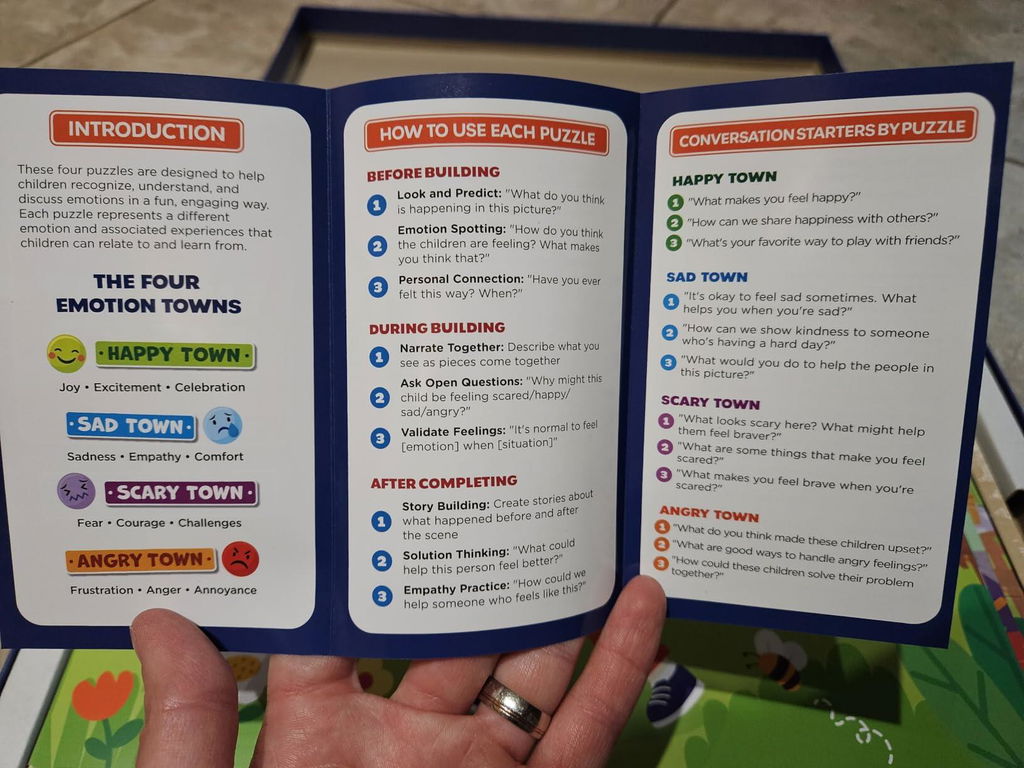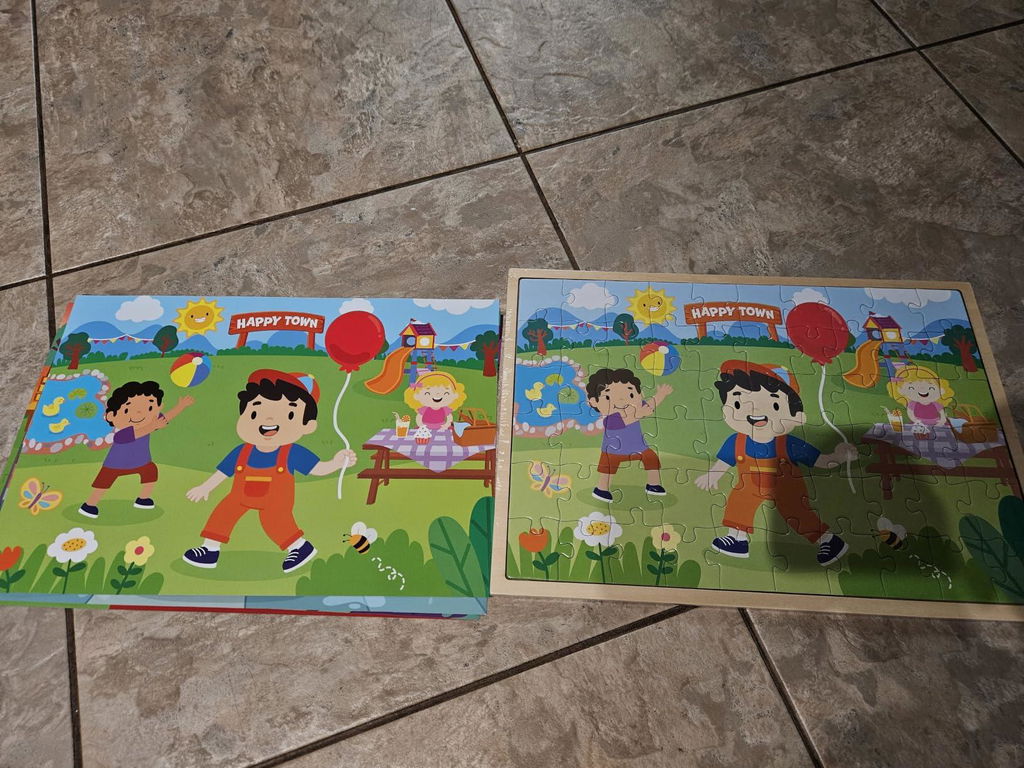


Emotion Town Puzzle Pack
Emotion Town Puzzle Pack


 30-day money back guarantee
 Free delivery on all US & Canada orders
 Developed by psychologists


"We wanted to create something that helps children start thinking and talking about emotions at an early age. A jigsaw puzzle is a great way to start emotional education early!"
How to use
- At Home
- In the Classroom
- In Therapy
FAQ
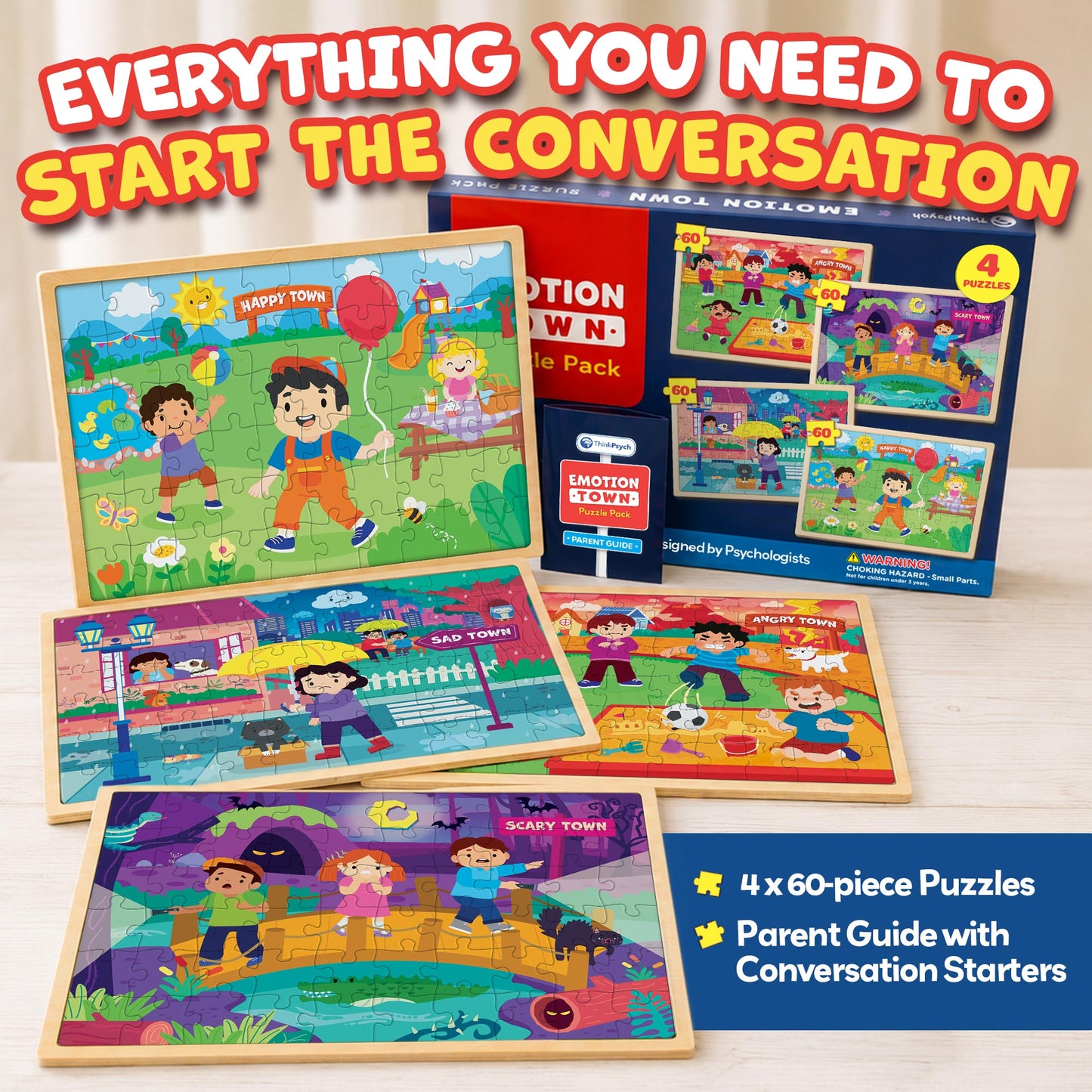
What puzzles are included?
How many pieces does each puzzle have?
What ages is this for?
How do you use it to talk about feelings?
Can each puzzle be used separately?



Additional Product Details




What Our Customers Think
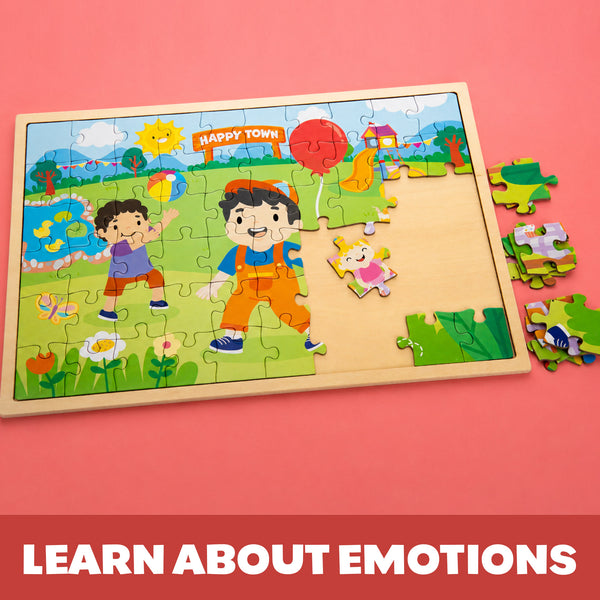
Customers praised these emotion-themed puzzles as "a great combination of learning and play." The 60-piece count provides appropriate challenge without frustration, while wooden frames keep pieces organized. Vibrant illustrations spark natural conversations about feelings. One minor concern: top layers may peel after repeated use.
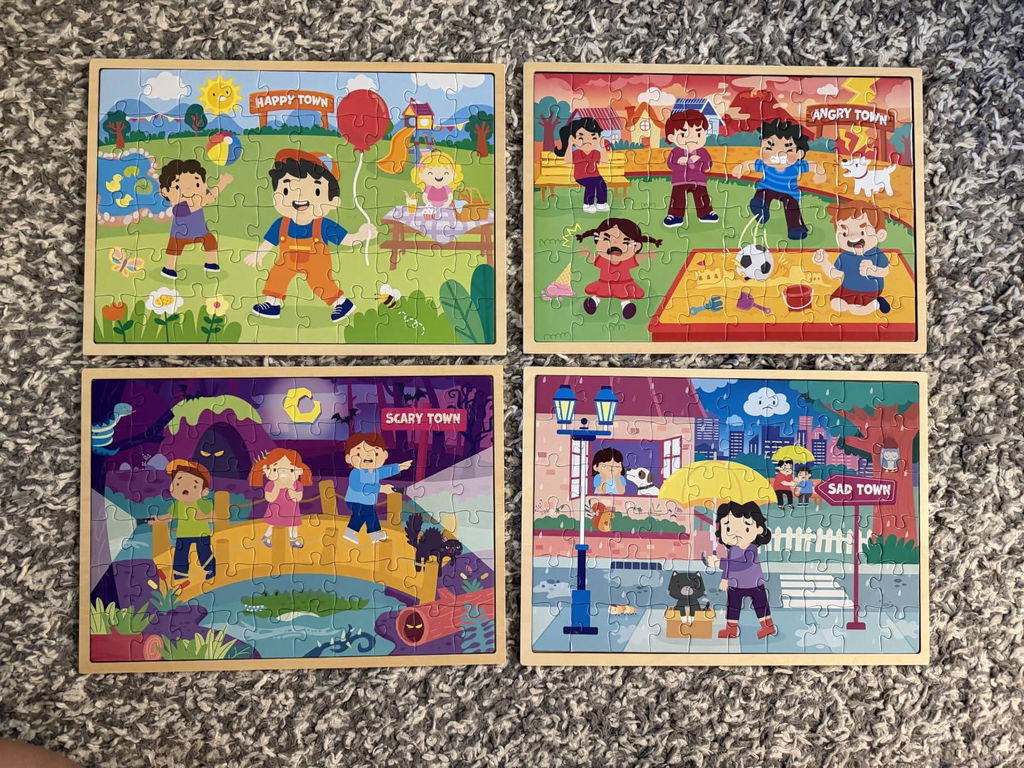
Great Puzzles for Building Skills and Emotional AwarenessThis is a set of four 60-piece puzzles, with each puzzle representing a different emotion: sadness, anger, happiness, and fear. My kiddos and I really enjoy these puzzles, and I’ve found them to be a particularly useful tool in my occupational therapy practice.I use the puzzles to work on several skills, including fine motor development, matching and pattern recognition, and problem-solving. They also provide a great opportunity to start conversations about emotional awareness and coping strategies. I like that the puzzles can be used for both skill development and discussion rather than being simply a traditional puzzle activity.The puzzle pieces are durable and well made. Each puzzle includes a picture guide for reference, a wooden framing board, and a nice storage box to keep everything together when not in use.The puzzles are listed as being appropriate for children ages 4 and up. In my experience, a 4-year-old would likely need additional guidance with the puzzles, but that isn't necessarily a drawback. I also find that both the discussion and the difficulty level can be adjusted for older children, which makes these a versatile tool that can continue to be useful across different ages and skill levels.Overall, I really like these puzzles. They combine fine motor and cognitive skills with opportunities to discuss emotions and coping strategies, making them a versatile and helpful resource for my work.
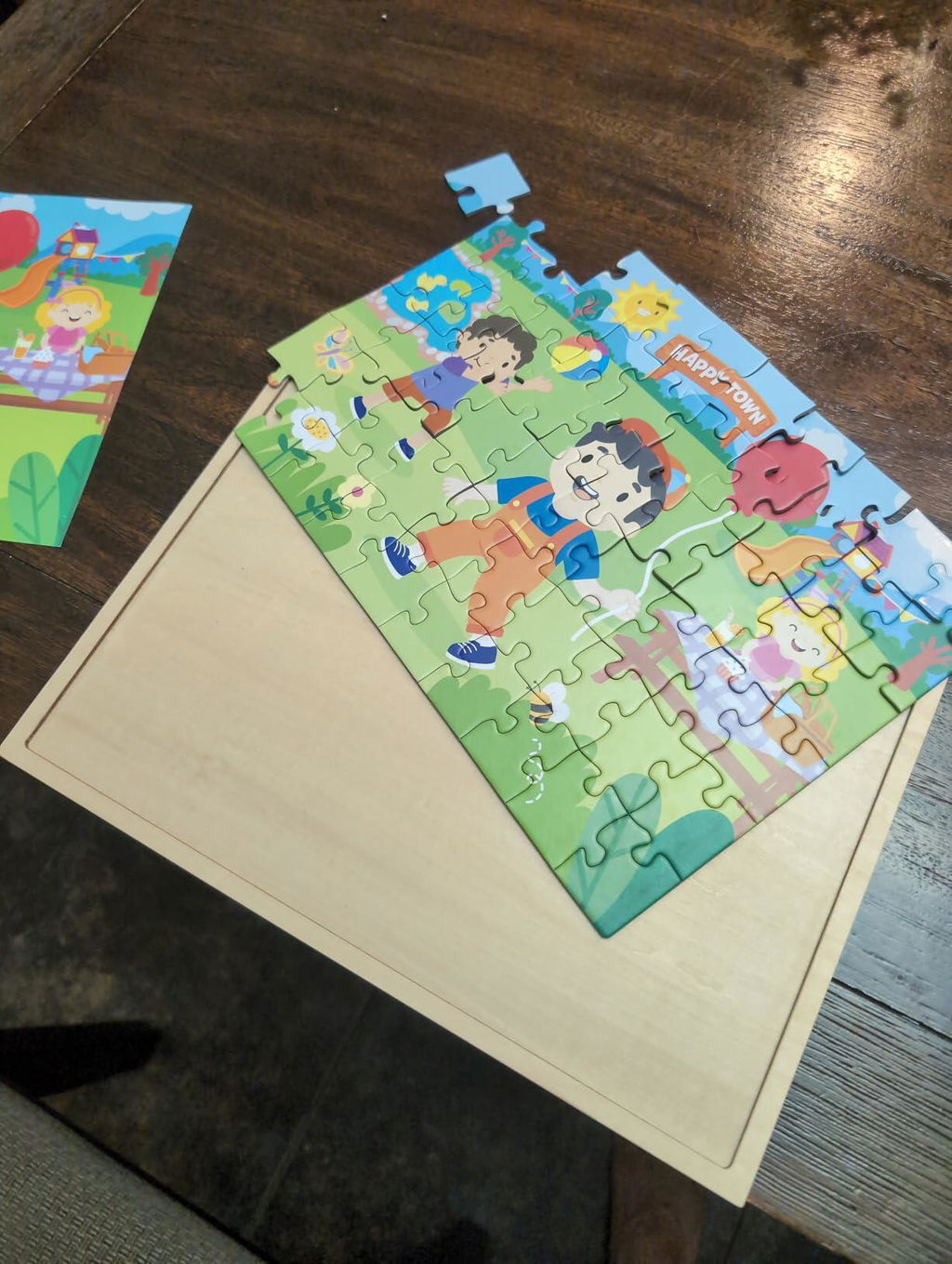
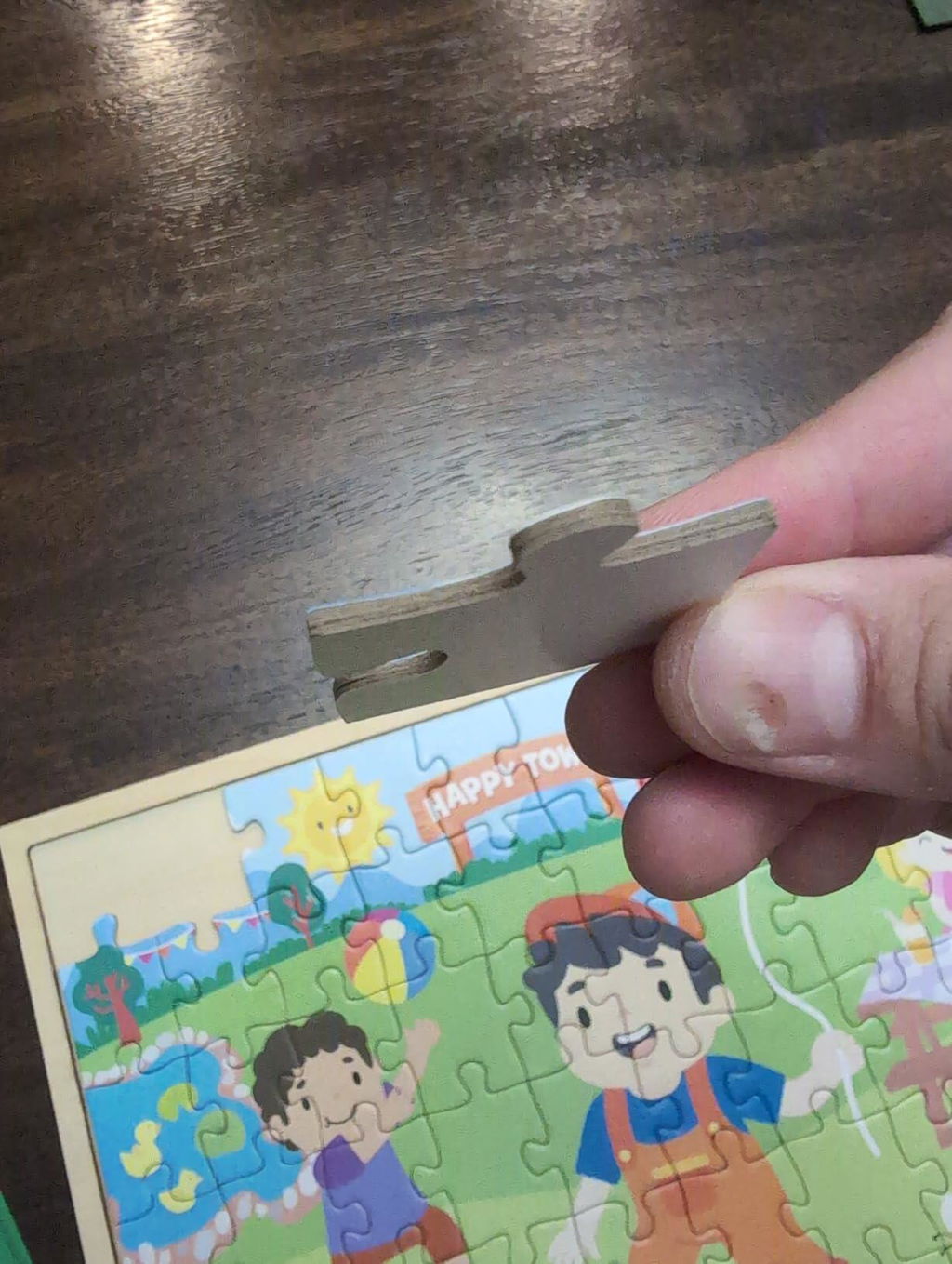
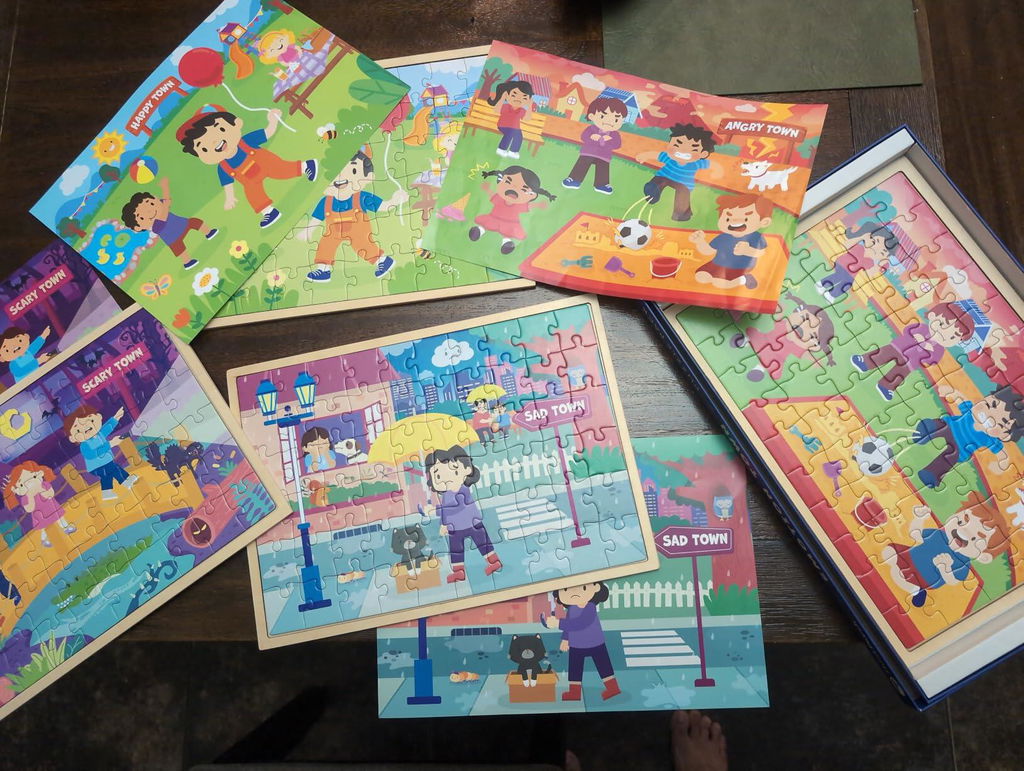
a good fun time for 4 years old and above. the wooden frames are surprisingly sturdy, not that flimsy cardstock stuff you usually get. my sister said the pieces fit tight which is nice, no gaps. four diferent pictures and caracters. the pices have good quality and not pilling off easily in the hand of toddlers. theyll have a good moment. the price is way better than what i see at toy stores too. the pictures are not too hard or too easy and just the right one to chalenge the toddlers.
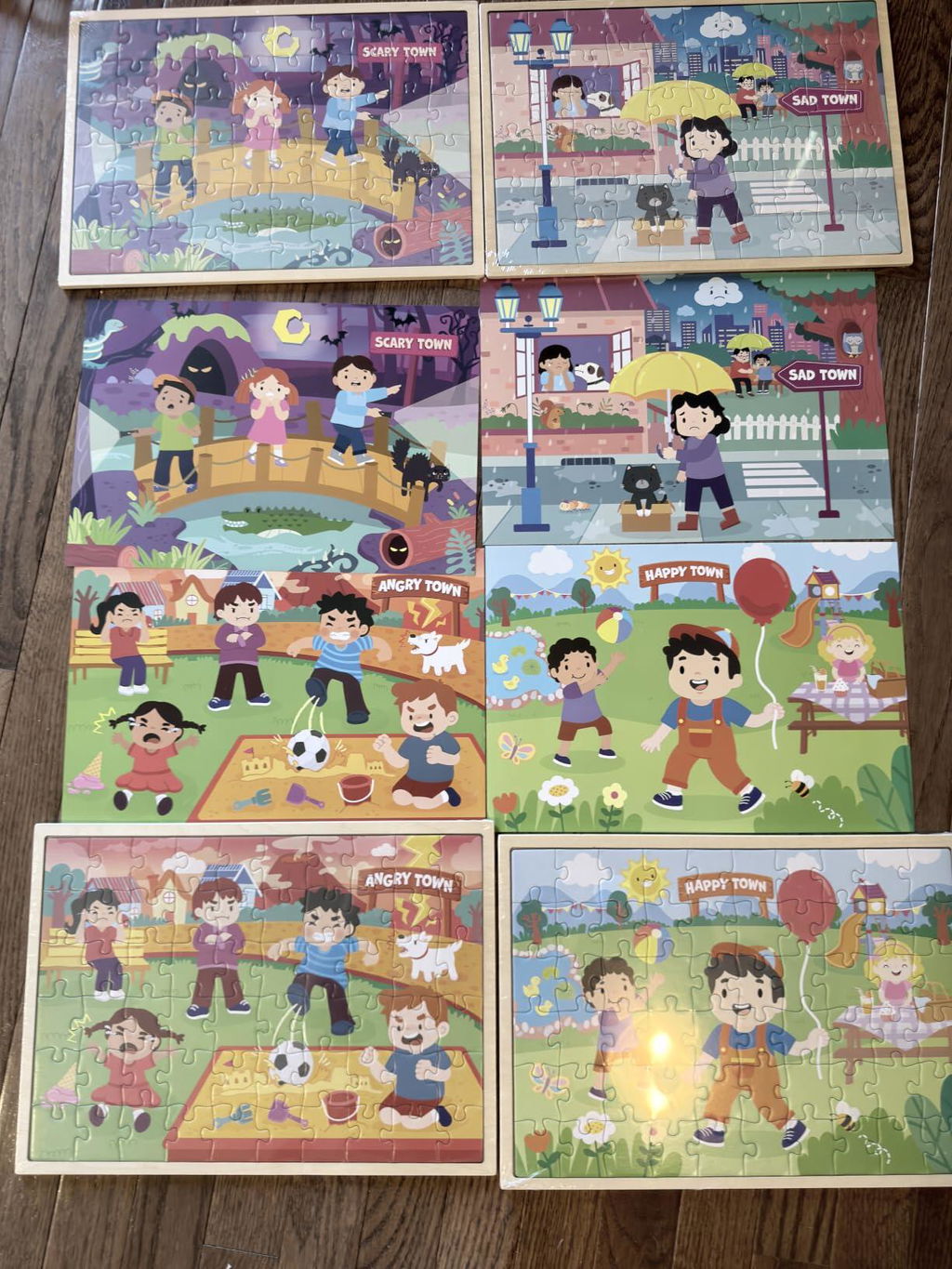
This set of puzzles is great for a mindfulness camp I do with small children. They had fun putting the puzzles together and talking about them. These are pretty easy to play with and clean up.
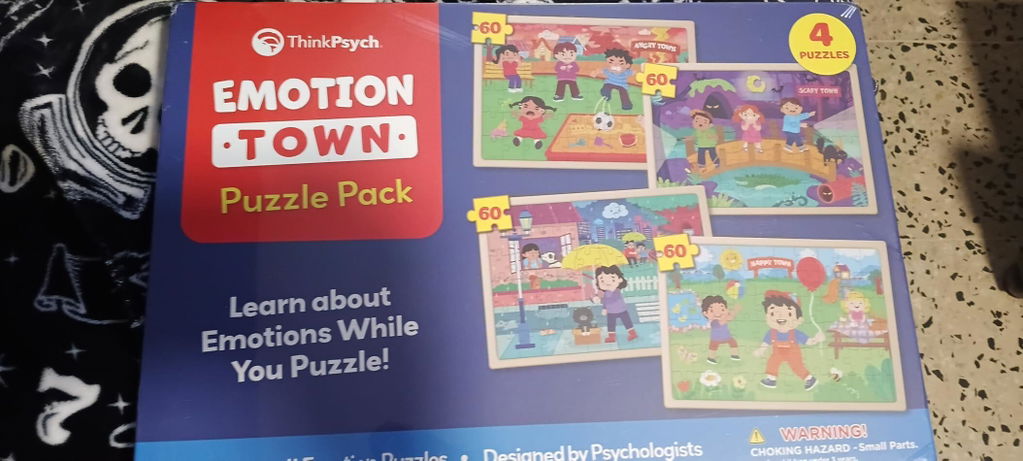
As a homeschooling mom of three boys, I’m always looking for activities that feel like play but have some real educational value behind them, and this Emotion Town Puzzle Pack is such a great fit for that. My boys can be very different when it comes to puzzles, so I appreciate having four separate ones to rotate through rather than one large, overwhelming set.The pack includes Happy Town, Sad Town, Scary Town, and Angry Town, with 60 pieces for each puzzle. The illustrations are colorful and full of little details that give us plenty to look at and talk about while we work. I especially love that the pictures provide an easy opening for conversations about why someone might feel a certain way, what different emotions look like, and how we can respond when we're experiencing those feelings ourselves.The wooden frames are helpful because they give the boys a defined space to build and keep the pieces from becoming quite as scattered across the table. The pieces are also a nice size for younger children to handle independently. The included reference pictures are another thoughtful touch and make the puzzles approachable when someone gets stuck.For us, this has been more than just puzzle time. It has become an easy way to incorporate social-emotional learning into our homeschool without it feeling like another lesson. We can sit down, build a puzzle together, and naturally end up discussing feelings, reactions, empathy, and different situations shown in the pictures.I also appreciate that all three of my boys can participate at their own level. The older boys can focus on actually completing the puzzle while my younger one can work on matching pieces, identifying pictures, and talking about the emotions he recognizes.This is a genuinely useful screen-free activity that combines problem-solving, fine-motor practice, and emotional learning in a way that feels fun rather than instructional. For a homeschooling family, that combination is a big win. Five stars from this mom!
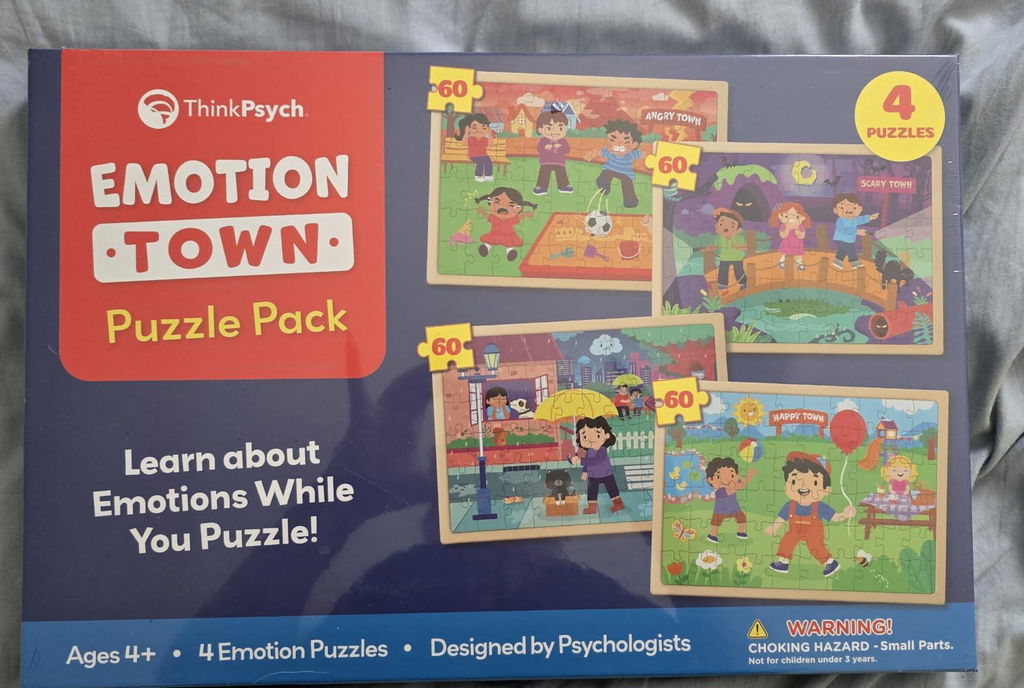
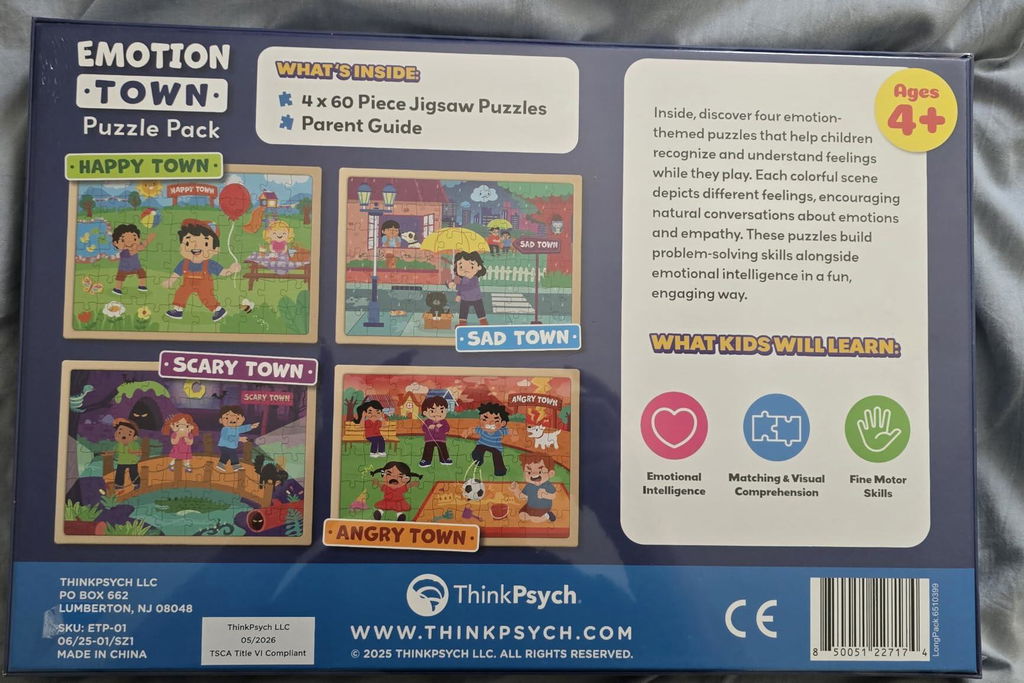
I'm really pleased with the quality of these wooden puzzles.The set includes four illustrated 60-piece puzzles. (Happy Town, Sad Town, Scary Town, and Angry Town) Each puzzle comes in a sturdy wooden frame. They are durable and easy to grip and put them together. There are also picture reference cards for the younger kids to aid in visual matching and helping them develop problem solving skills.These puzzles are not just any ordinary ones. They actually help parents/teachers teach their children about emotional intelligence. They open up dialogue about different emotions. Not only that, they learn how to express them in appropriate ways.Each of the puzzles have sixty wooden pieces and presents a challenge without being too overwhelming. They're colorful with engaging and eye catching illustrations. They're also great for kids to increase their fine motor skills and developing their patience.What a great resource for parents and professionals to help children develop these skill sets.These puzzles are excellent in value and educational/emotional learning. Learning and having fun at the same time.
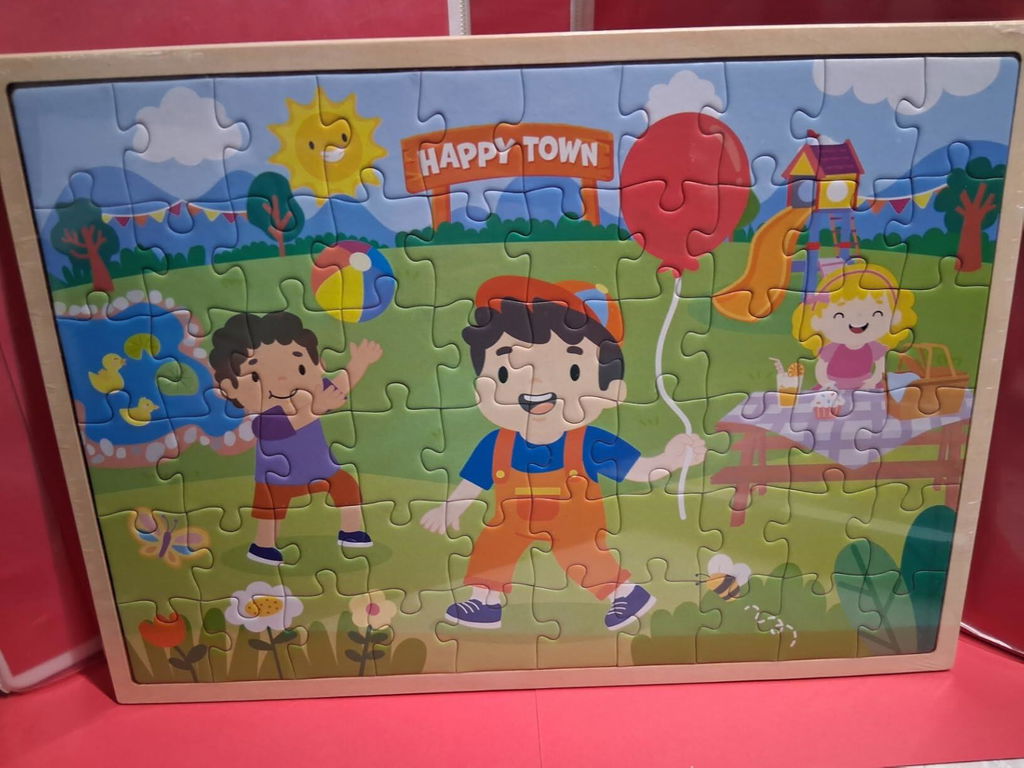
I got this puzzle set for my niece and I was really impressed with the presentation when it arrived. The packaging was neat and well done and it gave the whole set a more premium feel than I expected. The colourful printing on the puzzles is also bright, clear and nicely done.I especially like that these aren’t just regular puzzles. The four themes: Happy Town, Sad Town, Scary Town and Angry Town, give kids a fun way to learn about different emotions while they’re playing. It also makes it easy to start conversations with my niece about feelings and different situations.The 60-piece size is a good balance for kids. It’s enough of a challenge to keep them interested without being overwhelming. The pieces are easy to handle and the colourful illustrations make the puzzles more engaging.Honestly, I found the puzzles interesting myself! I ended up helping my niece with them and actually enjoyed putting the pieces together. I think adults can definitely join in, especially as a fun activity to do together with kids. It makes the puzzle feel more like a shared activity rather than something the child has to do alone.The reference pictures are also helpful when we get stuck or want to see what the completed scene should look like.All in all, I am really happy with this set. It’s colourful, well presented and has a thoughtful theme that goes beyond just putting puzzle pieces together. It’s a fun screen-free activity for kids but honestly, adults can enjoy it too!
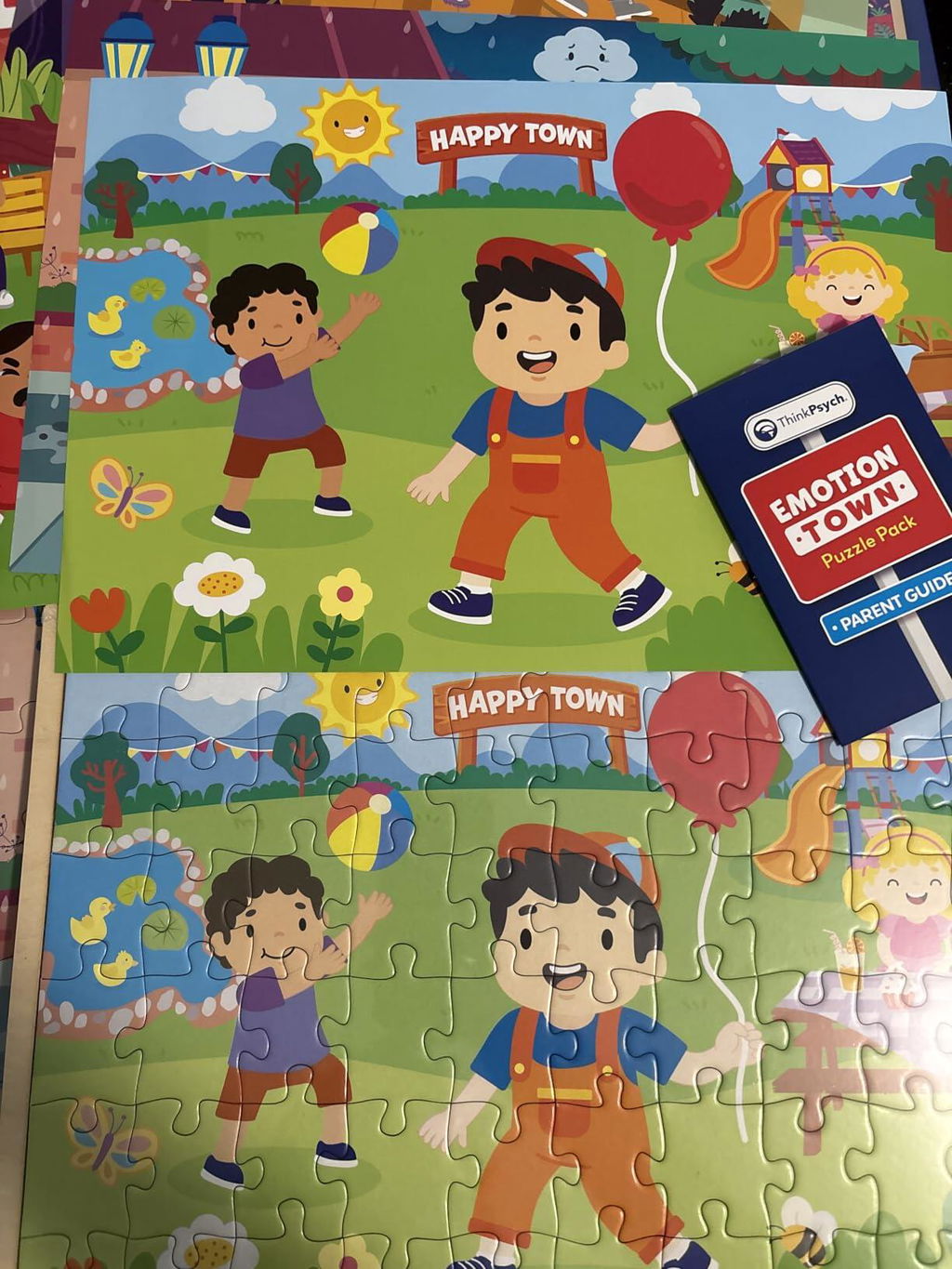
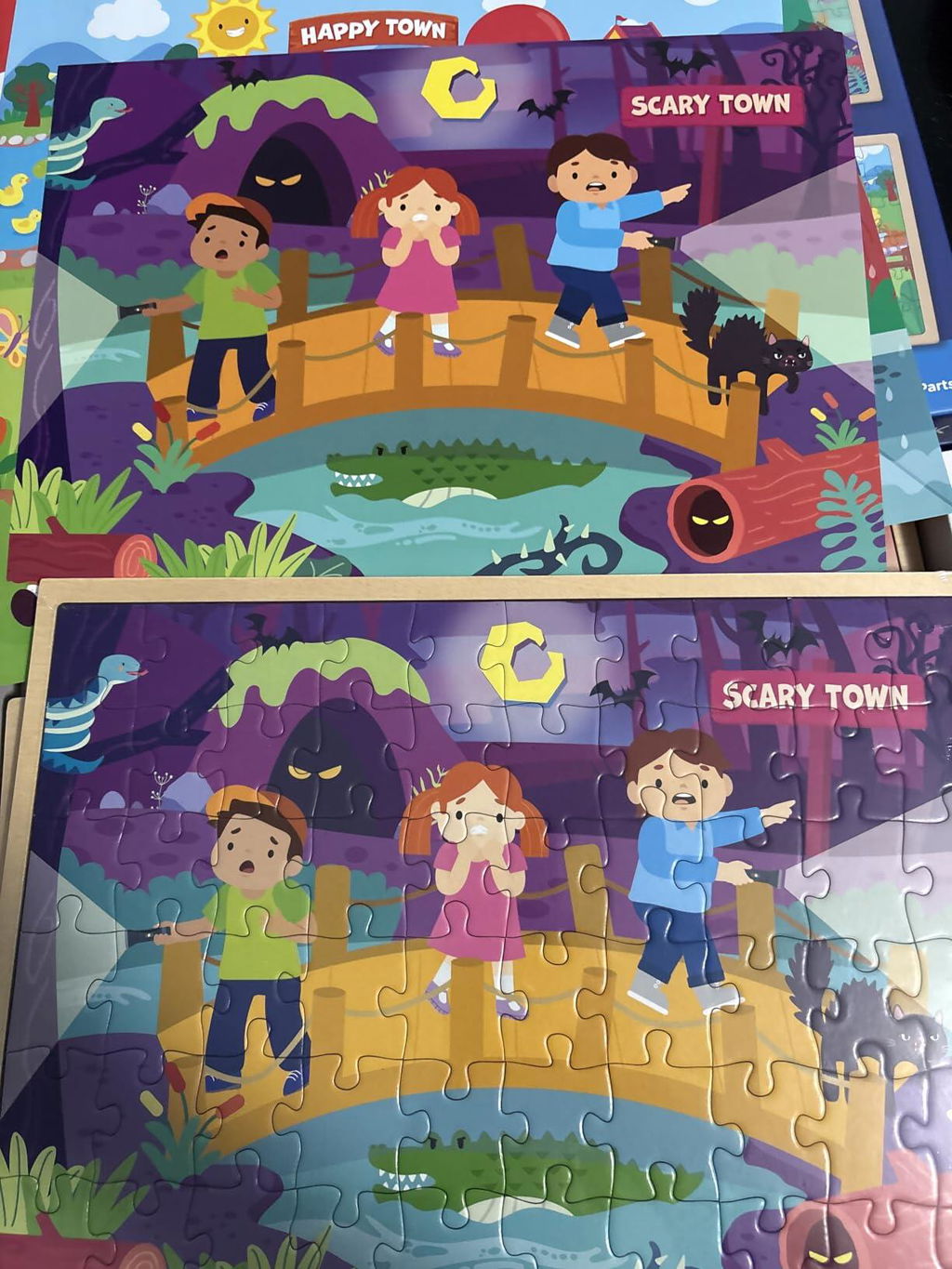
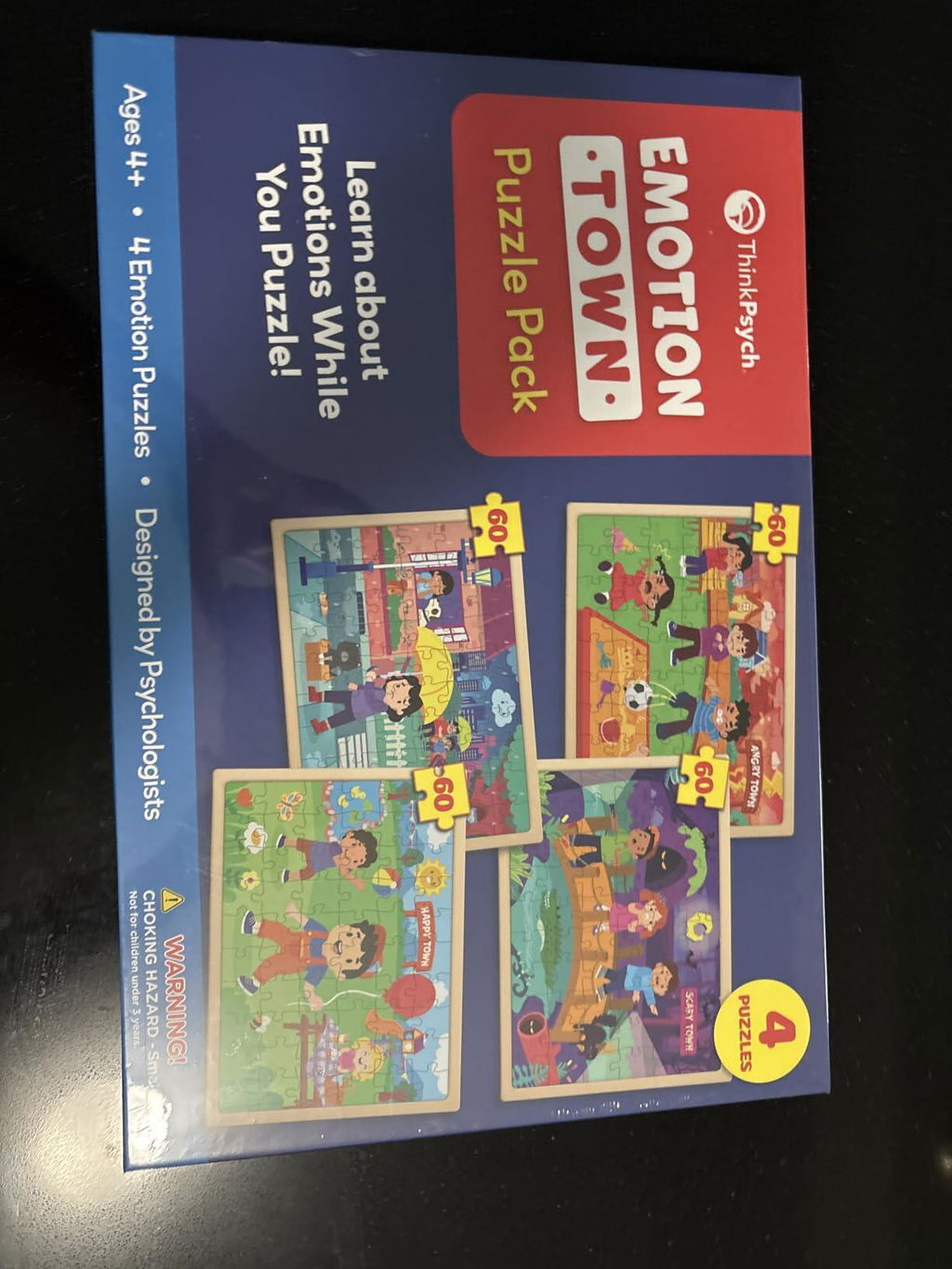
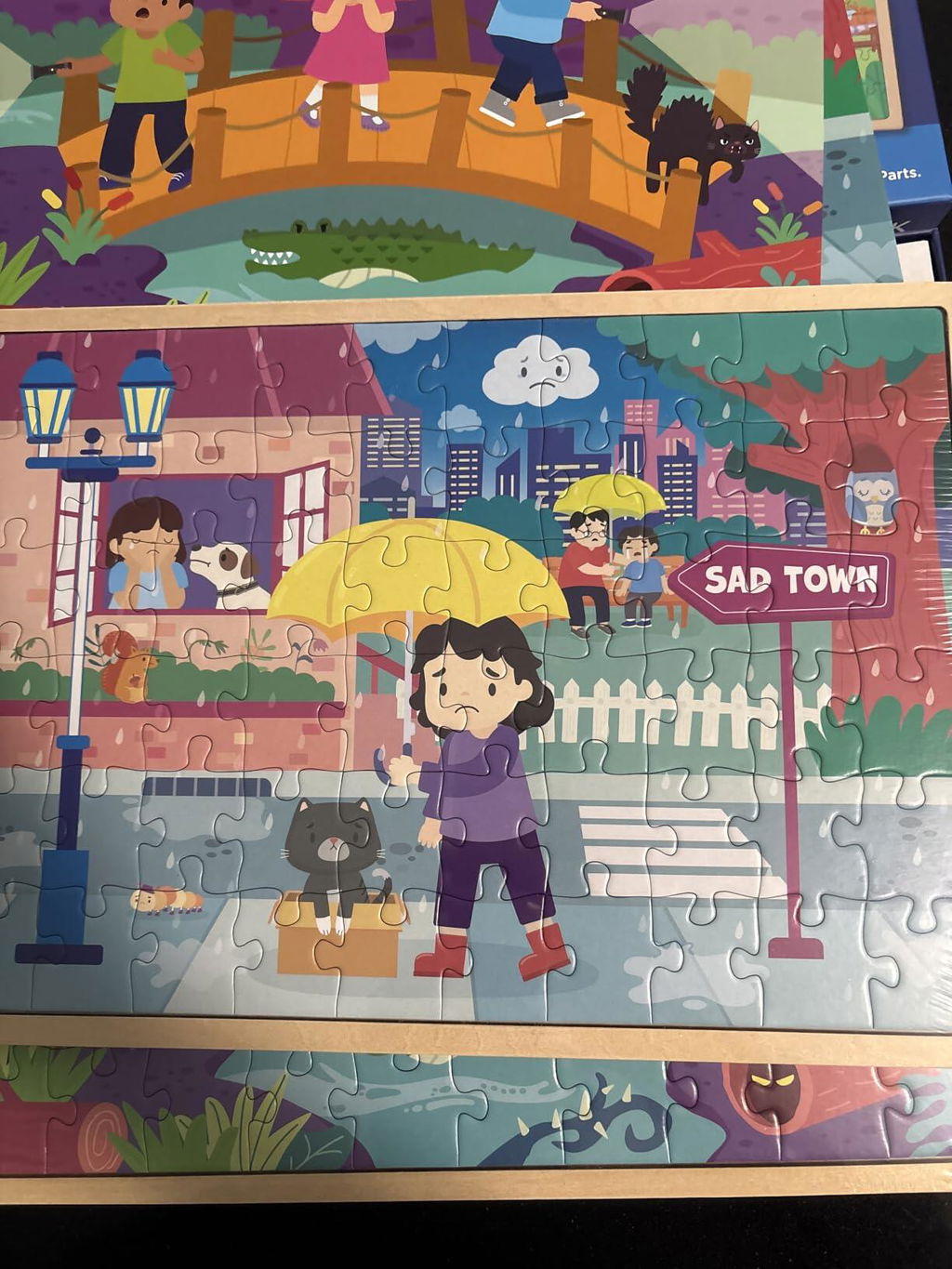
ThinkPsych Emotion Town Puzzle Pack (4 x 60 pcs, Wood Frame)Social Emotional Learning Toy for Kids Ages 4+ | 4 Feelings Puzzles | Emotional Intelligence, Counseling, Play Therapy Toys5*$33.99I ordered this ThinkPsych Emotion Town Puzzle Pack for my 3-year-old grandson, and both he and his 5-year-old brother really enjoyed working on the puzzles together.The set includes four beautifully illustrated 60-piece puzzles—Happy Town, Sad Town, Scary Town, and Angry Town—for a total of 240 pieces. Each puzzle comes on a sturdy wooden frame, and the pieces are thick, durable, and easy for little hands to grip and assemble.What really sets this puzzle pack apart is its focus on social-emotional learning. As the puzzles come together, they naturally encourage conversations about different emotions and how to recognize and express them. I also like that they were designed by child psychologists, making them a thoughtful resource for home, the classroom, or therapy settings.The included picture reference cards are a helpful addition, especially for younger children who are still developing visual matching and problem-solving skills. Along with building emotional awareness, the puzzles also help develop fine motor skills, hand-eye coordination, patience, and attention to detail.At $33.99, I think this set offers excellent value for the quality and educational benefits. It’s a wonderful way to combine learning and play, and I would happily recommend it to parents, grandparents, teachers, and therapists.
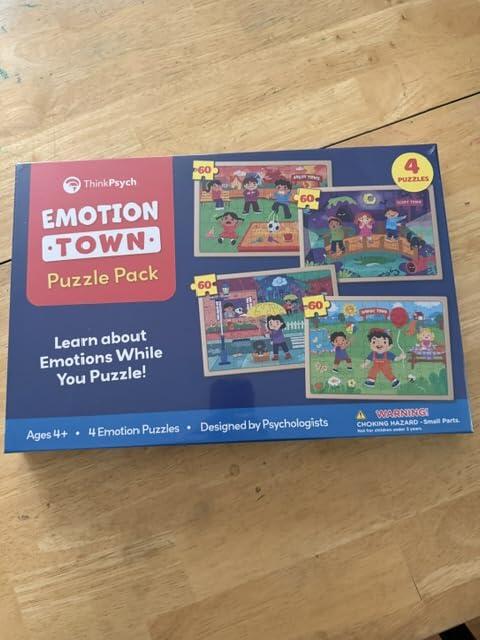
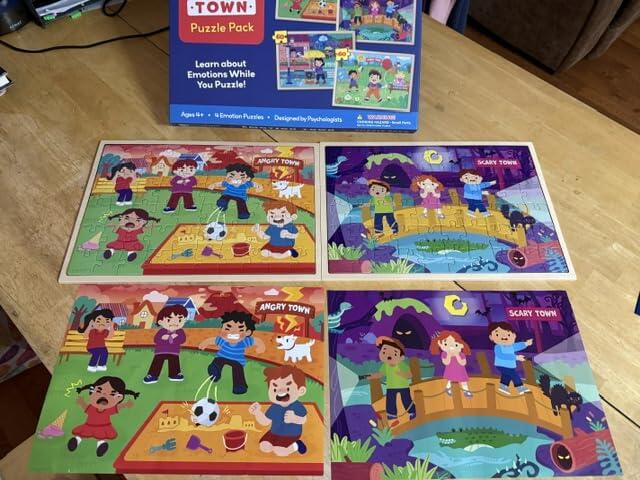
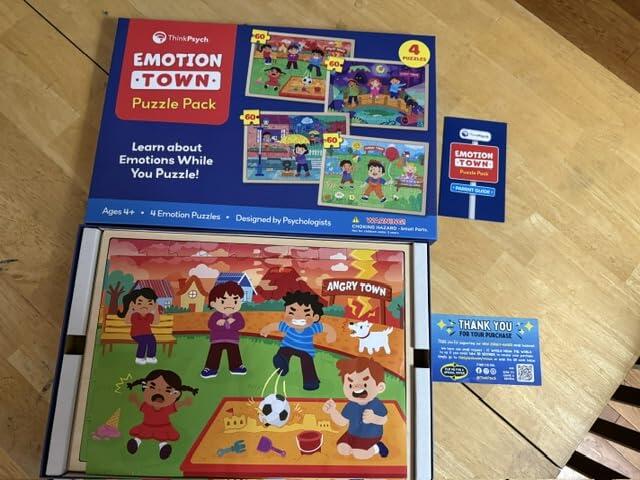
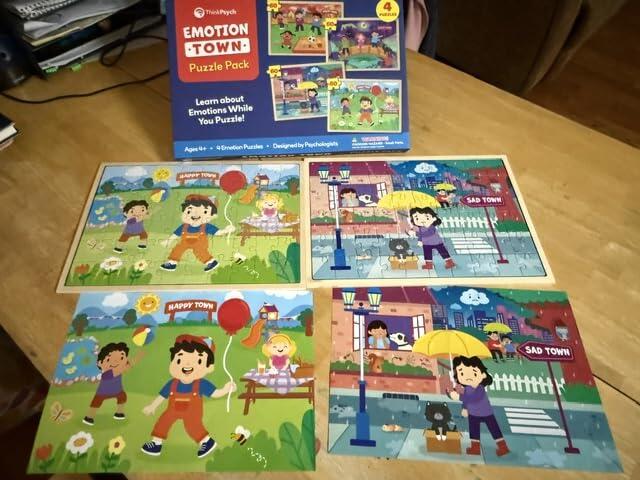
These puzzles are such a cute and fun way for kids to learn about different emotions. The pieces are a good size and the wooden frames make it easy to put everything together without the pieces sliding all over the place. I really like that each puzzle focuses on different feelings, so it gives kids a chance to talk about emotions while they play. The pictures are colorful and engaging, and the puzzles are challenging enough to keep them interested without being frustrating. There are also paper pictures of the puzzles that you can put below the puzzle pieces to help guide kiddos that might need a bit more visual help. These puzzles really are a nice combination of learning and play, and a great addition to a child’s toy collection.
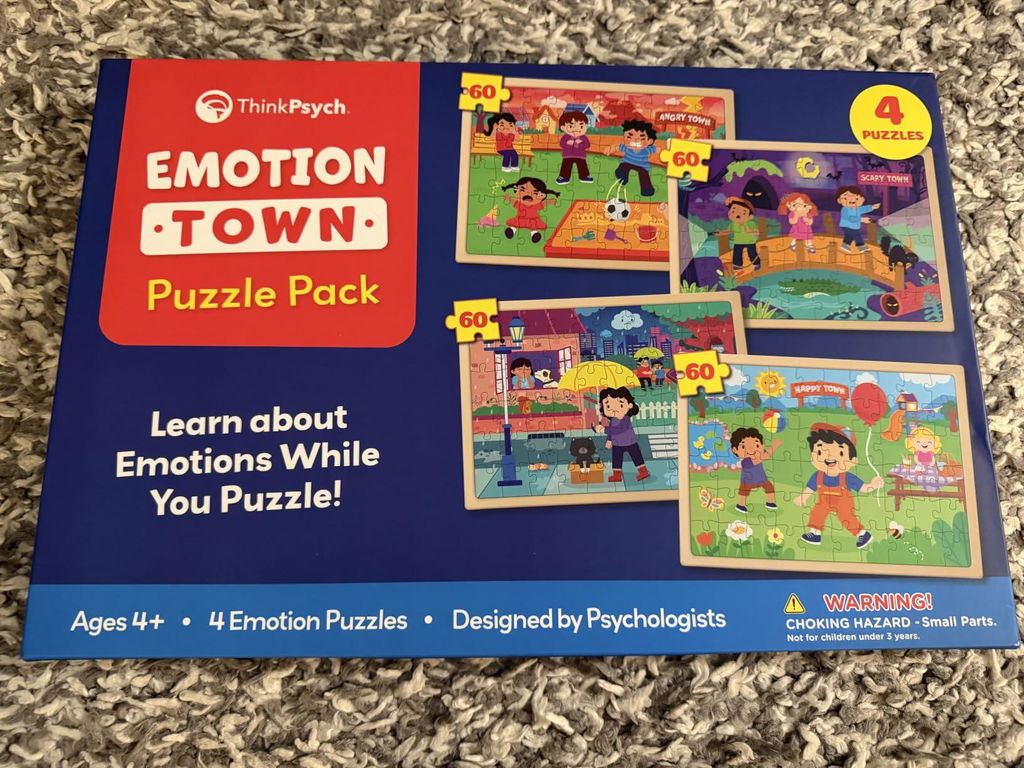
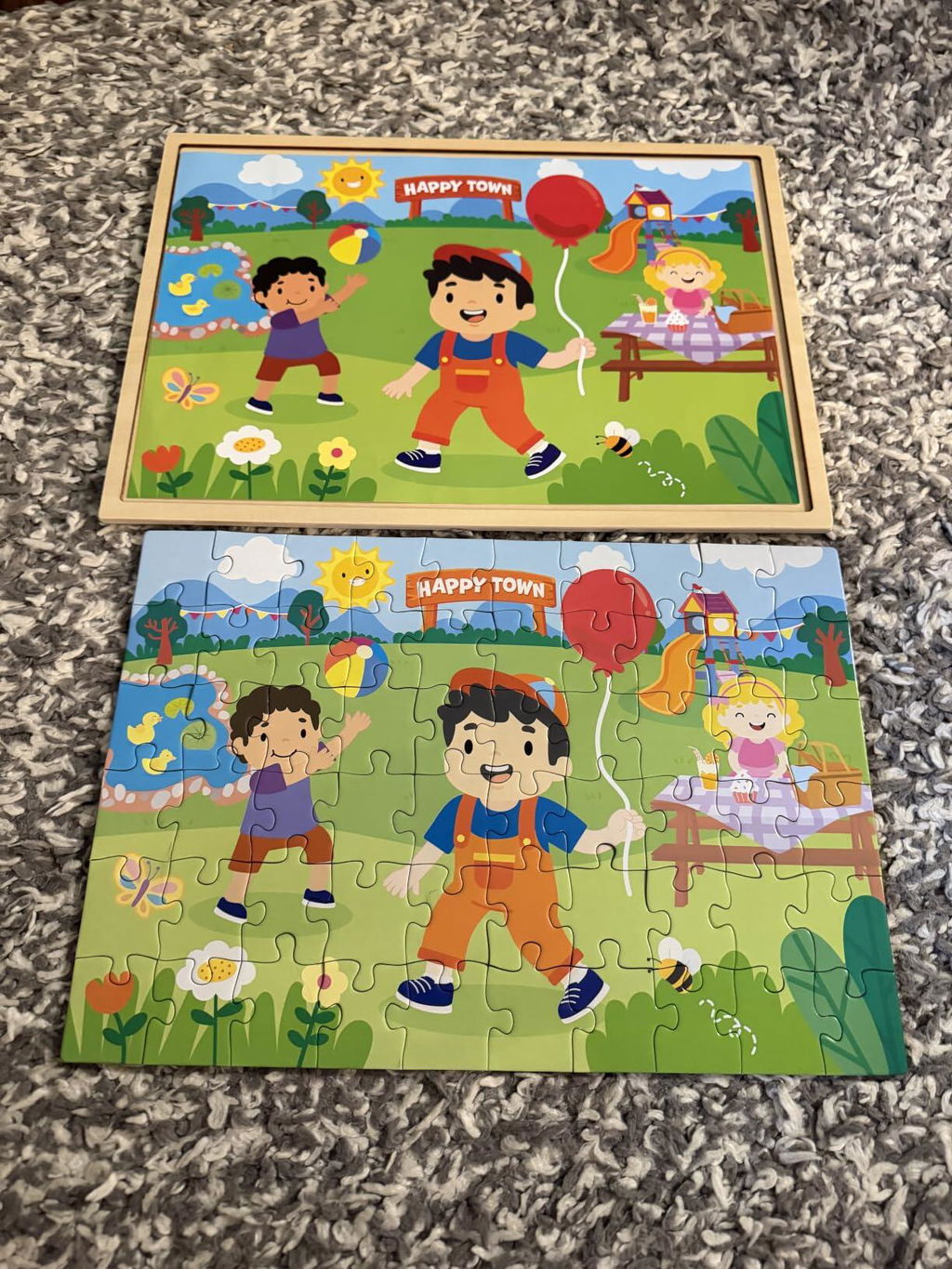
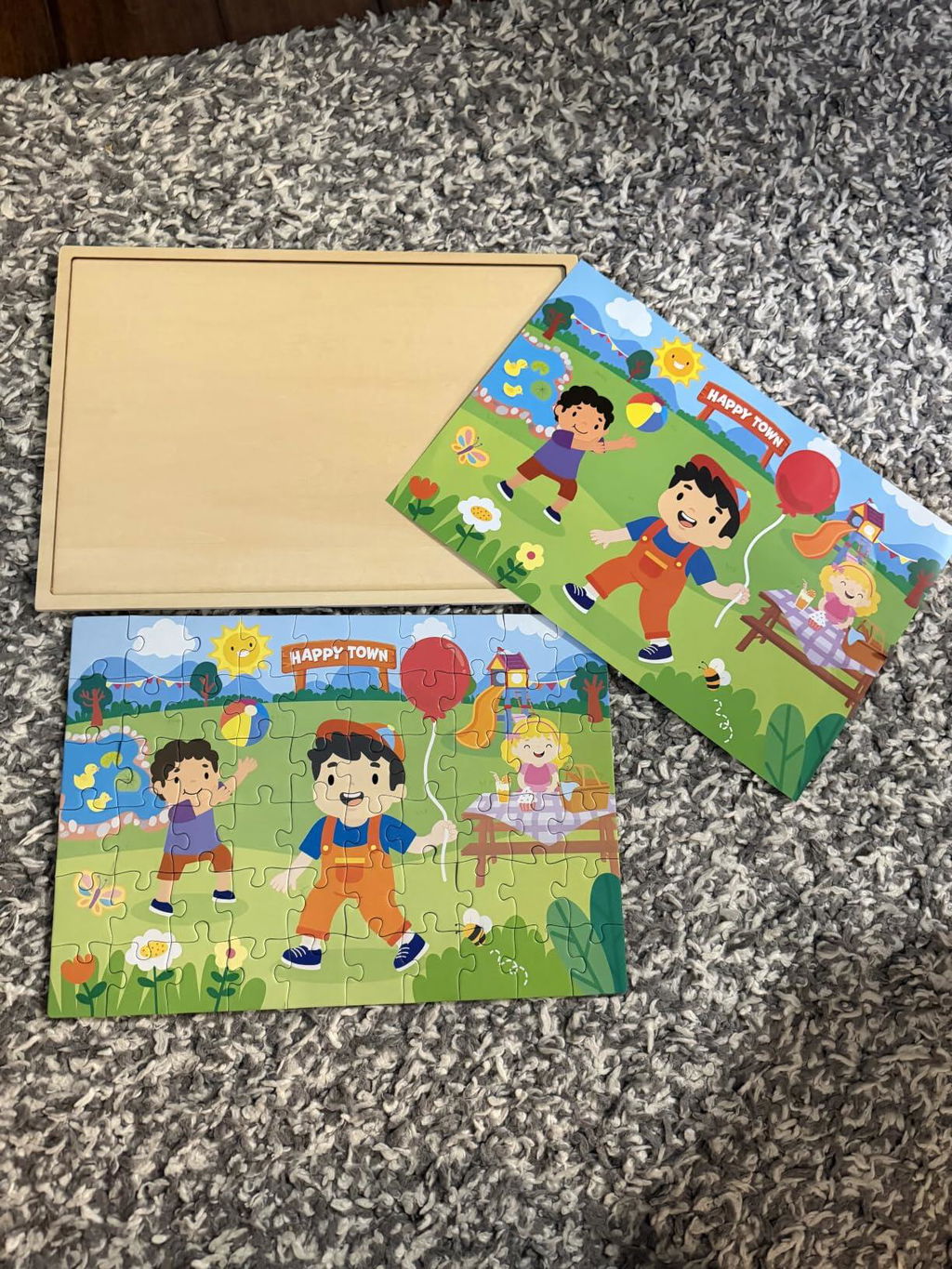
It’s a thoughtful activity that combines problem-solving with social-emotional learning. I ordered it for my preschool classroom, and the children enjoyed putting the puzzles together. The illustrations are colourful and engaging, and the four different emotions make it a nice conversation starter.I also like that it comes with tips for parents and educators, giving ideas on how to use the puzzles to encourage conversations about feelings and emotional regulation instead of just assembling them.The frame is made of wood, while the puzzle pieces themselves are sturdy cardboard. It also includes a reference poster, which was helpful for the children as they worked on the puzzles independently.
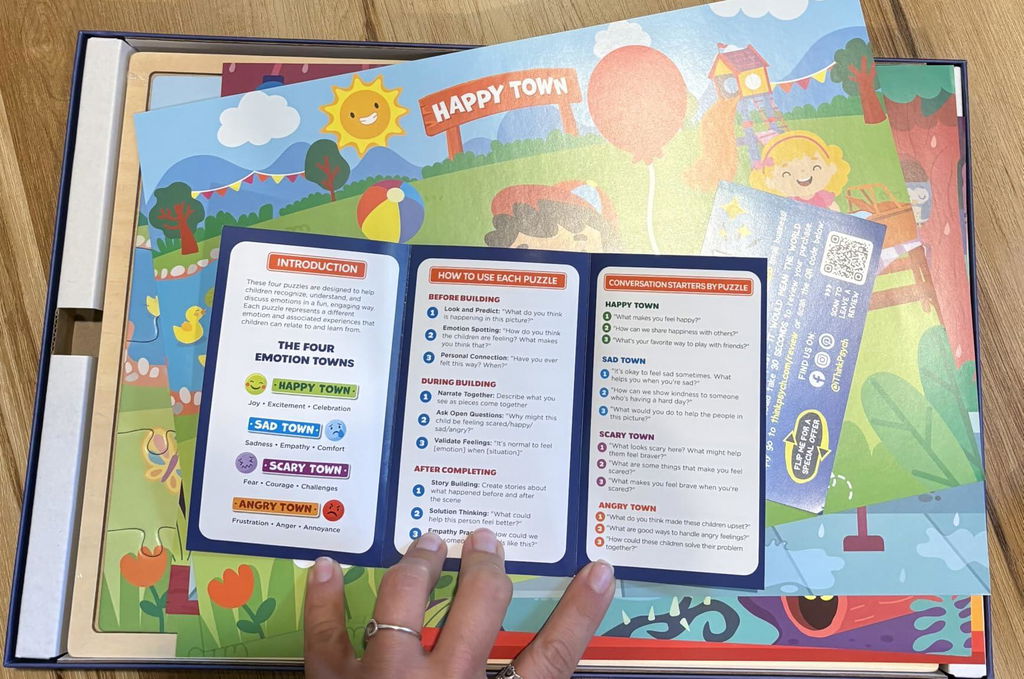
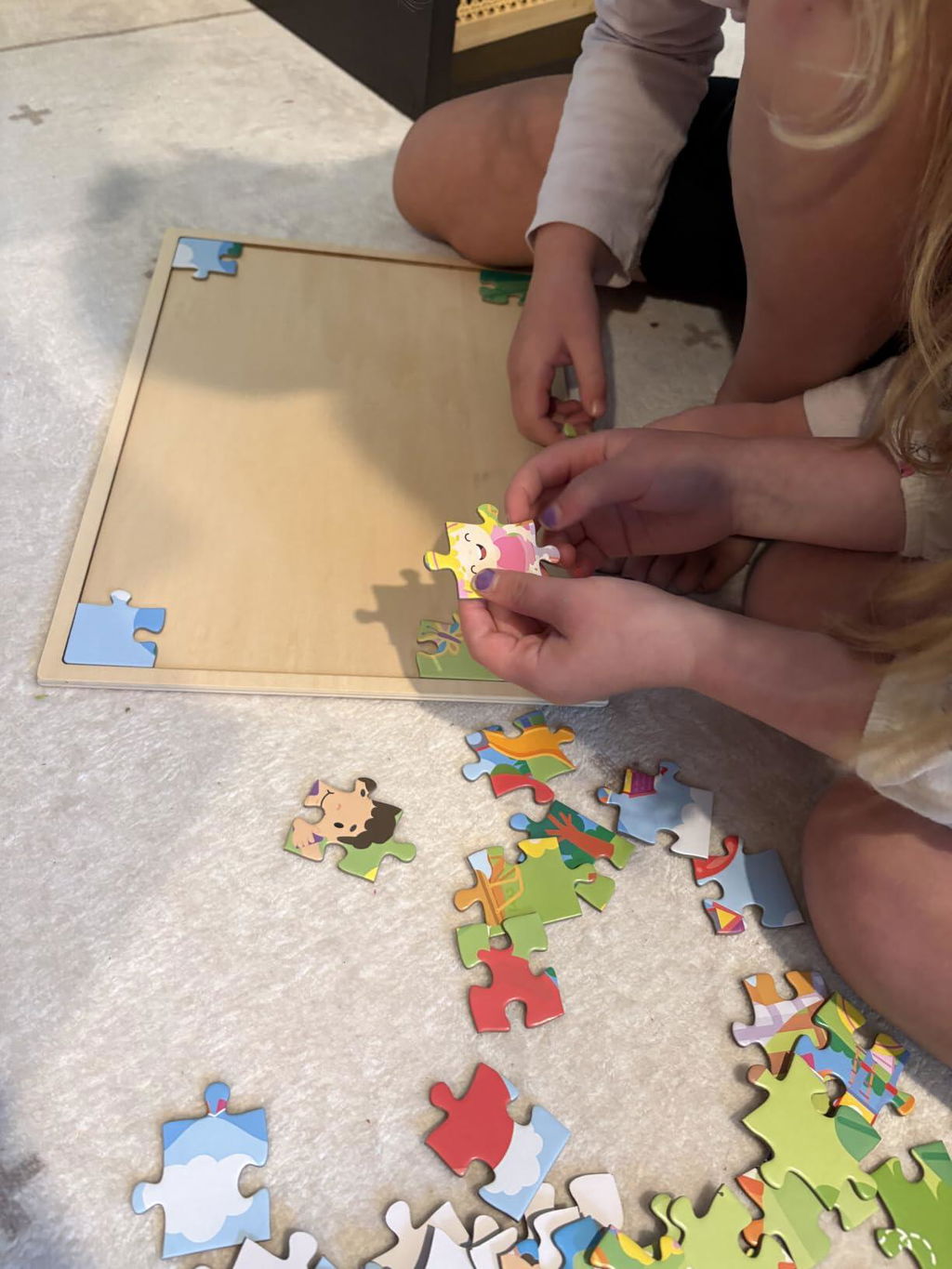
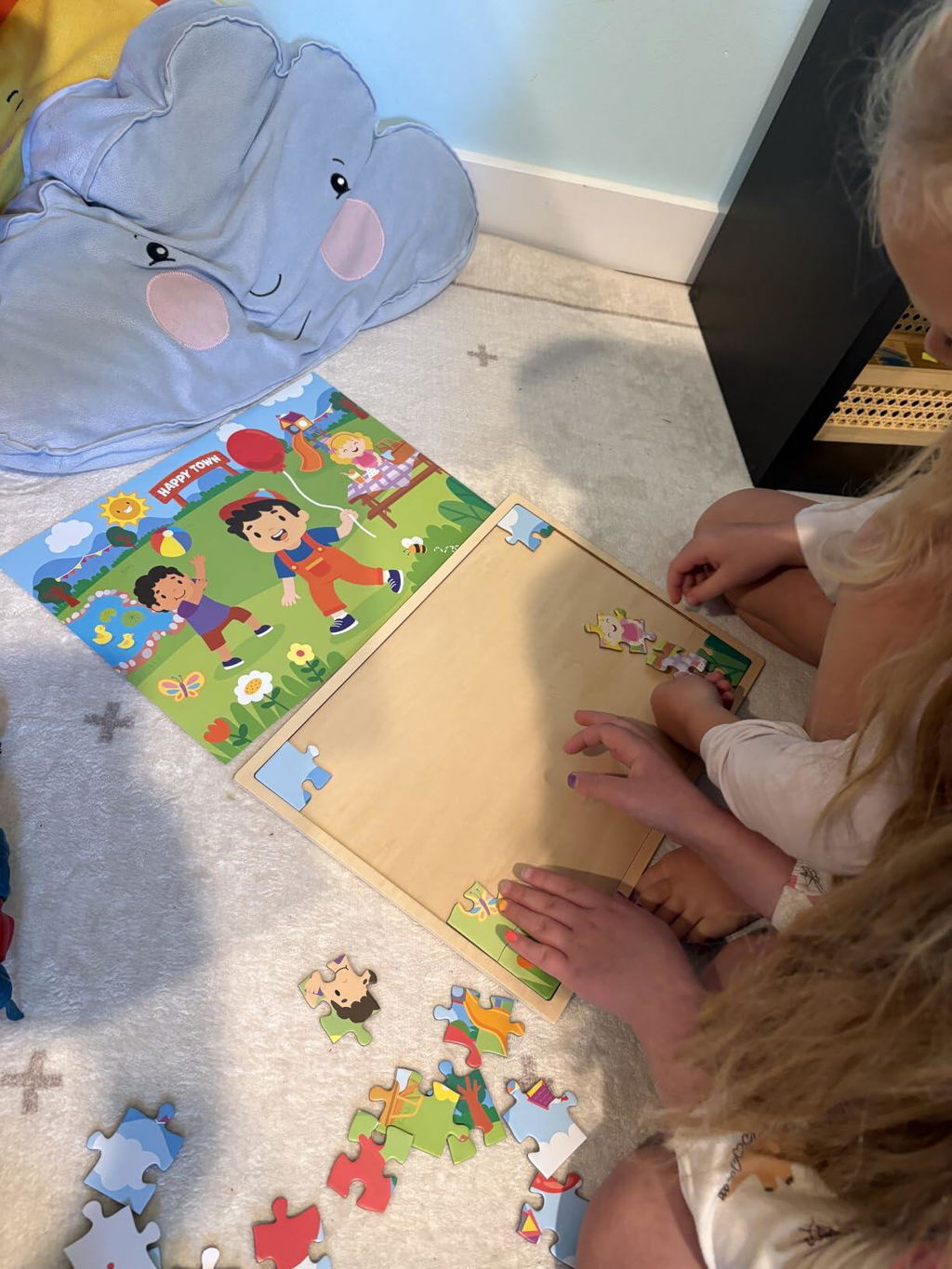
These puzzles are a great idea for little ones to learn to discuss emotions and how others may be feeling/work on empathy building. They are a great addition to any social-emotional learning setting such as school, daycare, therapy, home, etc. They help children to build and use language around emotions. Children can work collaboratively or independently to complete the puzzle (there is a full-size reference picture to support puzzle completion) and talk about what the characters in the picture are doing and how they may be feeling. They can then connect these feelings to scenarios or experiences in their real life. The pictures are more or less straightforward, but one aspect of the Sad Town picture is a bit perplexing: the cat in a box. Young children would not immediately know the meaning of this and would for the most part not have any worldly experience around finding a cat in a box or having to give a cat away. The pictures are not all obvious and would require support from an adult to help children around what's happening in each one. Apart from that, this is a good activity to get kids talking about emotions.
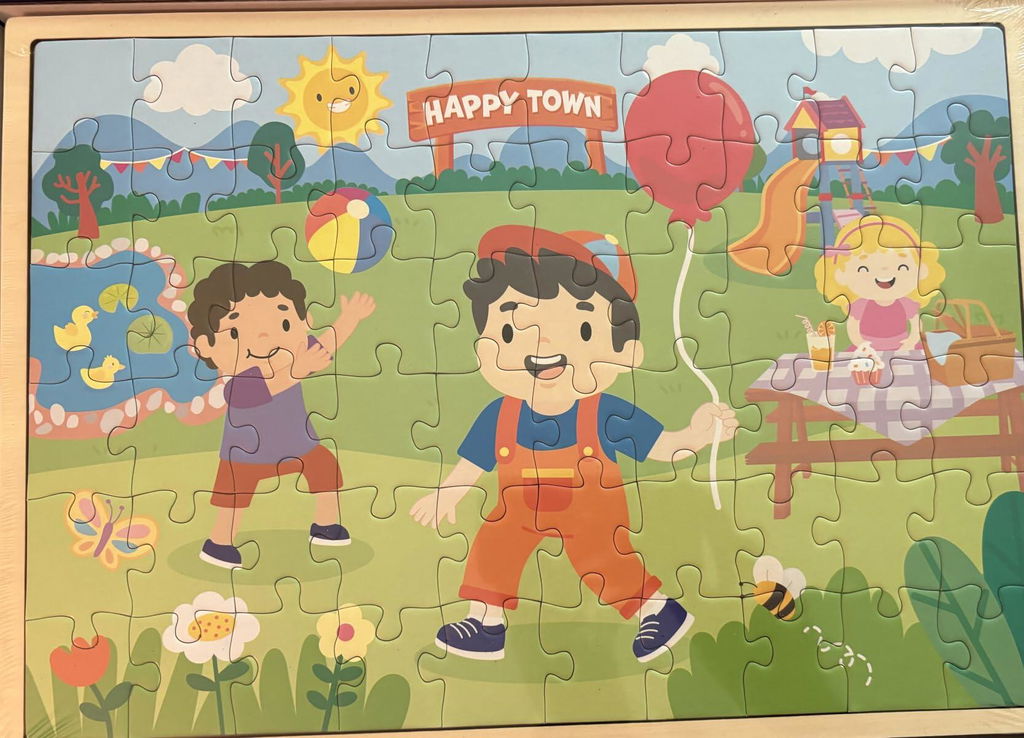
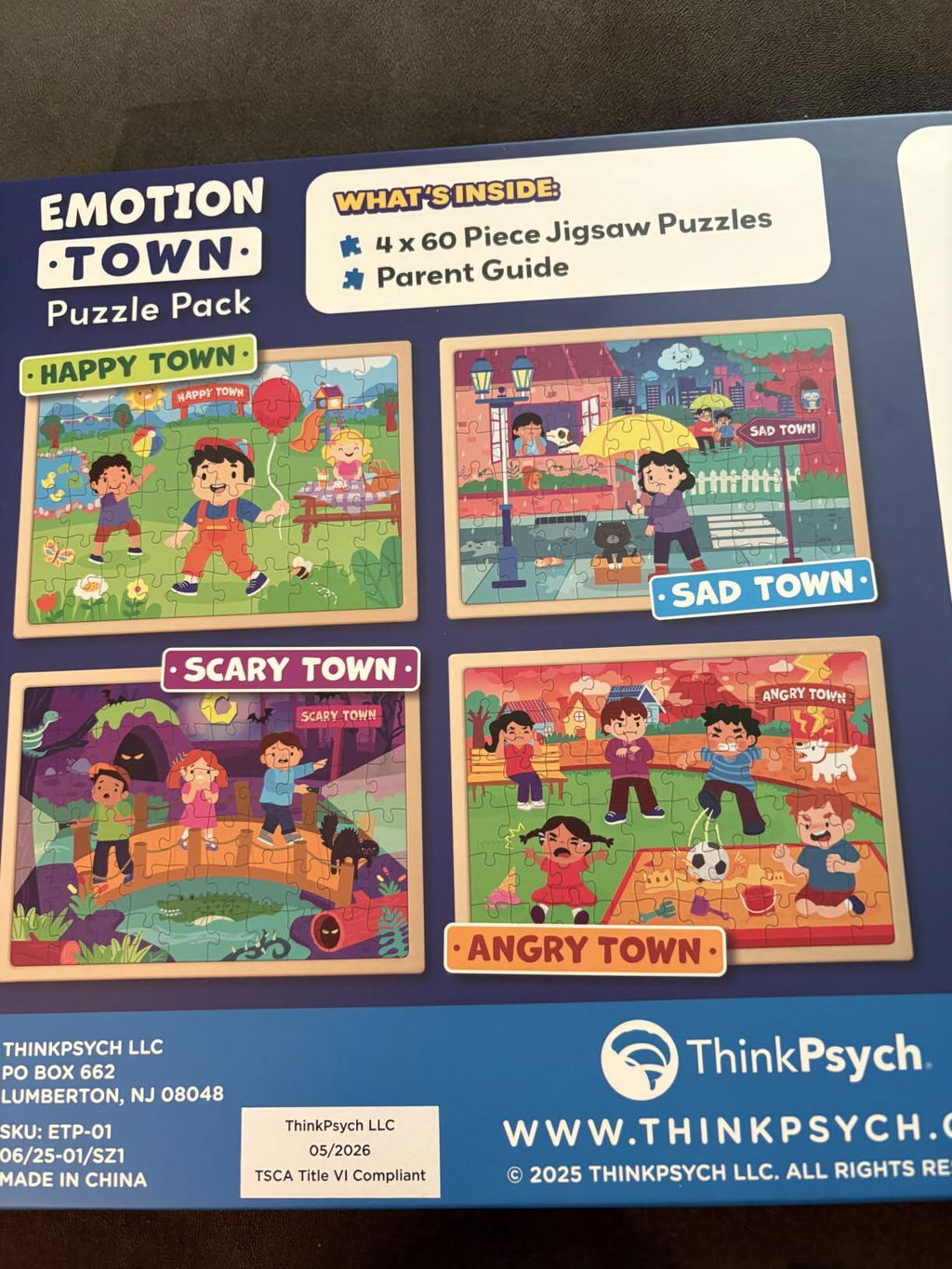
This is a thoughtful puzzle set that goes beyond just putting pieces together. It includes four 60-piece wooden puzzles, each centered around a different emotion: Happy, Sad, Angry, and Scary. The colorful illustrations naturally encourage conversations about feelings and what children might be experiencing in different situations.The wooden puzzle boards feel sturdy, and the pieces are a good size for little hands. The 60-piece count provides a nice level of challenge for preschoolers and early elementary-aged kids without becoming frustrating.I also like that it was designed by psychologists, making it a great option for parents, teachers, counselors, or therapists looking for engaging social-emotional learning activities. It’s an easy way to build emotional awareness while also working on fine motor skills, visual matching, and problem-solving.Overall, it’s a well-made educational puzzle set that combines learning and play in a meaningful way. I would definitely recommend it for any child beginning to learn about emotions.
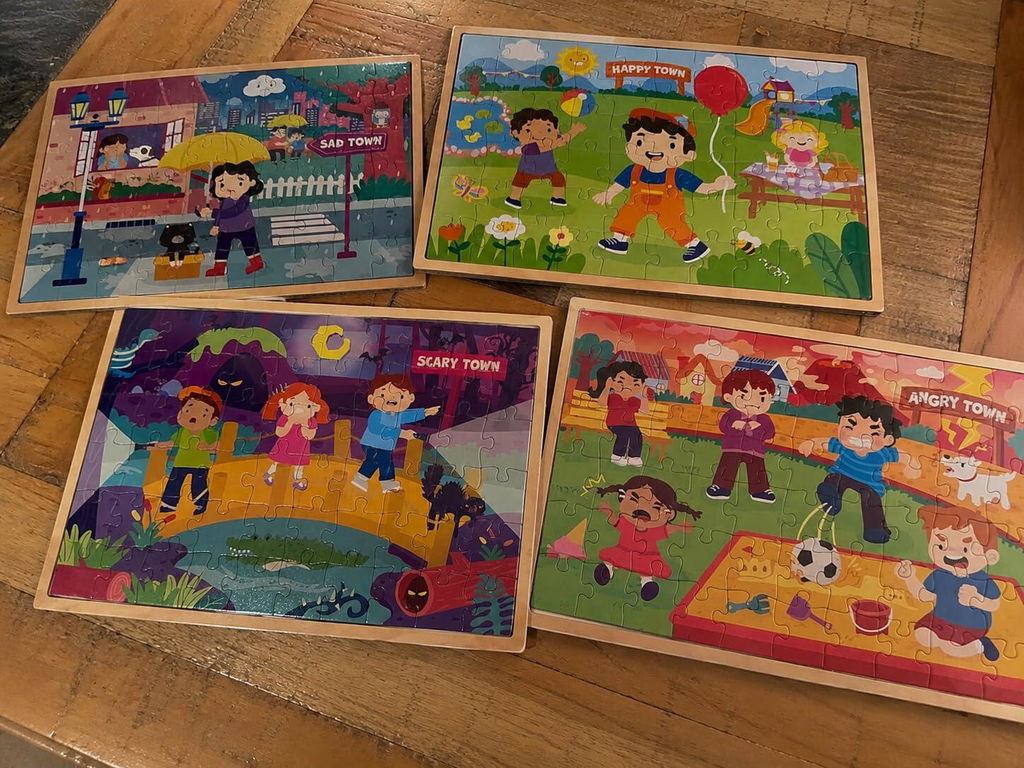
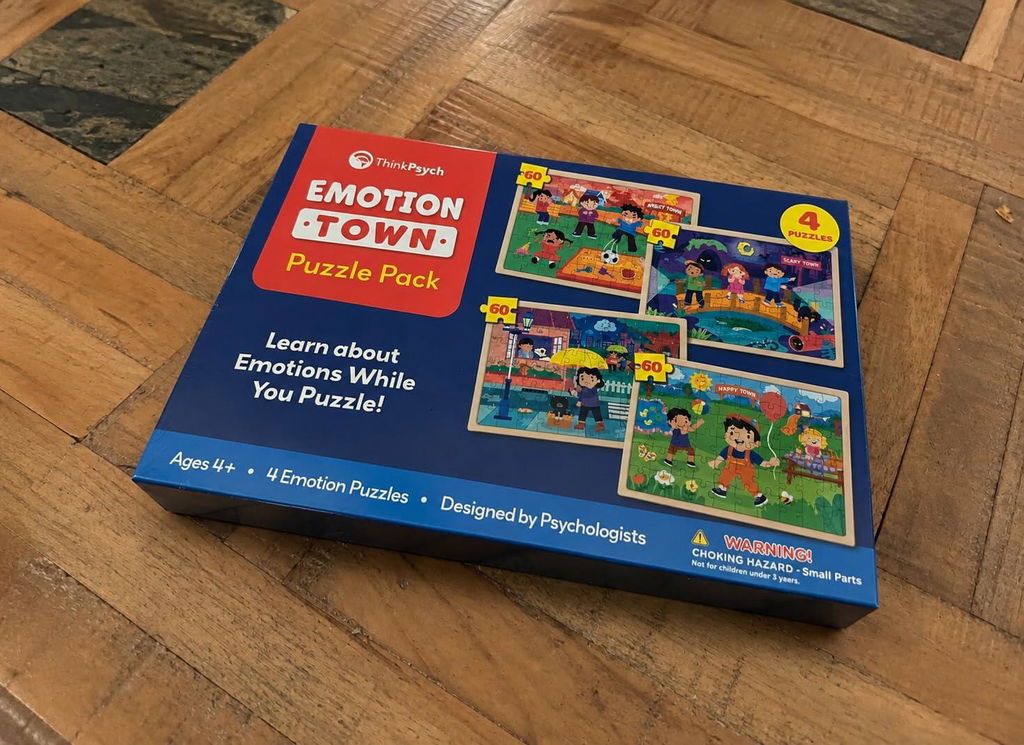
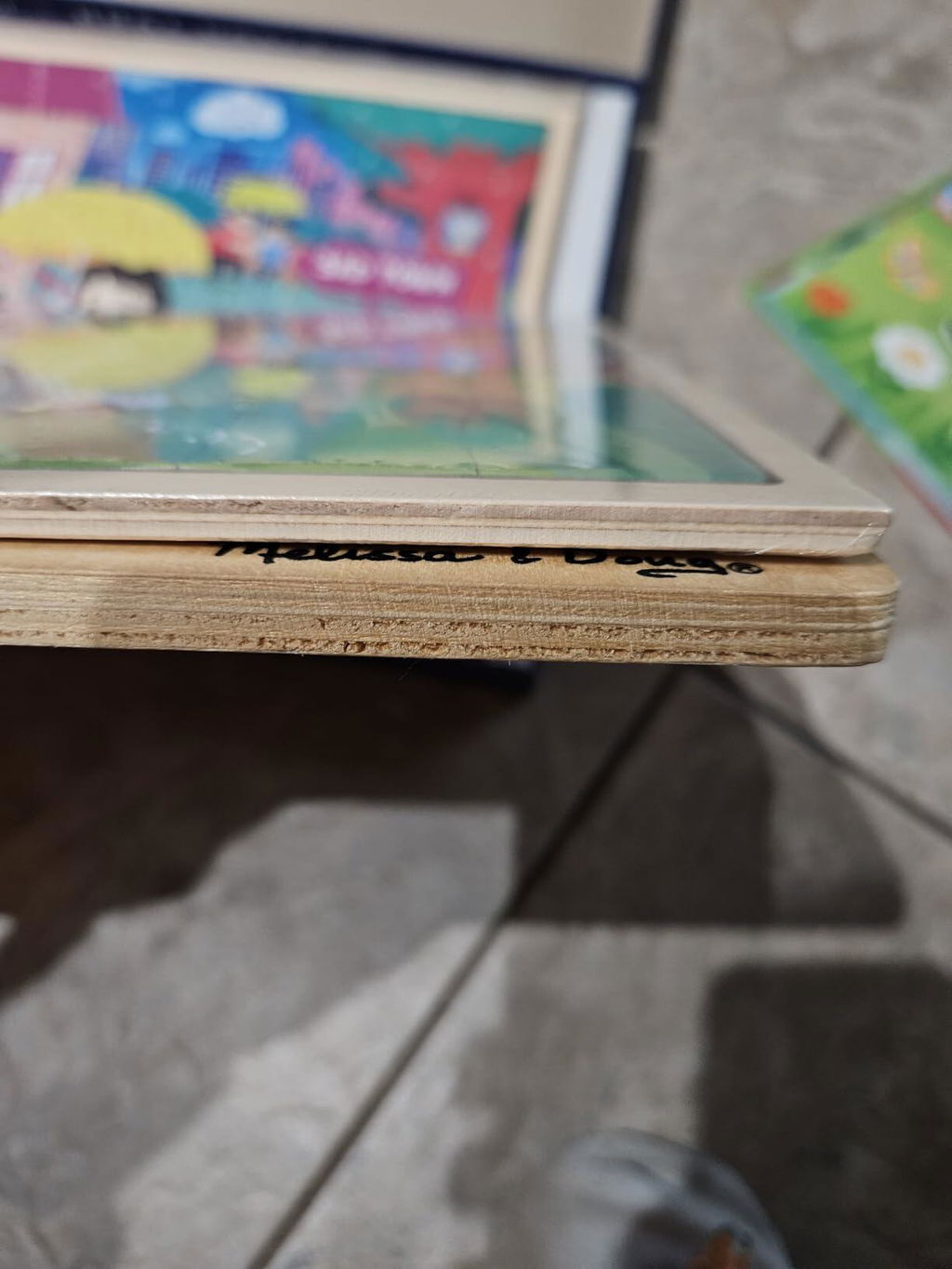
This is a really nice screen free activity for kids. I love that it’s not just a regular puzzle, but one that helps children recognize and talk about different emotions.The set includes 4 different emotion themes: Happy Town, Sad Town, Scary Town, and Angry Town. I like that kids can look at the scenes and connect them to feelings they may experience themselves. It’s a great way to start conversations about emotions in a natural and fun way.The puzzle pieces are good quality and easy for little hands to handle. My toddler enjoyed playing with it, and it’s a nice activity for quiet time away from screens.My only small complaint is the wooden puzzle board. It feels a bit thin, and I would have preferred if the edges were raised higher than the puzzle pieces to help keep everything in place while assembling.This is a thoughtful puzzle set that combines play with emotional learning.This is great for parents, teachers, or therapists looking for a fun way to help children identify and discuss emotions while also building puzzle skills and fine motor development.
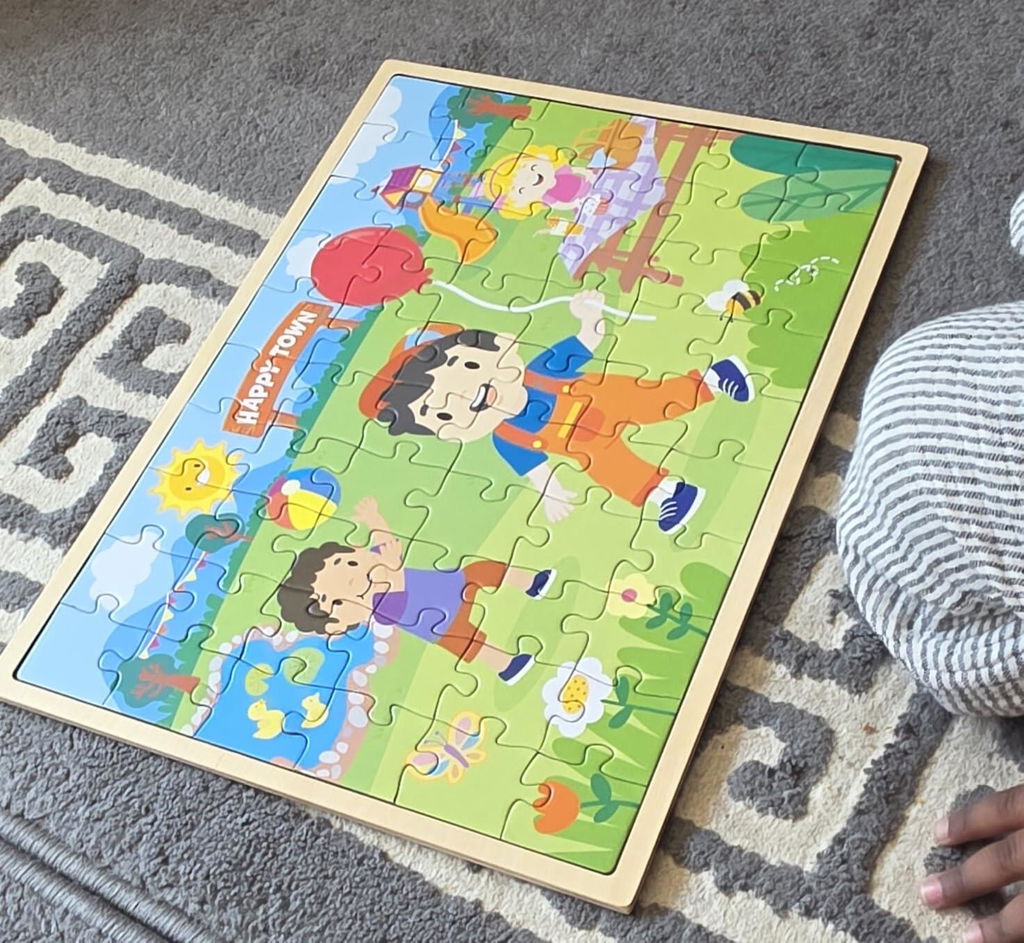
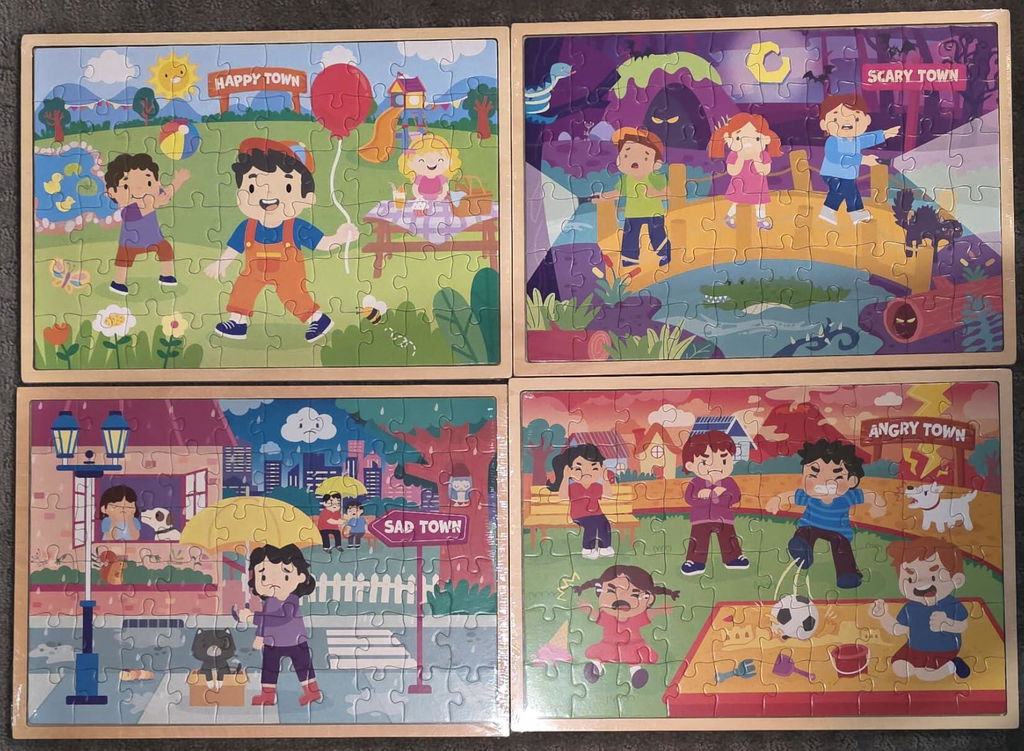
I teach preschool kiddos in a daycare centre so we are always looking for toys and activities for the kids to do. Learning about emotions is so important for proper development and for giving kids the language to express themselves. Making fun activities out of it is a great way for kids to learn different things, especially when coupled with conversations about different ways happiness, anger, fear, or sadness can express themselves or the different things that can cause them. The puzzles are all of decent quality and the pieces fit together well, so kids should have a good time playing with these for a while!
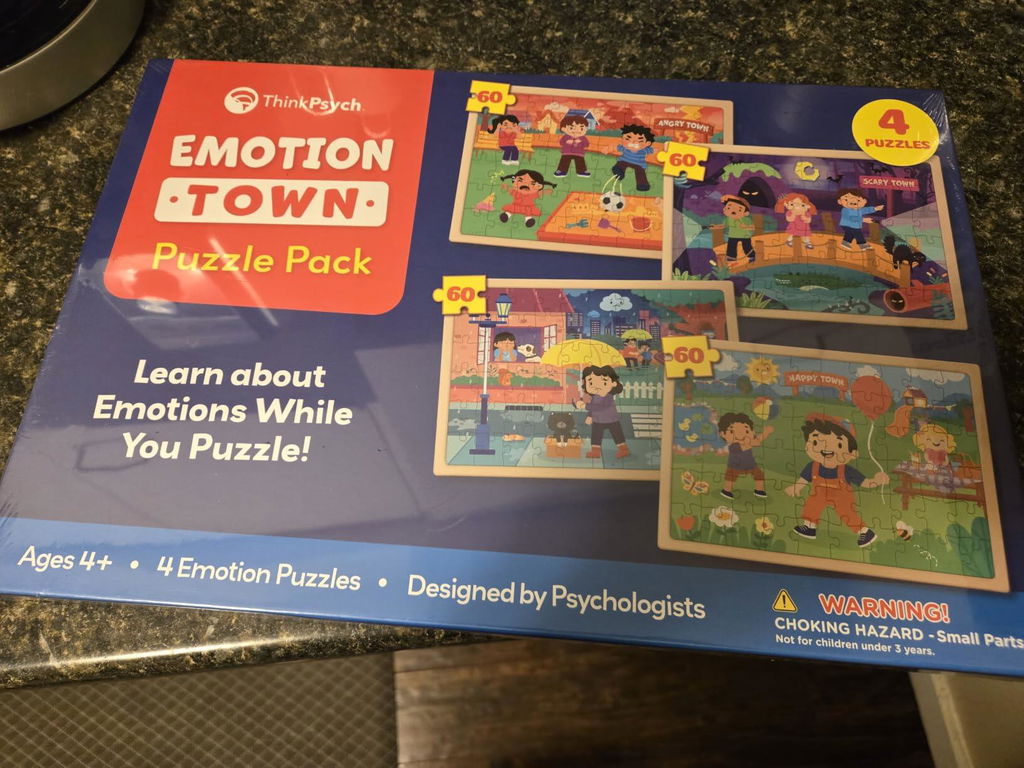
I have 3 kids 4 and under. The older two love puzzles and the littlest is srill putting everything in his mouth. This is about the right number of pieces and are wood so little dude won't ruin them if he manages a steal.Pros:- Well printed image- Reference poster included (not quite 1:1, a little shy)- Includes 'instructions' with ideas for talking points- I actually think this is great for younger kids with puzzle experience too. My younger (2.5) has lots of puzzle practice and in particular likes asking 'why is she/he sad/mad/happy etc' more than the older. So I would say 4+ is fine but some of those younger kids can manage fine- Pieces are large enough they aren't a choking hazard for littler siblings and hardy enough that should the baby get one, he won't ruin itCons:- We are very familiar with the Melissa and Doug wood puzzles so expected something similar. These are roughly half to 2/3 the thickness of those- Colors on reference poster are more vibrant than the puzzles themselvesOverall these are a good puzzle and parent's aren't hung out to dry for how to get the conversation happening. Love that they are wood so it can be in multi-child homes. Would have liked a little thicker.